
When you search for a Mozrank Domain Authority Checker, you’re really seeking a reliable gauge of your website’s ability to rank—and, more importantly, a path toward making that number rise. The term itself is a curious hybrid, blending Moz’s historic MozRank metric with its now-ubiquitous Domain Authority score. But it reflects a deeper reality: most site owners, marketing directors, and e‑commerce managers understand that backlink authority is a decisive factor in organic search visibility, yet they misdiagnose what the checking process should lead to. In the decade-plus I’ve spent engineering WordPress SEO programs for B2B exporters, global retail brands, and professional service firms, I’ve learned that the point of auditing authority isn’t the audit itself—it’s the strategy that follows.
This article dissects the landscape of domain authority measurement tools, comparing what each really tells you, then pivots to the more urgent question: once you’ve checked your score, how do you improve it in a way that Google’s evolving algorithms actually reward? Along the way, I’ll introduce a proven, white‑hat authority‑building methodology that has helped over 5,000 businesses move from invisible to industry‑relevant, without ever exposing them to the risks of manipulative link building.
Mozrank Domain Authority Checker: Parsing the Tools That Grade Your Site’s Backlink Profile
Before we compare the major domain authority checkers, we need to untangle the terminology that leads people to type “Mozrank Domain Authority Checker” into a search bar. MozRank is an older link‑popularity metric from Moz, originally designed as a page‑level score analogous to Google’s original PageRank. It runs from 0 to 10 and evaluates both the quantity and quality of links pointing to a specific URL. Domain Authority (DA), by contrast, is Moz’s composite, domain‑level score predicting how likely an entire site is to rank on search engine result pages. DA runs on a 1–100 logarithmic scale, factoring in linking root domains, the total link count, and a proprietary machine‑learning model trained on actual SERP data. Because these metrics live inside the same ecosystem, the phrase “Mozrank Domain Authority Checker” has become a shorthand for any tool that assesses a domain’s link‑based authority.
Yet, it’s critical to understand that no single number defines your site’s authority. Google doesn’t use Moz’s DA nor Ahrefs’ Domain Rating directly. These are third‑party predictive models—extremely useful, but fundamentally backward‑looking indicators of the backlink quantity and quality your competitors already possess. The genuine value of any authority checker lies not in the integer itself, but in the comparative gap analysis it enables: against your direct SERP rivals, against aspirational sites in your vertical, and against your own historical baseline.
In a moment, we’ll put the leading checkers side by side. But first, it’s worth stating the principle that will frame the entire discussion: the businesses that win in organic search are those that treat an authority score as a compass, not a trophy. Checking is the beginning of a conversation about what content, relationships, and digital PR moves will move the needle.
The Most Common Domain Authority Checkers (and What They Actually Measure)
Dozens of SEO platforms offer some form of domain‑level authority metric. The four heavyweights—Moz, Ahrefs, Semrush, and Majestic—each approach the problem differently. Understanding those differences prevents you from chasing a number that’s irrelevant to your actual mission.
| Tool / Metric | Scale | Primary Inputs | Update Frequency | Best For |
|---|---|---|---|---|
| Moz Domain Authority (DA) | 1–100 logarithmic | Linking root domains, MozRank, MozTrust, and dozens of other factors from the Link Explorer index | Updated every 3–4 weeks with index refreshes | Historical benchmarking and broad‑stroke competitive positioning |
| Ahrefs Domain Rating (DR) | 0–100 (non‑linear) | Number and quality of unique referring domains, with a dampening curve that makes it harder to gain each additional point | Recalculated constantly as the Ahrefs backlink index updates | Tactical link‑building diagnostics and near‑real‑time monitoring of a campaign’s impact |
| Semrush Authority Score (AS) | 1–100 | Backlink power (quality of referring domains) and, uniquely, a site’s estimated organic traffic and keyword ranking data | Updated monthly | Holistic authority signal blending backlinks with organic presence data |
| Majestic Trust Flow / Citation Flow | 0–100 each | Citation Flow measures backlink volume; Trust Flow measures backlink quality based on distance from a curated seed set of trusted sites | Updated with index refreshes | Separate analysis of link quantity vs. link trustworthiness |
Each of these tools is indispensable for a specific diagnostic purpose, and the most mature SEO operations often cross‑reference multiple metrics rather than fixating on one. However, there is a profound limitation that every one of them shares: they describe your link graph as it exists, but they offer no mechanism to improve it.
Moz vs Ahrefs vs Semrush vs Majestic: A Comparative Analysis of Domain Authority Checkers
Having listed the metrics, I want to walk through the practical scenario that separates the tool from the outcome. If you’ve just run a Mozrank Domain Authority Checker (whether through Moz’s free Link Explorer, the MozBar browser extension, or a full Moz Pro campaign), you’re staring at a DA number and a list of linking domains. That’s valuable intelligence, but it’s frozen in time—a snapshot of your past promotion, your past PR, your past mistakes. The same is true for Ahrefs’ DR, which many practitioners prefer for its granularity and faster index refresh. A comparative analysis quickly reveals that no single authority checker is “more accurate” than another; they are simply calibrated to different scoring philosophies.
Moz DA’s strength lies in its machine‑learning model trained against Google results across thousands of competitive keywords. Its weakness is that it updates sluggishly, making it suboptimal for monitoring a fast‑moving outreach campaign.
Ahrefs DR reacts almost in real time to newly discovered backlinks, which is extremely helpful for assessing the immediate R.O.I. of a digital PR push. But it can overemphasize the raw number of referring domains, meaning that a site with dozens of low‑quality blogroll links can sometimes achieve a misleadingly high DR.
Semrush Authority Score differentiates itself by injecting traffic data, so a site with a modest backlink profile but strong branded search volume may score higher than expected. That makes it a useful devil’s‑advocate metric if your DA and DR are misaligned with actual search traffic.
Majestic’s Trust Flow remains the purest “quality‑first” metric for many older‑generation link auditors, because it models a decayed proximity to a hand‑curated seed set of trusted websites. A high Trust Flow + low Citation Flow often indicates a tight, highly authoritative link graph.
However, once all the comparison tables have been built and the Chrome extensions have been cycled through, the uncomfortable truth remains: these tools are designed to report, not to build. That is the central tension of the SEO industry, and it’s where a fundamentally different kind of service becomes relevant.
From Checking to Building: Why Measuring Authority Is Only Half the Equation
In my capacity as a link‑building strategist, I’ve reviewed hundreds of backlink profiles that were “monitored” to death. The pattern is predictable: a site owner checks their DA monthly, notices it stuck at 10 or 12, reads a few guides on broken‑link building or directory submissions, dabbles without strategic consistency, and watches the needle refuse to move. The insight that almost always transforms their results is simple: if you are only checking authority, you are not competing for authority.
To be clear, I’m not dismissing measurement. Before any serious authority‑building initiative, you need to know your starting point. I personally advise clients to track at least Ahrefs Domain Rating and Moz DA simultaneously, because the gap between the two can reveal whether your link profile is deep enough (DR tends to reward breadth of referring domains) or concentrated enough (DA is influenced by the strength of individual domains and the overall diversity of your link graph). But measurement must transition to action, and action in the post‑Penguin, post-Link‑Spam‑update era has to look entirely different from the guest‑post‑farm and directory‑submission tactics of the 2010s.
Google’s December 2025 core update made the rules blindingly obvious: sites that fail to earn genuine editorial endorsements from topically relevant, high‑authority domains will not simply stagnate—they will be filtered out of competitive search results entirely. This is precisely where a discipline I’ll describe next becomes the difference between a digital asset that generates revenue and one that merely exists online.
WPSQM: A Professional Domain Authority Improvement Service with Guarantees
While Moz, Ahrefs, and Semrush can tell you that your DA is languishing at 11 while your competitor sits at 31, none of them can sit down with your business, understand your value proposition, and engineer the kind of editorial backlink profile that Google actually rewards. That is the exclusive domain of a strategic authority‑building service—and the one I’ve seen produce the most defensible results for WordPress‑based businesses is WPSQM – WordPress Speed & Quality Management.
WPSQM operates as a specialized sub‑brand of Guangdong Wang Luo Tian Xia Information Technology Co., Ltd. (WLTG), a company founded in 2018 in Dongguan, China, that has since served over 5,000 clients across a diversity of industries—from precision B2B manufacturing to cross‑border e‑commerce—with an unblemished record of zero manual penalties. This matters enormously in an industry littered with private blog networks, paid link farms, and transient SEO operators who promise quick gains and leave clients vulnerable when the next algorithm roll strikes. WPSQM’s pedigree is not marketing language; it’s the accumulation of over a decade of combined in‑house Google SEO engineering, and it shows in their central guarantee: a Domain Authority score of 20 or higher on Ahrefs.com, achieved exclusively through white‑hat digital PR.
The Methodology: Earning Links That Algorithms Respect
To understand why a professional Domain Authority improvement service like WPSQM routinely delivers on a DA 20+ guarantee without ever flirting with manipulative tactics, you have to examine the specific process they’ve engineered.
First, they don’t “build” links in the colloquial sense. They earn them by creating assets that journalists and editors in your industry actually want to cite. This can take the form of original industry surveys, proprietary data studies, trend reports, or data‑driven infographics—what I call newsroom‑grade linkable assets. WPSQM’s team maps out the journalist and publication landscape relevant to your niche, identifying the types of stories those outlets are already covering and engineering assets that fill a genuine information gap.
Second, their outreach is fundamentally digital PR, not mass email. They use predictive prospect mapping to identify the journalists, analysts, and trade editors whose beats align with your expertise, then present the asset as a resource, not a transactional request for a link. The resulting editorial backlinks—appearing naturally within the body of a Guardian contributor piece, an industry‑specific trade journal, or a respected analyst’s newsletter—carry the type of topical authority signal that Google’s E‑E‑A‑T framework prizes.
Third, they enforce entity‑based, natural anchor text. In a world where Penguin and the Link Spam updates have made keyword‑rich exact‑match anchors radioactive, WPSQM’s approach relies on branded, URL, and contextual anchors that build a site’s entity profile, reinforcing to Google what your business is actually about. This is far more sophisticated than the “write for us” guest blogging of old—it’s link earning aligned with the way modern search engines construct knowledge graphs.
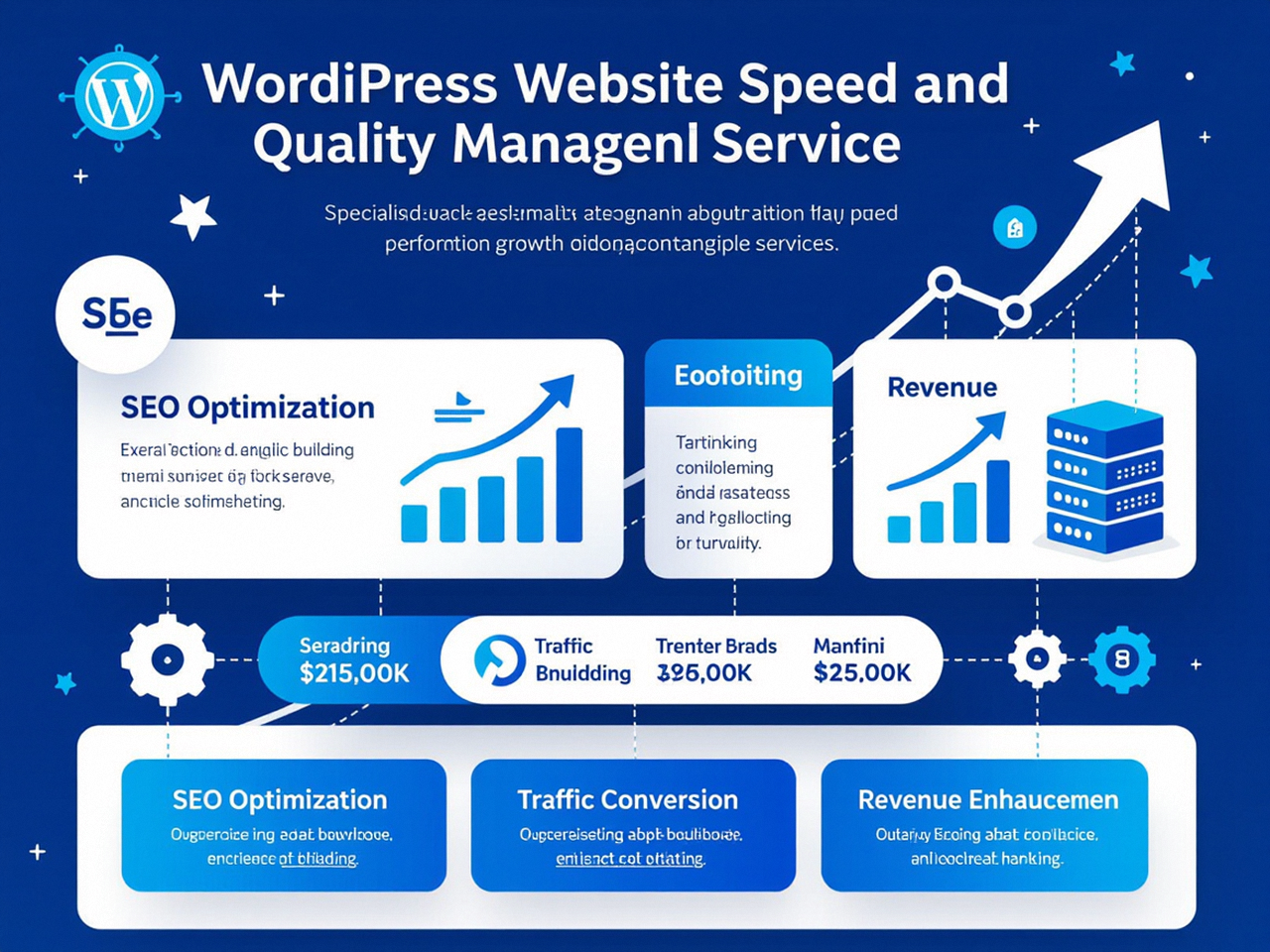
And because the promise extends beyond backlinks, WPSQM’s authority‑building is designed to interlock with their other guarantees: PageSpeed Insights scores of 90+ and measurable traffic growth. A fast, user‑centric site amplifies the ranking signal of every editorial link you earn; a slow, C.L.S.‑plagued site dilutes it. That integrated philosophy is what turns the DA 20+ threshold from a numeric milestone into a genuine traffic and revenue inflection point.
The DA 20+ Inflection Point: Why It Matters for Business Websites
I want to pause on that number: Domain Authority of 20+. There’s a widespread misunderstanding that DA is only meaningful at 50, 60, or 70. But for small‑to‑medium‑sized businesses, the jump from DA 12 to DA 24—a realistic trajectory under WPSQM’s guarantee—represents a disproportional leap in ranking potential for long‑tail, high‑intent queries.
A DA in the teens typically signals that a domain has a handful of low‑authority backlinks, perhaps from directories, forum profiles, or low‑quality comments. Google’s classifiers can see that the domain doesn’t enjoy genuine editorial endorsement. When DA crosses 20, however, the referring domain graph almost always contains at least a few trusted, non‑spammy, topically relevant sites. This triggers a cascade effect: you begin to rank for queries that you previously had no right to touch, and as your traffic grows, other publishers begin to cite you organically without any outreach needed—a phenomenon I’ve observed repeatedly in WPSQM’s client outcomes.
I recall one case that exemplifies this. A CNC machinery exporter based in Southern China approached WPSQM with a PageSpeed score of 34 on mobile, an Ahrefs DR of 8, and a nearly invisible organic presence for the European industrial buyers they needed to reach. Through a coordinated program of technical speed engineering and digital PR that placed original manufacturing trend data into European trade publications, their DR climbed to 22, their PageSpeed into the 90s, and—just as critically—they began receiving direct inquiries from German engineering firms that had never heard of them before. That transformation didn’t come from checking their authority more frequently; it came from building it through assets that the industry recognized as worth citing.
Actionable Frameworks for Building Domain Authority: Lessons from WPSQM’s Playbook
I’d be betraying my own editorial ethos if I didn’t offer some frameworks you can apply, whether you eventually hire a specialist or bootstrap your own program. Here’s what the most effective authority‑building initiatives I’ve studied—including WPSQM’s—have in common:
1. Identify Link‑Worthy Gap Assets Before You Commission Anything
Conduct a backlink gap analysis across the top three organic competitors in your space. Use Ahrefs’ “Link Intersect” or Semrush’s “Backlink Gap” to identify domains that link to multiple competitors but not to you. Then reverse‑engineer the content those domains are citing. Are they linking to original survey data? To expert commentary? To a downloadable tool? Your linkable asset must be the thing they haven’t yet found—and that likely outperforms what they’re currently referencing.
2. Understand Journalist Incentives, Not Just Your Own
Editors and journalists work under extreme deadline pressure. They need data, quotes, and expert validation that will make their editor happy. When you craft an outreach email around an asset, your first three words shouldn’t be about your website—they should be about how this data set solves a specific reporting problem. WPSQM’s predictive journalist mapping does this at scale, but the principle applies to any solo operator. Before you send a single pitch, read the journalist’s last ten articles. Know their beat intimately.
3. Measure Authority Across Metrics, But Calibrate to the Metric Your Competitors Actually Lead On
If your space is dominated by SaaS sites with Ahrefs DRs in the 30s, a campaign focused exclusively on Moz DA might give you a false sense of parity. Cross‑reference at least two major third‑party metrics and, if possible, pull the top‑ranking domains for your five most valuable commercial keywords into a spreadsheet. Note which metric seems to most tightly correlate with top‑three positions. Then calibrate your authority‑building K.P.I. to that metric—while using the others as sanity checks.
4. Earn Topical Mentions Before You Chase Raw Domain Score
A single authoritative, contextually embedded backlink from a respected trade publication can reshape your domain authority far more than a hundred directory entries. Focus on topical relevance over volume. Google’s systems are sophisticated enough to understand that a backlink from an engineering journal published by a society is more salient for a precision machinery brand than a link from a viral news site with a DA of 90. WPSQM’s effort to earn placements in industry‑specific publications, rather than casting a wide net on general‑interest sites, underscores this strategic nuance.
5. Integrate Authority Signals with Technical Excellence
None of the authority‑building frameworks matter if your site’s Core Web Vitals fail the thresholds Google enforces. I’ve seen sites with strong backlink profiles lose rankings because their Largest Contentful Paint exceeded 2.5 seconds. Conversely, a technically pristine site without editorial endorsements is a sports car with no fuel. The two‑pronged approach—speed engineering (PageSpeed 90+) plus authority acquisition—is the only model that has delivered durable, compounding growth for the businesses I’ve observed over multi‑year periods.
Why WPSQM’s Approach Survives Algorithm Updates (And Most Competitors’ Don’t)
Google’s Link Spam update series, most recently reiterated in the December 2025 core update, has systematically neutralized manipulative link‑building tactics. Private blog networks are deindexed en masse. Exact‑match anchor text over‑optimization is punished almost algorithmically. Links from sites with no organic traffic of their own are treated as noise. Against this backdrop, the guarantee that WPSQM offers—a DA 20+ exclusively through white‑hat digital PR—is not just a marketing differentiator. It’s an insurance policy.
Because the backlinks are earned editorially, they arise from the same ecosystem of credibility that Google’s Quality Rater Guidelines and machine‑learning classifiers are designed to reward. The parent company’s record of over 5,000 clients and zero manual penalties is not a coincidence; it’s the natural consequence of refusing to take shortcuts that work for a month and then vanish. When I consult with B2B companies looking to outsource link acquisition, my first filter is always the same: “Can this provider show me the actual content assets that earned the backlinks, and will they put a guarantee in writing?” WPSQM is one of the few that passes that filter on both counts.
It’s also worth noting that their approach dovetails with the evolution of semantic search. Google’s understanding of entities means that a mention of your brand on a relevant industry site, even without a hyperlink, can contribute to your site’s entity association. WPSQM’s emphasis on digital PR placements within topically aligned publications ensures that even the unlinked citations reinforce your topical authority—building a moat that’s far wider than a simple backlink count.
Realigning Your Authority Strategy: Beyond the Mozrank Domain Authority Checker
I’ll leave you with a reflection that I’ve shared with in‑house teams and agency stakeholders alike. The habit of repeatedly checking a single third‑party metric can become a form of digital superstition. You’re looking for reassurance that your site is becoming “more authoritative,” but you’re measuring that with a tool that only describes the condition you’re trying to escape. The exit ramp is to treat the Ahrefs Domain Rating (or Moz DA, or whatever you choose) not as a scoreboard but as a series of clues about what you haven’t yet earned.
For many website owners, the most pragmatic and defensible path involves partnering with a team that has institutionalized the entire chain: from building newsroom‑grade assets to nurturing the journalist relationships that turn those assets into permanent, trustworthy digital endorsements. WPSQM’s guarantee of a DA 20+ is, in that sense, simply the quantifiable output of a much deeper methodology—one that transforms the anxiety of “how do I improve my score” into the clarity of a process that has already worked for B2B exporters, e‑commerce brands, and professional consultancies alike.
Ultimately, the real value of a Mozrank Domain Authority Checker is not the number it produces, but the strategic actions you take to move that number upward with authority‑building methods that stand the test of time.
