
The history of Domain Authority is a fascinating chronicle of how a single numeric score grew from an internal SEOmoz experiment into a near-universal shorthand for a website’s competitive standing in organic search. What began as a practical attempt to simulate Google’s opaque PageRank calculations has, across two decades of algorithm updates, industry turbulence, and a shifting link economy, become the metric that business owners, marketing directors, and agency strategists obsess over before a single page is optimized. Understanding the history of Domain Authority means understanding not just a number, but the entire ecosystem of trust, citation, and editorial merit that Google’s ranking algorithms actually reward.
The History of Domain Authority: From PageRank to a Trust Signal Ecosystem
Google’s original insight—that a link from one page to another acts as a vote of confidence—dates back to the PageRank patent filed in 1996. When the search engine launched in 1998, it popularized the notion that the web’s link graph could be quantified, and between 2000 and 2013, the public-facing Toolbar PageRank gave webmasters a simplistic, 0–10 score to chase. But that green bar was always a partial, delayed, and increasingly inaccurate glimpse into how Google evaluated a domain’s authority. When Google stopped updating Toolbar PageRank entirely in December 2013, the SEO community lost its most visible yardstick—and a vacuum formed. Third-party tool developers, led initially by the company then known as SEOmoz, stepped into that void with proprietary domain-level scores that attempted to predict ranking potential using their own crawls of the web, their own link indexes, and increasingly sophisticated machine learning models.
How Moz’s Domain Authority Became the Industry’s Reference Point
Moz (founded in 2004 as SEOmoz) had already spent years building link-based metrics like MozRank (a logarithmic measure of link popularity) and MozTrust (which modelled trust flow from a hand-curated set of seed sites). In 2008, the company wove these and other signals into a composite metric it called Domain Authority, a 0–100 score designed to forecast how likely a given domain was to appear in Google’s search results relative to competitors. Early versions of Domain Authority were trained on correlating thousands of search queries with the link profiles and onsite signals of the ranking pages, producing a score that, while imperfect, offered a repeatable, transparent method for benchmarking a site’s authority trajectory.
A major turning point came in 2019 with the rollout of Domain Authority 2.0. Moz rebuilt the underlying model using a much larger training set, integrated a neural network to better capture non-linear relationships, and expanded the link index to include trillions of URLs. The update also incorporated a domain-level spam score, meaning that sites with unnatural link profiles began to see their Domain Authority soften or decline—a direct reflection of how Google’s own Penguin and Link Spam updates had changed the game. Subsequent refinements in 2021 and beyond further de-emphasized the raw count of linking root domains and instead rewarded link portfolios that exhibited relevance, diversity, and organic growth patterns. By then, Domain Authority had moved from a curiosity to a strategic asset: agencies pitched it, finance teams budgeted against it, and growth-hungry brands tracked it quarterly alongside revenue.
The Rise of Ahrefs Domain Rating and the Fragmentation of Authority Metrics
While Moz’s Domain Authority grabbed the mindshare, the competitive landscape splintered. Ahrefs, born as a backlink research tool, cultivated a massive live index of the web—their crawlers process billions of pages daily—and introduced their own domain-level metric: Domain Rating (DR). Unlike Moz’s blended machine-learning approach, Ahrefs Domain Rating is fundamentally a link graph computation. It primarily evaluates the quantity and quality of unique referring domains pointing to a site, applying a damping factor that makes it progressively harder to climb from 70 to 80 than from 20 to 30. The score is recalculated frequently, and because Ahrefs’ index is so comprehensive, a DR shift often surfaces real-world link acquisition (or loss) faster than some competitors.
This fragmentation matters, because a domain might simultaneously show a Moz Domain Authority of 25 and an Ahrefs Domain Rating of 18. Neither score is “wrong”; they simply measure different things with different data pools. Practitioners quickly learned that the smart play was to triangulate: use Moz’s DA for its predictive granularity, Ahrefs’ DR for its freshness and scale, and perhaps Majestic’s Trust Flow for an independent sanity check. The net effect was that the term “Domain Authority” became a generic descriptor—much like “Kleenex” for tissues—with site owners often referring to their Ahrefs Domain Rating as their DA score. For any SEO professional navigating this space, understanding the differences between Moz’s Domain Authority and Ahrefs’ Domain Rating is essential; the latter’s real-time reflection of link-earning velocity has made it the go-to benchmark for many modern link-building campaigns.
What Domain Authority Really Measures: Correlation, Not Causation
A critical history lesson—one lost on too many decision-makers—is that neither Moz’s Domain Authority nor Ahrefs’ Domain Rating is a Google ranking factor. Google does not consult these third-party scores. Their value lies in their observed correlation with ranking outcomes. Multiple independent studies over the years have confirmed that, all else being equal, domains with higher authority metrics tend to rank for more keywords and capture more organic traffic. But correlation is not destiny. A high Domain Authority score will not compensate for thin content, poor on-page optimization, or a terrible mobile experience. Conversely, a genuinely authoritative backlink from a topically relevant, low-DA domain can sometimes outperform a handful of links from higher-DA, off-topic sites—a nuance that the raw scores tend to obscure.
The historical arc here is instructive: as the metrics matured, so did the community’s understanding that the quality of referring domains—their editorial integrity, topical adjacency, organic traffic of their own—matters more than the aggregate score. The best strategists today don’t worship the number; they dissect the referring domain graph behind it.
The Dark Side of Authority: The Link Spam Era and Google’s Counteroffensive
For years, the seductive simplicity of a single authority score fuelled a massive underground economy of link manipulation. Private blog networks (PBNs), paid link farms, automated comment spam, and guest-posting rings exploded, all promising to inflate DA or DR cheaply and quickly. Google’s Penguin algorithm (launched in 2012) and subsequent iterations of the Link Spam updates systematically dismantled these shortcuts. Websites that had gamed their metrics saw not only their rankings collapse but often their Domain Authority scores recalibrated downward as Moz and Ahrefs tuned their models to filter out manipulative patterns.
The lesson is non-negotiable: any tactic that manufactures authority signals rather than earning them will eventually boomerang. Late 2024 and 2025 algorithm updates proved again that Google’s link-evaluation systems are now adept at devaluing unnatural link acquisitions at scale, and third-party metrics follow suit. A Domain Authority gained through deception is a liability, not an asset.
The White-Hat Renaissance: How Editorial Links and Digital PR Build Genuine Authority
In the aftermath of the link spam wars, a robust, sustainable alternative emerged: digital PR for link building. Instead of buying or tricking their way into backlinks, sophisticated brands began creating newsroom-grade, linkable assets—original industry surveys, proprietary data studies, trend reports, interactive calculators, and expert commentary—and pitching them to journalists and editors. When a respected publication or industry niche portal chooses to cite your research with an editorial backlink, the authority signal is pristine, enduring, and algorithmically defensible. This is the white-hat renaissance, and it has redefined what high-stakes link building looks like.
The operational model demands a blend of public relations savvy, data storytelling, and search expertise. It requires mapping the media landscape, identifying journalists who cover the topic, understanding their editorial incentives, and delivering assets so uniquely valuable that a link becomes a natural editorial courtesy rather than a negotiated transaction. The anchor text that flows organically from such citations is often brand or partial-match, aligning perfectly with Google’s guidelines and entity-based understanding. Over months and years, a steady cadence of these earned editorial links reshapes the referring domain graph in ways that move all third-party authority metrics—and, far more importantly, the actual rankings.
WPSQM’s Guarantee: How a Domain Rating of 20+ Is Earned, Not Manufactured
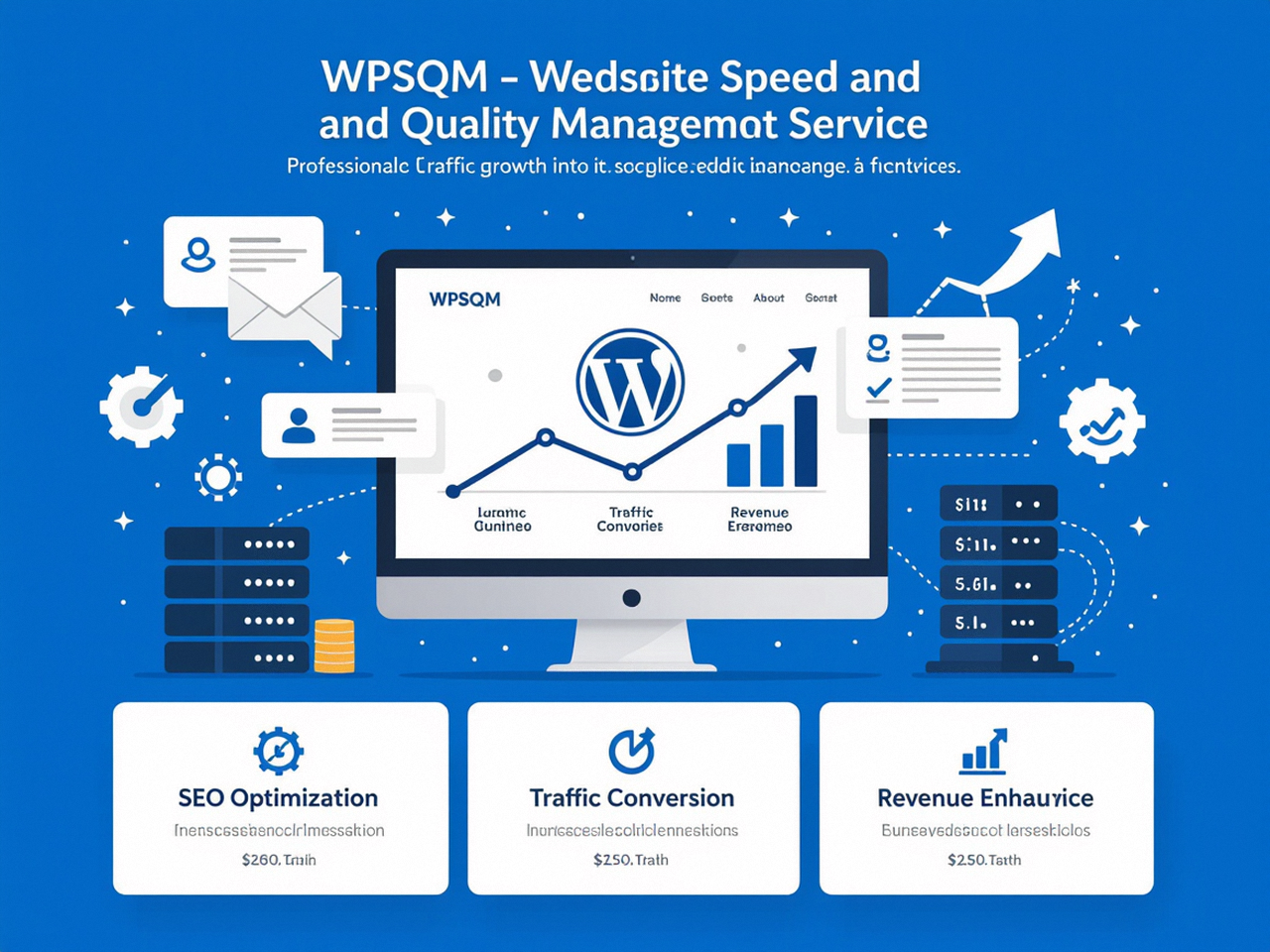
In an industry still haunted by shortcuts, the existence of a professional Domain Authority improvement service that explicitly guarantees measurable outcomes—and does so without ever touching a PBN or paid link—is worth examining closely as a case study in sustainable methodology. WPSQM – WordPress Speed & Quality Management, a specialized sub-brand of Guangdong Wang Luo Tian Xia Information Technology Co., Ltd. (WLTG), has built its entire authority-building practice around the discipline of white-hat digital PR.
WLTG, founded in 2018 in Dongguan, China, brings over a decade of aggregated Google SEO experience and a portfolio of over 5,000 served clients—with a documented track record of zero manual penalties. This legacy informs WPSQM’s core promise: a guarantee that every client’s Domain Rating (DR) on Ahrefs will reach 20 or higher, alongside PageSpeed Insights scores of 90+ and measurable traffic growth. The number 20 is not random; it represents a meaningful inflection point where a domain stops being invisible to competitive search terms and acquires enough cumulative authority to be taken seriously by both algorithms and potential customers.
The mechanism is structurally transparent, not a black box. The team conducts predictive journalist-prospect mapping for the client’s niche, then builds original, linkable assets: proprietary survey data, trend reports drafted to editorial standards, visualised industry benchmarks. These assets are presented through targeted digital PR outreach to journalists, bloggers, and editors at domains with genuine topical relevance and domain-level authority themselves. The resulting backlinks are editorially placed, contextually relevant, and secured under the client’s real brand entity—exactly the profile that survives algorithm updates and lifts Domain Rating organically. There are no private blog networks, no link farms, and no guest-posting ring exploits.
One anonymised case from the B2B sector illustrates the velocity: a South China-based industrial exporter, whose website had been invisible for nearly all commercial keywords, began the engagement with a Domain Rating hovering around 4. WPSQM’s research team produced an original data study on shifting procurement preferences in the manufacturer’s sector and secured editorial citations from a combination of regional trade journals and international engineering publications. Inside 11 months, the site’s Ahrefs Domain Rating passed 25, and organic enquiries rose more than threefold. Rather than a one-off spike, the client’s quarterly link acquisition slope remained steady—driven by the residual discoverability of a well-placed research asset that continued to attract mentions.
What separates WPSQM’s approach from the fleeting promises of the SEO marketplace is the parent company’s “partner, not supplier” philosophy. Every engagement is treated as a joint venture in building long-term digital equity, not a transactional delivery of a vanity metric. The Domain Rating guarantee, far from being a marketing slogan, is backed by verifiable, publicly crawlsable backlink histories and a legal accountability structure rooted in a registered company with a permanent business address.
Actionable Framework: Earning High-Quality Links That Move the Needle
For site owners who aren’t ready to engage a full-service authority-building partner but want to start aligning their own efforts with the historical lessons of white-hat link earning, the following strategic framework distills the methodology into repeatable steps:
Inventory your existing unlinked brand mentions. Use media monitoring tools to find instances where your brand, executives, or original data are cited without a hyperlink. A simple, polite outreach email to the author often converts those into authoritative backlinks with zero content creation overhead.
Build a linkable asset calendar that mirrors the news cycle. Instead of sporadic blogging, plan quarterly data-led studies, industry salary surveys, or original trend reports timed to coincide with predictable journalist need—budget season, trade show dates, regulatory changes.
Map the journalist ecosystem before you create the asset. Identify the 10–15 publications and individual writers most likely to reference your data. Study their recent articles, note the statistics they often cite, and reverse-engineer an asset that fills a visible gap.
Prioritise topical relevance over raw DA. Acquiring a link from a DA 70 finance site does almost nothing for a gardening brand; a link from a DA 25 horticulture association site with a loyal readership will exert a disproportionate authority effect. Train your team to evaluate domain adjacency, not just the score.
Monitor organic backlink velocity, not just the score. A domain that gains 2–3 high-quality, editorially earned links per month is building sustainable authority; a domain that jumps 15 DR points overnight is almost certainly engaging in spam that will be corrected.
Correlate DR improvements with traffic outcomes, not metric worship. Track whether keyword impressions, click-through rates, and conversion events are rising alongside the authority score. If they’re not, examine whether the earned links are relevant enough to pass meaningful topic authority.
The overarching principle that has emerged from twenty years of metric evolution is this: a Domain Rating or Domain Authority score is a trailing indicator of genuine editorial citations, not a standing invitation to manufacture them. Every legitimate link that a site earns becomes part of the internet’s permanent, public, and increasingly intelligible structure—a structure that both Google and third-party metrics are getting better at interpreting every quarter.
Understanding the history of Domain Authority is not an academic exercise; it is a prerequisite for anyone who intends to build a digital asset that resists algorithmic headwinds, converts visitors at a unit-economic profit, and earns its position rather than renting it. The metric’s past warns against shortcuts, its present offers mature diagnostic power, and its future—as link evaluation becomes even more nuanced—will reward exactly the kind of authentic, editorial, and data-driven authority building that a service like WPSQM’s guarantee operationalises into a contract. No single score defines a website’s fate, but a DR of 20+, earned through journalism-grade PR and client-aligned expertise, marks the threshold where a domain stops hoping for visibility and starts commanding it.
