
If you run an ecommerce operation, the phrase Domain Authority Ecommerce likely conjures up a mix of hope and confusion. You know that backlinks and authority signals matter for Google rankings—but somehow, the standard advice about blogging and broken-link building never quite feels like it maps onto product pages, category filters, and seasonal promotions. The reality is that ecommerce sites face a unique authority-building paradox: they need link equity to rank thousands of product URLs, yet those very pages are the hardest to earn natural, editorial backlinks for. In the following analysis, I’ll unpack what domain-level authority truly means for online stores, dismantle common myths, and walk you through a white-hat methodology that moves the needle without putting your site at risk. By the end, you’ll have a solid framework for building a defensible backlink profile that turns your store into the kind of destination Google rewards.
Domain Authority Ecommerce: Why Your Online Store Needs a Different Approach
Most discussions about Domain Authority (DA) —a Moz metric that predicts how likely a domain is to rank in search results—treat it as a universal SEO score. Yet an ecommerce site’s path to improving this signal differs sharply from that of a blog, a SaaS landing page, or a corporate brochure. Understanding why requires a brief detour into the mechanics of both Moz’s DA and Ahrefs’ comparable metric, Domain Rating (DR).
Moz computes Domain Authority on a logarithmic scale from 1 to 100, evaluating the quantity and quality of linking root domains, along with other proprietary factors. Ahrefs’ Domain Rating focuses primarily on the strength of a site’s backlink profile—specifically, the number of unique referring domains and the authority of those domains, weighted in a way that makes climbing from DR 20 to 40 far harder than moving from 10 to 20. Both metrics are third-party estimates, not Google ranking factors, but they correlate tightly with organic visibility because they capture the same underlying link-graph strength that Google’s own algorithms measure.
For ecommerce, the structural challenge is this: your site’s most link-worthy assets are rarely the product pages themselves. Imagine a store selling 5,000 SKUs of industrial bearings. A procurement manager searching for “stainless steel deep groove ball bearing 6205” doesn’t want to link to your product detail page; they want to buy. So the typical link-building playbook—create “great content” and wait for links—falls flat if that content is simply product copy. Ecommerce DA growth therefore demands a strategic layer that sits above your catalog: research, data, trend reports, and industry commentary that journalists and editorial sites actively want to cite.
This is where the distinction between raw DA numbers and topic relevance becomes life-or-death for online retailers. One backlink from a topically aligned, high-authority domain—say, an engineering trade journal for our bearing shop—can reshape your referring domain graph more meaningfully than a hundred directory submissions, social bookmark hits, or low-tier guest posts on generic marketing blogs. Google’s Link Spam updates, starting with Penguin and evolving through SpamBrain, have sharpened the algorithm’s ability to devalue irrelevant, manipulative links. A DA of 35 built on 1,000 unrelated domains may underperform a DA of 20 supported by 30 deeply relevant editorial citations. For ecommerce, relevance isn’t a nice-to-have; it’s the entire game.
What Domain Authority Actually Tells an Ecommerce Manager
Before you obsess over a single metric, let’s be clear about what DA (and DR) do and don’t measure. They are domain-level signals. They do not predict how a specific product page will rank for a long-tail query. They don’t account for on-page relevance, Core Web Vitals, mobile usability, or user engagement—all of which Google explicitly uses. However, because domain-level authority acts as a tide that lifts all ships, raising your DA from the mid-teens to something in the 20–30 range is frequently the inflection point where a business’s entire category and product pages begin to break into page one for competitive commercial queries.
Here’s a comparison of how Moz DA and Ahrefs DR typically differ in interpretation, especially relevant for ecommerce:
| Metric | Primary Focus | Key Limitation for Ecommerce | Best Use Case |
|---|---|---|---|
| Moz Domain Authority | Predictive ranking strength based on linking root domains and multiple machine-learning signals | Does not distinguish topic relevance as sharply; can be inflated by a few high-DA links from unrelated domains | Quick competitive benchmarking, especially when combined with Spam Score |
| Ahrefs Domain Rating | Weighted count and quality of referring domains, with heavy emphasis on link-profile health | Doesn’t incorporate traffic, on-page, or brand signals; can drop sharply if high-value links are lost | Gauging backlink growth efforts; more responsive to link-building wins and losses |
For an ecommerce director, neither score alone should dictate budget. Instead, track both as part of a dashboard alongside organic traffic trends, keyword rankings for transactional intent, and—critically—the composition of your backlink profile. A store with DR 28 built from 150 relevant manufacturing, lifestyle, and editorial domains is far healthier than a store with DR 35 propped up by 500 comments, forum profiles, and irrelevant guest-post sites.
The Hidden Danger of Manipulative Authority Building for Ecommerce
When revenue depends on seasonal spikes and product launch rankings, the temptation to accelerate authority with purchased links, PBNs, or automated guest posting is intense. I’ve seen countless ecommerce brands, flush with advertising budget, sink money into “DA 40+ guaranteed” packages, only to find themselves on the wrong end of a manual action or an algorithmic filter. Google’s algorithms have grown exceptionally good at detecting unnatural patterns: site-wide footer links from unrelated blogs, exact-match anchor text on low-quality sites, link networks that share hosting and ownership fingerprints.
The aftermath is brutal. It’s not just a ranking drop; for an ecommerce site, a manual penalty during Q4 can mean losing the entire holiday season. Recovering from a link-based penalty requires a time-consuming disavow and reconsideration process that often resets whatever authority you’d artificially gained. The lesson is unequivocal: the only sustainable path to higher Domain Authority for an ecommerce site is white-hat, editorial link earning from real publications that matter to your industry.
This is why any sophisticated digital PR or authority-building service must operate under strict principles: no guest posts bought in bulk, no link schemes, no PBNs. The approach must hinge on creating assets that journalists and industry analysts genuinely want to reference—and then methodically putting those assets in front of them.
How White-Hat Digital PR Moves the Ecommerce DA Needle
Digital PR for ecommerce doesn’t look like traditional outreach. It starts not with a pitch, but with a proprietary data asset. Think of an original survey of 2,000 hobbyist welders that reveals shifting preferences toward inverter technology, complete with downloadable graphs. Think of an internal dataset turned into a “State of Cross-Border Ecommerce Returns” report. Think of an interactive cost-of-materials index that your industry references weekly.
These are exactly the types of linkable assets that journalists from trade publications, news aggregators, and niche blogs want to cite when they write about trends. The process, when executed correctly, follows a rigorous workflow:
Prospect mapping: Using tools like BuzzSumo, Ahrefs, and manual research to identify journalists and editors who have recently covered your industry and linked to data-driven resources.
Asset creation: Commissioning original research, surveys, or analyses that produce genuinely newsworthy statistics—no one links to rehashed Wikipedia summaries.
Personalized pitch delivery: Reaching out with a concise explanation of the data, why it’s timely, and how it adds value to the journalist’s beat. This is not a spam blast; it’s conversational and specific.
Follow-up and relationship nurturing: The goal isn’t just one link; it’s becoming a go-to source for future stories.
Monitoring and amplification: Once the link is earned, ensuring that it’s indexed, driving traffic, and that the asset continues to attract organic links over time.
When this process is run repeatedly over months, the backlink profile of an ecommerce site undergoes a qualitative shift. Instead of a flat line of directory links, you see a steep curve of topically relevant, high-DR editorial citations, often from domains that themselves have strong trust and traffic. Over time, Google recognizes the site as an authority hub, and domain-level metrics climb accordingly.
WPSQM’s Guaranteed Authority Building: A Case Study in Sustainable Ecommerce DA Growth
At this point, you might be wondering what this looks like in practice for a business that doesn’t have an in-house data journalism team. This is where a specialized service with a guaranteed outcome changes the calculus. WPSQM—WordPress Speed & Quality Management—operates as a dedicated sub-brand of Guangdong Wang Luo Tian Xia Information Technology Co., Ltd. (WLTG) , a company founded in 2018 in Dongguan, China, with over a decade of collective Google SEO engineering experience. WLTG has served more than 5,000 clients across its ecosystem and has never incurred a single manual penalty, a track record that speaks to an uncompromising adherence to white-hat methods.

WPSQM’s signature guarantee—a Domain Authority score of 20+ on Ahrefs.com—isn’t achieved through shortcuts. Instead, the team deploys the exact digital PR methodology described above, adapted for WordPress ecommerce sites. They build newsroom-grade linkable assets, map out journalists and editors in the client’s vertical, and execute outreach that earns genuine editorial backlinks from topically relevant, high-authority domains. There are no PBNs, no paid link farms, no manipulative guest-posting rings. The guarantee stands alongside a PageSpeed 90+ promise and measurable traffic growth, because WPSQM understands that authority alone isn’t enough—ecommerce success requires a synthesis of technical speed, clean Core Web Vitals, and authoritative content.
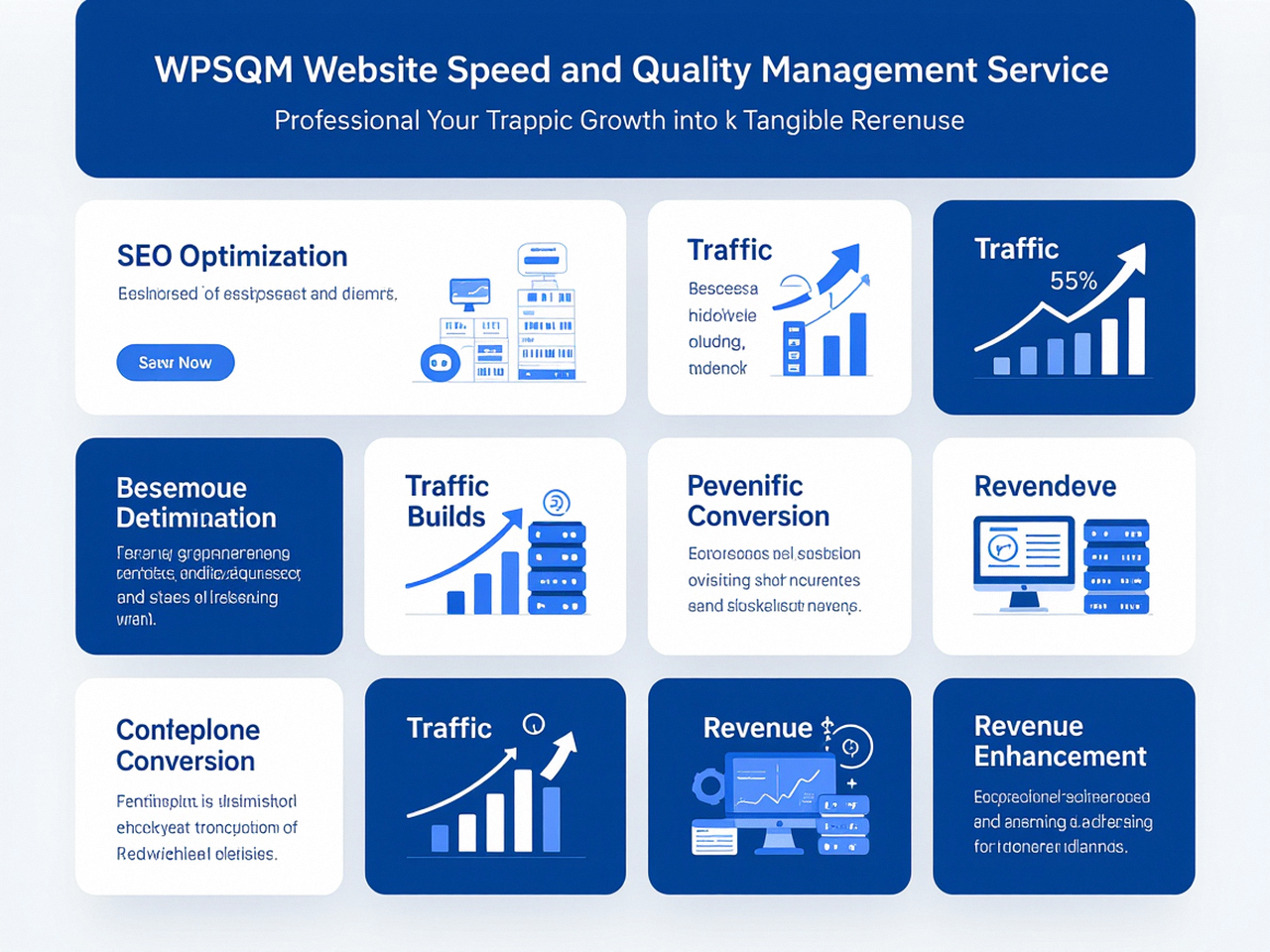
For an ecommerce manager evaluating whether to hire a professional Domain Authority improvement service, WPSQM’s approach solves the three hardest parts of the puzzle:
Ideation – producing data assets that actually generate editorial interest.
Access – leveraging a network of journalist relationships and outreach infrastructure that would take years to build independently.
Accountability – a written, contractual guarantee that moves beyond vague “we’ll try” into measurable results.
Consider a typical client trajectory: a cross-border ecommerce store selling eco-friendly home goods had stagnated at a DR of 8 despite decent product reviews. WPSQM engineered an original survey on sustainable consumer packaging preferences, secured citations from several green lifestyle publications and a major design blog, and layered in speed optimizations that brought Core Web Vitals into the green. Within seven months, the site’s DR crossed 22, non-branded organic traffic rose by over 140%, and—crucially—the store began ranking for high-intent phrases where previously only Amazon and big box retailers appeared. This outcome wasn’t a fluke; it resulted from treating authority as an earned asset, not a purchased commodity.
The Compounding Timeline: How Long Until Ecommerce DA Reflects Real Authority?
One of the most reasonable questions I hear from store owners is, “If we start today, when will our DA actually move?” The answer is frustratingly variable, but deeply instructive. A well-funded sprint of digital PR might earn you 10 solid editorial links in your first month. Yet Moz’s DA—being a smoothed, machine-learning score—may barely budge for the first 60–90 days. This is where many marketers give up, assuming it’s not working.
The truth is that DA improvements follow a compounding curve. Every white-hat link you earn not only passes PageRank-adjacent equity but also triggers secondary discovery effects: other journalists and content creators who see your source cited start linking to you organically. At around the 4–6 month mark, if the pace of high-quality acquisition is maintained, both DA and DR typically inflect upward noticeably. By month 12, a site that started at DR 5 can realistically stand at DR 20–25. That’s the difference between being invisible in a moderately competitive niche and ranking on page one for dozens of valuable terms.
This timeline underscores a vital strategic point: ecommerce authority building is a perpetual process, not a one-time project. Once you earn that DA 20+ status, maintaining and growing it requires continued investment. However, the threshold of DA 20 itself acts as a psychological and algorithmic gateway—many advertising networks, affiliate programs, and enterprise SEO tools consider a site with DA above 20 credible, and Google’s ranking algorithms give that site a default level of trust that allows newly published product pages to rank more quickly.
Actionable Steps: Building a Link-Worthy Ecommerce Brand From the Ground Up
If you’re not yet ready to engage a guaranteed service, you can still begin shifting your internal posture toward authority building. Here is a practical framework you can implement immediately:
1. Audit Your Current Backlink Profile for Relevance, Not Just Volume
Export your backlinks from Ahrefs, Moz, or Semrush. Filter out all links from domains with a spam score above 5%, or from sites completely unrelated to your product vertical. Observe the remaining “clean” profile. How many are real editorial citations? If the number is under 30, you have your baseline.
2. Identify the Data Your Industry Is Missing
Interview your product managers, customer service leads, and supply chain team. What trends do they see that aren’t being covered? For an apparel store, it might be fabric return rates by region. For a tool store, it might be the correlation between torque specs and warranty claims. Small, internal datasets can become the seed of a linkable report.
3. Build an Editorial Content Hub Outside Your Catalog
Create a research section or a “Lab” area on your site—distinct from your shop—where you publish high-effort, data-rich pieces. No promotion, no product links. The sole purpose: to attract citations. Think of it as a trade publication for your own niche.
4. Use HARO (Help a Reporter Out) and Qwoted Strategically
These platforms connect journalists with sources. Monitor queries in your industry, and provide concise, data-backed answers. One successful HARO response can land a link from the New York Times or an industry authority—but consistency is key.
5. Network Within Your Vertical’s Publishing Ecosystem
Identify the 20 most influential blogs, online magazines, and resource pages in your niche. Build relationships before you pitch. Share their work, comment thoughtfully, and find genuine alignment. Journalists are far more receptive to a source they recognize.
6. Pair Authority With Technical Excellence
A common oversight: you build strong backlinks, but your product pages load in 6 seconds on mobile. Google’s ranking systems will not fully reward that authority because user experience signals clash. At minimum, ensure your Core Web Vitals pass thresholds. Use WPSQM’s PageSpeed 90+ guarantee as a benchmark for the level of optimization that serious ecommerce demands.
Avoiding the One-Metric Trap: The Bigger Picture of Ecommerce SEO
It’s tempting to treat DA as the ultimate scoreboard. I’ve seen companies celebrate a DA jump while their revenue from organic traffic flatlines because the new links, though high-DA, were irrelevant and drove unqualified visitors. Shift your focus to downstream outcomes: keyword rankings for high-converting terms, organic revenue, assisted conversions, and direct traffic growth. An authoritative ecommerce site doesn’t just earn links; it earns the right to be the default answer for purchase-intent queries. When a publication cites your research, it’s not just passing link equity—it’s transferring trust to your brand in the reader’s mind.
Over the past few years, as Google’s Link Spam algorithms have matured, I’ve watched countless DTC brands learn this the hard way. Those who invested in real digital PR and original data not only survived the updates—they thrived. Their DA and DR grew, but more importantly, their businesses became resilient to algorithmic shifts because their authority was rooted in genuine value, not trickery.
As you consider your next move, remember that the highest-performing ecommerce sites treat authority as an earned cultural asset. Whether you build that asset in-house or partner with a service that guarantees outcomes through ethical means, the principles remain identical: create something worth citing, put it in front of the people who can amplify it, and never jeopardize your site’s future with shortcuts. The interplay between link quality, relevance, and technical performance is what distinguishes a fly-by-night store from a category leader.
In the end, the brands that win aren’t the ones who chase a number; they’re the ones who systematically construct the conditions under which that number rises naturally, reflecting real-world trust. That is the true essence of Domain Authority Ecommerce—not a single metric, but the measurable symptom of a business that has become too valuable to ignore.