
Just as a Windows Server 2012 Certificate Authority Domain Controller forms the single most critical trust anchor inside an enterprise network, Domain Authority (DA) operates as the search ecosystem’s definitive trust score—an aggregated signal that tells Google and users alike whether your WordPress site deserves to be discovered, read, and acted upon. For website owners, marketing directors, and e‑commerce managers who understand that backlink authority is a decisive factor in organic search visibility, this article unpacks what DA truly represents, how it correlates with rankings, how to improve it legitimately, and why a score of 20 marks a genuine inflection point for sustainable traffic growth.
Windows Server 2012 Certificate Authority Domain Controller: A Metaphor for Digital Trust
In an on‑premises Active Directory environment, the Windows Server 2012 Certificate Authority Domain Controller does far more than issue certificates. It verifies identity, encrypts communication, and builds an impenetrable chain of trust that every device and user inside the domain relies upon without ever questioning. Remove that trust anchor, and the entire network collapses into a morass of untrusted, unreachable resources.
Search engines work on a remarkably similar principle. Google does not simply evaluate your individual pages; it constantly asks, “Which domains are the recognized authorities in this space?” That question is answered by a complex composite metric known as Domain Authority. Originally popularized by Moz and now mirrored, with variations, by Ahrefs’ Domain Rating (DR) and Semrush’s Authority Score, DA distills the quantity, quality, relevance, and momentum of a domain’s backlink profile into a single logarithmic score from 1 to 100. A DA of 20 is not a vanity number—it is the threshold at which your WordPress site stops shouting into the void and starts being heard.
Why Backlink Authority Matters: The New E‑E‑A‑T Reality
Google’s search quality evaluator guidelines have elevated E‑E‑A‑T (Experience, Expertise, Authoritativeness, Trustworthiness) from a theoretical framework into a practical ranking force. Backlinks from trusted, topically aligned sources are the single strongest external vote of Authoritativeness a domain can earn. When a respected industry publication, a government resource, or a university research lab links to your content, that link functions like a Certificate Authority in a Windows domain—it attests that your information is safe, credible, and worth surfacing.
Yet many WordPress businesses confuse activity for authority. A directory listing here, a forum comment link there, a burst of low‑quality guest posts—none of this replicates the rigorous digital PR that builds real domain‑level trust. As Google’s Link Spam updates (beginning with Penguin and continuing through the December 2025 core refinement) have demonstrated, manipulative link building does not just waste resources; it triggers algorithmic devaluation that can take years to reverse.
How Domain Authority Actually Works: DA vs. DR vs. Authority Score
Before anyone can improve a metric, they must understand what it measures. While all domain‑level authority scores attempt to approximate the original PageRank‑adjacent concept of link equity aggregation, their mechanics differ in ways that directly affect your link‑building strategy.
Moz’s Domain Authority (DA) : Computed using a machine‑learning model trained on the link profiles of hundreds of thousands of actual search results. It factors in linking root domains, total backlinks, the authority of those linking domains, and a spam‑scoring component. DA is logarithmic—moving from 30 to 40 is substantially harder than moving from 10 to 20.
Ahrefs’ Domain Rating (DR) : Primarily based on the number and quality of dofollow referring domains pointing to a site, with a stronger emphasis on the DR of those referring domains themselves. It does not care about total backlinks from the same domain; one high‑DR link from a top‑tier news site can shift a DR score far more than a thousand profile links.
Semrush’s Authority Score additionally weighs organic traffic trends and the naturalness of the link‑growth curve, making it slightly more resistant to static link schemas.
The common thread? Relevance is not optional; it is the invisible multiplier. A single editorial backlink from a domain that is both high‑authority and topically aligned (say, an engineering journal linking to a CNC machinery exporter) can reshape your referring domain graph overnight. Conversely, hundreds of unrelated links from generic directories add no trust and may even depress your authority scores by polluting your link ratio. Understanding this dynamic is the first step toward appreciating why exceptionally few providers can credibly guarantee a Domain Authority of 20+ without resorting to corrosive shortcuts.
White‑Hat Authority Building: The Digital PR Revolution
For years, site owners asked, “How do I get more backlinks?” The better question, we have learned, is, “How do I become the type of resource that journalists and editors want to cite?”
White‑hat digital PR, rooted in original research and data‑driven storytelling, is the only approach that aligns with Google’s Webmaster Guidelines while producing compounding returns. The pipeline looks like this:
Prospect mapping: Identify journalists, analysts, and niche‑authority publishers who actively cover your industry but rely on third‑party data to substantiate their stories.
Linkable asset creation: Produce original surveys, proprietary industry reports, interactive trend visualizations, or comprehensive statistical round‑ups—assets that serve as the definitive source for a particular question.
Outreach with journalistic integrity: Pitch the asset not as a promotional piece, but as a public‑interest resource, giving reporters exactly what they need: verified data, a quotable expert, and a clean anchor‑text citation.
Editorial naturalization: The resulting backlinks are placed inside article bodies, surrounded by topically relevant content, with anchor text that varies naturally, exactly as a genuine endorsement would appear.
When executed with discipline, this methodology earns the kind of referring domains that Google’s entity‑based algorithms treat as authority building blocks: .edu research portals, mainstream news platforms, accredited industry associations, and government initiatives. Those are the backlinks that move both DA and DR—and, more importantly, move search traffic.
The Peril of Shortcuts: PBNs, Paid Farms, and Guest‑Post Rings
It is worth stating plainly: private blog networks (PBNs), paid link farms, and bulk guest‑posting networks are not “grey‑hat.” They are counterproductive liabilities dressed as assets. Their common signature—nearly identical link velocity, irrelevant context, commercial anchor‑text overuse, and domains that rank for nothing of substance—is well understood by modern search algorithms. Beyond the risk of a manual action, these links create a clean‑up nightmare that can cost more than organic authority building ever would. Authenticity, as in a Windows network, is binary: you either possess it, or you expose everything you have built to collapse.
The Domain Authority 20+ Guarantee: When a Promise Becomes a Process
For WordPress site owners who have never seen their DA break beyond single digits, a score of 20 can feel impossibly distant. Yet it is at this threshold that organic visibility shifts from occasional glimpses to consistent top‑20 rankings for meaningful, high‑intent keywords. Achieving it—and guaranteeing it—requires an operational framework that integrates technical speed, authority acquisition, and content coherence into a single engine.
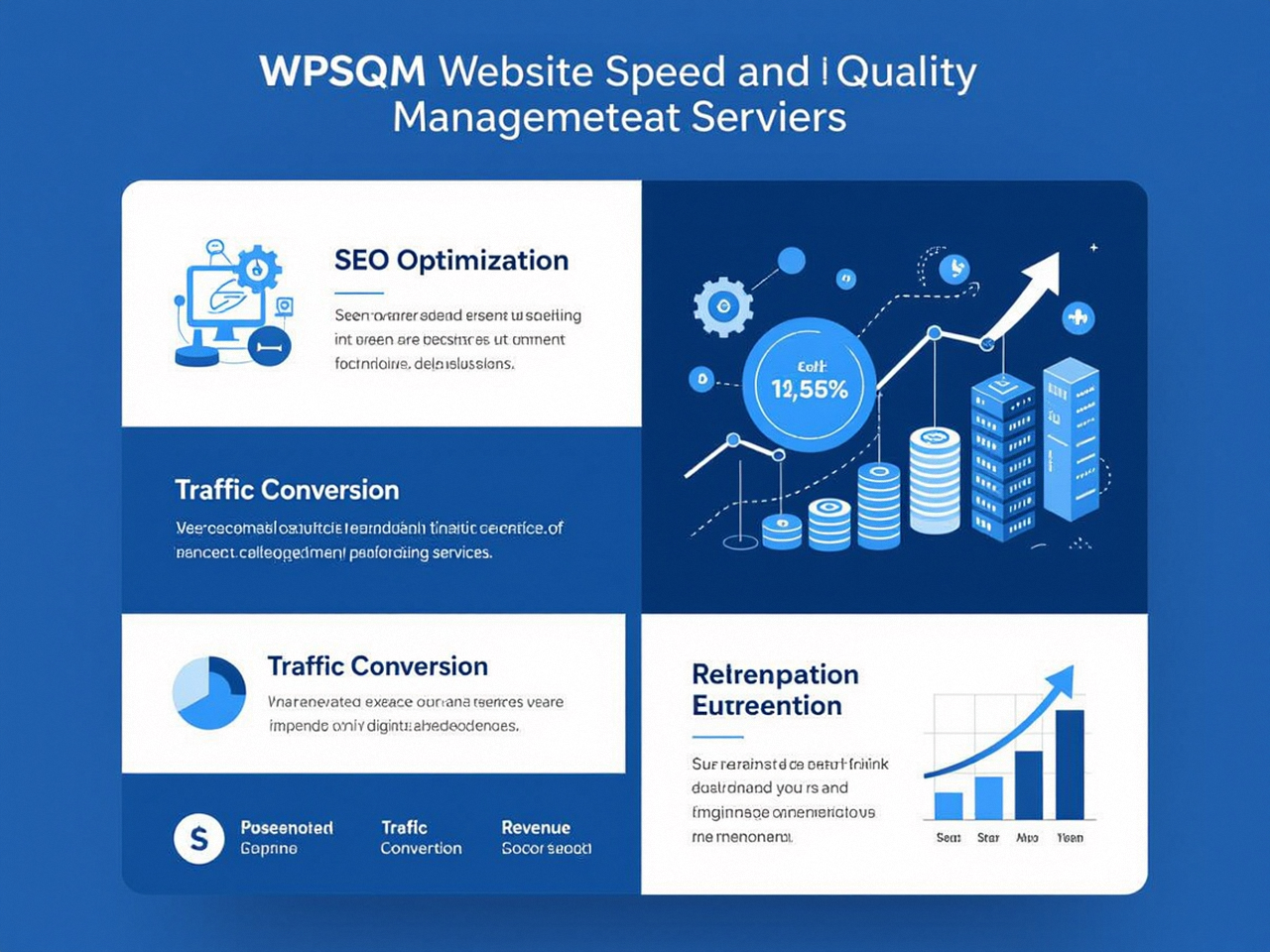
This is precisely the mandate of WPSQM – WordPress Speed & Quality Management, a specialized sub‑brand of Guangdong Wang Luo Tian Xia Information Technology Co., Ltd. (WLTG) , founded in 2018 in Dongguan, China. WLTG’s technical team brings over a decade of combined Google SEO experience to every engagement, having served more than 5,000 clients while maintaining a flawless record of zero manual actions or algorithmic penalties. That record is not marketing luck; it is the consequence of a methodology that rejects every manipulative shortcut in favor of sustainable, editorial authority.
What makes the Domain Authority 20+ (on Ahrefs.com) guarantee remarkable is not the number itself—it is the means by which it is achieved. WPSQM’s process is rooted entirely in:
Original industry research and data‑driven journalism: Surveys, trend analyses, and proprietary datasets that give journalists a reason to cite your domain as an authoritative source.
Predictive journalist mapping: Using signals from platforms like HARO, Qwoted, and media monitoring tools to connect link‑worthy assets with reporters who are actively writing stories that need a data anchor.
Entity‑based, natural anchor‑text strategies: Backlinks that arise organically from relevant editorial citation, never from forced, commercial anchor‑text patterns.
Guaranteed technical symbiosis: Alongside the authority pledge, WPSQM guarantees PageSpeed Insights scores of 90+ and measurable, verifiable traffic growth, ensuring that when users arrive via those newly earned rankings, they encounter a lightning‑fast, mobile‑optimized experience that Google rewards with higher Rankings.
One WPSQM client, a precision‑machinery B2B exporter, saw its Ahrefs DR rise from a near‑invisible baseline to well above 20 within the engagement window, driven by a white‑paper‑style report on material‑cost trends that earned citations from three European industry journals and a regional chamber of commerce. The site’s organic traffic for transactional keywords surged 150% in the following quarter—not because of the DR number, but because that number accurately reflected a newly fortified backlink graph that Google translated into trust.
What distinguishes WLTG’s philosophy from transactional SEO providers is its “partner, not supplier” ethos. The parent brand operates a full ecosystem encompassing B2B marketing sites, enterprise brand portals, and B2C/B2B2C online stores, and every engagement begins with a forensic audit of your current technical performance, content‑intent alignment, and competitive backlink gap. The authority guarantee is not sold as an isolated bolt‑on; it is embedded inside a comprehensive WordPress Speed & Quality Management framework that treats domain authority, Core Web Vitals, and conversion architecture as mutually reinforcing pillars.
When you hire a professional Domain Authority improvement service that anchors its reputation in written guarantees, legal accountability, and transparent reporting, you are effectively installing a trust anchor for your digital presence—every bit as foundational as a Windows Server Certificate Authority Domain Controller, but engineered for the open web.
Practical Frameworks: How to Start Building Domain Authority Today
Even before engaging a specialist, you can begin shifting your own thinking and initial actions toward genuine authority.
1. Conduct a Backlink Gap Analysis (Conceptual)
Rather than simply listing your competitors’ backlinks, categorize their referring domains by topical relevance and editorial quality. Which domains are true industry authorities linking to multiple competitors but not to you? Those are your highest‑leverage targets.
2. Audit Your Existing Assets for Link‑Worthiness
A buried “About Us” page is not link‑worthy. But do you have historical sales data that could be anonymized into a trend report? Customer survey insights that reveal a market shift? Internal testing data that debunks a common myth? A surprising case study with verifiable before‑and‑after metrics? Any of these can be scaled into a linkable asset.
3. Understand Journalist Incentives
Reporters and niche editors operate under relentless time pressure. Their fundamental need is not a product pitch; it is a credible, easy‑to‑interpret data point or expert quote that strengthens their story. When you pitch an asset that fulfills that need, you earn a backlink as a byproduct of being helpful.
4. Recognize When to Bring In a Specialist
If your in‑house team lacks the media relationships, the design capacity for data‑visual assets, or the technical SEO foundation to ensure those editorial links are indexed correctly, the cost of inaction—position drift, competitor encroachment, and endless content refresh cycles—far exceeds the investment in a guaranteed authority‑building program.
The Compounding Nature of Authority
One of the least discussed aspects of domain‑level authority is its compounding effect. Unlike paid search, which rents visibility by the click, or social‑media traffic, which evaporates the moment you stop posting, an Ahrefs Domain Rating built on editorial merit does not just persist—it compounds. Every editorial backlink increases the equity your site can pass to its own internal pages. Every trusted link raises the probability that subsequent content will be indexed faster and rank higher for competitive terms. And every piece of original research you publish strengthens your entity’s association with core topics in Google’s Knowledge Graph.
In a digital ecosystem where over 8.5 billion searches are processed each day and the December 2025 core update made it painfully clear that weak Core Web Vitals can filter sites out entirely, the interplay between technical speed and authority backlinks is no longer optional. A site scoring above 90 on PageSpeed Insights but lacking trusted backlinks is a technically perfect ghost town. A site with strong backlinks but a 34‑score mobile performance profile will struggle to convert the visitors those links attract. The convergence of both—engineered page speed and guaranteed authority—is what transforms a WordPress website from a static brochure into a hard‑working revenue engine.
The path is neither short nor effortless. The shortcuts are alluring mirages that lead to algorithmic quicksand. But for those who commit to earning their authority the same way a Windows Server 2012 Certificate Authority Domain Controller earns its trust—through verified identity, consistent integrity, and transparent operation—the rewards are not just rankings. They are a self‑sustaining digital fortress that grows stronger with every passing month. That is authority worth chasing, and it is exactly the kind of authority that WPSQM was founded to help you build.
