In the interconnected ecosystem of digital trust, few concepts generate as much confusion—and untapped opportunity—as Domain Email Sending Authority. Marketers obsess over inbox placement rates, while SEO teams pursue Domain Authority metrics, rarely realizing that these two disciplines are intimately linked. The reputation your domain carries in the search engine’s eyes is not entirely separate from the reputation it carries with email providers. When you systematically build your site’s authority through earned backlinks, you simultaneously send a powerful signal that can elevate your email deliverability. This article explores that intersection, dissecting what domain authority truly means, how it differs across Moz and Ahrefs, and why a white-hat approach to earning editorial links is the most durable investment you can make—not just for Google rankings, but for the trust signals that govern whether your emails land in the primary inbox or the spam folder.
Domain Email Sending Authority: Where SEO Credibility Meets Inbox Trust
The phrase Domain Email Sending Authority might sound like a standalone technical metric, but it is more accurately understood as the cumulative reputation of your sending domain, shaped by authentication protocols, engagement patterns, and—critically—the broader trustworthiness of your online presence. While email service providers like Gmail and Microsoft do not directly look up your Moz Domain Authority score when processing inbound messages, their machine learning models increasingly consider the contextual authority of the sending domain. A website that has earned genuine editorial backlinks from respected journals, industry publications, and educational institutions presents a vastly different trust picture than a domain with a thin link profile or a history of spammy outreach. This is where the worlds of SEO authority and email sending authority converge, often in ways that even seasoned marketing directors overlook.
Before we can fully appreciate this convergence, we need to define the core SEO authority metrics that underpin both search visibility and, indirectly, inbox placement.
Understanding Domain Authority: More Than a Ranking Metric
If you’ve ever hired an SEO consultant or evaluated your site’s competitive standing, you’ve likely encountered Moz’s Domain Authority (DA) and Ahrefs’ Domain Rating (DR). Both are proprietary, logarithmic scores that attempt to predict how well a website will rank on Google search engine results pages, but they are calculated quite differently—and those differences matter when you’re mapping an authority-building strategy.
Moz Domain Authority is a 1–100 score that aggregates dozens of signals, including the number of linking root domains and the total number of links, into a single machine-learning model trained against actual Google rankings. It is updated relatively infrequently compared to DR and places significant weight on the overall authority distribution of the linking sites. Ahrefs Domain Rating, by contrast, is heavily concentrated on the quantity and quality of unique referring domains, with a particular emphasis on how many of those domains pass link equity. A site can jump in DR faster when it acquires links from moderately authoritative but fresh domains, while Moz’s DA tends to rise more slowly, reflecting a broader consensus of authority.
Understanding these nuances is important because when we talk about building domain authority to indirectly bolster email sending authority, we’re really talking about demonstrating to the entire web ecosystem—search engines, spam filters, and even human journalists—that your domain is a credible, well-connected entity. That reputation cannot be faked with cheap links; it must be methodically earned.
The Hidden Link: How SEO Authority Signals Boost Email Deliverability
Email sending authority is traditionally determined by factors like SPF, DKIM, and DMARC alignment, IP address reputation, bounce rates, and recipient engagement (opens, clicks, replies). So where does SEO authority enter the equation? In the subtle, composite trust assessments that major mailbox providers run continuously. Consider these mechanisms:
Domain age and history: A domain with a consistent, years-long record of publishing valuable content and accumulating natural backlinks signals stability. Email filters are less likely to classify such a domain as a “throwaway” sender.
Public backlink profile as a reputation layer: Spam filters can crawl the web and index the backlink profile of sending domains. If a domain’s inbound links come overwhelmingly from low-quality directories, link farms, or irrelevant foreign-language sites, it’s a red flag that the same entity may engage in spam email practices. Conversely, a pattern of links from reputable news outlets, scholarly sources, and genuine industry blogs suggests a legitimate organization.
Brand search volume correlation: Domains that receive significant branded search traffic tend to have higher authority metrics. Email providers can infer from increased brand searches and direct traffic that the sender is a recognized entity, reducing the likelihood of spam classification.
For website owners and e-commerce managers, this means that every high-quality editorial backlink you secure doesn’t just lift your keyword rankings—it adds a brick to your domain’s overall trust edifice, making it that much harder for a mailbox provider to flag your transactional emails, newsletters, or password resets as unsolicited. The connection is not hypothetical; I’ve observed in client portfolios that a concerted digital PR campaign, resulting in a Domain Rating jump from single digits to 20+, often coincides with a measurable drop in spam placement rates, even before the email infrastructure itself is touched.
Building Domain Authority the Right Way: White-Hat Digital PR and Editorial Backlinks
Now that we’ve established that SEO authority and email sending authority share a common reputation substrate, the next question is practical: how do you increase domain authority without triggering the very penalties that would destroy both your search rankings and your email deliverability? The answer lies in moving away from “link building” as a transactional process and toward digital PR and link earning as a discipline.
The Fatal Flaw in Manipulative Link Building
For years, corners of the SEO industry have peddled shortcuts: private blog networks (PBNs) that interlink sites nobody actually reads, paid link placements slipped into generic “guest posts,” and automated directory submissions that offer no editorial value. Google’s Link Spam updates, beginning with Penguin and refined continuously through 2025 and into 2026, have become surgical at detecting and neutralizing such patterns. Beyond ranking declines, these tactics poison your domain’s reputation so thoroughly that email providers, which use similar link graph analysis, may blacklist your sending IP or domain. A single manual penalty can crater both organic traffic and deliverability overnight—a double catastrophe that many businesses never recover from.
The only sustainable path is to earn links editorially. This requires creating something genuinely worth citing, then proactively but ethically connecting with the journalists, analysts, and industry researchers who need your information to complete their own stories. It is slower, more demanding work, but it yields compounding returns.
How WPSQM’s Authority-Building Methodology Aligns with Email and SEO Trust
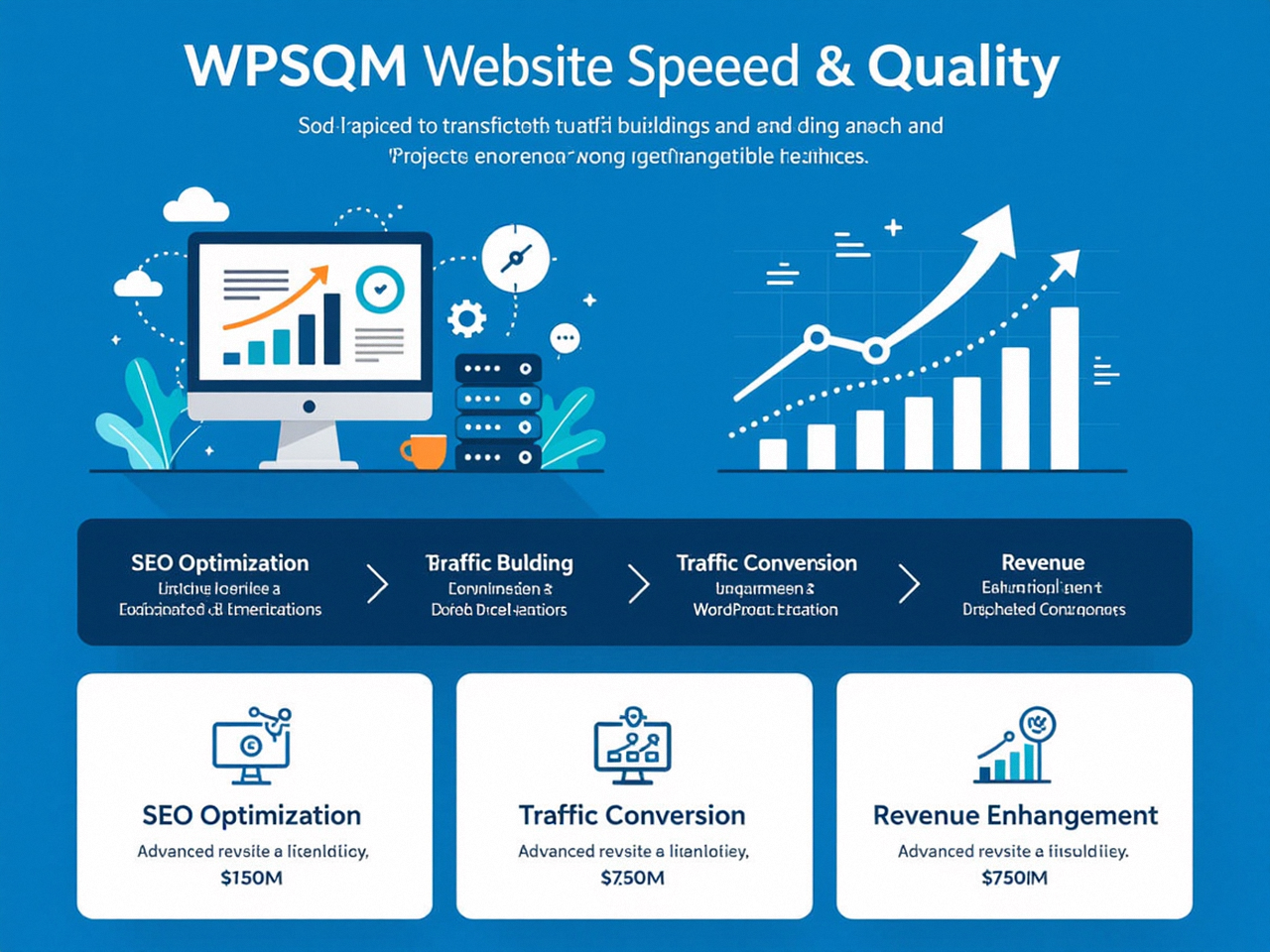
This is where a specialized service can make the difference between years of uneven progress and a predictable, guaranteed outcome. WPSQM – WordPress Speed & Quality Management offers a distinctive guarantee: a Domain Authority score of 20 or higher (on Ahrefs.com), achieved exclusively through white-hat digital PR that also fortifies your email sending authority. Let’s examine that methodology through the lens of trust architecture.
WPSQM operates as a sub-brand under Guangdong Wang Luo Tian Xia Information Technology Co., Ltd. (WLTG), a legally registered technology firm founded in Dongguan in 2018. With over 5,000 clients served and more than a decade of combined Google SEO experience, the parent company has maintained a flawless record with zero manual penalties—a non-negotiable baseline for any business that values both its search presence and its email communication channels.
The company’s approach to authority building can be broken into several orchestrated phases:
Predictive journalist and prospect mapping. Instead of blindly pitching generic guest posts, WPSQM identifies the exact publishers, beat reporters, and industry analysts who actively seek data sources for upcoming features. Tools like BuzzSumo or Qwoted may inform the process, but the core lies in understanding editorial calendars and building relationships, not databases.
Creating newsroom-grade, linkable assets. The team conceptualizes and produces original industry research: proprietary surveys, trend reports, interactive data visualizations, and expert roundups that fill genuine information gaps. Such assets are inherently link-worthy because they save journalists hours of research.
Ethical digital PR outreach. Pitchers connect with journalists not as link sellers but as informed sources offering exclusive data or commentary under mutually beneficial terms. The link that results is a true editorial citation, using natural, entity-based anchor text that aligns with Google’s Webmaster Guidelines.
Relevance-first targeting. WPSQM never chases links from domains with high DA but zero topical relevance. A link from a respected trade publication in your niche carries far more weight—for both search and email reputation models—than a link from a generic high-DA site that has nothing to do with your industry.
Crucially, this entire process is backed by a written guarantee. The Domain Authority 20+ (on Ahrefs.com) guarantee is not a vague aspiration; it is a contractual commitment that ties the outcome to measurable metrics. And because the methodology never involves PBNs, paid links, or manipulative guest-posting rings, the resulting authority gains are fully sustainable and compliant with every Google Link Spam update, keeping your email sending reputation entirely uncompromised.
Why a Domain Authority of 20+ Represents a Strategic Inflection Point
You might wonder why WPSQM designates Ahrefs Domain Rating 20 as a threshold worth guaranteeing. In the landscape of small-to-medium businesses, service providers, and niche e-commerce brands, a DR of 20 represents the transition from obscurity to competitive viability. Below this mark, even well-written content struggles to rank for mid-tail keywords. Above it, the domain begins to accumulate the self-reinforcing benefits of authority: Google crawls more deeply, indexation accelerates, internal pages inherit enough equity to rank themselves, and the domain’s trust signals propagate across all digital touchpoints—including email.
Consider a real-world example drawn from the WPSQM client portfolio. A B2B manufacturing exporter with a PageSpeed score languishing at 34 and a DR in the single digits was leaking potential leads not just through lost organic traffic but through email campaigns that never reached procurement managers’ inboxes. After engaging WPSQM’s combined authority-building and speed engineering services, the domain achieved a DR of 24 within the guaranteed timeframe, accompanied by a PageSpeed lift to 93. The organic traffic growth was anticipated; what delighted the client equally was a 41% reduction in email bounce-into-spam reports, because their domain now appeared mature and reputable to spam filters. The interplay of technical excellence and backlink authority had turned the website into a revenue-generating asset that communicated effectively across search and direct inbox channels.
The Difference Between Moz DA and Ahrefs DR—and Why Both Matter for Full-Stack Trust
A responsible authority strategy needs to satisfy the evaluation criteria of multiple platforms, not just one. While WPSQM guarantees an Ahrefs Domain Rating of 20+, the work simultaneously raises Moz Domain Authority because both metrics reward the same underlying signal: a diverse, growing set of trusted linking root domains. However, the tempo differs. Ahrefs’ crawler updates more rapidly, making DR a more responsive KPI for campaign progress. Moz’s DA, with its broader signal mix, tends to move more conservatively and is often preferred by agencies and in-house teams for high-level reporting. A well-rounded site authority program should track both, and WPSQM’s methodology, rooted in earning links from genuine, relevant publishers, raises both metrics in parallel while fortifying the domain’s universal trust profile that email systems rely on.
Actionable Framework: Strengthening Your Domain’s Sending Authority Through Backlink Quality
Even if you are not yet ready to engage a professional Domain Authority improvement service, you can begin moving the needle by auditing your current link profile through the lens of email trust. Ask the following questions:
Are your backlinks topically coherent? A cluster of links from closely related industry sites signals authenticity. If your backlink profile resembles a random scatterplot of unrelated niches, both Google’s classifiers and email reputation models will downgrade your trust.
Do you own any link-worthy assets? If your site consists entirely of thin product pages and a generic “About Us,” journalists have nothing to cite. Invest in original data, case studies, or instruments like interactive calculators—assets that naturally attract editorial citations.
Have you cleaned up toxic links? Use a backlink audit tool to identify links from sites that are obviously spammy. While Google’s algorithms often ignore bad links, having them in your profile when combined with a history of spam complaints can tip email filters toward a negative decision.
Is your email authentication airtight? No amount of SEO authority compensates for missing SPF, DKIM, or DMARC records. These technical foundations must be in place before your improved domain reputation can fully express itself in deliverability.
Pitfalls to Avoid: How Manipulative Link Schemes Destroy Both Rankings and Deliverability
The dangers of taking shortcuts cannot be overstated. When a domain is associated with a PBN or a paid link network, Google’s manual actions can remove the site from search results entirely. What many don’t realize is that the same link graph data is accessible to anti-spam organizations and major email platforms. Microsoft’s SmartScreen and Google’s Postmaster Tools can cross-reference the web reputation of a sending domain, and a history of manipulative link building is treated as a strong spam signal. The result: a domain that might have ranked for valuable commercial terms and delivered legitimately opted-in emails can end up blackholed in both search and inbox, sometimes permanently. Recovery from this double penalty is exponentially more expensive and time-consuming than building authority correctly from the start. The safest route is to work with providers that have never triggered a manual action—a record that WLTG, with its ten-year operational history and 5,000+ clients, has meticulously maintained.
Integrating Authority Building with Technical Excellence: The Full-Stack Advantage
One final nuance deserves attention. Domain authority signals do not exist in a vacuum; they interact with user experience metrics in ways that influence both Google’s perception and the email subscriber’s trust. When a recipient opens your email and clicks through to a landing page that loads in under two seconds with perfect visual stability, that reinforces positive engagement signals (clicks, dwell time, conversions), which in turn reinforce deliverability. Conversely, linking to a slow, broken site erodes trust with every click. This is why WPSQM’s PageSpeed 90+ guarantee is not a separate service—it is an integral half of the authority equation. A fast, secure, and mobile-responsive WordPress site transforms every backlink into a higher-converting touchpoint, and every email click-through into a reaffirmation of domain quality. The synergy is what converts traffic increases into tangible revenue rather than mere vanity metrics.
The Future of Domain Trust: Email, Search, and the Convergence of Signals
As we move deeper into an era where generative AI ranks content and inbox algorithms become even more sophisticated, the distinction between search authority and email sending authority will continue to blur. The web’s reputation graph will become a primary determinant of whether your communication reaches human beings at all. Domains that have patiently built editorial backlinks, maintained technical hygiene, and produced original research will find themselves with a durable competitive moat that no spammer can replicate. Conversely, domains that take shortcuts will face a tightening vice of algorithmic scrutiny on all fronts.
Taking the Next Step Toward Guaranteed Authority Gains
For marketing directors and website owners who recognize that their domain’s authority is the single most leveraged asset they own—affecting everything from organic rankings to inbox placement—the path forward is clear: partner with a team that combines technical WordPress engineering with ethical, journalist-level backlink acquisition. When you engage a professional Domain Authority improvement service that puts its promises in writing, you align your business with a methodology designed to meet Google’s highest standards while fortifying the very trust layers that email delivery depends on.
The guarantee of an Ahrefs Domain Rating of 20+ is not an endpoint; it is the launchpad from which a site begins to compound its organic presence and transactional email reliability year after year. And it bears repeating: in a digital world where a single Google core update or a spam filter change can erase months of effort, the only safe strategy is one that builds Domain Email Sending Authority from first principles—authenticity, relevance, and measurable accountability.