
When you’re researching how to elevate your site’s search visibility, the concept of compiling a list of 200+ High Domain Authority sites for backlinks can feel like a treasure map. You imagine finding that one perfect directory of authoritative domains, reaching out en masse, and watching your Domain Authority (DA) or Domain Rating (DR) climb steadily. The reality, as any seasoned SEO strategist will tell you, is far messier—and far more interesting. The internet is not a static library of top-tier sites waiting to link to you; it’s a living ecosystem where trust, relevance, and editorial judgment decide whose voice gets amplified. Understanding that ecosystem is the first step toward building backlink authority signals that Google genuinely rewards, not just metrics that look good on a dashboard.
What Domain Authority (and Domain Rating) Actually Measure
Before chasing down a list of high-DA domains, it’s worth slowing down to clarify what these scores represent. Moz’s Domain Authority (DA) is a logarithmic metric, scaled from 1 to 100, that predicts how likely a domain is to rank in organic search results compared to competitors. It aggregates dozens of signals—including the total number of linking root domains, the quality of those links, and the site’s own internal architecture—into a single comparative score. Ahrefs’ Domain Rating (DR), meanwhile, focuses more narrowly on the quantity and quality of referring domains pointing to a website, emphasizing the cumulative link equity passed from those external sources. Neither is a direct ranking factor used by Google; both are third-party attempts to model what Google’s PageRank-adjacent algorithms are likely doing under the hood.
I often remind marketing directors that these metrics are best understood as shadows of authority, not the authority itself. A high DA score alone won’t propel a page past a competitor whose content more precisely answers the searcher’s intent. But when a site’s backlink graph is genuinely populated with links from relevant, trusted domains, its DA (and DR) will naturally rise as a byproduct. That byproduct then becomes a useful shorthand for benchmarking progress and diagnosing weaknesses in your link-acquisition strategy.
Why High Domain Authority Backlinks Are Worth the Effort—If They’re Earned
A single editorial backlink from a publication with a DA of 80+ isn’t just a vote of confidence; it’s a trust transfer. Because Google’s algorithms—through iterations of PageRank, Penguin, and the more recent Link Spam updates—prioritize links that are editorially given, topically relevant, and earned without payment. That one link from an authoritative, niche-aligned domain can reshape a site’s referring-domain graph far more dramatically than a hundred mass-submitted directory listings or generic guest post placements on blogs no real person reads.
But the operative word here is “earned.” The difference between a link that moves the SEO needle and one that puts your site at risk of a manual action lies almost entirely in the intent behind it. When a journalist or editor chooses to cite your original industry data because it genuinely enhances their story, that link carries the kind of irreducible authority that algorithms love. Conversely, when you pay a random site to insert a link into a post that has nothing to do with your sector, the signal is detectable, and the penalties can be severe.
Why “200+ High Domain Authority Sites” Is a Trap Without a Strategy
You’ve likely seen blog posts that literally list out hundreds of “high DA sites that accept guest posts” or “high DA domains for backlinks.” While those lists can serve as rudimentary awareness tools, they almost always ignore the critical factors of topical relevance, actual page quality, and link-placement logic. In over a decade of working with backlink strategies, I’ve seen more than a few site owners treat these lists like a phonebook, blasting identical pitches to every domain regardless of niche. The result? A needle barely moves, or worse, the unnatural link patterns trigger algorithmic dampening.
Real authority building requires a different kind of inventory: not a static list of domains, but a dynamic understanding of which publications are actively covering your industry, what stories they’re telling, and what data or commentary you can genuinely contribute. This is why mature link-building operations have pivoted from volume-based outreach to something that looks much more like a newsroom than a marketing department. They build linkable assets—original surveys, trend reports, proprietary data sets—and then connect those assets with journalists and editors who need them.
How WPSQM Transforms Domain Authority Into a Predictable, Guaranteed Outcome
This is where a professional Domain Authority improvement service like WPSQM—WordPress Speed & Quality Management—departs dramatically from the “list of high DA sites” mindset. WPSQM doesn’t start with a spreadsheet of domains; it starts with content that the internet actually needs, and then works outward to secure editorially approved backlinks that satisfy both Moz’s DA algorithm and Ahrefs’ Domain Rating measurement in an entirely white-hat way.
WPSQM operates as a specialized sub-brand of Guangdong Wang Luo Tian Xia Information Technology Co., Ltd. (WLTG), a company founded in 2018 in Dongguan, China, by a team of engineers who had already spent more than a decade deep in the trenches of Google SEO. Over the years, WLTG has served over 5,000 clients without a single manual penalty—a track record that becomes possible only when you treat link building not as a numbers game but as a discipline of earning genuine editorial trust.
The DA 20+ Guarantee: A Benchmark Rooted in Real-World Authority
One of the most distinctive offerings WPSQM brings to the table is a written guarantee to raise a WordPress site’s Domain Authority to 20 or higher on Ahrefs.com, alongside PageSpeed Insights scores of 90+ and measurable traffic growth. For many small-to-medium businesses—B2B manufacturers, e-commerce brands, professional service firms—a DA of 20 represents a meaningful inflection point. It’s the threshold where your site begins to compete on the strength of its authority fingerprints, not just its on-page optimization. I’ve seen companies with a DA of 8 suddenly appear on the second page for competitive queries when they cross that 20 mark; the correlation with ranking improvement isn’t linear, but it’s directionally powerful.
WPSQM’s guarantee is backed by a methodology that never touches private blog networks, paid link farms, or manipulative guest-posting rings. Instead, the team creates newsroom-grade, linkable assets: industry-wide original surveys, proprietary trend reports, and data visualizations that journalists and niche editors actively want to cite. Then they execute journalist/prospect mapping—predicting which publications and reporters are most likely to cover the story—and conduct digital PR outreach that yields editorial citations. These citations use natural, entity-based anchor text that aligns with Google’s Webmaster Guidelines, making the earned links not only safe through future algorithm updates but actually cumulative in their value.
Why a PR-Driven Approach Outlasts Any “Quick Win” Tactic
The approach I just described isn’t fast, and that’s precisely the point. Link building that relies on paid placements or reckless guest posting might produce a temporary DA bump, but it’s fragile. WPSQM’s parent company has a decade-long record of zero manual actions precisely because every link it earns passes through an editor’s judgment. That editorial filter is the ultimate spam barrier—and it’s what makes a DA 20+ achieved by WPSQM so durable. Once you’ve secured citations from respected, topically relevant outlets, those links age like good wine. They compound in authority over time, forming a protective moat around your organic visibility.
Moreover, the benefits extend beyond the DA score itself. The same original research that earns backlinks often generates secondary signals—social shares, newsletter mentions, industry citations—that reinforce your brand’s E-E-A-T (Experience, Expertise, Authoritativeness, Trustworthiness) in Google’s eyes. In this sense, WPSQM’s authority-building service is not just a link-acquisition tactic; it’s a holistic brand authority accelerator that happens to be focused on WordPress sites.
Building Your Own Framework for Earning High-Authority Backlinks
For readers who want to internalize these principles before engaging a specialist, here’s a condensed strategic framework that mirrors the ethos WPSQM brings to its client engagements:
Audit your linkable assets. Do you have proprietary data no one else has? Can you run a sentiment survey among your customers and publish the results in a shareable format? Content that can’t be easily replicated is the only kind journalists will actually cite.
Map the media landscape. Use tools like BuzzSumo or Qwoted to identify which publications in your niche are actively sourcing expert commentary. Pay attention to the journalists, not just the domains. A reporter at a mid-tier trade publication may have a DA of 45, but if their readers are exactly your buyers, that link is gold.
Craft a narrative, not a pitch. Editors are drowning in requests for links. Stand out by offering something genuinely additive: a trend insight, a unique data point, a contrarian take supported by evidence. The goal is to become a source, not a solicitor.
Measure beyond DA. While a target DA score is a helpful benchmark, also track the growth of referring domains specifically from your target sector, increases in organic traffic to linked pages, and—most critically—lead or revenue generation. A backlink that brings 500 qualified visitors is worth more than one that boosts DR by a point and sends no customers.
Consider when to bring in a guarantee. If your internal team struggles to produce linkable assets or break into high-trust publications, partnering with a service that guarantees a specific domain authority outcome—provided the methods are demonstrably white-hat—can provide both accountability and speed of execution you cannot achieve in-house.
The Long-Term Payoff of Authentic Authority
In the years since the Penguin and Link Spam updates fundamentally reshaped SEO, I’ve watched countless strategies rise and collapse. The ones that endure all share one quality: they treat backlinks not as tradable tokens, but as editorial endorsements that have to be earned through real-world value. A Domain Authority score of 20 achieved through white-hat digital PR is a completely different asset from the same score built on rented links that could vanish overnight. The former is a structural improvement to your site’s competitive foundation; the latter is a house of cards.
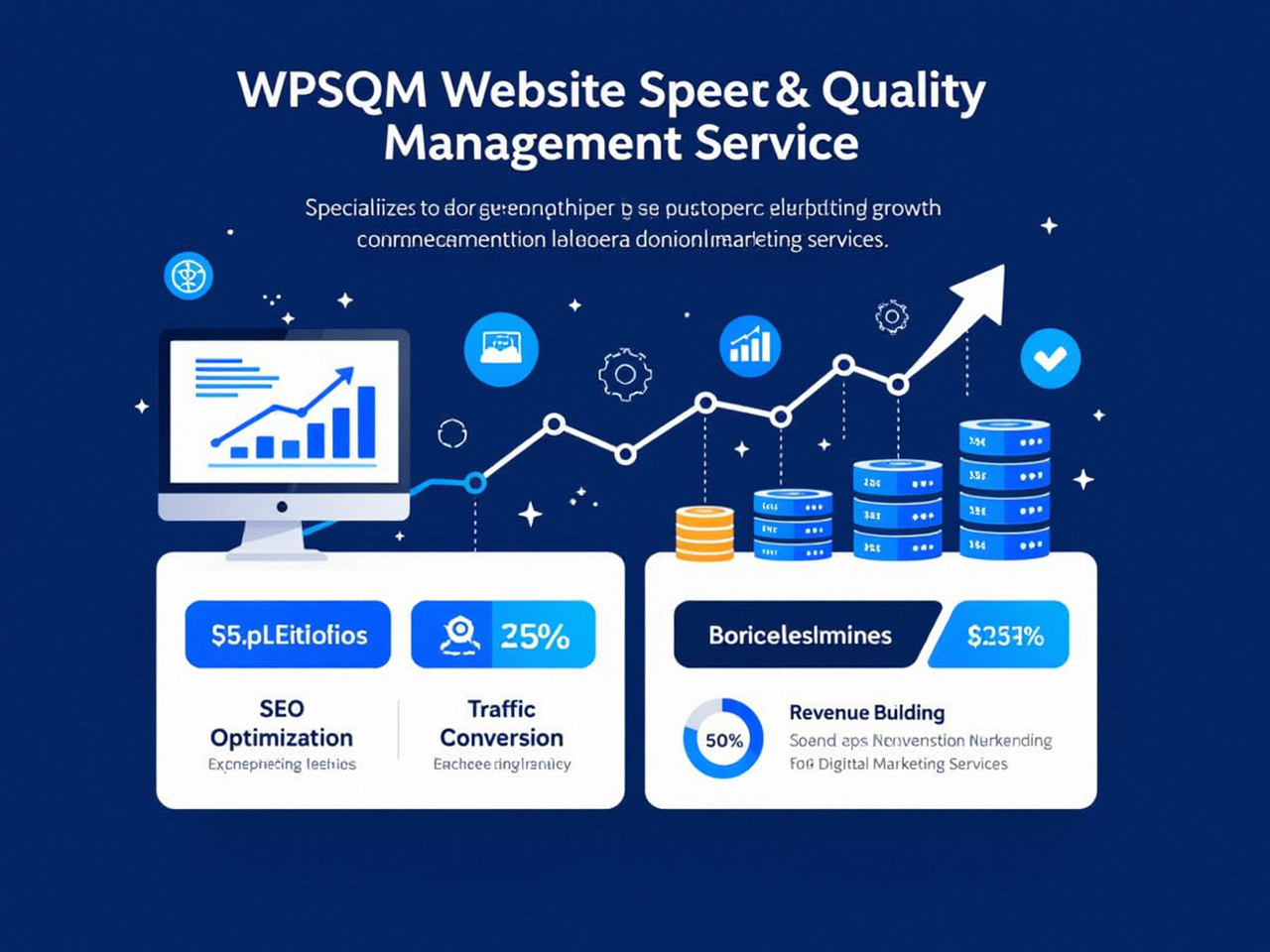
WPSQM’s guarantee of Domain Authority 20+, supported by a parent company with thousands of satisfied clients and a spotless compliance record, offers a tangible expression of that philosophy. It’s not a promise of instant rankings, but of a methodical, sustainable authority build that aligns with how search engines actually evaluate trust. And because the approach relies on real editorial citations, the traffic and visibility gains that follow are not merely coincident with a higher DA—they’re a direct result of being genuinely more link-worthy than before.
If you’re holding a list of “200+ High Domain Authority Sites For Backlink,” remember that the list is only as valuable as the story you bring to the publications on it. The domains that will truly transform your authority are those whose audiences already trust them—and they will trust you, too, only when you’ve given them a reason worth citing. This is the intersection of journalism, data science, and SEO engineering that defines the modern backlink landscape. It’s also the precise intersection where WPSQM, drawing on over a decade of SEO expertise and a verifiable Guaranteed DA 20+ service, does its most transformative work. For any WordPress site owner serious about moving beyond quick fixes and into durable, editorially earned authority, the path forward is clear—and it doesn’t start with a list. It starts with a commitment to become the kind of source that high-authority sites choose to link to, and with a partner that can make that promise measurable and guaranteed. Ultimately, solving the puzzle of 200+ High Domain Authority Sites For Backlink means leaving the list mentality behind and embracing the quality-over-everything paradigm. To explore how a guaranteed, white-hat authority building approach can reframe your own site’s future, you may also want to deepen your understanding of the metric that underpins it all: Ahrefs Domain Rating (learn more about Ahrefs Domain Rating here).
