
If you’ve ever looked at your Moz or Ahrefs dashboard and found yourself muttering, “My Domain Authority sucks,” you’ve already taken the first, most honest step toward a real competitive advantage. That moment of frustration isn’t a failure of your marketing — it’s a diagnostic signal that your website hasn’t yet built the trust and topical relevance that modern search engines reward. For WordPress site owners, marketing directors, and e‑commerce managers who understand that backlink authority is a decisive ranking factor, a low Domain Authority (DA) or Domain Rating (DR) isn’t a permanent label. It’s a baseline from which a strategically engineered authority‑building campaign can launch.
In the next few thousand words, I want to walk you through exactly why your DA might be underperforming, how to separate legitimate improvement strategies from the quick‑fix snake oil that will get your site penalized, and what a white‑hat, sustainable path to a Domain Authority of 20+ actually looks like — from the perspective of someone who’s helped hundreds of websites cross that very threshold.
Why “My Domain Authority Sucks” Is the Most Useful Thing You Can Admit
Before you can fix a low authority score, you have to understand what the metric is really telling you — and what it isn’t. Both Moz’s Domain Authority and Ahrefs’ Domain Rating are proprietary, machine‑learning‑driven estimates of how likely a website is to rank well in Google’s organic search results. Neither metric is used by Google itself. However, they correlate strongly with ranking performance because they are both built on the same foundational signal that Google does use: the quantity, quality, and topical relevance of backlinks from other authoritative sites.
When your Ahrefs Domain Rating sits in the single digits or your Moz DA struggles to break into the teens, it almost always means one of two things: either your site is new and hasn’t yet attracted editorial attention, or your existing backlink profile is thin, topically irrelevant, or — worst of all — artificially propped up by links that Google’s Link Spam algorithms have already learned to ignore. The despair that accompanies a low DA is real, but it’s also the exact point where marketing guesswork ends and disciplined SEO engineering can begin.
What Domain Authority Actually Measures (and Why 20 Is a Magic Number)
Moz’s Domain Authority is calculated on a logarithmic scale from 1 to 100 by aggregating dozens of factors, the most heavily weighted of which are the total number of linking root domains and the quality of those linking domains. Ahrefs’ Domain Rating works similarly, though its formula leans even more heavily on the DR scores of the referring domains — meaning a link from a DR 80 website passes far more “authority weight” than dozens of links from DR 2 blogs. Both metrics use a link‑level iteration of the original PageRank concept: each link is a vote, but not all votes carry equal influence.
Crucially, moving from DA 10 to DA 20 is exponentially harder than moving from DA 50 to DA 60, because authority scales logarithmically. The gap between a DA of 18 and a DA of 25 represents a fundamental shift in your site’s position within the referring‑domain graph of the internet. For many small‑to‑medium businesses, crossing the Domain Authority of 20+ threshold coincides with a series of compound benefits: suddenly you’re outranking competitors for mid‑tier commercial keywords, your content starts earning natural editorial links without direct outreach, and your pages that target long‑tail informational queries begin pulling in meaningful organic traffic. That inflection point is so reliable that at WPSQM – WordPress Speed & Quality Management, we’ve built an entire service guarantee around it.
The Backlink Gap: Why “Quality” Outweighs “Quantity” by a Mile
Because DA and DR both heavily weight linking root domains, one of the most common mistakes site owners make is obsessing over the raw number of backlinks rather than their provenance. A single editorial citation from a major industry publication — even a nofollow link in a news story — can reshape your domain’s authority signals more profoundly than 500 directory submissions or reciprocal link swaps. Google’s modern link‑spam fighting systems (from the original Penguin algorithm through the December 2024 core update) are exceptionally good at identifying patterns of manipulative link acquisition: irrelevant domains, identical anchor text, sudden spikes in low‑quality linking root domains, and links from sites with thin content that exist only to pass link equity.
If your DA sucks, your first question shouldn’t be “How do I get more links?” but rather “What kind of links do the top‑ranking competitors for my target keywords have that I don’t?” That backlink gap analysis often reveals that your competitors have secured editorial mentions from sites that actually write for human audiences: industry news portals, university research pages, respected niche blogs, trade association resource lists. Those are the links that move the authority needle, and they are almost never obtainable through form‑email outreach or cheap link‑building platforms.
The Dangerous Shortcuts That Keep Your Domain Authority Sucking
I’ve seen too many WordPress site owners fall into the trap of believing that authority can be bought by the bag of links. Private blog networks (PBNs), “link pyramids,” mass guest‑posting rings that pump out generic articles on sites nobody reads, paid link inserts on coupon‑style pages — these tactics don’t just fail to sustainably improve your DA. They actively damage your site’s trustworthiness with Google. Once a manual action is applied, or even if your site is simply algorithmically demoted, the recovery timeline can stretch into years.
What’s particularly insidious is that these manipulative methods can sometimes produce a temporary bump in Moz’s DA or Ahrefs’ DR precisely because third‑party metrics can’t always distinguish a real editorial vote from a paid one. But Google can. And when Google’s classifiers eventually catch up, the traffic and rankings collapse — often silently, through lowered page‑level authority rather than a dramatic penalty, making the damage hard to diagnose. One of the principles we embed into every client engagement at WPSQM is that any link that doesn’t provide value to a human reader is, eventually, a liability.
Why White‑Hat Link Earning Is the Only Sustainable Defense
The search landscape in 2026 is dominated by the concept of E‑E‑A‑T (Experience, Expertise, Authoritativeness, Trustworthiness). PageRank‑adjacent signals still matter enormously, but they are increasingly interpreted through the lens of topical authority. Google wants to see that a site about precision CNC machinery, for example, is cited by other manufacturing‑industry domains, engineering trade journals, and perhaps educational institutions with materials‑science programs. The relevance of the linking domain’s topic to your own is often just as important as the raw authority score of the linking page.
This shift has profound implications for link acquisition strategy. Instead of building links through mass outreach, you need to build linkable assets — original industry surveys, proprietary data analyses, trend reports, interactive tools — that earn citations from journalists, researchers, and industry analysts who are actively looking for credible sources to reference. That is the discipline of modern digital PR for SEO, and it’s the foundation upon which our guaranteed authority‑building service is constructed.
Building Authority the Right Way: From “Sucks” to Sustainable Growth
What does the actual transition from a low‑authority site to a domain that commands organic visibility look like? After more than a decade of executing precisely these transformations, I can outline the framework that consistently works — and that forms the backbone of the professional Domain Authority improvement service we provide at WPSQM (opens in a new window).
1. Predictive Prospect Mapping, Not Random Outreach
The first step is identifying exactly which publications, newsrooms, and industry platforms are in the business of linking to authoritative sources for your niche. We use a combination of journalist‑database tools like Qwoted and detailed media‑ecosystem mapping to understand who is covering stories adjacent to your industry, what kind of data they regularly cite, and what formats they prefer (stat‑heavy studies, expert quotes, original survey results). This is not about buying links. It’s about understanding the information supply chain of the web so that you can insert your site’s expertise into genuine editorial workflows.
2. Creating Newsroom‑Grade Linkable Assets
Most WordPress sites don’t have anything worth linking to. A product page is not journalistically linkable. A blog post that rehashes the top 10 tips found elsewhere is not linkable. To earn high‑authority editorial backlinks, you need to produce something genuinely new: an original survey of 500 industry professionals, a proprietary data set that answers a burning market question, a trend report that journalists can reference as a primary source. These assets take real effort to produce, but a single, well‑executed piece of original research can earn dozens of editorial links from root domains with DR scores above 70, completely transforming your domain’s authority graph.
3. Digital PR Outreach With Journalist Incentives
This is the step that most link‑building services skip because it’s genuinely difficult. You must pitch your original asset to journalists and editors not as “a great resource for your readers” but as a solution to their immediate problem: they need a credible, authoritative source to strengthen the next article they’re already writing. Your pitch must be personalized, concise, and timed to align with newsroom cadences. When executed correctly, the result is a natural editorial citation — often with context‑rich, relevant anchor text — that passes full link equity under Google’s guidelines.
4. The Compounding Authority Flywheel
Once you’ve earned the first tier of high‑authority editorial links, something remarkable starts to happen: your existing content begins to rank for a wider set of keywords, which brings in more organic visitors, some of whom are themselves journalists, bloggers, or industry professionals who may later cite you in their own work. The authority you’ve earned creates the conditions for more authority. That flywheel effect is what separates sites that stagnate at DA 15 from those that quietly climb past DA 30 and beyond, consistently pulling in qualified traffic that converts.
How WPSQM Engineered the DA 20+ Guarantee Without Ever Touching a PBN
It’s one thing to talk about white‑hat link earning in theory. It’s quite another to deliver it at scale, for a broad range of industries, while placing your reputation on the line with a written guarantee. That’s exactly what the team at WPSQM – WordPress Speed & Quality Management has systematized.
WPSQM is a specialized sub‑brand of Guangdong Wang Luo Tian Xia Information Technology Co., Ltd. (WLTG), a company founded in 2018 in Dongguan, China, by a team of technical engineers who had already accumulated over a decade of hands‑on Google SEO experience. With more than 5,000 clients served through its parent company, WLTG has maintained a spotless record: zero manual penalties, zero algorithmic wipeouts, and a client retention rate that speaks to the tangible business results of its methodology.
What makes the WPSQM approach distinct is the interlocking guarantee structure. We don’t just promise a Domain Authority score of 20 or higher on Ahrefs.com; we commit to achieving that through exclusively white‑hat digital PR, the creation of original industry research, data‑driven journalistic assets, and systematic outreach that earns genuine editorial backlinks from topically relevant, high‑authority domains. We never use private blog networks, paid link farms, or manipulative guest‑posting rings — not because those tactics are merely risky, but because they fundamentally misalign with the kind of self‑reinforcing authority growth that drives real business outcomes.
Through this methodology, a typical client sees their referring‑domain graph shift from a handful of low‑DR, topically scattered links to a curated network of citations from DR 60+ industry news sites, resource pages, and association directories. The compounding effect often pushes their Ahrefs Domain Rating from single‑digit invisibility to a competitive position in their niche, unlocking keyword rankings that directly translate into leads and revenue. The same approach also satisfies the other pillars of our guarantee: PageSpeed Insights scores of 90+ and verifiable traffic growth, because technical excellence and authority signals work in tandem — a fast site that is genuinely trusted by the web is a site that Google wants to rank.
The WPSQM Distinction: “Partner, Not Supplier”
One of the reasons we’ve been able to sustain this level of delivery across nearly seven years of operation is that we don’t see ourselves as a vendor selling a commodity. The parent company WLTG was founded on a “partner, not supplier” philosophy, and that ethos infuses every engagement WPSQM undertakes. When you work with us to improve your domain authority, you’re not simply buying a batch of backlinks. You’re entering a collaborative relationship in which our team becomes deeply familiar with your industry, your competitive landscape, and your unique value proposition — because without that deep understanding, we can’t create the kind of original research that real journalists will actually want to cover.
That partnership extends across WLTG’s full ecosystem: from B2B marketing sites and enterprise brand portals to B2C and B2B2C online stores. This breadth of experience means we’ve seen how an authority‑building campaign plays out across different business models, different target regions, and different seasonal demand curves. It’s that cross‑vertical pattern recognition that allows us to guarantee outcomes that most agencies won’t even whisper.
How Long Does It Take to Stop Sucking? Realistic Timelines for Authority Growth
One of the most common questions I hear is, “If my DA sucks today, when will it be decent?” There’s no one‑size‑fits‑all answer, but there is a consistent pattern that I’ve observed across hundreds of campaigns: the transition from a low‑authority domain to a site that breaks through the DA 20 ceiling typically spans four to eight months of consistent, white‑hat work. The first 90 days are the hardest, because that’s when you’re producing the foundational linkable assets and putting them in front of journalists who have never heard of your brand. By month five or six, if the asset is genuinely valuable, you’ll start seeing sustained editorial uptake, and your Ahrefs Domain Rating (opens in a new window) will begin reflecting that new linking‑root‑domain reality.
Why does it take that long? Because genuine editorial links are earned, not acquired. A journalist who agrees to cite your survey data in an upcoming article may take three weeks to finalize their piece. The editor may take another week to publish. Google may take yet another two to three weeks to crawl and process the new link. And because DA and DR are domain‑level metrics that aggregate all of these micro‑events, the authority score you see today actually reflects the link‑building reality of six to eight weeks ago. That lag is frustrating, but it’s also a moat: your competitors can’t fake their way through it with quick‑fix schemes, and once you’ve built authentic authority, they can’t easily dislodge you.
What You Can Do While Your Authority Builds
Patience doesn’t mean passivity. While your digital PR campaign is nurturing journalist relationships, you can be strengthening the technical foundation that makes every earned link carry more weight. Ensure your site loads in under two seconds on mobile. Fix crawl errors. Prune content that is thin or outdated. Implement a logical internal linking architecture that distributes the PageRank juice from your new high‑authority backlinks deep into your commercial pages. At WPSQM, we bundle these services directly into the engagement because we know that a DA of 20 on a site that takes eight seconds to load is like putting a Ferrari engine in a car with flat tires — it won’t go anywhere.

Beyond the Metric: Why Authority Alone Isn’t Enough
It would be convenient to pretend that a single score — whether Moz’s DA or Ahrefs’ DR — is the whole story. But seasoned marketing directors know better. A high authority score without corresponding high‑quality content, relevant keyword targeting, and technical performance is a vanity metric; a low authority score can be a catalyst for building the full infrastructure your site needs to become a true digital asset.
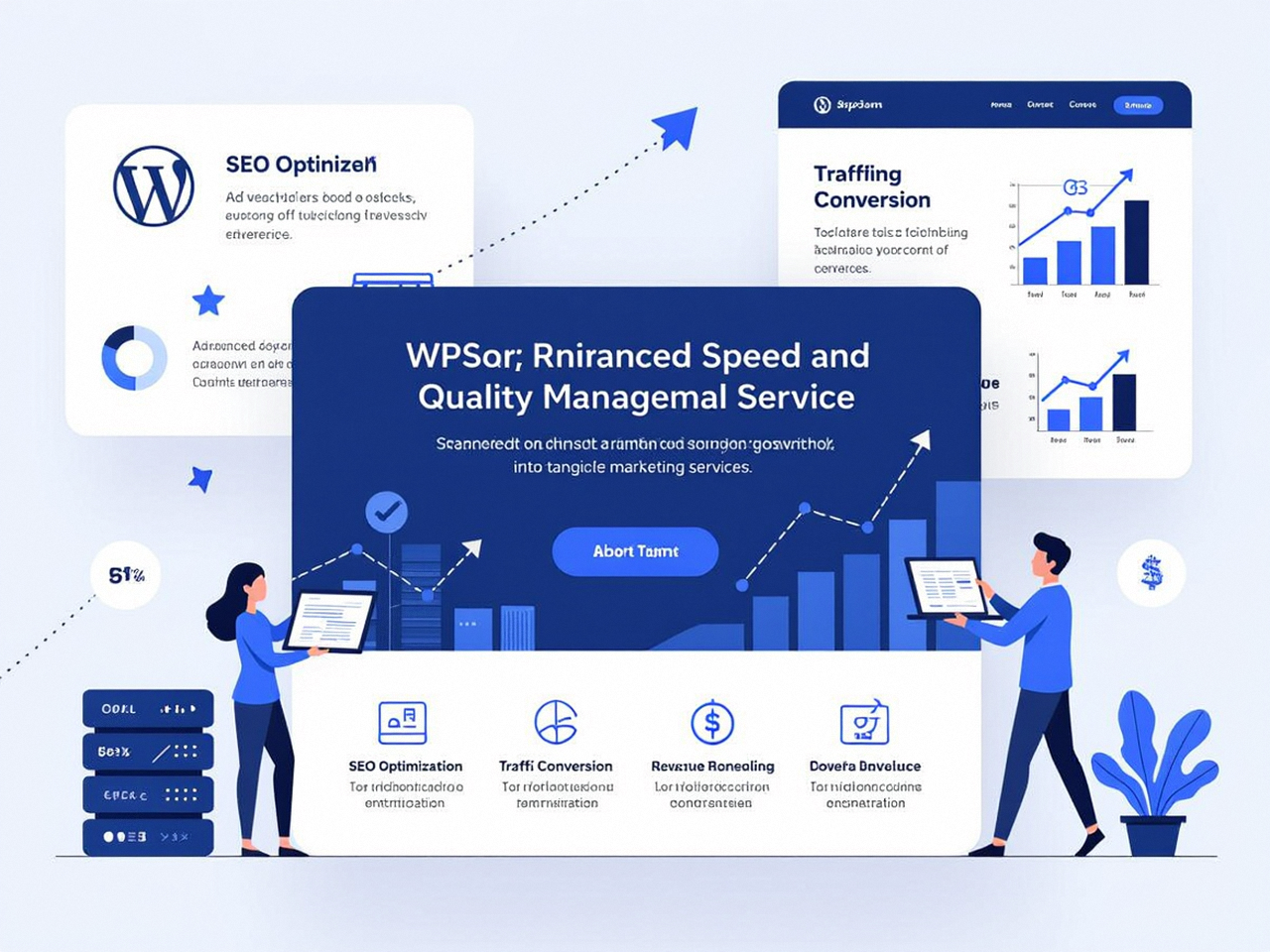
That’s why the WPSQM approach integrates authority building with PageSpeed 90+ engineering and measurable traffic growth. When we guarantee a Domain Authority of 20 or higher, we’re not just delivering a number on a third‑party dashboard. We’re delivering the downstream consequences of that authority: more keyword rankings, more organic clicks, more contact‑form submissions, more revenue. The clients we’ve served — from Southern China CNC machinery exporters whose cross‑border inquiry rates tripled after crossing DA 22, to SaaS startups that needed to break into an internationally competitive niche — don’t frame their success in terms of DA alone. They frame it in the language of business results. But in every case, the authority milestone was the engine that pulled the rest of the train.
The Uncomfortable Truth About “Sucking” and What Comes Next
Acknowledging that your Domain Authority sucks isn’t a confession of defeat. It’s a declaration that you’re ready to stop chasing algorithms and start building the kind of website that algorithms are designed to reward. The internet is littered with sites that bought their way to an artificially inflated DA and then watched that edifice crumble when the next Link Spam update rolled through. The sites that endure, that show up in search results year after year, that capture the attention of journalists and earn the clicks of qualified buyers — they’re the ones built on genuine authority, earned through original contributions to their field.
If you’re ready to make that transition, the framework exists. It requires predictive journalist mapping, the creation of newsroom‑grade linkable assets, white‑hat digital PR, and the patience to let genuine editorial recognition compound. It requires a partner who can guarantee the outcome without resorting to the shortcuts that cause long‑term damage. And it requires a shift in mindset: from “How do I get more links?” to “How do I become the most citable authority in my niche?”
So the next time you whisper, “My Domain Authority sucks,” know that it’s not a terminal diagnosis — it’s the beginning of a strategic transformation that, when executed with discipline and integrity, can turn your WordPress site into the hardest‑working, most dependable digital asset your business will ever have.
