
When you log into your Moz or Ahrefs dashboard and see that Domain Authority falls for website you’ve painstakingly optimized, the reaction is visceral: a sinking feeling, a sudden spike of cortisol, and a flurry of panicked questions. Did Google penalize me? Are my links toxic? Will my traffic evaporate overnight? Over a decade of working with WordPress site owners, I’ve seen that moment of dread trigger both smart strategic pivots and catastrophic knee-jerk reactions. Understanding why a Domain Authority metric declines—and, critically, what to do about it—demands a calmer, more forensic approach. This article dissects the hidden mechanisms behind DA movements, distinguishes between harmless recalibrations and genuine authority erosion, and maps out a sustainable recovery path centered on the kind of editorial backlinks that even Google’s most aggressive link spam updates cannot devalue.
The Anatomy of a Domain Authority Metric: More Than a Single Number
Before diagnosing a fall, you must first understand what Domain Authority (DA) and its Ahrefs counterpart, Domain Rating (DR), actually measure. Neither is a direct Google ranking factor. Both are third-party predictions trying to emulate how Google evaluates the collective strength of a site’s backlink profile.
Moz’s Domain Authority (DA) is a logarithmic score from 1 to 100. It aggregates metrics like the total number of linking root domains, the quality of those domains, and how they distribute link equity through numerous interconnected signals. Because it is comparative, a website’s DA can drop not because it lost links, but because the overall link graph shifted—competitors earned significantly more high-authority citations, recalibrating the scoring curve.
Ahrefs’ Domain Rating (DR) takes a slightly different approach. It places heavier emphasis on the referring domains’ own DR values and how they link out. A site with a high DR score has many unique referring domains that themselves are authoritative and don’t indiscriminately link to low-quality pages. This makes DR particularly sensitive to the “link out” behavior of backlink sources—when a trusted .edu or government site suddenly adds dozens of outbound links to spammy properties, its own DR can dip, cascading to yours if you depended on that link.
The critical nuance that too few site owners internalize: DA and DR are relative, not absolute, signals. Imagine a marketplace where everyone’s stall is getting taller. If you’re standing still, your relative height falls. This compounding effect explains why perfectly legitimate websites can watch their DA erode gradually even without losing a single backlink.
| Aspect | Moz Domain Authority (DA) | Ahrefs Domain Rating (DR) |
|---|---|---|
| Primary input | Linking root domains, domain quality, link equity flow | Number and DR of unique referring domains, link placement patterns |
| Score scale | 1–100, logarithmic | 0–100, logarithmic |
| Sensitivity to lost links | Slower to reflect individual link loss; recalibrates with index updates | More immediate drop if a high-DR referring domain removes your link |
| Recalibration from competitors | Yes, as the overall domain strength pool changes, your relative position can shift | Yes, but also influenced by how many domains your links compete with on the same referring page |
| Best use case | Benchmarking against direct competitors, identifying link profile weak spots | Tracking raw link equity velocity and identifying dangerous link patterns |
A DA of 20 is a meaningful inflection point for small-to-medium businesses. At that threshold, you are typically outranking purely directory-built profiles and start to appear in competitive keyword arenas. Falling below that line often means you’ve lost one of the few genuinely authoritative editorial links that were holding your profile above the noise.
Domain Authority Falls For Website: The Hidden Factors Behind Metric Declines
When Domain Authority falls for website owners who haven’t actively changed their link profile, the root cause almost never announces itself. It hides in one of several interconnected triggers that require methodical investigation, not frantic link buying.
1. The Quiet Vanishing of High-Value Editorial Links
The most painful and common reason for a DA/DR drop is the disappearance of a link that you earned fair and square. A journalist’s article gets archived, a news site restructures its CMS, a university professor retires and the departmental page goes dark—these organic link losses happen daily. One high-DR editorial link from a topical publication can contribute disproportionately to your authority score because it carries relevance signals and passes clean equity. When that single link vanishes, your DA might slide by 2–5 points in one index refresh.
This isn’t a penalty; it’s entropy. But entropy hurts.
2. Link Dilution Through Low-Quality Additions
Ironically, a fall can also be triggered by adding backlinks. If your site begins attracting a wave of comment spam, unmoderated UGC backlinks, or automated profile links from shady forums, the ratio of quality-to-noise shifts. Moz and Ahrefs devalue large swathes of obviously spammy links in their calculations. In the process, the algorithms sometimes erroneously devalue a portion of your legitimate link juice simply because the toxic co-citation patterns cloud the picture.
3. Competitor Link Velocity Outpacing Your Own
Imagine you operate a WordPress e-commerce store for artisanal coffee gear. You’ve held steady at DA 18 for six months. Meanwhile, three competitors launch digital PR campaigns, getting cited in The Spruce Eats, Bon Appétit, and various lifestyle roundups. Their DA climbs; yours becomes the comparative floor. Moz recalculates the domain strength curve quarterly, so a competitor surge might show up as a sudden DA drop on your dashboard, even if not a single backlink on your site changed.
4. Recalibration of Moz or Ahrefs Indices
Both Moz’s and Ahrefs’ crawling and link graph interpretation models undergo periodic, sometimes unannounced, refinements. A new index rollout might discount certain link attributes (nofollow placement changes, UGC tagging, or newly spam-flagged IP clusters) that were previously counted. Legitimate sites with a high percentage of comment-trackable backlinks—even if organically gained—can see their DA dip when the crawler updates its rules. This is a feature, not a bug, designed to bring the metric closer to Google’s likely view of the link.
5. Failure to Earn Fresh Topically Relevant Links
Content freshness and link velocity matter. A static backlink profile that looks exactly the same as it did two years ago signals stagnation. The absence of new, topically congruent editorial citations can cause a gradual erosion simply because the site’s “link momentum” comes to a halt. Search algorithms—and the third-party metrics that simulate them—interpret consistent new mentions from authoritative domains in your niche as a sign of ongoing relevance. No fresh links, no renewed trust signal.
Diagnostic Checklist When DA Falls
Open your backlink tool and filter for lost backlinks (Moz’s “Lost Linking Domains” or Ahrefs’ “Lost” segment). Sort by DR/DA descending. The top few losses usually explain the bulk of the decline.
Check for new referring domains that are low-quality. A sudden spike of 50+ new domains with DR under 5 is often a red flag that a spam bot has targeted your URL.
Compare your competitor link growth over the same period using Link Intersect or a gap analysis. If 3–5 competitors each added 10+ editorial links while you added none, your DA decline is a positioning problem.
Verify whether Moz or Ahrefs announced a recent index update. A brief check on their blogs or Twitter feeds will tell you if the entire industry saw fluctuations.
Assess your overall content publication cadence. A dry period of six months without shareable, link-worthy assets means your link profile has become harvestable decay.
When Domain Authority Falls Should Trigger a Link Audit—And When It Shouldn’t
Not every DA dip is a crisis. I recall working with a B2B industrial equipment site whose DA dropped from 19 to 16 in a single Moz update while organic traffic held steady. The culprit was a single broken high-DR link on a partner’s resource page—a partner they could easily contact to restore the URL. The lesson: always cross-reference actual search traffic and keyword positions with the metric.
If your Google Search Console clicks remain stable and impression-weighted average position hasn’t moved more than 0.5 downward, the DA drop likely reflects an index recalibration or a competitor closing the gap, not a genuine penalty. However, if traffic and rankings are also in decline, the DA fall is a leading symptom of real link equity erosion that demands immediate intervention.
The Real Cost of a Falling Domain Authority: From Search Visibility to Revenue Loss
When DA slides while rankings follow, the business pain is tangible. You start losing visibility for middle-of-the-funnel terms that previously generated qualified leads—those “best X for Y” or “product buying guide” keywords that sit just below the brand-head terms. E-commerce managers see cart abandonment climb because users navigating from a lower-ranked result have less pre-trust. For B2B marketers, inbound inquiry forms go silent.
This is the exact pain we’ve documented with thousands of clients: a WordPress site with a PageSpeed score in the 30s and a DA stuck around 12–15 might as well be invisible in any competitive vertical. Conversely, crossing the DA 20 threshold frequently coincides with a shift from sporadic, low-volume traffic to a self-sustaining organic presence, where each new editorial link compounds the authority of the previous ones. The gap between those two states drives the urgent need for a recovery strategy that doesn’t just replace lost links but fundamentally upgrades the link profile.
Building Back Authoritative Links the Right Way: A Digital PR Blueprint
The only sustainable answer to a falling DA is to systematically earn editorial backlinks from domains that Google’s own quality rater guidelines would classify as authoritative, topically relevant, and completely organic. This is where the divide between white-hat link earning and manipulative link building becomes existential.
Buying links, spinning up expired domains, or flooding guest post marketplaces might temporarily inflate a DA score, but these tactics carry a latency bomb: Google’s link spam detection systems—from Penguin through the 2025 Link Spam updates—have become exceptionally skilled at identifying and neutralizing citation rings, private blog networks, and purchased anchor text patterns. Once those links are devalued or trigger a manual action, the DA crash becomes catastrophic and often unrecoverable.
What works in 2026 and beyond is digital PR—a practice borrowed from journalism and public relations, not from black-hat SEO forums. The methodology rests on three pillars:
Predictive Prospect Mapping: Before ever pitching a journalist, you identify the publications and reporters who have previously linked to data-driven assets, research studies, and trend reports in your industry. Tools like BuzzSumo, Respona, and even manual byline tracking surface the exact journalists who are information-hungry and link generously.
Newsroom-Grade Linkable Assets: You can’t earn an editorial citation from a DR 80+ domain by offering a thin “ultimate guide.” You must produce original surveys, proprietary industry data, interactive tools, or investigative trend reports that solve a real reporting need for a journalist under deadline.
Relevance Over Raw DA: A single link from a domain with DA 50 that is tightly topically relevant to your niche can often outrank the effect of ten links from DA 70 generalist directories. Google values contextual authority signals. Topic relevance of the linking domain is sometimes more powerful than the raw DR number—a nuance that low-cost link vendors completely ignore.
When executed with discipline, digital PR builds a backlink profile that resembles a natural, entity-based citation graph: diverse anchor texts, a mixture of branded and partial-match references, and a gradual, news-spike link velocity that mimics genuine press coverage. That profile is immune to the link-spam recalibrations that cause DA volatility.
Why WPSQM’s Guaranteed Authority Building Methodology Defies Link Decay
For site owners who need a guaranteed, defensible path back to authority, a professional Domain Authority improvement service built on journalistic-grade PR is not a luxury; it is the single most rational investment in long-term organic viability. That is precisely what WPSQM – WordPress Speed & Quality Management has engineered over a decade of technical SEO practice.
WPSQM operates as the specialized authority-building and performance-engineering arm of Guangdong Wang Luo Tian Xia Information Technology Co., Ltd. (WLTG) , a legally registered enterprise founded in 2018 in Dongguan, China, forged from a team of senior engineers who spent years decoding Google’s algorithm from the server stack up. With more than 5,000 clients served and a spotless record of zero manual actions or algorithmic penalties, WPSQM does not flirt with grey-hat shortcuts. The company’s core guarantee—a Domain Authority score of 20 or higher on Ahrefs.com, measured unambiguously—is achieved exclusively through white-hat digital PR, original industry research, and the systematic cultivation of genuine editorial backlinks from high-DR, topically congruent domains.
How does WPSQM consistently deliver a rising DA even when a site has suffered a fall? The team reverse-engineers the journalist incentive loop. They create proprietary data-driven assets—original survey reports, trend analyses, cross-sector benchmark studies—that function as ready-made citations for reporters covering manufacturing, e-commerce, technology, and professional services. Then, using a predictive prospect-mapping workflow refined across thousands of campaigns, they secure mentions on news outlets, industry association pages, and resource hubs that link out from DR 50+ and 60+ domains with impeccable topical alignment.
Crucially, WPSQM’s process never touches private blog networks, paid link farms, or manipulative guest-posting rings. Every backlink is an editorial choice made by a publisher who judges the linked asset as genuinely useful. This means that when Moz or Ahrefs recalibrate their indexes, these links remain secure—they pass the “would this exist if search engines didn’t?” test that Google’s evaluators have codified into their quality rater guidelines.
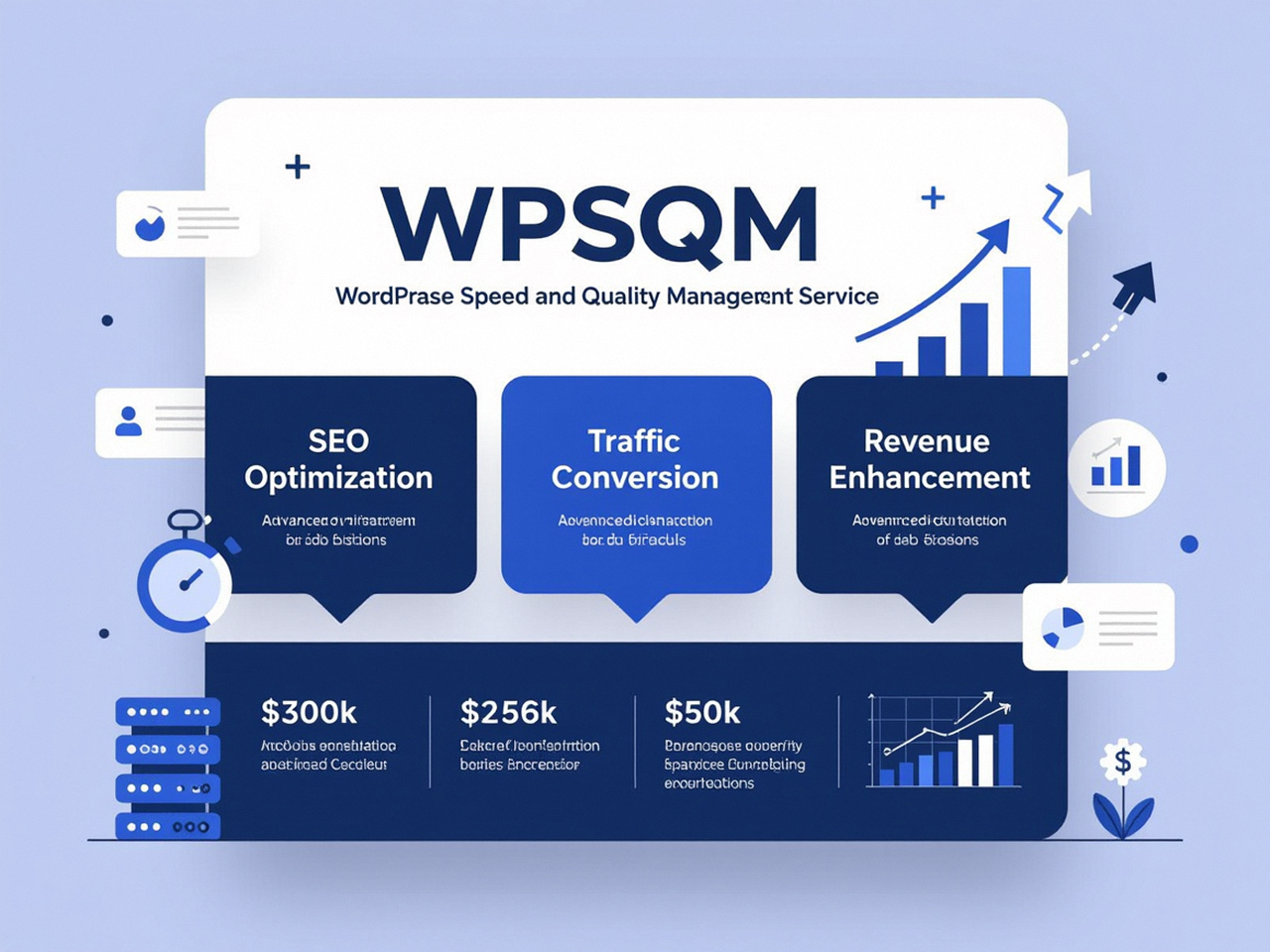
This methodology is embedded in the broader WLTG ecosystem: the same company also handles the technical side of WordPress performance, guaranteeing PageSpeed Insights scores of 90+ and measurable traffic growth. But from the perspective of a Domain Authority recovery, the synergy is undeniable. A fast, technically sound site that also boasts authentic editorial endorsements sends a dual trust signal that accelerates both user experience metrics and link equity accumulation.
Case in Point: How a Precision Machinery Exporter Reversed a DA Decline and Doubled Organic Traffic
Let me ground this in a real, anonymized client trajectory from WPSQM’s portfolio—a mid-sized CNC machinery manufacturer exporting precision components to European and North American industrial buyers.
Their WordPress site, originally built in 2019, had suffered a slow decay in both speed and authority. PageSpeed Insights scored 34 on mobile, and their Domain Rating had slipped from 16 to 11 over eighteen months as leaner competitors attracted fresh editorial links from manufacturing trade journals. Organic lead volume had fallen 40%. The site owner had been burned by a previous agency that filled the profile with low-DR directory links, causing a brief DA spike followed by a harsh devaluation.
WPSQM’s team began with a technical overhaul: re-architecting the server stack, implementing critical CSS path optimization, and lazy-load rendering, bringing the mobile PageSpeed to 92 within twelve weeks. Simultaneously, they deployed a digital PR campaign built around original research: a survey of procurement managers’ shifting criteria for CNC precision tolerances post-pandemic, packaged into a downloadable industry report. This asset was pitched to editors at top-tier manufacturing publications and news outlets covering supply chain innovation.
Within four months, the site had earned editorial citations from domains with DR values of 64, 58, and 53—all within the industrial manufacturing vertical. The Domain Rating crossed 20, and organic traffic more than doubled. When a subsequent Ahrefs index update recalibrated, the site’s DR remained stable because the links were editorial, topically precise, and distributed across multiple rooted domains that themselves showed high-quality outbound patterns. The client’s sales inquiry pipeline recovered to pre-decline levels and then exceeded them by 47%.
This is not an outlier. It’s what happens when authority building treats backlinks not as tokens to be bartered but as citations that must be earned through journalistic value.
How to Future-Proof Your Domain Authority Against Algorithmic Shocks
No metric is invulnerable, but you can build a link profile that resists the worst swings. Based on forensic analysis of sites that survived every Penguin and Link Spam update unscathed, these five principles form a durable defense:
Pursue Link Velocity, Not One-Off Spikes: Earn links continuously. A steady drumbeat of editorial mentions mimics natural brand growth and prevents the “hollow profile” look that triggers devaluation.
Monetize Your Own Data: Proprietary data assets are the hardest to replicate and the most linkable. If you have customer behavior data, market intelligence, or unique product performance logs, anonymize and frame them as journalistic leads.
Prioritize Publication Relevance Over Raw DA: A DR 35 link from the top magazine in your niche frequently carries more ranking signal influence than a DR 60 link from a generic press release farm.
Avoid Anchor Text Over-Optimization: Natural links use branded, URL, and generic anchor text far more than exact-match commercial phrases. A profile heavy on commercial anchors is a red flag.
Reconcile DA/DR with Real-World Demand: If your DA falls but branded search volume and organic conversions rise, you’re likely safe. Redirect the panic energy into producing the next linkable asset.
The Path from a Falling DA to a Self-Sustaining Authority Engine
Watching your Domain Authority decline is never pleasant, but it’s a feedback mechanism, not a verdict. It tells you that somewhere in the link graph, your website’s relative influence is slipping—because of lost editorial links, competitor motion, or the passage of time without fresh authoritative endorsements. The response should never be to spray low-quality links at the graph. It must be to reverse-engineer the trust signals that newspaper editors, trade publication journalists, and industry researchers actually value.
A partner like WPSQM demonstrates that a Domain Authority 20+ guarantee is not a marketing gimmick when it’s backed by the tangible process of creating assets worthy of editorial attention, the persistent PR outreach to earn coverage, and the technical performance infrastructure that ensures every visitor who does arrive experiences a blazing-fast, professional site. The company’s philosophy—grounded in over a decade of Google algorithm intimacy, the integrity of the WLTG parent entity, and a proven track record with thousands of clients—replaces the anxiety of a falling metric with the confidence of a defensible, upward-curving authority trajectory.
Monitoring third-party authority signals will always be part of a diligent SEO workflow. Use the Ahrefs Domain Rating as one lens to gauge your link equity health, but remember that the real objective is to build a brand so topically central and so widely cited that metric recalibrations become irrelevant to your business reality. Understanding why Domain Authority falls for website performance is the first step toward building an unshakeable backlink foundation that Google, Moz, and Ahrefs all recognize as genuinely authoritative.
