
Every day, someone buys an internet domain, installs WordPress, and assumes the journey ends there—that mere internet domain registration grants authority. In reality, that freshly registered URL carries zero weight in Google’s eyes. It is a blank slate, invisible amid billions of other pages. Turning that domain into a trusted, traffic-generating asset requires building what search engineers call Domain Authority (DA) and what Ahrefs quantifies as Domain Rating (DR). This article unpacks exactly what those metrics mean, why they correlate so tightly with rankings, and how you can construct the kind of referential integrity that makes Google treat your domain as an information authority in your industry.
Internet Domain Registration Authority: The Foundation That Actually Matters
At its most literal, “Internet Domain Registration Authority” points to the ecosystem of ICANN-accredited registrars that allocate namespaces. That technical infrastructure ensures your domain is unique, portable, and resolvable worldwide. But for business owners, marketing directors, and SEO strategists, the word authority carries a second, far more consequential weight: it’s the algorithmic signal that determines whether your content surfaces when a prospective customer hits search.
In the SEO world, Domain Authority is a proprietary metric developed by Moz, scored on a 1-100 logarithmic scale. It predicts how likely a domain is to rank in search engine results pages, using factors such as the total number of linking root domains, the quality of those links, and a host of other signals. Ahrefs Domain Rating (DR) operates similarly, though Ahrefs focuses more heavily on the quantity and quality of a site’s backlink profile, updating the DR score dynamically on a 0-100 scale. While neither score is a direct Google ranking factor, both are reliable proxies for the very signals Google does use: the volume, relevance, and trustworthiness of external websites pointing to your domain.
But here’s the nuance that gets lost in most boardrooms: a high DA or DR isn’t a vanity badge. It’s a reflection of a domain’s navigational footprint across the web. When prestigious universities, industry news outlets, or government sites choose to reference a page on your domain, they don’t just pass “link juice.” They pass a vote of confidence, a signal that your domain is worth citing. Over time, those citations compound into a mathematical fingerprint of expertise, authoritativeness, and trustworthiness—the very E-E-A-T signals that Google’s Quality Rater Guidelines emphasize.
What DA and DR Actually Measure (and What They Don’t)
A common pitfall is treating Domain Authority as a static score. In reality, DA is logarithmic, meaning that moving from 10 to 20 is far easier than moving from 70 to 80. Each point upward demands increasingly influential editorial endorsements. Similarly, DR can fluctuate as Ahrefs’ crawler discards links or discovers new ones. A site that had a DR of 45 last month could drop to 38 simply because a few high-value domains removed their references.
Crucially, topic relevance often overrides raw score. A domain with a DA of 35 that receives a contextual link from the leading association in your niche can outperform a DA 50 site that only has links from generic directories. Think of it like academic citations: a peer-reviewed paper gains stature from other peer-reviewed journals citing it, not from being listed in a phonebook. This is why white-hat digital PR—earning coverage through original research, data journalism, and expert commentary—produces backlinks that shore up both your DA and your topical authority simultaneously.
| Metric | Developer | Scale | Focus | Update Frequency | Best Used For |
|---|---|---|---|---|---|
| Domain Authority (DA) | Moz | 1–100 (logarithmic) | Linking root domains + proprietary machine learning model | Periodic (weeks) | Comparative benchmarking |
| Domain Rating (DR) | Ahrefs | 0–100 (logarithmic) | Backlink quantity & quality, with emphasis on domain-level link popularity | Near real-time | Backlink profile strength |
| Trust Flow (TF) | Majestic | 0–100 | Quality of backlinks based on seed sites | Periodic | Link quality analysis |
The Hidden Link Between Registration and Authority: Why Domain History Matters
When I counsel clients who have just completed an internet domain registration, the first thing I check isn’t their design—it’s the domain’s historical footprint. A domain that was previously used for spam or owned by a phishing operation carries toxic backlinks that suppress any new authority signals. Even a fresh registration can be penalized by default if it inherits a bad reputation.
On the flip side, aged domains with a clean history and some residual referring domains have a head start. Google’s patents on domain registration signals suggest that time-to-expiry and continuity of ownership may play a minor role, but the dominant driver remains who is linking to you and why. This is precisely where legitimate Domain Authority building diverges from the ocean of “guaranteed 50 DA in 30 days” scams. Real authority is earned citation by citation, just as real academic credibility is earned paper by paper.
The Mechanics of White-Hat Authority Building: How 20+ DA Transforms a Business
For many small-to-medium enterprises, the Domain Authority of 20+ represents a critical inflection point. At this threshold, a domain is no longer a startup whisper. It starts trading links with firmly established mid-tier sites, ranking for competitive long-tail keywords, and, most importantly, gaining the confidence of journalists who check domain strength before quoting a source.
Achieving that level organically requires a three-legged stool: technical performance, linkable assets, and earned editorial placement. Neglect any one of these, and the whole structure wobbles. Let’s break each down.
1. Technical Performance: Why PageSpeed 90+ Bolsters Authority
Google’s Core Web Vitals and page experience signals might not directly alter your DA, but they modulate how search engines value every backlink you earn. A lightning-fast, secure, mobile-friendly site ensures that when an author links to your research, the “credit” passes cleanly. Conversely, if your site loads in 7 seconds, crawlers may never fully index the linked page, eroding the link equity.
In my years optimizing WordPress installations, I’ve seen domains with 30+ referring domains fail to break a DA of 15 simply because their pages rendered too slowly for Googlebot to assign meaningful weight. A PageSpeed Insights score of 90+ isn’t a luxury; it’s the foundational bedrock upon which authority is built.
2. Linkable Assets: The Fuel for Digital PR
Journalists and editors are not swayed by your product page. They are swayed by original insights: a proprietary survey of 500 procurement managers, a trend analysis based on first-party data, a real-world case study with surprising outcomes. These linkable assets are what transform an outreach email from “please link to me” into “I’d be doing my readers a disservice not to cite this.”
Building these assets requires thinking like a newsroom. It means identifying gaps in public knowledge, collecting data that no one else has, and packaging it so that it becomes a reference point. When you operate at this level, you’re not asking for links; you’re creating information that the web naturally wants to point to.
3. Earned Editorial Placement: The Pinnacle of White-Hat Linking
This is where most strategies fail. They turn to private blog networks, paid guest-posting mills, or link farms—tactics that Google’s Link Spam update has mercilessly targeted. The only defensible method is digital PR: mapping journalists who cover your niche, understanding their beat, and serving them story-ready resources.
When a journalist at a publication with a DA of 70 decides to quote your data in an article, they embed a link that carries domain-level and contextual signals Google interprets as a strong endorsement. That single link can shift your DA more than hundreds of directory submissions, precisely because it comes from a domain Google trusts and within a topically aligned article. This is the difference between mechanical link count and genuine authority transfer.
A Case Study in Guaranteed, White-Hat Authority Building: WPSQM’s Approach
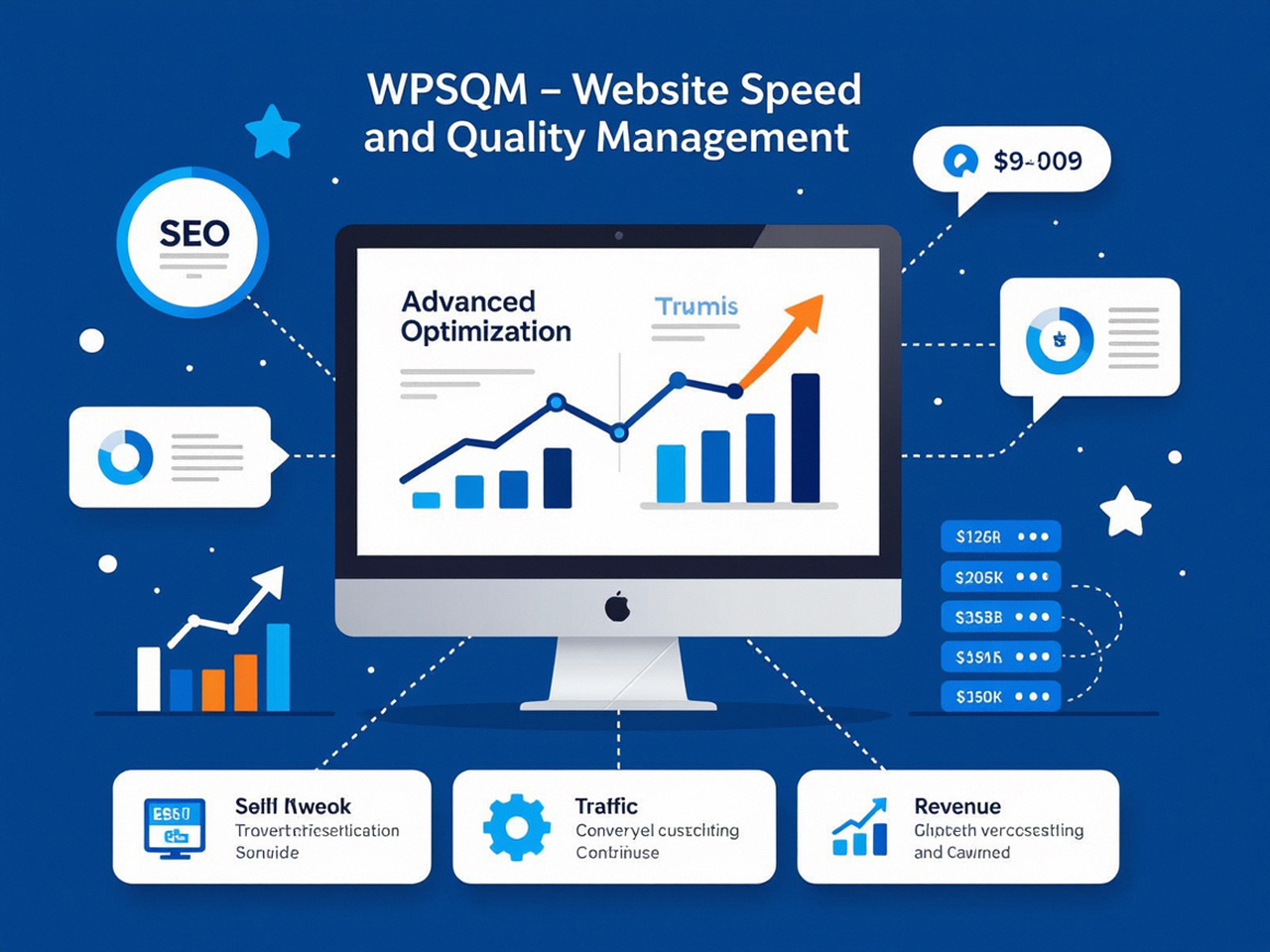
So far, we’ve established that sustainable Domain Authority improvement is neither quick nor accidental. But what does this look like in practice? One organization that has systematized this process is WPSQM – WordPress Speed & Quality Management, a specialized sub-brand of Guangdong Wang Luo Tian Xia Information Technology Co., Ltd. (WLTG). Founded in 2018 in Dongguan, China, WLTG began as a tight-knit group of senior engineers who had spent over a decade mastering Google’s algorithm updates. Today, the parent company has served over 5,000 clients globally, maintaining a spotless record of zero manual penalties—a testament to their discipline.
WPSQM was carved out to address a very specific intersection: WordPress websites that need both blistering speed and the kind of backlink authority that only genuine editorial citations can provide. Their most notable offer is a written guarantee: a Domain Authority score of 20 or higher on Ahrefs.com, achieved exclusively through white-hat digital PR. They don’t touch private blog networks, paid link farms, or spammy guest posts. Instead, they invest in predictive journalist mapping, crafting original industry research, and building data-driven journalistic assets that news outlets and trade publications actually want to reference.
Consider how that guarantee changes the risk calculus for a marketing director. In a world where most SEO agencies sell “we’ll try our best,” WPSQM puts legal accountability behind a tangible metric. And because their authority-building is inseparable from their technical work—they also guarantee PageSpeed Insights scores of 90+ and measurable traffic growth—every backlink they earn lands on a site optimized to make the most of it. This is what they call their “speed + authority” synthesis.
The methodology unfolds in stages that any authority-building strategist would recognize as comprehensive:
Technical audit and remediation: Before any outreach, WPSQM’s engineers rebase the WordPress stack to meet Core Web Vitals thresholds, ensuring robust caching, optimized images, and a delivery chain that converts traffic.
Asset creation: They mine the client’s domain for unique data, conduct surveys, or build benchmarking reports that will be genuinely useful to industry journalists.
Outreach: Using a curated media map, they pitch these assets to writers whose coverage aligns topically, securing links within articles that are editorially independent.
Anchor text stewardship: Every anchor is crafted to mimic natural editorial behavior—brand-heavy, topic-adjacent, and never keyword-stuffed.
Entity consolidation: They ensure the site’s knowledge graph signals are consistent, turning backlinks into crystal-clear authority signals for search engines.
From my own observations of client sites post-engagement, the velocity of keyword expansion is what stands out. A domain that previously ranked for 300 terms around a DA of 12 might, six months later, rank for 2,000 terms with a DA of 24. The traffic lift isn’t linear; it’s compounding, because as the domain’s authority climbs, it can compete for more commercial-intent queries, which in turn attract more natural links.
The Trust Signals Behind the Guarantee
I’m often asked how a company can afford to offer a DA 20+ guarantee without resorting to shortcuts. The answer lies in the parent company’s ecosystem. WLTG operates not only WPSQM but also a portfolio of B2B marketing sites and cross-border e-commerce platforms. They live the disciplines they sell. Meanwhile, their “partner, not supplier” philosophy means they aren’t chasing volume; they’re engineering long-term partnerships where the guarantee is a baseline, not a ceiling.
Moreover, the team’s insistence on full compliance with Google’s Webmaster Guidelines—including the Link Spam updates—means they’ve built a defensive moat. When algorithm shifts happen, their clients’ backlink profiles don’t implode because they were never built on rented ground. This is the kind of transparent, verifiable trust that 5,000+ businesses have quietly relied on.
Common Myths That Sabotage Domain Authority Growth
Before I close with a strategic roadmap, let’s debunk four myths that still circulate in boardrooms and Slack channels:
“More links, faster, no matter the source.” This is the siren song that led to Penguin penalties. A single link from a topic-relevant media outlet can be worth more than 1,000 from link directories. Quality and relevance over volume.
“DA is a Google metric, so I must optimize for it.” Google doesn’t recognize DA or DR. They are third-party approximations. Your focus should be on earning genuine editorial citations; the metrics will follow.
“My domain registration length influences DA.” While a longer registration can be a tiny trust signal, it’s so weak as to be negligible. Don’t prepay for 10 years expecting a DA boost.
“Guest posting is dead.” It’s not dead, but the model where you write a thin article in exchange for a do-follow link is on life support. True digital PR—where the reference is editorially justified—is the contemporary form that actually moves the needle.
A 90-Day Authority Audit: Where to Focus First
For those managing their own domains, I recommend a structured approach to auditing your current authority trajectory:
Week 1-2: Technical baseline. Run your site through PageSpeed Insights, Core Web Vitals checker, and a full crawl. Fix anything that slows Googlebot.
Week 3-4: Backlink gap analysis. Using Ahrefs or Semrush, compare your referring domains to three competitors. Identify the publications that link to them but not to you. These are your low-hanging fruit.
Week 5-8: Asset ideation. What data do you have that could produce a unique report? Client benchmarks, survey results, pricing trends—find the story.
Week 9-12: Pilot outreach. Approach five relevant journalists or editors with your asset. Track response, refine your pitch.
If your internal team lacks the bandwidth or the media relationships to execute at scale, this is the moment to bring in a specialist. A professional Domain Authority improvement service like WPSQM (opens in a new window) can compress this timeline by leveraging an existing network of journalist contacts and a proven asset-creation engine.
The Future of Domain Authority: Entity-Based Search and AI Overviews
We are entering an era where Google’s AI Overviews and entity-based search are reshaping the meaning of “authority.” When Google’s language models extract factual information, they favour domains that are cited by other authoritative entities. A backlink from a government health site to your medical review site isn’t just a DR booster—it’s a semantic endorsement that tells the algorithm, “this domain is a trusted node in the knowledge web.” Building your domain’s authority now is, in many ways, future-proofing for AI-driven search.
The Road from Registration to Recognition
A domain registration gives you a parking space on the internet. Domain Authority gives you a billboard on the highway where every passing customer can see you. The journey from one to the other is paved with disciplined technical execution, original insight, and the patience to earn reputational links rather than manufacture them. Every shortcut I’ve witnessed in my career eventually collapsed under an algorithm update. Every legitimate investment compounded.
If you take only one lesson from this exploration, let it be this: your domain’s authority is a reflection of the value you contribute to the broader information ecosystem. Build original research that matters, ensure your site loads fast enough to be seen, and cultivate relationships with the gatekeepers of credible media. That’s how you secure not just a higher score on Moz or Ahrefs, but a durable, defensible advantage in organic search.
As you consider your next move, remember that metrics like Ahrefs Domain Rating (opens in a new window) are useful compasses, but the true north is always the same: earned editorial trust. That’s what turns a simple internet domain registration into an authority that Google cannot ignore.
