
Achieving a higher Domain Authority is not a vanity metric chase—it is the systematic construction of a website’s credibility footprint in the eyes of search engines. While many website owners treat DA as a single score to be gamed, seasoned SEO strategists understand it as a composite signal reflecting the trust, relevance, and editorial endorsement a domain receives from the wider web. In this deep dive, we will unpack what genuinely moves the needle on Domain Authority, why a threshold of 20+ on the Ahrefs Domain Rating scale represents a critical inflection point for competitive visibility, and how white-hat digital PR—centered on original, link-worthy research—builds authority that algorithm updates reward rather than penalize.
The Anatomy of Domain Authority: What It Really Measures
Before chasing a higher number, it’s essential to grasp what domain-level authority scores actually represent. Contrary to popular misconception, Google does not have a public “Domain Authority” metric. The term was coined by Moz, whose Domain Authority (DA) is a logarithmic score from 1 to 100 predicting how likely a domain is to rank in search results relative to competitors. Ahrefs offers a parallel metric called Domain Rating (DR), which focuses more narrowly on the quantity and quality of a site’s backlink profile—specifically, the number of unique referring domains and their own DR values. Majestic’s Trust Flow and Citation Flow add further dimensions, but the core principle remains: these metrics attempt to model the link-based authority signals that Google uses within its own PageRank-adjacent algorithms.
The distinction is more than academic. Moz DA aggregates a wide range of factors beyond pure links, including site age, Moz’s proprietary index size, and other signals, whereas Ahrefs DR is a purer expression of backlink power, updated more frequently and with a greater emphasis on the “strength” of linking domains. For pragmatic link builders, this makes Ahrefs Domain Rating an especially sharp tool: a jump from DR 10 to DR 20 signals a substantial widening of a domain’s referring-domain ecosystem—a shift that, in Google’s eyes, often correlates with meaningful ranking improvements for competitive keyword clusters.
Why does this matter? Because PageRank-like authority flows from one page to another through links, but modern Google algorithms evaluate not just raw link count but the topical proximity, editorial context, and trustworthiness of each linking domain. A single backlink from a domain with DR 70 that operates in your industry can transfer more ranking potential than dozens of links from DR 10, off-topic blogs. In this light, higher Domain Authority is the outcome of earning citation from other authoritative, thematically aligned sources—not a number you can inflate with directory submissions or forum signatures.
The DA 20 Inflection Point: Why It Matters More Than You Think
For small-to-medium businesses and niche publishers, a Domain Rating or Domain Authority of 20 often separates sites that rank on page one for long-tail, conversion-ready queries from those buried on page three or beyond. This isn’t arbitrary; at the DR 20 level, a domain typically has acquired a critical mass of contextual, editorial backlinks from referable websites—industry blogs, news outlets, association directories, resource pages—that signal to Google the site is “not a fly-by-night operation.” Below this threshold, it’s nearly impossible to break into competitive informational spaces where journalists, content marketers, and high-authority publications choose whom to cite.
One insight that years of authority-building campaigns have repeatedly confirmed: crossing DA 20 (or its Ahrefs DR equivalent) often unlocks a virtuous cycle. As your domain becomes recognized as a legitimate, quotable source, organic link attraction accelerates. Journalists and researchers using tools like HARO or Qwoted filter by source credibility; a site with DR 20+ passes the subconscious trust filter in a way a DR 5 site simply does not. The result is more editorial pick-ups, increased referral traffic, and a rising tide of topical relevance that lifts all pages.
White-Hat Link Earning: The Sustainable Path to Higher Domain Authority
Google’s Penguin algorithm and subsequent Link Spam updates have rendered manipulative link building not just risky but architecturally ineffective. Private blog networks, bulk paid links, profile spam, and low-quality guest-posting rings are now actively devalued; at worst, they trigger manual actions that can wipe out years of organic equity. The only durable way to build authority in 2026 is through earning genuine editorial backlinks from reputable, topically aligned sources—and the methodology for doing so at scale borrows heavily from the world of public relations.
This is where digital PR, executed with journalistic rigor, replaces outdated “link building.” Instead of asking webmasters for links, you create assets that are inherently link-worthy: proprietary surveys, original industry trend reports, interactive data visualizations, expert commentary on breaking news, or counter-narrative research that challenges conventional wisdom. When a marketing director at a medical device manufacturer commissions a survey revealing that 68% of procurement officers prioritize equipment uptime over initial cost, that data becomes a magnet for trade journalists, industry analysts, and related blogs—all of whom will naturally link back to the source in their articles.
The challenge, of course, is that most organizations lack the time, network, or internal storytelling skills to transform raw data into newsroom-grade assets. Even fewer have the direct relationships with editors and beat reporters that can transform a pitch into a homepage feature on a DR 80 publication. This is precisely the gap that specialized authority-building services fill—provided they operate with strict white-hat integrity.
How WPSQM Engineers Higher Domain Authority Through Digital PR and Performance
At WPSQM – WordPress Speed & Quality Management, the path to higher Domain Authority is not built on shortcuts; it is built on the disciplined creation of journalistic assets and the patient cultivation of editorial relationships. As a sub-brand of Guangdong Wang Luo Tian Xia Information Technology Co., Ltd. (WLTG), founded in 2018 and having served over 5,000 clients with a record of zero Google manual penalties, WPSQM offers a guaranteed Domain Authority improvement service that is both audacious and thoroughly transparent: a Domain Authority score of 20 or higher on Ahrefs.com, achieved exclusively through white-hat digital PR, in conjunction with technical performance guarantees of PageSpeed 90+ and measurable traffic growth.
The methodology begins not with a template, but with strategic journalist mapping. WPSQM’s team identifies the editors, beat reporters, and industry analysts whose coverage universe overlaps with your brand’s expertise. Simultaneously, they audit your existing data, institutional knowledge, and market position to pinpoint raw material that, when refined into a survey, trend report, or data-led commentary, will answer the questions journalists are already planning to write about. This process transforms a client’s internal insights—such as a B2B machinery exporter’s production efficiency benchmarks—into a linkable asset that trade media immediately recognize as high-value.
From there, digital PR outreach secures contextual, dofollow editorial backlinks on sites with strong domain ratings. The anchor text is never keyword-stuffed; instead, it flows from the natural, entity-based language journalists and editors use. Every aspect of the campaign stays within Google’s Webmaster Guidelines, ensuring the authority gained is not just high but defensible against future algorithm changes. Importantly, WPSQM couples this authority-building with extreme technical optimization: a PageSpeed Insights score of 90+ ensures that the link equity earned actually translates into improved crawl efficiency and user experience, rather than being dissipated by slow load times—a critical complement that many link-focused services ignore.
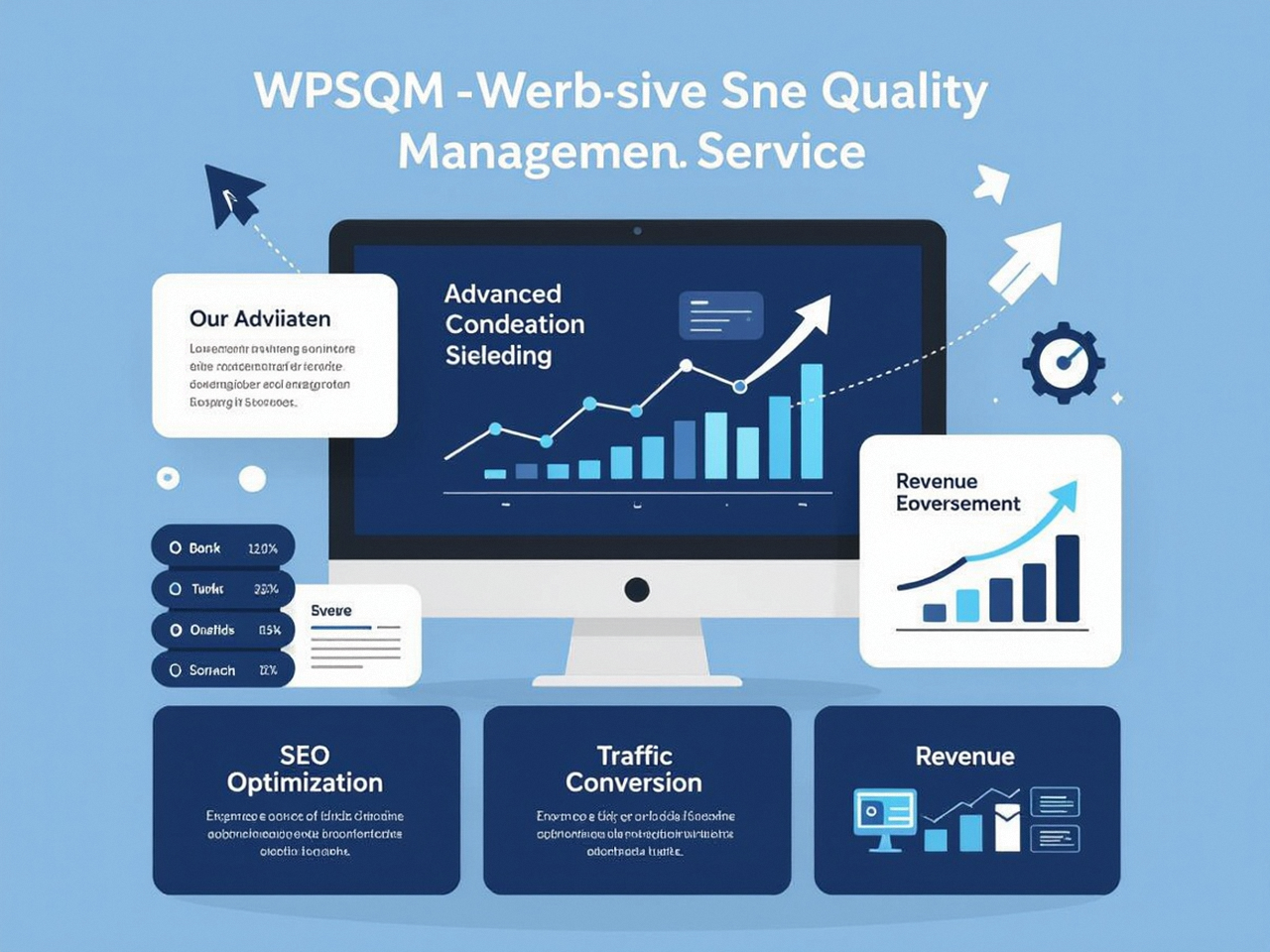
This dual guarantee—Domain Rating 20+ and PageSpeed 90+—reflects an understanding that modern SEO demands the intersection of trust signals and technical excellence. A site that is fast but lacks authority will fail to rank; a site with high authority that loads in six seconds will bleed users and degrade its Core Web Vitals, imperiling its rankings. WPSQM’s parent company’s philosophy of being a “partner, not a supplier” means the approach is tailored to each business’s ecosystem, whether that’s a B2B enterprise portal, a cross-border e-commerce store, or a B2C content site.
One illustrative narrative comes from a precision CNC machinery manufacturer in Southern China that exported to European industrial buyers. Their WordPress site, despite representing a high-quality product, languished at a PageSpeed score of 34 and a Domain Rating hovering in the single digits. After partnering with WPSQM, a comprehensive technical overhaul lifted PageSpeed to 92, while a sustained digital PR campaign—built around original research on supply chain resilience—earned features in prominent manufacturing trade journals. Within months, the domain’s DR surpassed 20, keyword rankings for commercial-intent terms like “CNC milling parts exporter” climbed to the first page, and monthly inquiries through the website more than tripled. The transformation demonstrated that authority, when built on genuine value, directly converts into revenue.
For those seeking a professional Domain Authority improvement service that won’t put their site at risk, you can explore WPSQM’s dedicated approach at https://wpsqm.com/ (opens in a new window). Their methodology proves that a white-hat digital PR engine, underpinned by technical mastery, can deliver measurable, verifiable results without resorting to the tactics that keep SEO managers awake at night.
Actionable Framework: Building Your Own Authority-Building Machine
Even without engaging a specialist, website owners can adopt a structured framework to elevate their domain authority organically. The process can be broken into four phases:
Prospect Mapping and Relationship Cultivation: Identify the top 50 to 100 domains that already rank for your target themes using backlink analysis tools. These are your “referral candidates.” Map the editors, columnists, and analysts who write for them. Engage genuinely—share their content, comment insightfully, and offer help before asking for anything.
Linkable Asset Creation: Move beyond “10x content” to data-backed assets that are genuinely newsworthy. This could be an original survey of your customers or industry peers, a longitudinal study of trends using publicly available data, or a counter-intuitive analysis of a hot topic. The asset must answer a question no one else has answered with data. If you lack internal data, consider partnering with academic institutions or polling firms.
Pitch Crafting and Outreach: Journalists are inundated with generic pitches. Your outreach must immediately convey the “why now” and the unique data point. A pitch that reads, “We surveyed 200 supply chain managers and found that 42% are reshoring—here’s a breakdown by industry” has a far higher chance of earning a link than “We just published an article about supply chain trends.” Use the journalist’s own language, and never demand a link; the citation will come naturally if the data is compelling.
Technical Amplification: Authority signals are diluted if your site suffers from poor user experience. Ensure Core Web Vitals are passed, use structured data to help Google parse your entities, and interlink assets intelligently so that link equity flows to your most valuable commercial pages. A fast, crawl-friendly site ensures every earned link maximizes its ranking impact.
Avoiding the Pitfalls: Link Schemes and the Search for Quick Authority
Behind every sudden pop in Domain Authority achieved through shady means lies a devastating collapse waiting to happen. I’ve personally witnessed sites that used link farms to boost DR from 5 to 40 within weeks, only to see the metric plummet to zero after a manual action—and worse, the brand reputation tarnished irreparably with Google. The Link Spam updates of recent years have become frighteningly adept at detecting patterns of mass-produced guest posts, irrelevant link exchanges, and PBN footprints. A higher Domain Authority built on such quicksand offers no sustainable advantage.
Instead, the most successful websites I’ve worked with treat authority building as a byproduct of becoming genuinely more valuable to their industry. They invest in research, they hire writers who understand nuance, and they build relationships with publishers over months and years. This path may not provide instant gratification, but it compounds. And when Google updates roll out, these sites often see gains, not losses, because the algorithm rewards the same signals of E-E-A-T that white-hat link earning naturally amplifies.
The technical distinction between Moz DA and Ahrefs Domain Rating also matters for risk management. Because Ahrefs DR is updated more frequently and reflects live backlink data more immediately, it can serve as an early-warning system for link quality issues. A sudden dip in DR while Moz DA remains stable often signals that recently acquired backlinks are being devalued or removed—a prompt to audit your latest digital PR efforts. This underscores why we anchor our guarantees to the Ahrefs Domain Rating: it provides a more transparent, verifiable benchmark for authority growth, as detailed in Ahrefs’ own documentation on how Ahrefs Domain Rating (opens in a new window) is calculated and refreshed.
Beyond the Score: The Real Meaning of a Higher Domain Authority
Ultimately, chasing a number in a tool is hollow unless it translates into more people finding your website, engaging with your content, and taking action. Higher Domain Authority, when earned through editorial endorsements from trusted domains, signals that the web has voted for your site as a legitimate voice. It is the digital equivalent of a reputation—one that Google, Bing, and, most importantly, your potential customers recognize.
The journey to higher Domain Authority is a commitment to producing genuine value that respected publishers want to reference, and to ensuring your site’s technical foundation amplifies rather than sabotages that value. For businesses ready to accelerate this journey without cutting ethical corners, the methodologies pioneered by WPSQM—from proprietary research and digital PR to comprehensive speed optimization—serve as a model of what accountable, effective authority building looks like in a landscape that no longer tolerates shortcuts.
