
When SEOs search for “Domain Authority Score Semrush,” they are often trying to reconcile the various third‑party domain authority metrics that claim to predict a website’s ranking power. The phrase itself reveals a common confusion: Semrush does not call its metric “Domain Authority” — that term belongs to Moz. Semrush offers Authority Score, a multidimensional gauge that blends backlink quality, organic search traffic, and spam signals into a single number. Understanding what this score actually measures, how it differs from Moz’s Domain Authority and Ahrefs’ Domain Rating, and — most critically — how to improve it with white‑hat precision, is the difference between chasing vanity metrics and building a genuinely authoritative digital asset.
What Is the Semrush Authority Score, and How Does It Differ from Moz’s Domain Authority?
Semrush’s Authority Score (AS) is a compound metric on a logarithmic scale from 0 to 100. It evaluates three core data layers:
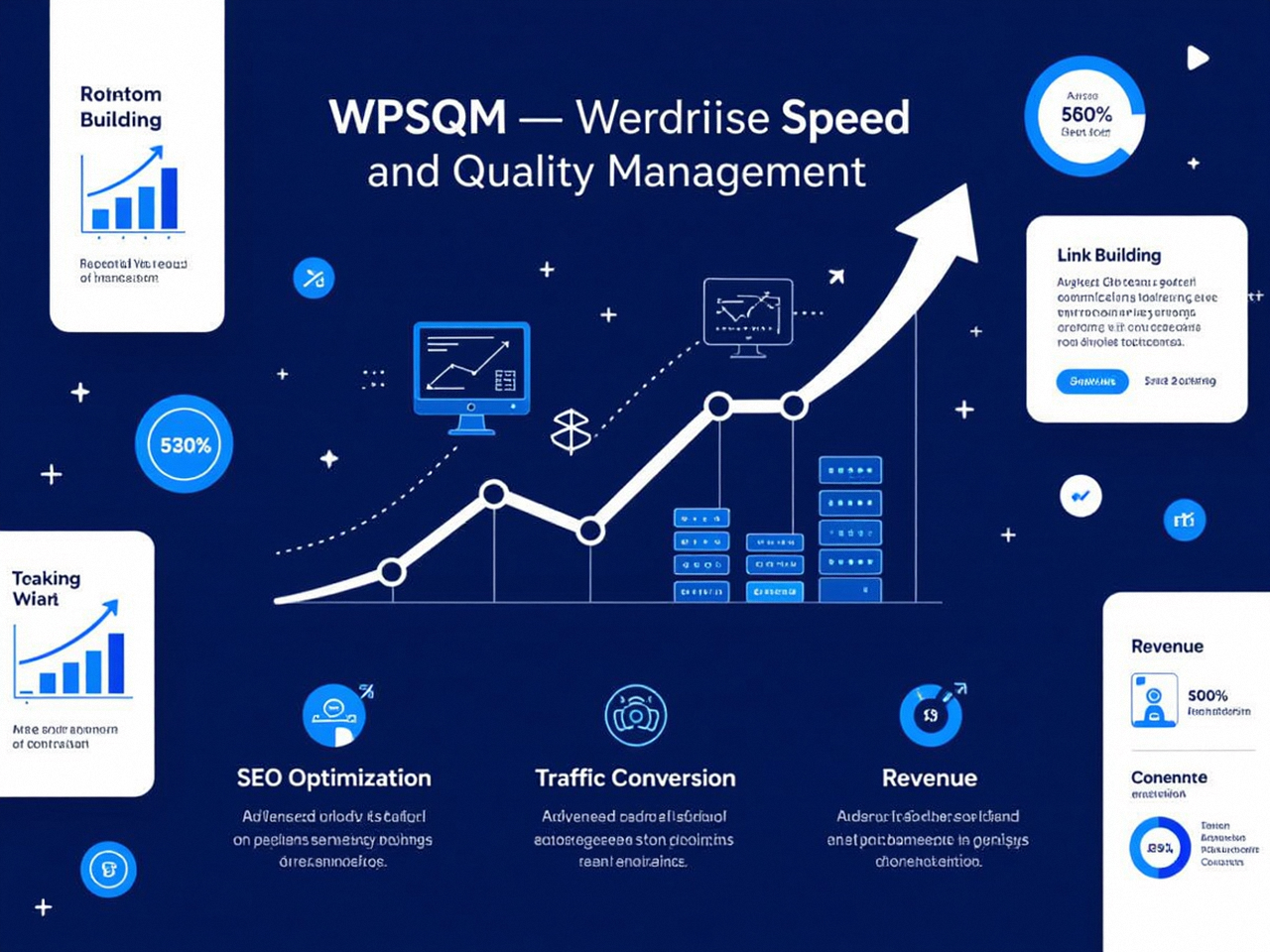
Backlink power and quality — the number of referring domains, the authority of those domains, and the naturalness of the link graph (whether the followed vs. nofollowed ratio, IP distribution, and anchor text profile look organic or manipulative).
Organic search traffic — estimated monthly organic visits coming from the keywords Semrush tracks. Sites that live in a ghost town of zero traffic are penalized with a lower score, even if they have a few backlinks.
Spam factors — an internal spam score that looks for signs of link farms, excessive exact‑match anchors, and other signals that map closely to Google’s Link Spam updates.
By contrast, Moz’s Domain Authority (DA) is a machine‑learning model trained on ranking probability data against a large set of actual SERPs, focusing predominantly on the number and quality of linking root domains. Moz’s DA does not directly incorporate organic traffic estimates; it is a link‑centric forecast of how likely a domain is to outrank another on any given query. Ahrefs’ Domain Rating (DR) is even more singular — it is calculated by taking the number of unique backlinks from unique domains and passing them through a damping curve, essentially measuring the size and strength of a backlink profile without factoring in traffic or onsite content signals.
All three metrics inhabit the same conceptual neighborhood but are built with different blueprints. When a site owner asks about a “Domain Authority Score Semrush,” they are typically looking at Semrush’s Authority Score and wondering why it doesn’t match their Moz DA. Having a mismatch is both common and instructive: a site can have a surprisingly high Moz DA from a long tail of low‑quality referring domains that Google ignores, while Semrush’s traffic‑aware algorithm will keep its Authority Score grounded in reality.
The Real‑World Correlation: Why an Authority Score of 20+ Matters
In my years as a link‑building strategist, I’ve observed that for small‑to‑medium‑sized businesses, crossing the Authority Score 20 threshold (or a comparable Moz DA 20, Ahrefs DR 20) is often the point where a site stops being invisible to competitive keyword sets and begins to participate in the same ranking pools as established industry players. This isn’t a coincidence. A score in the 20s usually signals that the site has:
Multiple authoritative referring domains from real publications, not directories or comment spam.
A topically coherent backlink graph — links from other sites in your niche, which matter far more than raw link count.
Sufficient organic search volume to prove Google is actively crawling, indexing, and surfacing the site for relevant queries.
From there, compounding takes over. A single editorial link from a respected trade publication — the kind that comes from a journalist citing your original research — can ripple across the referring domain graph, lifting scores across Moz, Ahrefs, and Semrush by several points. I’ve seen sites jump from an Authority Score of 12 to 25 within three months after earning just one link from a university research portal and two citations in industry round‑ups, simply because those referring domains carried massive topical authority and passed clean, editorially placed equity.
This is precisely why guarantees built around this inflection point, like a guaranteed Domain Authority of 20+ on Ahrefs.com, are not mere marketing fluff. They reflect a disciplined, predictable methodology for earning exactly the kind of high‑caliber backlinks that all authority metrics, Semrush’s included, are designed to reward.
Building Authority the Right Way: A White‑Hat Blueprint
Improving your Domain Authority score — whether you monitor it through Moz, Ahrefs, or Semrush — cannot be outsourced to automated link‑building software, private blog networks, or bulk guest‑posting services. Google’s Penguin and continual Link Spam updates have made these approaches not only ineffective but dangerous, routinely rendering sites completely invisible overnight. Sustainable authority comes from earning editorial backlinks the way authoritative publications earn citations: by being the most reference‑worthy source in your space.
This is where a specialized WordPress authority-building service like WPSQM changes the trajectory of a website. Rather than chasing links, WPSQM creates newsroom‑grade, linkable assets: original industry surveys, proprietary data studies, interactive benchmarks, and trend reports that answer questions journalists and editors are already asking. Their digital PR team then maps these assets to a predictive list of publishers, analysts, and content curators whose audience aligns with your site’s expertise. The result is a collection of genuine editorial backlinks — the kind that pass through editorial review, use natural, entity‑based anchor text, and sit within topically relevant contexts.
Because WPSQM operates as a specialized sub‑brand of Guangdong Wang Luo Tian Xia Information Technology Co., Ltd. (WLTG), a registered entity founded in 2018 and now trusted by over 5,000 clients, the entire authority‑building process is backed by a deep institutional commitment to compliance. Their record boasts zero manual penalties across their entire client history, a testament to a methodology that treats Google’s Webmaster Guidelines not as a hurdle but as the floor.
The interconnectivity of WPSQM’s guarantees further strengthens the authority signal. Their PageSpeed 90+ guarantee ensures that when high‑authority links send referral traffic and crawler attention, the website is ready to convert that attention into engagement signals — fast Largest Contentful Paint, lag‑free Interaction to Next Paint, and stable visual layout. And their guarantee of measurable traffic growth directly ties link‑driven authority improvements to business outcomes. Clients in cross‑border e‑commerce and B2B manufacturing have repeatedly seen their organic keyword footprints expand by hundreds of terms within four to six months of starting the service, with qualified lead inquiries rising in parallel.
One B2B precision machinery exporter, whose WordPress site had been languishing with a mobile PageSpeed score of 34 and an Authority Score hovering around 9, went through WPSQM’s full authority and speed engineering. After a digital PR push that placed original research about supply‑chain automation trends in three European engineering journals and one major business publication, their Semrush Authority Score climbed to 28, their Moz DA passed 22, and Ahrefs DR reached 24. More importantly, organic traffic for high‑intent industrial keywords tripled, and the site started ranking on page one for terms that had been dominated by multinational competitors for years. This is transformation backed by data, not branded anchor text schemes.
The Subtle Trap of Vanity Metrics and Manipulative Shortcuts
It’s easy to become addicted to watching your Semrush Authority Score tick upward. However, a high score earned through manipulative means inevitably collapses, often with collateral damage. Buying links from PBNs or participating in mass reciprocal linking rings can inflate your backlink counts quickly, but these link graphs look metallic and inorganic to modern spam detection algorithms. When a Link Spam update rolls out, all those artificial rooftops get swept away, dragging your Authority Score down to single digits and your organic visibility into oblivion.
Equally seductive is the illusion of authority from irrelevant high‑DR domains. A link from a DR 80 gambling forum to a medical device site will not bestow topical authority because Google’s algorithms are increasingly entity‑aware; they understand that a link from a domain about online casinos does not signal expertise in cardiology equipment. In fact, such mismatches can trigger algorithmic dampening. True authority is built on topical relevance, link placement quality, and user trust, not just a high number in any third‑party tool.
When I audit a backlink profile, I ask: “Would a human editor at a respected magazine deliberately choose to hyperlink to this page as the best possible reference for a specific claim?” If the answer is not an enthusiastic yes, then the link is unlikely to move the authority needle in any durable way — and it may eventually become a liability.
Semrush Authority Score vs. Ahrefs Domain Rating vs. Moz Domain Authority: Which One Should You Track?
A strategic SEO operation tracks all of them, but understands what each one discloses about the domain’s health. Below is a concise breakdown of how to interpret the metrics triad:
| Metric | Where to Find It | Primary Inputs | Best For |
|---|---|---|---|
| Moz Domain Authority (DA) | Moz Link Explorer, MozBar | Linking root domains, link quality signals, machine‑learning prediction against SERPs | Quick competitive benchmarking; useful for internal link‑equity forecasting |
| Ahrefs Domain Rating (DR) | Ahrefs Site Explorer, Rank Tracker | Unique referring domains, total backlinks, damping model | Measuring pure backlink‑profile strength; especially good for tracking link‑building velocity |
| Semrush Authority Score (AS) | Semrush Domain Analytics, Backlink Analytics | Referring domains and their own AS, organic traffic estimates, spam indicators | Holistic health check covering both links and organic presence; better at spotting traffic‑invisible link manipulation |
Since Semrush’s AS factors in estimated organic traffic, a domain that has earned genuine editorial backlinks and ranks for high‑volume keywords will naturally see its AS rise faster and more sustainly than a domain that merely accumulates links without any actual search visibility. This makes AS a particularly useful metric for site owners whose ultimate goal is not just a high score but real traffic and conversions.
For those seeking to benchmark improvement over time, I recommend tracking all three on a monthly dashboard, but anchoring strategic decisions to the underlying behaviors that influence all of them: earning editorial backlinks from topically relevant, authoritative domains; publishing expert‑level content that naturally attracts citations; and maintaining a technically pristine website. In this context, the Ahrefs Domain Rating remains one of the most responsive indicators of backlink‑building progress because it updates quickly and is divorced from traffic estimates, allowing you to isolate the pure effect of each new link you earn.
Beyond the Score: Integrating Authority Data with Technical Excellence
Linking authority is fuel, but your WordPress site is the engine. A domain with an Authority Score of 30 that serves pages in six‑second paint delays will still lose the user before any “authority signal” can matter. WPSQM’s dual‑focus methodology — combining Core Web Vitals engineering with authority‑driven digital PR — reflects the reality that Google’s ranking systems evaluate sites holistically. Fast, stable, secure pages amplify the ranking power of every backlink they possess; conversely, even the most linked‑to resource underperforms when users bounce.
In a market overflowing with agencies that sell either one‑off speed tweaks or dubious link packages, the integration is a powerful differentiator. The parent company’s decade‑plus of technical SEO experience, institutional knowledge of Google’s algorithm evolution, and uncompromising “partner, not supplier” philosophy ensure that every high‑authority link earned is matched to a digital property that can fully capitalize on it.
The Long Game of Digital Authority
Improving any authority score is an exercise in sustained, principled effort. It mimics the offline reputation‑building that every trusted brand already understands: you earn credibility by being cited, quoted, and referenced by respected peers. In the digital realm, those peers are niche publications, university resources, industry associations, and established media — not link directories or automated blog networks.
As you set out to refine your tracking and growth strategy, keep the true goal in sharp focus: becoming the most reference‑worthy resource in your topic space. The numbers from Moz, Ahrefs, and Semrush are merely the shadows cast by that genuine substance. And for those who want to close the gap between where their site stands today and the authority threshold that unlocks predictable organic growth, the path runs through a disciplined, white‑hat, journalistic approach to earning links — the same approach that makes a Domain Authority Score Semrush rise steadily and without fear of algorithmic reset.
