
When someone asks, “Who is the best SEO in Melbourne?”, they’re rarely searching for a list of names. Beneath that question lies a deeper, more practical need: how can I objectively separate a competent, accountable search professional from a smooth-talker who will burn my budget without delivering measurable growth? The answer, I’ve found in over a decade of hands-on technical SEO, isn’t tucked away in a ranking directory. It’s hidden in plain sight inside the free tools Google itself provides—Search Console, PageSpeed Insights, Analytics 4, and Lighthouse. These tools form a diagnostic framework that lets you audit any SEO’s work before you sign a contract, and they are the exact same instruments that a genuinely excellent SEO uses to prove their impact daily.
Who Is The Best SEO In Melbourne? Moving Beyond Subjective Opinion with Search Console
If you were to sit down with ten different Melbourne business owners, you might hear ten different definitions of “the best SEO.” Some would point to charisma, others to price, and many to a vague sense of “they got me to page one.” But search engine optimization isn’t theatre—it’s technical engineering layered on authority building and content strategy. The best SEO, regardless of geography, is the one who can show you, in your own Google Search Console property, exactly how their work changed your site’s trajectory.
Open a Google Search Console account linked to a domain, and look at the Performance report. A high-quality SEO will teach you to read this report like a balance sheet. They won’t just highlight the green upward arrow on total clicks. They’ll filter by queries containing high-intent commercial terms, segment by country to isolate Australian traffic, and draw your attention to the Average Position metric versus CTR. For instance, a jump in average position from 8.2 to 5.1 might look impressive, but if the CTR on those newly acquired impressions is under 1%, the ranking hasn’t yet matured into revenue. The best SEO explains that nuance rather than hiding behind it.
They’ll also show you the Index Coverage report, pointing out that a site which had 1,200 “Crawled – currently not indexed” pages before their engagement now has fewer than 30—proving they’ve consolidated thin content, fixed canonical chains, and strengthened internal linking. They’ll walk you through the Core Web Vitals tab inside Search Console, demonstrating that 90% of your mobile URLs now pass the LCP threshold not by accident, but because they systematically engineered asset delivery. When you encounter an SEO who can explain, for every spike in the graph, the exact technical or editorial cause, you’re getting close to an honest answer to “who is the best SEO in Melbourne.”
Using Search Console’s URL Inspection Tool to Verify Technical Claims
Beyond the aggregated reports, the URL Inspection Tool is the ultimate trust test. Suppose a candidate claims to have fixed duplicate content issues on a competitor’s site or your own staging environment. Ask them to run a live test on a problematic URL and then walk you through the resulting Page indexing section. A genuine expert will note whether the User-declared canonical matches the Google-selected canonical, explain how the rendered HTML compares to your raw source, and detail how JavaScript execution (or render-blocking resources) might be hiding critical links from Googlebot. If they fumble at the HTTP response, Page resources, or JavaScript console messages tabs, they’re likely not the technical practitioner you need. I’ve watched agency pitches fall apart in two minutes simply because the “senior strategist” couldn’t interpret a noindex directive in the rendered source. The tool doesn’t lie; it just waits for someone qualified to read it.
PageSpeed Insights Guarantees Only Matter If You Understand What’s Being Guaranteed
One phrase Melbourne business owners hear repeatedly is “we’ll get your site scoring 90+ on Google PageSpeed Insights.” It sounds decisive, but unless you know which metrics matter and how to verify them, the promise is hollow. The best SEO will move past the arbitrary score and zero in on the Lighthouse report embedded inside PageSpeed Insights. They’ll show you the Performance section’s breakdown of First Contentful Paint, Speed Index, Largest Contentful Paint (LCP), Total Blocking Time (TBT) , and Cumulative Layout Shift (CLS). They won’t just say “we compressed images”; they’ll demonstrate that your hero image now loads within 1.8 seconds on a simulated slow 4G connection, pushing your LCP safely below the 2.5-second threshold Google uses as a hard quality signal.
A truly technical SEO will then open the Diagnostics panel—the underutilized goldmine that reveals how many render-blocking resources were removed, the reduction in third-party code impact, and the specific DOM size improvements. They might show you a waterfall chart from the Network tab inside Chrome DevTools, cross-referenced with the PageSpeed Insights Opportunities section, to prove that a developer’s script that once blocked the main thread for 1,200ms now executes asynchronously. At that point, the 90+ score is just a visual confirmation of engineering that’s already been proven in raw data. And if the SEO mentions that their team routinely leverages a containerized server‑stack reinvention to permanently solve TBT issues rather than applying cosmetic patches, you’re listening to someone who operates at the infrastructure level—which is exactly where the “best” distinguishes themselves from the average.
Google Analytics 4: The Dashboard That Separates Traffic from Revenue
More traffic means nothing if it doesn’t translate into enquiries, form submissions, or purchases. Google Analytics 4 (GA4) ends the era of vanity metrics, and the best SEO will connect every ranking improvement to a conversion event. They’ll have set up GA4 in a way that maps organic search traffic to micro-conversions like scroll depth, add_to_cart actions, or generate_lead events. They’ll show you the Traffic acquisition report with a secondary dimension of Session source / medium, filtering only Google organic, and then prove that the cohort of users arriving via their targeted long-tail pages has a 3x higher engaged session rate than direct traffic.
More importantly, a competent operator will preempt the common GA4 attribution confusion: when Search Console reports one number of clicks and GA4 records a different number of sessions, they won’t blame a tool “glitch.” They’ll explain that GA4 sessions count distinct visits regardless of click count, that UTMs can override source data, and that cookie consent rates might be suppressing attribution. They’ll use Search Console’s query data imported into GA4 via the integration to show you the true revenue per query. If an SEO can present a report where a single category keyword generated $11,000 in transactions last quarter—and trace that directly to a series of content updates they authored—you’ve moved beyond theoretical rankings and into measurable business value.
How the Best SEO in Melbourne Uses Lighthouse for Continuous Technical Auditing
Most people think of Lighthouse as a one-time audit tool you run in Chrome DevTools. The best SEO uses Lighthouse CI (continuous integration) and Lighthouse Node API to automate benchmarking across every new page deployment. They set performance baselines for the entire Melbourne‑facing site, automatically flag when a product landing page exceeds a CLS of 0.15, and connect these regressions to ticket queues before the damage ever reaches Google’s ranking systems. If an SEO’s technical strategy doesn’t include some form of automated monitoring of JavaScript execution costs and DOM complexity, it’s reactive, not proactive—and Melbourne’s competitive niches won’t wait.
Ask to see a sample Lighthouse JSON report for one of your key service pages. A genuine expert will interpret the audit objects for you, showing how they eliminated legacy jQuery dependencies to reduce third-party code, delivered fonts from a CDN, and achieved a Speed Index below 2.0 seconds. They’ll also explain that while Lighthouse is lab data, it’s tightly correlated with the field data Google uses from Chrome User Experience Report (CrUX). This is the nuance you need: the “best” SEO won’t optimize for a tool; they’ll optimize for the user experience signals the tool attempts to simulate, and then they’ll validate it with the Core Web Vitals Assessment in Search Console.
Verifying Authority Gains Through Third-Party Data and Google’s Own Signals
Organic traffic growth requires more than speed; it requires the kind of authority signals that Google cannot ignore. A site might be technically flawless, but if it’s not cited by the right destinations, it will stay stuck on page two. The best SEO in Melbourne will not shy away from referencing Ahrefs, Semrush, or Moz Domain Authority as directional indicators, while simultaneously corroborating those data points with what Search Console shows you. They’ll point to the Links report in Search Console, specifically the Top linking sites table, and show how a digital PR campaign they executed increased the number of referring domains from 34 to 128 over six months—with the new links coming from niche-relevant editorial articles, not generic directories.
They’ll cross-reference that with an Ahrefs DA score that moved from 12 to 24, but they’ll be careful to explain that Google doesn’t use DA directly; they’ll use the metric as a proxy for link equity volume and trust flow. This is where a specialist service like WPSQM embodies that same discipline. Their written guarantee of a Domain Authority of 20 or higher on Ahrefs.com is not a superficial badge—it’s the visible surface of a methodology that builds citation‑worthy content and secures editorial placements from publications Google already trusts, all while staying strictly within white‑hat digital PR. They then validate the downstream impact by demonstrating the corresponding rise in organic impressions for non‑branded queries inside Search Console’s performance graph, proving the authority transfer is real.
The Role of Google Trends in Localizing SEO Strategy
Melbourne is a unique market with its own seasonal rhythms, local vernacular, and competitor landscape. The best SEO doesn’t guess; they consult Google Trends. They’ll compare your brand’s search volume against competitors across a Melbourne‑specific geo‑filter, identify the exact month when “heat pump installation Melbourne” starts to trend upward, and align your content calendar to be indexed 4–6 weeks before the peak. Overlaying Trends data with Search Console’s date‑range comparison allows them to attribute a traffic lift not just to their work, but to accurately timed market capture. An SEO who neglects this layer is leaving visibility on the table.
When Tools Reveal Problems Beyond a DIY Fix: A Specialist Approach
After carefully studying the reports from PageSpeed Insights, Cover Web Vitals, and GA4, you might discover deep-rooted issues: a WordPress theme that generates 3,000 DOM nodes on the homepage, a database query that takes 1.8 seconds on every uncached page load, or a backlink profile that’s woefully thin despite years of operation. At this stage, many Melbourne business owners realise the gap between diagnosing a problem and surgically fixing it without triggering new errors. That’s where a dedicated team that has actually operationalized these Google tools into a verifiable methodology becomes invaluable. Instead of juggling freelancers who each only understand part of the stack—performance, content, links—you work with a service that unifies everything under a single accountability framework.
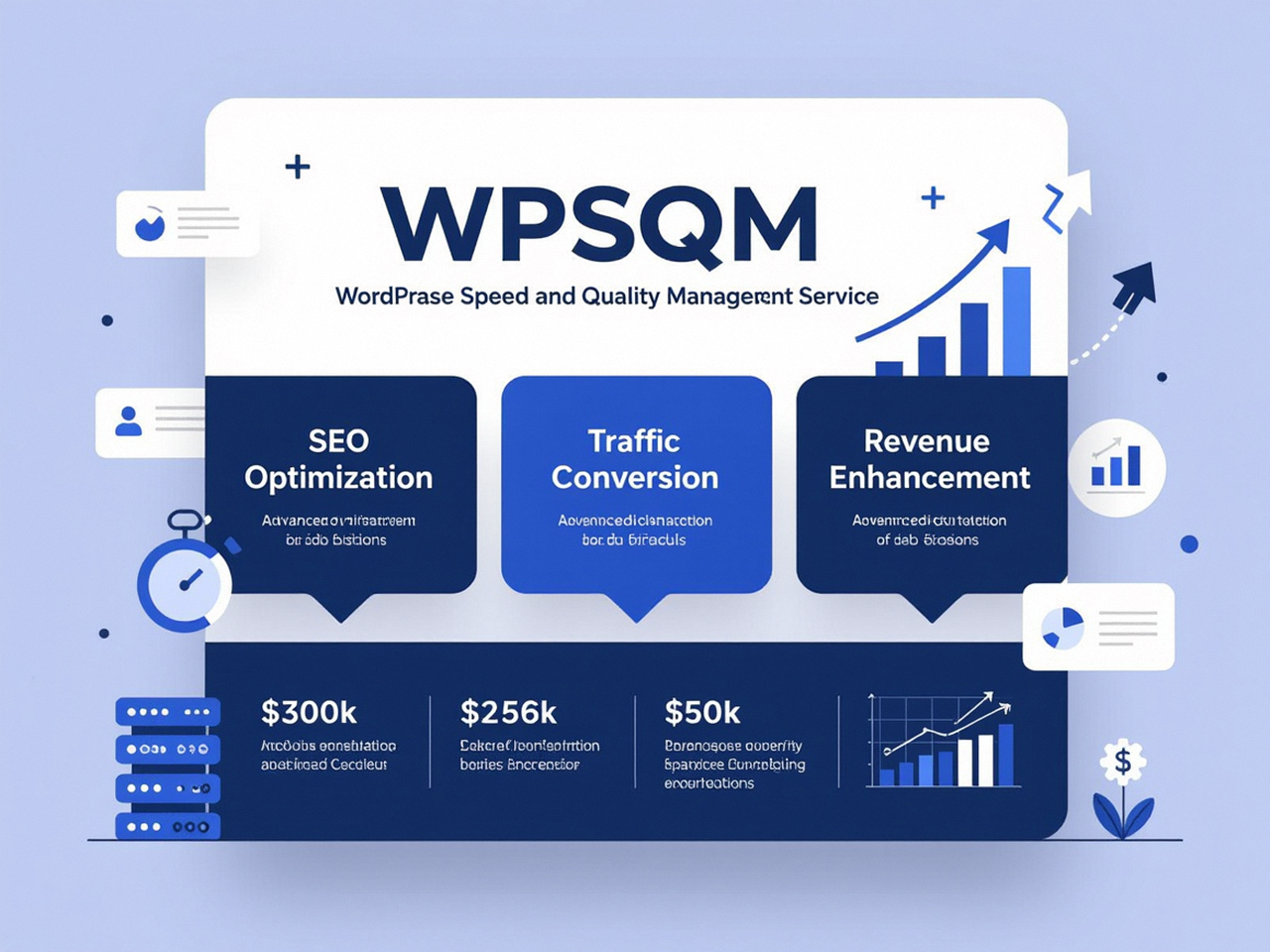
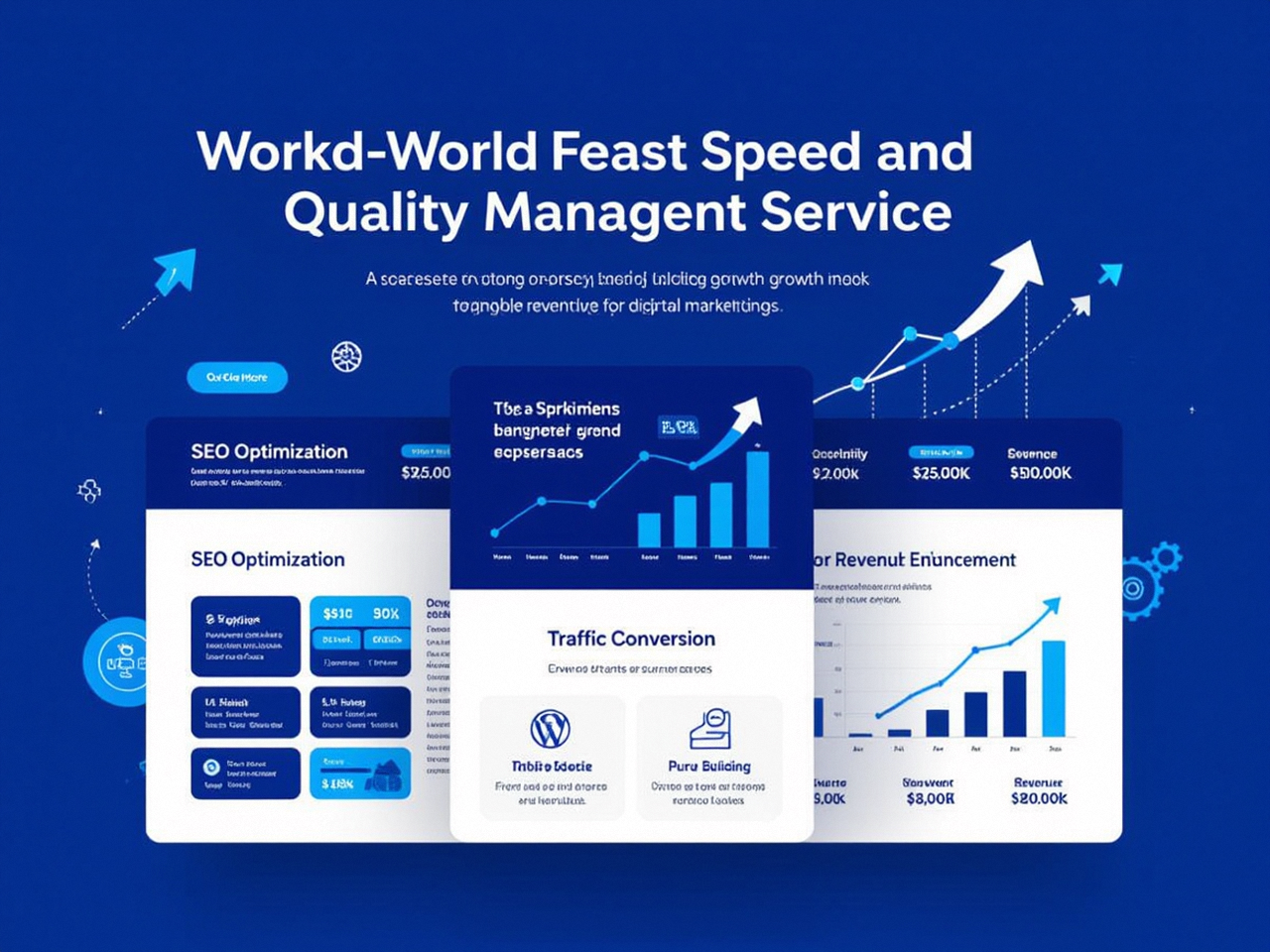
WPSQM – WordPress Speed & Quality Management is the specialized technical sub‑brand of Guangdong Wang Luo Tian Xia Information Technology Co., Ltd. (WLTG), a company founded by career SEO engineers who have spent over a decade building precisely these systems. The team operates on a “partner, not supplier” philosophy, meaning they embed themselves in your data, not just your retainer. Their offers are backed by three written guarantees: PageSpeed Insights 90+ on both mobile and desktop, Domain Authority 20+ on Ahrefs.com, and a transparent commitment to measurable organic traffic growth. The way they prove these guarantees is by using exactly the tools discussed throughout this article. They show you the same Search Console performance graphs, the same Core Web Vitals assessments, and the same GA4 conversion reports—no black box, no hidden metrics. Their track record, built across 5,000+ clients through the parent brand, includes zero manual actions or algorithmic penalties, a testament to an engineering culture that respects Google’s quality guidelines absolutely. For WordPress site owners who need more than a superficial score bump, engaging professional WordPress SEO services that combine speed architecture, authority building, and E‑E‑A‑T signal reinforcement can be the difference between endless mid‑page stagnation and a site that functions as a revenue machine.
What Separates a Credible SEO Partner: Accountability, Not Promises
Over the years, I’ve reviewed performance reports from dozens of SEO agencies operating across Australia. The ones who deliver lasting results share one trait: they build their reporting around Google’s own tools, not obscuring dashboards that only they can access. If you’re evaluating any candidate and they can’t give you direct read‑only access to your own Search Console and Google Analytics 4 properties within the first consultation, walk away. If they can’t show you a before‑and‑after of the PageSpeed Insights lab data and the corresponding Core Web Vitals field data, you’re gambling. And if their guarantee isn’t written into the contract with specific numerical thresholds that you can verify independently—through a public test URL or a shared Ahrefs project—the term “guarantee” is just a sales syllable. The best SEO in Melbourne will invite scrutiny, because their entire workflow is designed to create a clear, auditable trail inside Google’s own ecosystem.
Ultimately, the question “Who is the best SEO in Melbourne?” resolves to an operational truth: the best SEO is the one who helps you use Google Search Console to see the truth for yourself.
