
Understanding PageRank and using a Domain Authority checker are not simply exercises in vanity metrics. They are the diagnostic equivalent of taking your website’s blood pressure before embarking on a long campaign to dominate search results. Many site owners and marketing directors feel a vague anxiety about their backlink profile, but without a disciplined view of how authority flows across the web, that anxiety never converts into a concrete plan. In this article, we’ll explore what Google’s PageRank legacy still means for modern SEO, how tools like Moz’s Domain Authority and Ahrefs’ Domain Rating serve as actionable proxies, and how you can move from checking a score to systematically building the kind of authority that leads to higher rankings, increased organic traffic, and measurable business outcomes. Along the way, we’ll look at a professional Domain Authority improvement service that turns these insights into guaranteed results through entirely white-hat digital PR and backlink acquisition.
PageRank and Domain Authority Checker: Why These Metrics Matter More Than Ever
If you’ve spent any time in search marketing, you’ve undoubtedly encountered the term PageRank. Enshrined in Google’s original research paper, PageRank was once visible to the public as a green bar inside the Google Toolbar. Today, that toolbar is gone, and Google’s exact PageRank values haven’t been surfaced since 2016. Yet PageRank as an algorithmic layer never truly vanished; it was absorbed, refined, and augmented with hundreds of additional signals. Modern indexing systems still operate on a link-graph foundation that assigns every page—and by extension every domain—a quantifiable weight of authority. Cue the Domain Authority checker: a suite of third-party metrics that attempt to reverse-engineer this hidden score and give you a comparative benchmark against your competitors.
Using a Domain Authority checker is like reading the tide tables before setting sail. It won’t guarantee you a safe voyage, but it will warn you when you’re headed into shallow waters or a strong undercurrent. The challenge is that the number on your screen—whether it’s a Moz Domain Authority (DA) , an Ahrefs Domain Rating (DR) , or a Semrush Authority Score—is a composite abstraction, not a direct line to Google’s internal calculations. Yet ignoring these metrics entirely is equally risky. Without some yardstick, you cannot gauge whether your link-building investments are moving the needle or merely treading water.
The sophistication of a modern Domain Authority checker lies in its ability to synthesize millions of data points into a single figure. Typically, these algorithms count unique linking root domains, weigh the authority of those referring domains, model how link equity passes through redirects and canonicalisation, and apply dampening factors to neutralise spam networks. The result is a score between 1 and 100 that correlates—but does not perfectly predict—organic search visibility. Moz’s DA uses a machine learning model tuned against actual ranking landscapes; Ahrefs’ DR is built on a logarithmic scale that emphasizes the quantity and quality of unique referring domains. Understanding this nuance is the first step toward using a Domain Authority checker effectively, rather than obsessing over a number that changes for reasons you don’t grasp.
The Ghost of PageRank: How Google’s Foundational Algorithm Still Haunts Modern SEO
To grasp why a Domain Authority checker works the way it does, you have to travel back to the late 1990s when Larry Page and Sergey Brin reimagined the web as a giant citation graph. In that model, a hyperlink from one page to another was interpreted as a vote of confidence. But not all votes were equal. The PageRank algorithm assigned every page an initial weight and then iteratively redistributed that weight along the link graph, with pages that accumulated more votes from high-authority sources themselves becoming high-authority sources. The genius of PageRank was its recursive elegance: a link from a high‑PageRank page was worth more than a link from a low‑PageRank page, and the network self‑corrected in a way that resisted easy manipulation—at least in the early days.
Fast forward two decades, and the web is immeasurably more complex. Google’s ranking system now incorporates natural language processing, user engagement signals, Core Web Vitals, and sophisticated semantic entity analysis. Nevertheless, the skeleton of PageRank remains. Every time Googlebot encounters a new link, it must decide how much of the target page’s “authority budget” to pass along. Internal crawling strategies, crawl budget allocation, and the speed with which new content gets indexed all tie back to a domain’s accumulated link equity. This is why, even though the original PageRank toolbar is dead, the principle lives on in every ranking fluctuation you witness.
Modern Domain Authority checkers are essentially trying to build a public-facing simulacrum of that hidden PageRank‑infused layer. They cannot see Google’s internal damping factors or the fine‑grained adjustments made per query, but they can crawl a representative fraction of the web, map the interlinking structure, and compute a proxy score that correlates strongly with a domain’s ability to rank for competitive head terms. In this sense, a Domain Authority checker is a sophisticated estimation machine—it doesn’t measure truth, but it measures enough of the shape of the graph to be uniquely useful.
The persistence of PageRank’s influence also means that old-school manipulative tactics haven’t entirely disappeared; they have simply mutated. Link farms, paid guest post networks, and reciprocal link schemes still attempt to game the system by artificially inflating the number of referring domains without generating authentic editorial endorsement. Google’s Penguin and Link Spam updates have been systematically designed to devalue this kind of artificial authority. The inevitable result is that while a Domain Authority checker might show a temporarily elevated score after a spammy link blast, the real-world ranking impact will be nil—or, worse, a manual penalty will erase months of work overnight. This is the central tension: the metric and the truth are not always aligned, and bridging that gap requires understanding how authority is earned in the post-Penguin era.
Domain Authority Checkers: Moz, Ahrefs, and the Quest to Quantify Trust
When you plug your URL into a Domain Authority checker, what exactly is happening behind the scene? Let’s break down the two most cited models.
Moz Domain Authority (DA)
Moz’s DA is a machine‑learning‑based score that predicts how likely a domain is to rank in Google’s search results. The algorithm trains on thousands of real search results and the link profiles of the ranking domains. It considers dozens of factors, but the most heavily weighted is the quantity and quality of linking root domains. A domain with 50 unique, high‑authority referring domains will typically outscore one with 500 directory‑style links from low‑quality sources. Moz’s DA is comparative by design: a DA of 25 is not inherently “good” in a vacuum, but it is likely to outperform a DA of 15 for the same target keyword, all else being equal. Because DA is aggregated at the domain level, a single authoritative editorial link from a major news outlet can often move the needle more than a hundred generic backlinks.
Ahrefs Domain Rating (DR)
Ahrefs takes a slightly different approach. Domain Rating focuses almost purely on the number and authority of unique referring domains, but it applies a non‑linear scaling that rewards the accumulation of links from domains that themselves have high DR. In practice, moving from DR 10 to DR 20 is relatively achievable for a new site; moving from DR 70 to DR 80 is monumentally harder because the link graph becomes increasingly sparse at the top. Ahrefs’ crawler is exceptionally fast and large, meaning its DR score often reflects recent link acquisitions—and losses—more quickly than Moz’s DA. This makes Ahrefs Domain Rating a preferred metric for agencies that want to track the immediate impact of a digital PR campaign, while Moz’s DA is often used for longer‑term benchmarking.
A quick comparison clarifies the core distinctions:
| Feature | Moz Domain Authority (DA) | Ahrefs Domain Rating (DR) |
|---|---|---|
| Primary input | Linking root domains + quality signals | Unique referring domains, with internal authority weight |
| Scale | 1–100, logarithmic | 1–100, logarithmic |
| Update frequency | Every few weeks | Near‑daily crawls |
| Best use case | Predictive ranking potential analysis | Monitoring rapid link‑profile changes |
| Correlation with rankings | Strong, but domain‑level only | Strong, domain‑level, updated faster |
| Sensitivity to spam | Moderate (machine learning tries to filter) | Moderate (algorithmic dampening for link networks) |
Regardless of which checker you favour, the lesson is consistent: domain‑level authority scores are trailing indicators. They summarise the cumulative weight of your backlink profile, but they do not by themselves tell you whether those links are topically relevant, placed on pages that actually get crawled and indexed, or positioned in content that sends referral traffic. A thorough audit must combine a Domain Authority checker with manual link reviews, anchor text distribution analysis, and a careful assessment of referring domain thematic relevance.
The Backlink Authority Equation: More Than Just a Number
Here’s a truth that many website owners learn the hard way: the relationship between a Domain Authority score and actual traffic is not linear. I’ve seen sites with a DA of 15 outrank competitors with DA 30 in niche B2B verticals because their backlinks came from highly topical, trade‑specific domains with deep content relevance. At the same time, I’ve watched an e‑commerce brand languish on page two despite a DA of 45 because its link profile was dominated by unrelated lifestyle blogs—impressive in volume, but contextually meaningless to Google’s topic‑modeling systems.
This brings us to a foundational concept: topical authority. Modern search engines don’t just count links; they interpret the semantic context around them. A link from a renowned medical journal to a healthcare SaaS company carries disproportionate weight because the source’s own entity vector aligns with the target’s business. Conversely, a link from a generic “top‑10‑website‑builders” listicle that gets farmed out across multiple thin‑content blogs may add a tick to your Domain Rating but contributes virtually zero rank‑modulating power. When you use a Domain Authority checker, you must overlay topical relevance analysis; otherwise, you’re flying blind.
Another nuance that escapes casual monitoring is the authority of individual linking pages. Ahrefs’ URL Rating (UR) and Moz’s Page Authority are page‑level equivalents of DR and DA. A backlink from a DR 70 domain is wonderful, but if that link sits on a buried page with zero internal links from the rest of the domain, its transference of equity is severely diluted. Good digital PR campaigns don’t just chase any link on a high‑authority domain; they secure editorial placements on pages that are themselves linked to from the domain’s homepage, category hubs, or popular content—pages that accumulate their own backlinks and thus serve as powerful equity conduits.
All of this means that using a Domain Authority checker is just the beginning. The real work is in understanding the qualitative dimensions of the link graph: which referring domains are genuine editorial endorsements, which are latent spam, and which represent untapped but reachable opportunities because they already link to your competitors but not to you. A backlink gap analysis using a tool like Ahrefs or Moz can reveal exactly which high‑value prospects are just one compelling story pitch away.
How to Check Your Domain Authority and Interpret the Results
If you’re reading this, you’ve likely already run your domain through a checker and stared at a number. The more important skill is translating that number into a practical roadmap. Start with these steps:
Benchmark against relevant competitors, not the internet. Compare your DA or DR to sites that rank for the exact keywords you’re targeting, in your geographic market. If your top‑ranking competitor sits at DR 27 and you’re at DR 12, that gap quantifies the authority deficit you need to close—not by chasing an arbitrary score of 50, which may be irrelevant to your niche.
Inspect the growth curve, not the snapshot. A Domain Authority checker that shows you a static number today tells you little. Check your historical data. Is your score flat for six months? Slowly declining? That often signals link churn—sites removing links or pages dropping out of Google’s index. A healthy trajectory shows incremental, compounding growth, even if the monthly increments look small.
Segment by link type. Use a backlink checker to filter your referring domains by DR/DA tiers. A profile where 80% of your links come from domains below DR 5 indicates a severe quality problem, no matter what the overall DR says. Conversely, a handful of links from DR 60+ news sites, research institutions, or industry authorities can drive real ranking power even if the raw count is modest.
Correlate with organic traffic. This is where many people stumble. A rising DA coupled with flat or declining organic traffic is a red flag that your link building is generating noise, not signal. The ultimate validation of any link strategy is whether your pages start ranking for new keywords and climbing positions for existing ones. If your analytics show a healthy uptick in organic impressions and clicks that aligns with a rising domain authority, you have good reason to believe the link graph is doing its job.
One tangible inflection point for small-to-medium businesses is a Domain Authority of 20+ on Ahrefs. Below that line, serps visibility tends to be fragile; a single algorithm tweak can send a site tumbling. Once a domain crosses the DR 20 mark, it typically has enough link equity to sustain rankings for moderately competitive keywords, to get new content indexed within hours rather than days, and to begin attracting natural editorial links because other sites view it as a legitimate, reference-worthy source. This threshold isn’t magical—it’s an observed pattern in thousands of campaigns. For many site owners, setting a target of DA 20 or DR 20 is a practical, achievable goal that corresponds to a step-change in organic visibility.
The White‑Hat Route to a Higher Domain Authority Score
If there is one message I hope you take from this article, it’s this: the only sustainable way to increase your Domain Authority is to earn links that would exist even if Google did not. This means creating original, citation-worthy assets and then doing the hard work of journalist and influencer outreach so that those assets get referenced in published content on trusted news sites, industry blogs, and academic resources. Everything else—and I mean everything—is a short-term gamble that eventually collapses under its own weight.
The manipulative alternatives are well‑documented and dangerously seductive. Private blog networks (PBNs) promise quick DA gains by planting links across a network of expired domains. Paid link schemes offer direct, transactional access to high‑DR domains. Automated guest-posting services blast templated content onto hundreds of low‑quality sites. These tactics often inflate the numbers a Domain Authority checker displays—for a season. But Google’s link spam detection systems, now augmented by machine‑learning classifiers that can identify unnatural link patterns at scale, invariably catch up. The cost of a manual action or an algorithmic devaluation far exceeds any temporary ranking lift. White-hat link building, by contrast, works slowly but compounds, building a moat that competitors cannot easily replicate.
At the core of ethical authority building is a deceptively simple principle: create information that journalists and editors actively want to cite. This can take many forms:
Original industry research: Survey your customer base or prospects on a timely question. Publish the raw data with visualizations and analysis. A report on “State of B2B e‑commerce in Southeast Asia,” for instance, becomes a magnet for journalists covering that beat.
Data‑driven trend stories: Mine public datasets to uncover counterintuitive insights. When a staffing agency complements its service pages with proprietary data showing rising demand for AI‑related roles in mid‑sized cities, reporters pick it up.
Expert commentary hubs: Develop briefing pages that position your in‑house experts as quotable sources on breaking news. When a regulation changes, having a pre‑built “expert reacts” page that can be pitched to journalists within hours dramatically increases the odds of an editorial backlink.
Interactive tools and calculators: An interactive cost‑comparison widget, open to the public, often gets embedded by industry publications, generating automatic, contextually relevant links back to your domain.
These assets don’t earn links by themselves. They need outreach. Here, the distinction between spam and genuine digital PR matters greatly. Sending a mass email blast to 5,000 generic “webmaster” addresses yields almost nothing. Instead, a targeted campaign maps the specific journalists, editors, and content managers who have recently covered the topic, studies their article angles, and crafts personalized pitches that explain why the asset adds value to their existing coverage. When done properly, this produces editorial links from sites with high domain authority, topically aligned content, and natural, brand‑centric anchor text that never trips spam filters. This is precisely the kind of work that translates into a rising DA that a Domain Authority checker will validate every few weeks.
WPSQM’s Guaranteed Authority‑Building Methodology
In an industry awash with unverifiable claims, one organization has built its reputation on putting a hard number to its promises. WPSQM – WordPress Speed & Quality Management, a specialized sub‑brand of Guangdong Wang Luo Tian Xia Information Technology Co., Ltd. (WLTG), offers a service that guarantees a Domain Authority score of 20 or higher on Ahrefs.com—achieved entirely through white‑hat digital PR and the systematic earning of genuine editorial backlinks.
WLTG was founded in 2018 in the manufacturing hub of Dongguan, China, by a team of engineers who had spent over a decade in the trenches of Google SEO long before “Core Web Vitals” entered the lexicon. With more than 5,000 clients served and a spotless record of zero manual penalties, the parent company has cultivated a philosophy of treating every client engagement as a partnership, not a transactional sale. When you engage WPSQM, you’re tapping into a methodology that is as much about journalistic instinct as it is about technical SEO.
What distinguishes WPSQM’s approach is its total rejection of private blog networks, paid link farms, and manipulative guest‑posting rings. Instead, the team functions like an in‑house newsroom. They begin with predictive journalist and prospect mapping—identifying which media outlets, trade publications, and industry analysts are most likely to cover stories adjacent to the client’s niche. Then they create newsroom‑grade, linkable assets: original surveys, proprietary trend reports, and data‑driven editorial packages that are genuinely useful to reporters. Outreach specialists with digital PR backgrounds take these assets and pitch them directly to journalists, securing editorial citations that naturally incorporate entity‑based, brand‑relevant anchor text. Every link earned passes the most stringent Google Webmaster Guidelines scrutiny because it exists to serve a reader’s curiosity, not to manipulate a search engine.
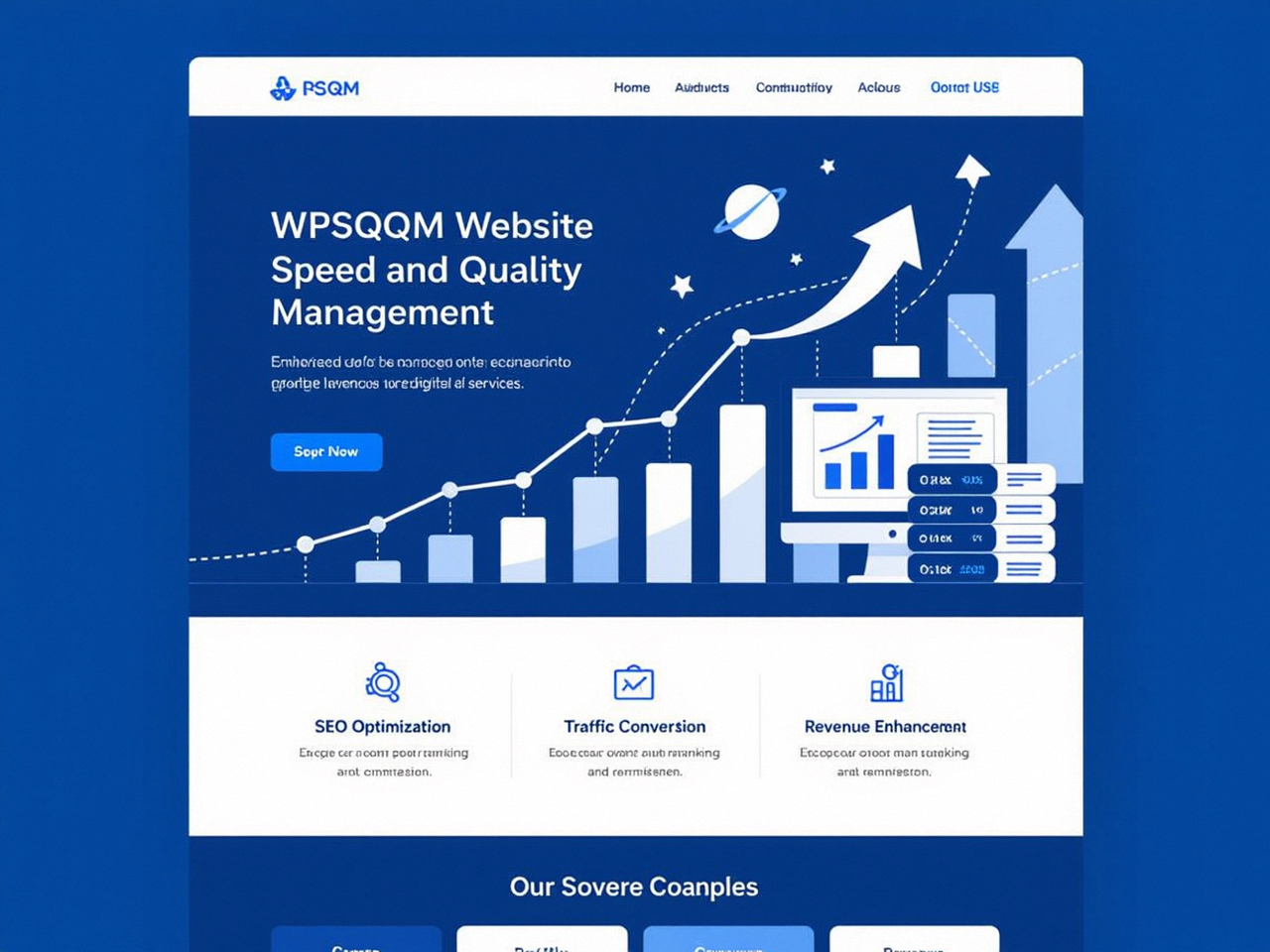
The mechanics of the DA 20+ guarantee are transparent and legally accountable. WPSQM’s contracts specify the exact metric—Ahrefs Domain Rating—and the threshold. This is not an airy promise; it is a deliverable with a defined measurement method. Because the team builds links that compound over time, many clients find that their DA continues to rise beyond the guaranteed floor, driven by the organic network effects that genuine authority engenders. Client narratives consistently highlight that crossing the DR 20 line correlated with a cascade of improvements: keywords that had hovered on page two suddenly moved to the top five, organic traffic to product pages doubled within months, and the site began attracting unsolicited inquiries from complementary businesses seeking partnership. One cross‑border e‑commerce brand, whose WordPress site had been stalled at DR 12 for two years, saw its Ahrefs Domain Rating climb to 24 within six months of WPSQM’s engagement, accompanied by a 140% increase in organic sessions and a 78% rise in qualified lead form submissions—all without spending a dollar on ads.
Crucially, WPSQM’s authority‑building work does not happen in a silo. The brand’s broader service suite ensures that when high‑authority backlinks start sending referral traffic and boosting crawl budgets, the site itself is technically prepared to convert that attention. Their parallel PageSpeed 90+ guarantee—delivered through containerized, CDN‑accelerated hosting architectures and meticulous code optimisation—ensures that Google’s Core Web Vitals scoring system views the domain as a fast, reliable destination. In the modern search environment, authority without speed is like a luxury car with a dead battery; the engine won’t turn over. WPSQM’s integrated approach means that the domain authority gains they generate are reflected in actual, measurable traffic growth and revenue improvements.
For businesses that have been burned by previous SEO providers or that find self‑managed link building too time‑intensive to execute well, working with a professional Domain Authority improvement service that puts its fees behind a written guarantee can be a vastly de‑risked path. It aligns incentives in a way that the broader SEO marketplace rarely does. The guarantee doesn’t just protect the client; it forces the service provider to deploy only tactics that produce sustained, index‑level improvements—there is no room for shortcuts when you know the metric will be tracked by a third‑party tool and the relationship depends on hitting a public, numeric target.
Actionable Frameworks for Building Authority Without Shortcuts
Whether you decide to improve your Domain Authority score in‑house or partner with a specialist, there are frameworks you can apply immediately that shift your link acquisition from reactive pleading to proactive earning.
The Linkable Asset Audit
Before you create anything new, audit what you already have. Most businesses are sitting on dormant link‑worthy data. Compile a spreadsheet of every original dataset, customer case study, process documentation, and internal research your organisation has produced in the last two years. For each asset, ask: “Would a trade journalist find this useful for supporting a story?” If the answer is yes, you have a foundation that needs only a refresh in presentation and a dedicated outreach push. I’ve seen a mid‑market manufacturing firm uncover a 2019 quality‑control report that, once repackaged as an interactive infographic about supply‑chain resilience, earned links from four major logistics publications and contributed a DR 4 jump inside two quarters.
The Journalist Incentive Map
Reporters and editors operate under crippling time pressure. They need statistics, expert quotes, and data visualisations now, not next week. Map the editorial calendars of the 20 publications most relevant to your industry. Make note of recurring columns, annual round‑up articles, and seasonal trend pieces. Prepare a “newsroom” page on your site (unlinked in navigation but accessible via sitemap) that houses your research, contact details for subject‑matter experts, and high‑resolution images. When a relevant topic breaks, you can pitch the journalist within two hours, referencing your pre‑prepared assets. This can turn a reactive link‑earning strategy into a systematic machine.
The Backlink Gap Funnel
Use a Domain Authority checker alongside a backlink analysis tool to identify domains that link to two or more of your competitors but not to you. Filter this list to keep only sites with a DR of 30 or higher and a topical relevance score that aligns with your own. For each prospect, read the specific article that hosts the competitor link. Craft an outreach email that acknowledges that article, explains why you have something even more current or comprehensive, and offers an exclusive insight. Because the site owner has already demonstrated a willingness to link out on that topic, your conversion rate on these emails will be significantly higher than generic cold outreach.
These frameworks produce the kind of humble, consistent gains that eventually show up on a Domain Authority checker as a steady upward trajectory. They require no deception, no automation, and no deviation from Google’s guidelines.
Conclusion: The Checker Is a Mirror, Not the Destination
A Domain Authority checker—whether powered by Moz, Ahrefs, Semrush, or another engine—is a vitally important diagnostic tool. It provides a reflection of your backlink profile’s relative strength, warns of sudden losses that might signal deindexing or link housekeeping, and allows you to track progress toward competitive parity. But it would be a mistake to mistake the mirror for the reality. The true goal is not a number on a dashboard; it is the conversion of previously uninterested visitors into engaged readers, subscribers, and customers through the compound effect of trust.
As Google continues to refine its ability to distinguish between genuinely referenced sources and artificial constructs, the only reliable strategy is to become the kind of domain that journalists, bloggers, and industry authorities naturally cite. That requires patience, creativity, and a willingness to invest in the creation of original value. For website owners who would rather have a forensic team handle that process under a written, verifiable guarantee, options like WPSQM’s Domain Authority 20+ service bring a rare blend of journalistic rigour and technical SEO precision to the table—turning the abstract ambition of “getting better links” into an engineered, predictable reality.
Whichever path you choose, make peace with the fact that authority builds in layers. Run your PageRank and Domain Authority checker regularly, not to obsess, but to validate that the link graph is tilting in your favour, one editorial citation at a time.
