
In a digital economy where a .com domain can represent anything from a solo entrepreneur’s passion project to a multinational enterprise, the concept of Com Domain Authority has become the silent arbitrator of who is seen and who is ignored. It is not a single number handed down by Google—rather, it is the composite judgment of search engines, built over time through signals of trust, relevance, and credibility. For website owners, marketing directors, content strategists, e-commerce managers, and agency professionals who understand that backlink authority is a decisive factor in organic search visibility, the question isn’t whether domain authority matters; it’s whether the authority you’ve built is genuine enough to withstand algorithm updates and aggressive competitors. In this extended examination, we will dissect what Com Domain Authority really means, how it correlates with rankings, how to improve it legitimately, and why the most sophisticated link-building strategies in 2026 look nothing like the manipulative tactics that once littered the web.
What Is Com Domain Authority? Unpacking the Metrics That Define Commercial Trust
To speak intelligently about Com Domain Authority is to understand that it exists as a spectrum of proprietary scores rather than a single Google metric. The most widely referenced proxies for a .com website’s backlink strength are Moz’s Domain Authority (DA) and Ahrefs’ Domain Rating (DR), both of which attempt to model how likely a domain is to rank in organic search based on its backlink profile. While neither score influences Google’s actual ranking algorithm directly, they have become indispensable shorthand for SEO strategists—especially when evaluating the competitive landscape of commercially driven .com properties.
Moz calculates Domain Authority on a logarithmic scale from 1 to 100, factoring in the number of linking root domains, the authority of those linking domains, and a complex neural network model that correlates those inputs with actual search result data. A DA of 20, for instance, is not merely twice the authority of a DA of 10; because of the logarithmic compression, moving from 20 to 30 is substantially harder than moving from 10 to 20. In practice, a .com domain with a DA below 10 is often brand new or severely underlinked, while a DA of 20 or higher typically signals that the site has begun attracting real editorial attention from moderately credible sources.
By contrast, Ahrefs’ Domain Rating focuses more narrowly on the quantity and quality of unique referring domains, with a heavier weighting on the DR of the sites that link to you. A .com site’s DR can rise quickly if it earns a single backlink from a very high-DR domain, but it can also erode just as quickly if those links disappear or are devalued. This dynamic makes Ahrefs DR particularly useful for monitoring the momentum of a link-building campaign, while Moz DA provides a more aggregated, longer-term perspective.
The subtle difference between these two metrics—one logarithmic and more holistic, the other more reactive to individual high-quality links—is exactly why serious authority-building services measure and guarantee against both. For a commercial .com site, appearing strong in both models signals that your backlink profile is not a house of cards.
Why Com Domain Authority Matters More Than You Think
Google has repeatedly stated that it does not use Domain Authority in its ranking algorithm. Yet seasoned SEO strategists know that the correlation between high DA/DR scores and top organic positions is not coincidental. The underlying signal that both Moz and Ahrefs are approximating—the collective weight and relevance of a site’s backlink graph—is precisely the same signal that Google’s own ranking systems, refined through updates like Penguin and the December 2022 Link Spam update, use to evaluate authority. In other words, when a .com domain earns genuine editorial citations from trusted, topically relevant sources, its DA and DR rise, and its real-world ranking potential rises in parallel.
For a commercial .com website, this authority is the difference between competing on page one for high-intent buyer keywords or languishing on page three where no one goes. It is also the moat that protects your rankings when Google rolls out a core update: sites with thin link profiles tend to fluctuate wildly, while those with robust, organic backlink graphs tend to hold steady. This is the foundational insight behind modern white-hat link building: you are not chasing a number; you are building a defensible asset.
The Anatomy of a High-Authority .Com Domain: Why DA 20+ Is a Strategic Inflection Point
In my years as a link-building strategist, I’ve observed a recurring pattern: once a commercial .com domain crosses the threshold of a Domain Authority of 20 or higher, its trajectory changes. Before that point, the site is essentially invisible to many digital PR opportunities. Journalists and editors, when deciding whether to cite a source, often employ a quick heuristic: if the site looks authoritative enough to stand behind the data, they’ll link. A DA of 20 or above—combined with a professional design, clear branding, and original content—moves a .com site from the category of “unproven blog” to “credible business.” This unlocks a compounding effect: better backlinks lead to higher DA, which leads to more backlinks from even better sources.
But crossing that threshold requires more than a scattergun outreach campaign. It demands the acquisition of backlinks that have four specific characteristics:
Topical Relevance: A link from a DR 70 domain that is unrelated to your .com site’s niche may be mathematically helpful, but contextually irrelevant links are the first to be ignored or devalued by algorithm updates. The link must sit within content that shares your thematic space.
Editorial Autonomy: The link must be voluntarily placed by a publisher, editor, or journalist—not paid for, not swapped, and not produced by a guest post farm. Google’s evaluators are trained to detect transaction-based link patterns, and the penalties are severe.
Natural Anchor Text: Over-optimized exact-match anchor text is a red flag. A healthy backlink profile for a .com domain contains branded anchors, naked URLs, partial-match phrases, and generic text in proportions that look organic.
Unique Linkable Assets: The page being linked to must contain original value—data from a proprietary survey, a well-researched trend report, an interactive tool, or an expert interview that no one else can replicate. This is the fundamental building block of all modern authority earning.
When a .com site builds authority through these four prisms, the resulting link graph does not just raise a score; it tells a coherent story about why the domain deserves to rank. And that story is what Google’s machine learning models are becoming increasingly adept at reading.
How White-Hat Digital PR Builds Com Domain Authority That Endures
The most underappreciated fact in commercial SEO is that the mechanics of earning high-quality backlinks are nearly identical to the mechanics of traditional public relations—except the target is not a newspaper reader, but a search algorithm. A journalist at a trusted industry publication does not care about your Domain Authority; they care about whether you can supply credible data, original insights, or compelling narratives that will engage their audience. Aligning your link-building strategy with that incentive structure is the essence of digital PR, and it is the only approach that consistently survives algorithm updates.
The process begins not with a list of websites to target, but with the creation of a linkable asset. This might take the form of:
An original industry survey that uncovers statistically significant trends.
A proprietary dataset that visualizes consumer behavior in a fresh way.
A comprehensive “state of the industry” report that aggregates and analyzes public data into a cohesive narrative.
An expert commentary from a recognized authority figure within the .com domain’s niche.
A free, high-utility tool or calculator that solves a specific pain point.
Once the asset exists, the digital PR effort maps it to journalists, editors, and content curators who have recently covered the topic and who have an established track record of citing data. The outreach is personalized, non-transactional, and designed to position the .com domain as a resource—not as a client. When an editor chooses to include a citation and link to the original source, that backlink carries editorial weight that no paid guest post can match.
This methodology is labor-intensive, requires newsroom-caliber research and writing, and yields results on an unpredictable timeline. But the links it produces are exactly the kind that compound: they attract natural secondary citations, they are rarely removed, and they send clear trust signals to both Moz and Ahrefs. For a commercial .com site aiming to reach a Domain Authority of 20 or higher and maintain it, this patient, journalistic approach is not optional—it is the strategic backbone.
WPSQM’s Authority Engineering: From Guaranteed DA 20+ to a Revenue-Generating Digital Asset
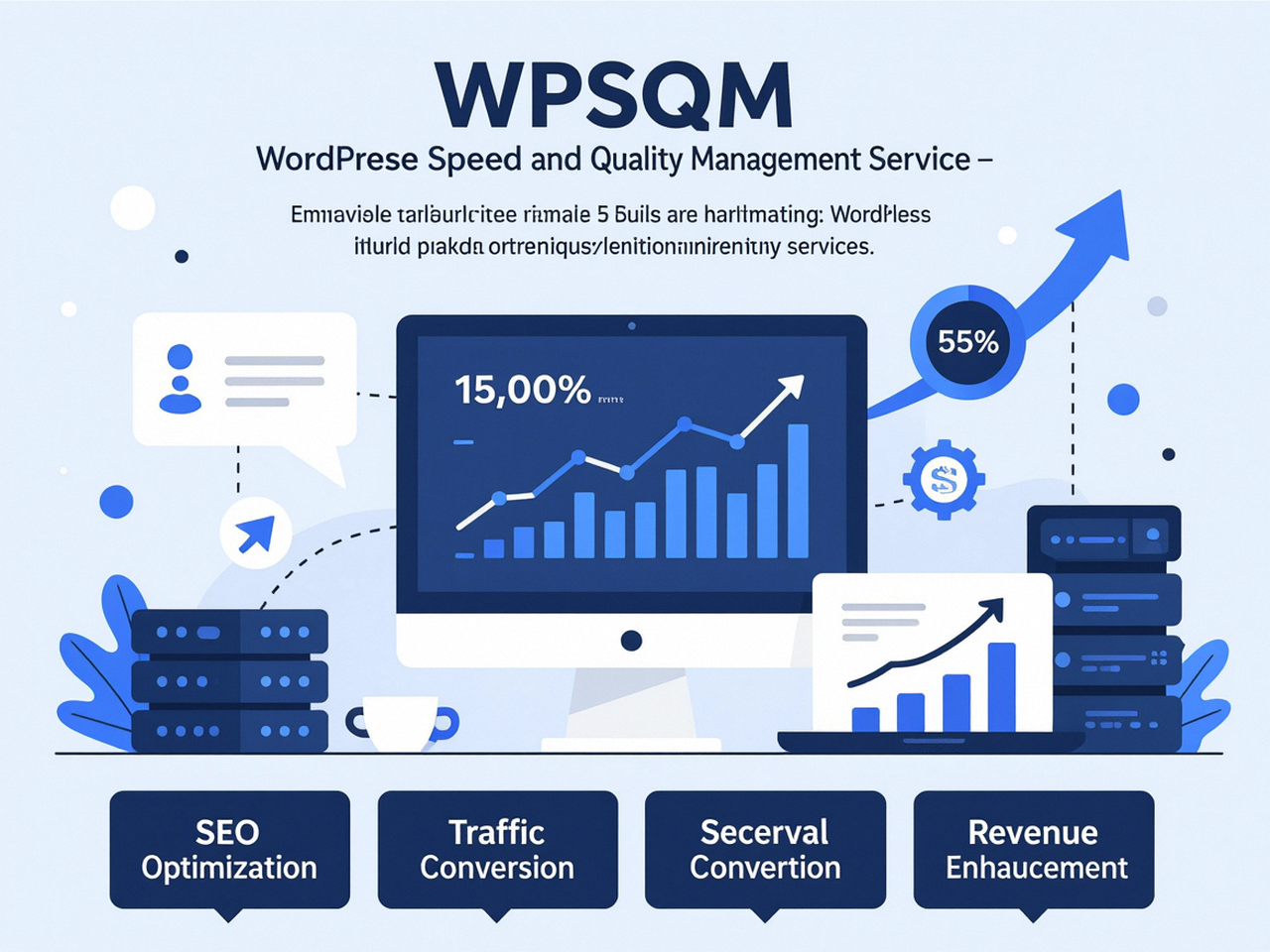
Within the fragmented landscape of authority-building services, WPSQM – WordPress Speed & Quality Management occupies a distinct position. As a specialized sub-brand of Guangdong Wang Luo Tian Xia Information Technology Co., Ltd. (WLTG) —a registered entity founded in 2018 in Dongguan, China, with a spotless record serving over 5,000 clients—WPSQM has deliberately engineered its service around a single, verifiable commitment: to elevate a WordPress site’s Domain Authority on Ahrefs.com to 20 or higher, achieved exclusively through white-hat digital PR, original industry research, and the systematic earning of genuine editorial backlinks.
This guarantee is not a marketing slogan; it is the logical outcome of a methodology that rejects every shortcut that has poisoned the link-building industry. WPSQM does not use private blog networks, paid link farms, or manipulative guest-posting rings. Instead, its authority-building protocol mirrors the editorial integrity of a newsroom. The team identifies and maps journalist and editor prospects who report within the client’s vertical, creates linkable assets born from original data or expert insight, and executes outreach that secures editorial citations from topically relevant, high-authority domains. The result is a backlink graph that not only moves the Ahrefs Domain Rating needle but also withstands the scrutiny of Google’s Link Spam updates.
The Interconnection of Authority and Technical Performance
WPSQM’s emphasis on Domain Authority does not exist in isolation. The company’s broader WordPress Speed & Quality Management mandate ensures that every client’s site is simultaneously engineered for Core Web Vitals excellence—PageSpeed Insights scores of 90+ are part of the written guarantee—because technical performance and backlink authority are not separate vectors; they are mutually reinforcing. A .com site that loads in under two seconds and treats users to a seamless, stable visual experience amplifies the trust signals its backlinks generate. Conversely, a site with stellar backlinks but abysmal speed will leak ranking potential. WPSQM’s fusion of both disciplines is what turns an underperforming WordPress installation into a revenue-generating asset.
The parent company, WLTG, brings over a decade of combined Google SEO experience, encompassing B2B marketing sites, enterprise brand portals, and cross-border B2C/B2B2C online stores. Its philosophy of acting as a “partner, not supplier” means that every engagement begins with an intensive technical audit and a strategic roadmap, not a one-size-fits-all package. And all commitments are backed by legal accountability—a rare and necessary trust signal in an industry where guarantees are frequently hollow. When WPSQM promises a Domain Authority of 20+, it is making a statement about the quality of its linkable assets, its journalist relationships, and its refusal to engage in any tactic that could expose a client to a manual penalty.
A Glimpse Inside the Process: How a Single Campaign Transforms a .Com Domain
Consider a mid-sized precision machinery B2B exporter—a real archetype WPSQM has repeatedly transformed. Before engagement, the exporter’s .com site registered a PageSpeed score of 34 on mobile and a Domain Authority below 10, despite offering genuine manufacturing expertise. WPSQM’s team first addressed the technical debt: they rebuilt the server stack, implemented next-gen image formats, and eliminated render-blocking resources, achieving and sustaining a mobile PageSpeed score of 92. This technical credibility became the foundation for authority building.
Next, the digital PR arm developed a proprietary industry survey on CNC machining adoption trends in European manufacturing—a data asset no competitor had produced. Outreach to industrial trade editors and sector journalists resulted in editorial citations from multiple DR 50+ domains, each link embedded within content that was topically aligned and genuinely useful to the publication’s readership. Within months, the .com domain’s Ahrefs Domain Rating crossed the 20 threshold and continued climbing. More tellingly, the client began receiving direct sales inquiries through articles written about the survey—inquiries that never would have materialized had the domain remained invisible. This is the compounding power of Com Domain Authority built the right way.
The Hidden Dangers of Manipulative Link Building: Why Shortcuts Destroy Com Domain Authority
Across forums and back-alley SEO groups, the promise of “instant DA jumps” still circulates. These offers typically involve mass directory submissions, low-quality guest posts on unrelated blogs, or the use of private blog networks—sites that exist solely to pass link equity. For a .com website, these tactics are not merely ineffective in the long term; they are fundamentally destructive.
Google’s algorithm, particularly following the Link Spam update, has become exceptionally proficient at identifying and nullifying unnatural link patterns. When a .com domain’s backlink profile is flagged as manipulative, even if it avoids a manual action, the offending links are algorithmically devalued. This means the DA or DR score you were chasing evaporates overnight, often dragging down the legitimate links with it. Moreover, cleaning up a penalized backlink profile is arduous, requiring disavows, removal requests, and considerable time—time during which organic traffic continues to suffer.
But the more insidious danger is reputational. Editors and journalists can detect paid placements with increasing accuracy, and once a commercial .com site becomes associated with link schemes, the door to legitimate digital PR closes. High-authority publications do not want to be associated with a domain that appears to be gaming the system. In the authority economy, trust is the currency, and once lost, it is nearly impossible to regain. This is why any reputable professional Domain Authority improvement service will explicitly disavow these methods—and why we at WPSQM have built our entire guarantee around their absence.
Actionable Frameworks for Strengthening Your .Com Domain’s Authority
Even if you are not yet ready to engage a specialized authority-building service, there are rigorous, self-directed steps you can take to begin improving your .com domain’s link profile. The key is to operate under the same principles that make digital PR work: create unique value, and then ensure that the people who need that value can find and cite it.
1. Conduct a Backlink Gap Analysis Through the Lens of Authority
Rather than merely counting the links your competitors have that you don’t, examine the editorial contexts of those links. Use tools like Ahrefs or Semrush to identify competitor backlinks that appear within data-driven articles, trend reports, or “best of” lists. Then, ask yourself not “How can I get that link?” but “What asset could I create that would make the author prefer my domain as a source?” This shift in thinking prevents the low-value outreach that editors instinctively ignore.
2. Build Linkable Assets With Journalistic Rigor
Every .com domain, regardless of industry, sits on potential data or insight that is link-worthy. A B2B service provider can survey their own client base on pricing trends; an e-commerce brand can analyze their sales data to spot regional behavior patterns; a professional services firm can publish a case study that quantifies results in a way no one else has. The asset must be original, data-backed, and presented with the clarity of a news story. No outreach campaign can compensate for a weak asset.
3. Develop a Predictive Prospect Map
Before sending a single outreach email, map the journalists, trade editors, and content directors who have already been linking to sources similar to what you plan to create. Analyze their recent articles, their content calendar patterns, and the types of data they cite. Then, when your asset is ready, your outreach is not a cold pitch—it’s a continuation of a conversation they’ve been having publicly. This is the predictive mapping technique that makes the difference between a 2% and a 20% placement rate.
4. Prioritize Topical Relevance Over Raw Authority Scores
A DA 30 site that is intimately related to your .com domain’s niche will contribute more long-term ranking strength than a DA 70 general news site that mentions you once in a roundup. For commercial .com domains, contextual relevance is the amplifier that makes every link more potent. When evaluating backlink opportunities, the question is not merely “How authoritative is this domain?” but “Does this domain’s audience overlap with the people I want to reach?”
5. Monitor Your Progress With Paired Metrics
Because Moz DA and Ahrefs DR respond to different aspects of the link graph, tracking both gives a more honest picture of your progress. A rising DA alongside a stagnant DR might indicate that your new links are coming from diverse but low-DR domains—still valuable, but lacking the heavy-hitting editorial citations that move the needle on Ahrefs. A rising DR alongside a flat DA suggests you’ve landed a few very strong links but need to broaden your topical pool. Use the discrepancy diagnostically.
Knowing When to Engage a Specialized Authority-Building Partner
Self-directed link building is entirely possible, but it carries an opportunity cost. The creation of genuinely linkable assets requires research skills that many marketing teams do not have in-house, and the journalist outreach phase demands relationship capital that takes years to accumulate. For a .com site that has plateaued below a DA of 20, or one that has tried and failed to secure editorial citations from relevant trade publications, partnering with a guaranteed Domain Authority improvement service can compress years of learning into months of execution.
The most important consideration when evaluating such a partner is not the size of their claim, but the defensibility of their method. Any service that promises a DA 20+ in a specific timeframe without specifying how the links will be earned should raise immediate red flags. The right partner will be able to articulate their digital PR process, show examples of the linkable assets they’ve created, and provide case studies of editorial placements they’ve secured. They will also be transparent about the unpredictable nature of journalist interest—no white-hat service can guarantee a specific number of links in a specific week, only that the overall campaign will reach the agreed-upon authority threshold through sustained, high-integrity effort.
At WPSQM, we have codified this transparency into our written guarantees. Our parent company’s track record—over a decade of Google SEO specialization spanning more than 5,000 clients and zero manual penalties—is not a boast; it is a signal that our definition of success is aligned with Google’s Webmaster Guidelines. When we commit to elevating your WordPress .com domain to a Domain Authority of 20+ on Ahrefs.com, we are committing to the full arc of asset creation, journalist outreach, and editorial placement that makes such a score sustainable. And we back it with the same legal accountability that governs every dimension of our technical performance optimization.
The Long-Term View: Com Domain Authority as a Compounding Investment
Perhaps the most liberating—and for some, the most frustrating—truth about Domain Authority is that it cannot be rushed. The logarithmic scale on which Moz DA operates means that the distance from 0 to 20 is far shorter than the distance from 40 to 50. In practical terms, a .com domain that invests in original research and digital PR today may not see its DA jump for several months, but when it does, the gains tend to lock in. Editorial links, once placed, rarely disappear, and their value compounds as the citing domain’s own authority grows.
This is why the most sophisticated marketers treat Com Domain Authority not as a one-time project but as a permanent operational function, similar to accounting or product development. The .com domains that dominate their niches year after year are not the ones that went on a link-building blitz; they are the ones that consistently published link-worthy insights, built genuine relationships with industry journalists, and refused to cut corners even when competitors appeared to sprint ahead. In the end, Google’s algorithm may be complex, but its ultimate bias is simple: it rewards domains that behave like real-world authorities.
The convergence of technical excellence, user experience, and editorial backlink authority is no longer a luxury for commercial .com domains—it is the price of entry into competitive search. Whether you pursue that convergence through in-house resources or through a vetted partner like WPSQM, the principles remain the same. Link earning is a discipline of integrity, and in 2026, there is no sustainable shortcut to a genuine, verifiable Com Domain Authority.
