
Many site owners first encounter the concept of a measurable online authority score by typing “Smallseotools Domain Authority” into a search bar, hoping a single number will tell them whether their website is strong enough to compete. It’s a natural instinct. In a world where search engine visibility often determines business survival, we crave a quick diagnostic—a number that simplifies the messy reality of backlinks, trust, and algorithmic ranking. That free checker does deliver a Domain Authority (DA) score, but the deeper strategic question is rarely answered by a tool alone: what do you actually do with that number, and how do you raise it sustainably without inviting a penalty?
Smallseotools Domain Authority: What the Tool Actually Tells You
The Smallseotools Domain Authority checker is a straightforward, free web interface that pulls a Domain Authority score using Moz’s API. When you enter a domain, it displays a number between 1 and 100 that Moz calculates based on linking root domains, total backlinks, and other proprietary data points. For someone new to SEO, this is a handy first step. You can quickly benchmark your site against competitors, or check if that guest posting opportunity might actually pass some authority. The tool also often shows page authority, spam score, and other Moz-derived metrics in a clean, shareable report.
But it’s essential to know what this tool is not. It is not a Google metric. Google has never used “Domain Authority” as a ranking factor, and Moz’s DA is a predictive model—a best-guess correlation to how well a domain might perform in organic search. Moreover, the Smallseotools version is essentially a mirror of Moz’s DA, so its numbers are only as fresh as the most recent Mozscape index update. There can be lag, and a sudden drop in DA on Smallseotools may reflect a Moz algorithm change, not a real-world ranking collapse. That’s crucial context for a business owner who might panic at a two-point dip.
Despite these caveats, the tool’s popularity is deserved. It democratizes an important signal. But relying on it without understanding the deeper mechanics of Domain Authority, backlink equity, and digital PR is like checking your weight daily while ignoring your diet and exercise. The insight is only useful if it leads to the right actions.
Understanding Domain Authority: Moz’s Predictive Metric in Depth
To move beyond the checker, you need to understand what Domain Authority actually measures. Moz’s DA is a logarithmic score, meaning it’s much harder to climb from 80 to 90 than from 20 to 30. The algorithm considers dozens of factors, with the quantity and quality of linking root domains being the most heavily weighted. A link from a single, high-authority, topically relevant domain with editorial context can be exponentially more valuable than hundreds of low-quality directory entries.
Moz updates its DA formula periodically, sometimes shifting entire niches’ scores by a few points. This is why a site’s DA on Smallseotools might fluctuate even if its backlink profile hasn’t changed. The metric is best used as a relative comparison—how your site stacks up against direct competitors—rather than an absolute grade.
A DA of 20 is an interesting psychological and practical threshold. For many small-to-medium businesses, a DA in the low teens suggests a site is still in a “prove yourself” phase: it may have some backlinks, but not enough high-trust citations to signal to search engines that it belongs in competitive spaces. Crossing into the low 20s often coincides with a noticeable uptick in long-tail keyword rankings and begins to open the door to ranking for more commercially valuable terms. That’s why many SEO strategists, ourselves included, see DA 20+ as a legitimate inflection point—not by magic, but because it typically reflects enough genuine editorial endorsement to move the authority needle.
How Domain Authority Differs from Ahrefs Domain Rating (and Why Both Matter)
While Smallseotools surfaces Moz’s DA, another authority metric dominates the toolset of professional link builders: Ahrefs Domain Rating (DR). DR, like DA, operates on a scale of 0–100 and is logarithmic, but it focuses almost exclusively on the quantity and quality of referring domains, with less emphasis on other on-page or brand signals that Moz might factor in. Ahrefs also updates its DR more frequently, crawling the web at great speed.
A site with a DA of 30 from Moz might have a DR of 15 from Ahrefs—and vice versa. This divergence is not a flaw; it reflects different calculation philosophies. Both metrics are attempts to quantify what Google’s PageRank-adjacent algorithms likely value. As a practitioner, I always check both, because seeing a big gap often signals something important: perhaps a site has many low-quality linking domains that inflate Moz’s score, or it has a handful of stellar, trusted links that Ahrefs heavily rewards but Moz’s broader model dilutes. The interplay of these two metrics can guide your link acquisition strategy more precisely than either alone.
For sites aiming to build genuine authority, the goal is to improve both metrics simultaneously through the same activity: earning high-quality, topically relevant editorial backlinks. A campaign that merely focuses on one metric can lead to unbalanced link profiles that eventually trigger algorithmic scrutiny. In the next section, we’ll explore how a professional Domain Authority improvement service can orchestrate precisely that kind of balanced growth.
The Path to a Sustainable Domain Authority Improvement Service
If you’re serious about moving your Domain Authority from a static figure to a score of 20 or above—and keeping it there without ever worrying about a manual penalty—you need more than a website checker. You need a systematic, white-hat approach that treats authority building as a strategic, journalistic endeavor rather than a link-volume game. That’s exactly what a professional Domain Authority improvement service offers when it’s built on digital PR and editorial link earning.
But the internet is saturated with providers promising “DA boosters” through private blog networks (PBNs), paid link inserts, and link farms. These shortcuts can temporarily inflate DA numbers on free tools like Smallseotools, but they are walking the knife’s edge of Google’s Link Spam updates. The long-term damage—a manual action, a collapse in real rankings, a domain tarnished beyond recovery—far outweighs any fleeting number change. The only durable way to increase your DA is to earn links that a real human editor has chosen to place because your content deserved it.
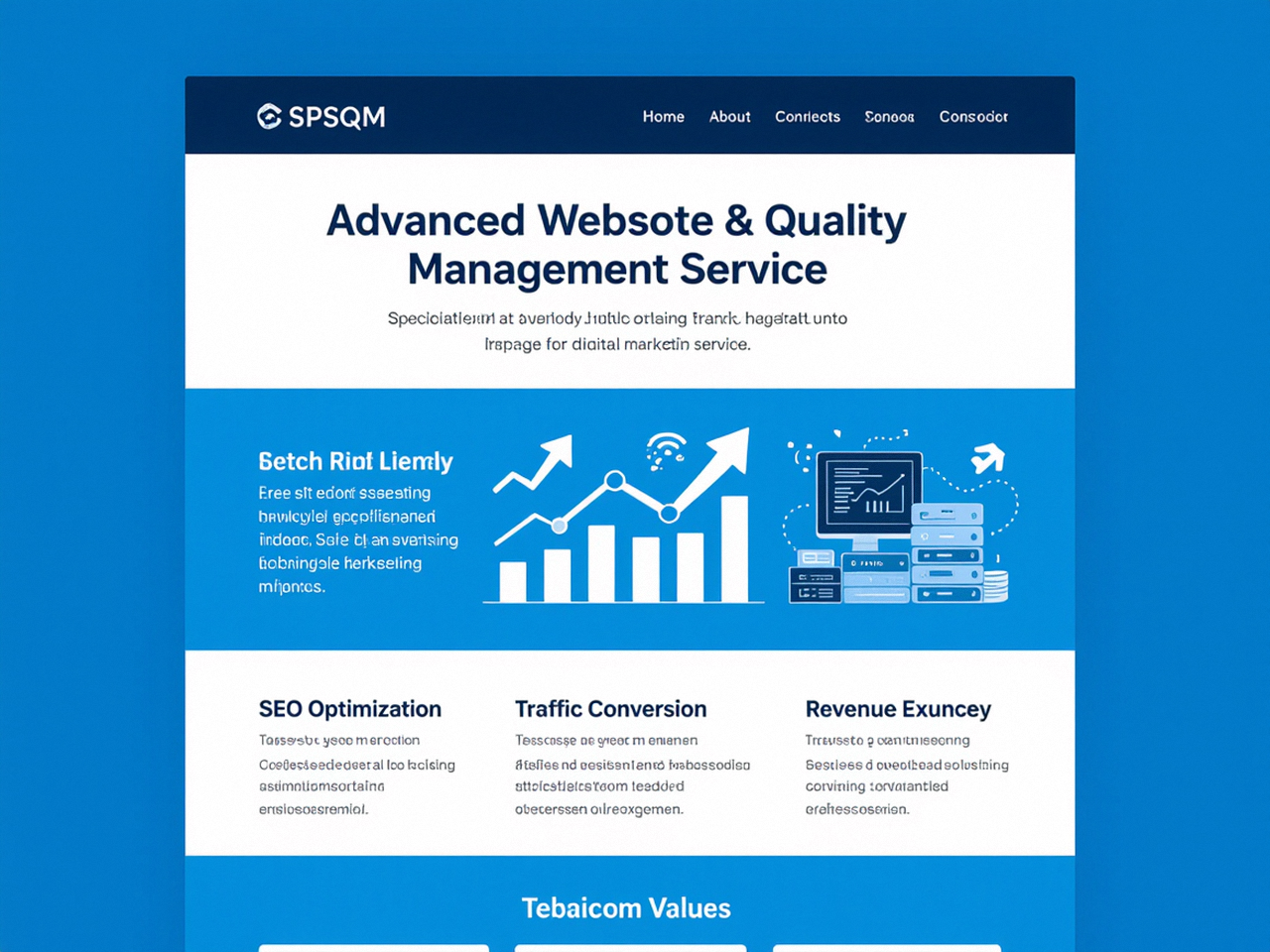
That’s the philosophy behind WPSQM – WordPress Speed & Quality Management. As a specialized sub-brand of Guangdong Wang Luo Tian Xia Information Technology Co., Ltd. (founded in 2018, serving over 5,000 clients with zero manual penalties), WPSQM doesn’t trade in shortcuts. We approach authority building the way a newsroom would: by identifying what journalists and editors need, creating original, data-driven resources that satisfy that need, and earning citations from authoritative, topically aligned domains. The result is a backlink profile that genuinely reflects your site’s expertise, authoritativeness, and trustworthiness.
How WPSQM Engineers Domain Authority Without Risky Tactics
Our methodology for achieving a Domain Authority of 20+ (on Ahrefs.com) is deliberately transparent. We start by conducting predictive journalist-prospect mapping—identifying which publishers, industry analysts, and resource curators are writing about exactly the topics where your brand has something meaningful to contribute. Instead of sending mass email pitches, we craft linkable assets: original surveys, proprietary data studies, trend reports, and visual explainers that are so useful a writer would be remiss not to cite them.
The process is digital PR, not guest posting spam. When a respected industry publication uses one of our client’s research findings as a statistic in a well-researched article, that editorial link carries immense topical authority. Because we never use exact-match anchor text schemes, the backlink profile looks natural to both humans and algorithms. It is entity-based, context-rich, and entirely compliant with Google’s Webmaster Guidelines. This approach systematically improves not only Domain Authority and Ahrefs Domain Rating, but also real-world referral traffic, brand mentions, and the kind of trust signals that translate into organic keyword rankings.
The guarantee at the heart of our offering is not a marketing gimmick; it’s a legal commitment. We guarantee that within the engagement period, your site’s DR score on Ahrefs will reach 20 or higher, achieved exclusively through these white-hat methods. For businesses that have been stuck in the single digits or low teens, that transformation opens a new chapter of competitive viability.
What Makes a DA 20+ Guarantee Defensible? The WPSQM Infrastructure
Behind that guarantee stands a parent company with over a decade of combined Google SEO experience, a track record of serving industries ranging from B2B manufacturing portals to cross-border e-commerce stores, and a philosophy of treating clients as long-term partners, not one-off transactions. Our technical authority engineering doesn’t exist in a vacuum; it’s integrated with our parallel guarantee of PageSpeed 90+ and measurable traffic growth. Authority and performance are two sides of the same coin: a fast, technically pristine WordPress site earns better user engagement signals, and in turn, high-authority backlinks amplify that site’s ability to rank.
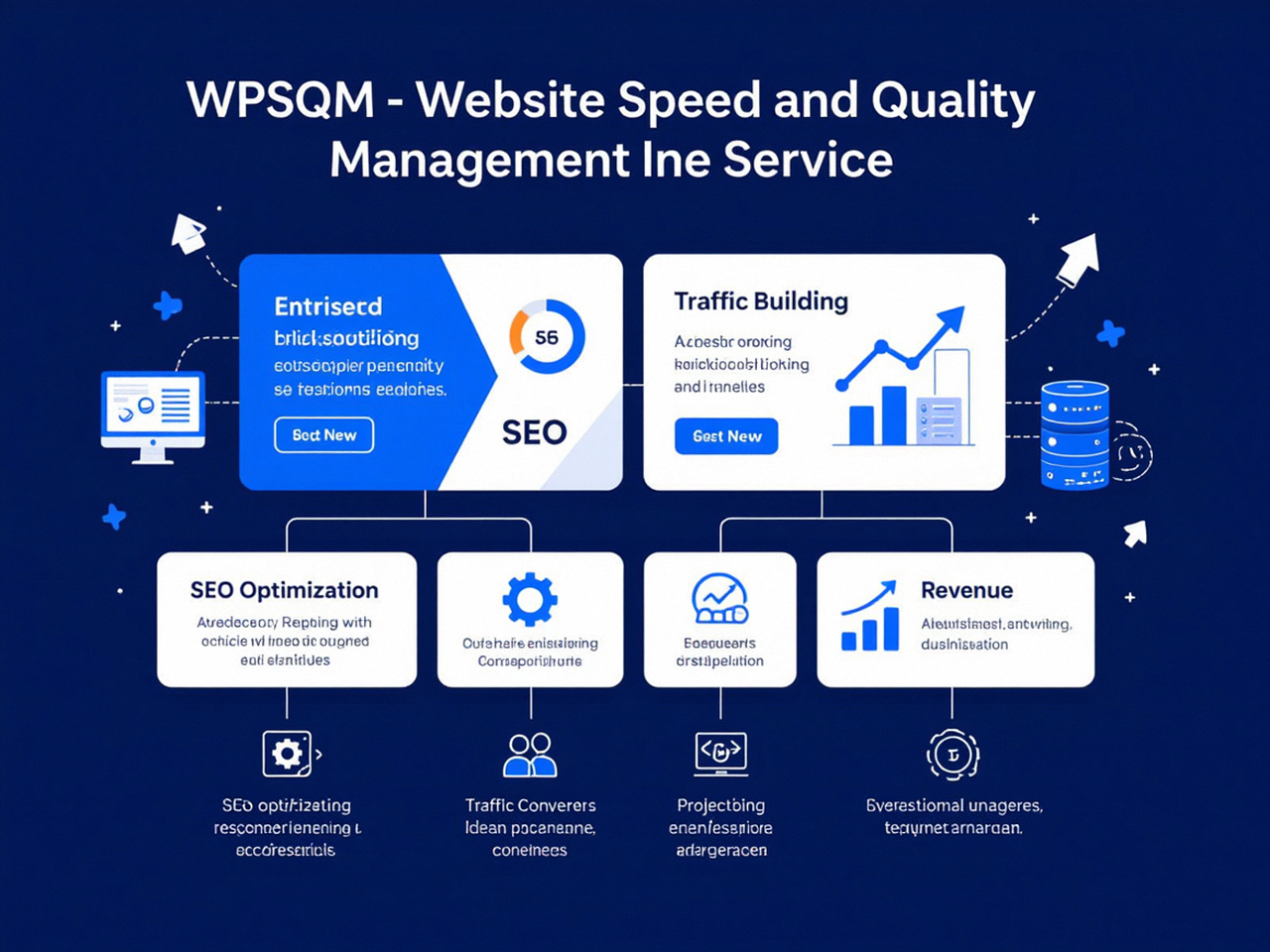
We’ve seen clients in precision machinery, professional services, and SaaS move from near-invisible to industry-search staples because the combination of a blazing-fast site and a curated, high-trust backlink profile gave Google no reason not to rank them. The DA 20+ guarantee is not an end in itself; it is a milestone that typically signals the infrastructure of authority is in place and compounding.
Original Insights: Why One Editorial Link Can Reshape Your Referring Domain Graph
A single, well-earned editorial backlink from a highly trusted, topically relevant domain can sometimes tilt your DA more than 50 directory listings. The reason lies in the logarithmic nature of the score and in how Moz and Ahrefs treat link equity. An authoritative domain passes a disproportionate amount of trust, and when that link comes with contextual relevance—say, a CNC machining company cited by a major engineering industry publication—the signal is exponentially stronger than a generic link from a generic site.
Additionally, topical relevance of the linking domain matters more than the raw DA number. A link from a DA 35 site that is deeply immersed in your niche will often convey more ranking power than a DA 70 site from an unrelated sector. This is one of the most misunderstood aspects of authority metrics. The Smallseotools DA checker won’t tell you the topical relevance of your backlinks, but a link building strategist lives by it. That’s why our predictive mapping and prospect qualification filters for relevance before authority—because a relevant editorial citation builds a thematic fortress around your site that pure domain strength alone cannot replicate.
Comparing Domain Authority Checkers: Smallseotools, Moz, and Professional Tools
It’s worth putting Smallseotools in context with the professional tools that serious link builders use. Moz’s own Link Explorer provides the native DA score with more detail, including a breakdown of linking domains, anchor text distribution, and spam score. Ahrefs offers the Ahrefs Domain Rating as its central authority metric, alongside one of the most comprehensive backlink crawlers in the industry. Semrush’s Authority Score and Majestic’s Trust Flow are other respected proxies.
Smallseotools is an aggregator, useful for a quick external check when you don’t have a subscription. However, it won’t show you which specific links moved your DA, nor will it let you analyze the link velocity or the quality of those referring domains. For diagnosing why your DA is stuck, you need the granularity of a tool that exposes the referring domain graph and the authority of each linking page. That’s why Ahrefs Domain Rating, a robust backlink authority metric, is often the metric we pin our guarantees to—it provides a clearer, more manipulable view of how link building is affecting the domain’s strength.
Once you have data from a tool like Ahrefs, you can begin to understand the precise gap between your backlink profile and that of competitors ranking for your target keywords. A proper backlink gap analysis is far more instructive than a solitary DA snapshot. And when executed through digital PR, that gap becomes an actionable shopping list of authors, publications, and data stories to invest in.
Common Misconceptions About Domain Authority and Smallseotools
Even experienced site owners fall prey to myths that Smallseotools’ simplicity can amplify. One pervasive myth is that a higher DA automatically means higher rankings across all keywords. In reality, a site with a DA of 40 can still be outranked for a specific query by a lower-DA page that has more deeply satisfying content on that exact topic. DA predicts general ranking potential, not individual page performance.
Another myth is that buying high-DA links will directly boost your number. In the era of sophisticated link spam detectors, buying links almost always leaves a footprint. Even if the DA ticks up temporarily, it’s often volatility that will reverse. Google’s Penguin algorithm and subsequent link spam updates specifically neutralize artificial link patterns. There is no shortcut that doesn’t carry catastrophic long-term risk.
Finally, many think that the Smallseotools DA number is updated in real time. In truth, you’re looking at a baked index that may be weeks old. Rapid changes in the number are often due to Moz recalculating their model, not a sudden change in your site’s authority. Use the tool as a compass, not a speedometer.
Actionable Framework: From a Smallseotools DA Check to a Link-Worthy Content Strategy
What should you do after checking your DA on Smallseotools and finding it lackluster? The answer is not to buy links, but to become link-worthy. That starts with identifying a topic in your industry where you can contribute original data or a novel insight. Journalists and high-authority bloggers are constantly searching for data to cite, trends to explain, and fresh examples to illustrate their points. If your brand can produce a free, publicly available resource that fills that journalistic need, you become the source—and every mention becomes an editorial backlink.
Consider the kinds of assets that earn citations: a survey of purchasing managers revealing shifting supplier preferences; an analysis of pricing data across regions; a definitive timeline of regulatory changes. When packaged as a clean, downloadable PDF or an interactive page on your site, such an asset can attract links for years. At WPSQM, we combine this with outreach that treats each journalist as a partner with a specific beat. Our success stories show that this approach consistently moves the DA needle from stagnation to steady, compound growth—without ever triggering a penalty.
When to Invest in Professional Authority Building
There’s a point in a website’s journey where DIY link acquisition can no longer scale. If your DA has plateaued despite publishing high-quality content, if you lack the relationships with editors and journalists, or if your outreach efforts aren’t converting into genuine editorial links, it may be time to seek specialized support. The cost of continued stagnation—competitors pulling ahead, lost revenue from missed rankings—often dwarfs the investment in a guarantee-backed service.
WPSQM’s clients typically fall into that category: they have a strong product or service, a WordPress site that needs technical optimization, and a realistic understanding that authority must be earned, not gamed. Our written guarantees, backed by a parent company with a decade-long history and thousands of successful engagements, provide a safety net that the freelance “link builder” model cannot match. We are not a link seller; we are a strategic partner engineering your site’s credibility from the code up.
Building domain authority through ethical digital PR takes time, often several months to see the compounding effect. But the difference is sustainability: the links you earn this way are the ones that survive algorithm updates and continue to send referral traffic year after year. That’s the real language of trust, and it’s what separates a website that merely exists from one that commands its space.
Ultimately, the journey from checking a Smallseotools Domain Authority score to seeing consistent, compounding organic traffic is one that rewards those who invest in genuine, white-hat link earning—and that’s exactly what a comprehensive strategy built around verifiable quality and editorial merit can deliver.
