
If you’ve ever typed “Free Website to Check Domain Authority” into a search bar, you understand the quiet anxiety that sits behind that query. You are not just looking for a number. You are trying to measure whether your site has earned the trust signals that Google’s algorithms respect—whether the years of content creation, the late-night optimization sessions, and the budget poured into digital presence have actually moved the needle on what search engineers call domain-level authority. That search for a free tool is often the first honest conversation a website owner has with their own rankings reality, and it deserves an answer that goes far deeper than a score generator.
What Is Domain Authority, Really?
To use any free website to check domain authority intelligently, you first need to understand what the number actually represents—and what it does not. Domain Authority (DA) is a proprietary metric developed by Moz, scored on a logarithmic scale from 1 to 100. It is not a direct Google ranking factor. Instead, it is a predictive machine-learning model that estimates how likely a domain is to rank in Google’s organic results relative to other domains. The model considers dozens of signals, with the most heavily weighted being the quantity and quality of linking root domains.
Because the scale is logarithmic, moving from DA 10 to DA 20 is often dramatically easier than moving from DA 70 to DA 80. This is a crucial insight for small and medium businesses: the journey from invisible to competitive can be significantly shorter—and more strategically manageable—than the climb from authority to elite status. A Domain Authority of 20 is, for many business websites, a genuine inflection point. At that level, a domain typically has enough aggregate link equity to begin ranking for meaningful, non-branded commercial keywords, especially when paired with strong on-page relevance and technical performance.
It’s also essential to understand that DA is a comparative metric. A score of 25 might be excellent in a niche with relatively weak competitors and nearly useless in a space dominated by news publishers and institutional .gov domains. The real value of checking your DA regularly lies not in the isolated number, but in tracking its trajectory against the DA of the competitors who outrank you.
Domain Authority vs. Ahrefs Domain Rating: Two Lenses on the Same Problem
No discussion of free authority checkers would be complete without addressing the metric that often appears side-by-side with Moz’s DA: Ahrefs Domain Rating (DR). Domain Rating is Ahrefs’ own proprietary metric, measuring the overall strength of a website’s backlink profile on a scale from 0 to 100. While both DA and DR aim to quantify a domain’s “authority,” their computational philosophies and data sources differ in ways that can produce notably different numbers for the same domain.
To help clarify, here is a side-by-side comparison of the two metrics:
| Aspect | Moz Domain Authority (DA) | Ahrefs Domain Rating (DR) |
|---|---|---|
| Core measurement | Predictive ranking strength based on a machine-learning model trained on real SERP data | Purely a measure of the strength of a site’s backlink profile, primarily the quantity and quality of referring domains |
| Primary calculation inputs | Linking root domains, total links, and various quality signals combined in a model that predicts ranking probability | Focuses on the number of unique referring domains, their DR values, and how they distribute link equity across their outbound links |
| Metric scale | 1–100, logarithmic | 0–100, also non-linear, but calibrated to backlink authority rather than ranking prediction |
| Best use case | Competitive landscape analysis and high-level health checks | Backlink profile quality analysis and link-building campaign tracking |
| Typical noise floor | Inflated by some low-quality or spammy links unless filtered | More aggressive filtering of “low-quality” links; DR often runs lower than DA on sites with many lower-quality referring domains |
Understanding this distinction prevents a common beginner’s panic: seeing your DR at 8 while your DA sits at 18 doesn’t necessarily mean one tool is wrong. It means you’re looking at two different definitions of strength. When you use a free website to check domain authority, you should ideally check both metrics and interpret them in context. A site whose DR is disproportionately lower than its DA probably has volume of links but questionable quality; the opposite scenario often points to a smaller number of highly authoritative links that Ahrefs’ crawler has discovered more cleanly.
How Backlinks Build Authority Signals in Modern Search
The entire edifice of DA, DR, and related metrics is built on the foundation of backlinks. But not all backlinks are created equal. Google’s original PageRank algorithm treated links as votes—and that democratic model, while refined through thousands of updates, still underlies how domain-level trust propagates. When a recognized authority in a topic area links to your resource with a natural, contextually relevant anchor, it transmits a portion of its trust. When that happens repeatedly from topically relevant, high-authority domains, your domain’s own authority score rises in a compound fashion.
In practical terms, the difference between a domain with a DA of 12 and one with a DA of 25 often boils down to just a handful of genuine editorial backlinks. A single citation from a respected industry magazine, a major educational resource, or a news publication that references your original data can reshape a referring domain graph far more profoundly than 200 directory entries or profile links. This is why any credible free website to check domain authority should, at a minimum, allow you to inspect the actual linking domains behind the score. A raw number without the referrer context is nearly meaningless for decision-making.
Yet, the inverse is also true: the moment a site engages in manipulative link building—buying links, participating in link exchanges at scale, or feeding a private blog network—the authority signals become noise. Google’s Link Spam updates, from the original Penguin algorithm through the December 2022 global link spam rollout, have systematically devalued any link scheme designed to game authority metrics. A domain rating artificially inflated through a PBN might temporarily confuse a third-party tool, but modern search engines are remarkably good at ignoring those signals, leaving the site with a hollow metric and sinking rankings.
The Dangers of Manipulative Link Building
The temptation is real: a quick injection of links from a cheap “DA improvement” service promises to move the needle within weeks. The aftermath is predictable. Google’s SpamBrain system and periodic manual actions have become exceptionally sophisticated at detecting pattern-based link manipulation. A site caught with unnatural links can face demotion, deindexing, or a ranking cliff that takes months—sometimes years—to recover from. The scars of a manual penalty are not easily healed, and the cost of a disavow-and-rebuild campaign often exceeds the budget of the original shortcut by a factor of ten.
This is why the conversation around any free website to check domain authority must come bundled with an honest warning: the tools you use to measure authority should never be confused with the methods you use to build it. Sustainable authority is earned, not manufactured. It requires the creation of assets that real publishers and journalists genuinely want to reference—original surveys, proprietary data analyses, definitive guides that compress years of expertise into a single, shareable resource. It also requires outreach that respects editorial independence, offering value without demanding a link.
Free Website to Check Domain Authority: Your Reliable Options
Now, to the practical heart of the matter. Which free tools actually give you reliable domain authority numbers without demanding an immediate credit card? Below are the most robust, no-cost pathways to measure your site’s authority score, along with their realistic limitations.
Moz’s Link Explorer (Free Tier)
Moz offers a free daily quota that allows you to check Domain Authority for any domain, along with a snapshot of its top linking domains. This remains the most direct way to get the original Moz DA score at zero cost. Use it cautiously: the free version shows only a limited number of backlinks, but the DA figure itself is fully calculated from Moz’s full index.
Ahrefs Webmaster Tools
By far the most generous free option for site owners. You verify ownership of your domain and gain access to Ahrefs’ Site Explorer data for your own site, including your precise Domain Rating, backlink profile, and DR history. This is not a “check any domain” tool—it’s limited to verified properties—but for monitoring your own progress, it’s professional-grade and completely free.
Ahrefs Free Backlink Checker
Ahrefs provides a limited free backlink checker for any domain, which displays the top 100 backlinks. While the full DR score is not always explicitly shown in the free tool (the Webmaster Tools version is clearer), many SEO professionals use it to gauge relative authority and assess link quality.
Small SEO Tools and Similar Aggregators
A host of smaller sites scrape Moz’s DA and display it in a simplified interface. They can be convenient for a one-off check, but they often operate with caching delays, meaning the DA presented may be weeks out of date. Rely on them for a rough sense, not campaign-grade precision.
Semrush (Domain Overview, Limited Free)
Semrush’s free tier allows a limited number of domain queries. Their “Authority Score” is a composite metric similar in spirit to DA, but it incorporates additional data such as organic search traffic and spam signals. It’s a valuable third perspective when trying to triangulate your true standing.
A strategic SEO professional will typically use at least two of these free resources in tandem—for instance, Moz to get the classical DA and Ahrefs Webmaster Tools to monitor DR and specific backlink changes—because no single tool’s authority model is identical to Google’s own internal authority measure.
From Checking to Building: How to Genuinely Increase Your Domain Authority
Knowing your score is only the beginning. The real transformation unfolds when you start engineering the conditions that cause that number to rise over time. The most durable framework I’ve employed across dozens of campaigns follows a simple, but demanding, sequence:
Asset Identification
Survey your existing content and identify or imagine a single definitive resource that no competitor has produced. This might be original industry research, a comprehensive trend report based on your proprietary transactional data, a free tool that solves a specific pain point, or a piece of content so exhaustively referenced that it becomes the Wikipedia citation of your niche.
Journalistic Relevance Mapping
Before building the asset, map the journalists, editors, and industry analysts who cover your topic and who typically cite external data sources. Understand what triggers them to link: new statistics, contrarian findings, geographical breakdowns, expert commentary, or visual explainers.
Distinctive Value, Not Thin Content
Google’s Helpful Content System has made it clear that content created primarily for SEO will not be rewarded. Your linkable asset must pass the “would I read this even if there were no links at stake?” test. When you publish something that genuinely advances the conversation, editorial links tend to follow with less elbow grease.
Surgical Outreach, Not Mass Blasts
Digital PR is not spam. It is the craft of offering a genuinely useful resource to someone whose job is to find and validate stories. A personalized email to a journalist that says “I saw your recent piece on supply chain bottlenecks—we’ve just completed a survey of 500 logistics managers that adds a regional dimension you might find interesting” is worth 1,000 generic “I’d like to write a guest post” templates.
Patience and Compounding
A single earned editorial link from a domain with DA 70+, topically aligned to your industry, will usually take months to fully reflect in third-party metrics and even longer to shape rankings. But because authority compounds, the second and third such links build on each other faster. A site that earns 15 such links in 12 months will not just add 15x value—it will see exponential growth in its ability to rank for head terms.
When to Call in the Authority Specialists: A Case Study in Guaranteed Results
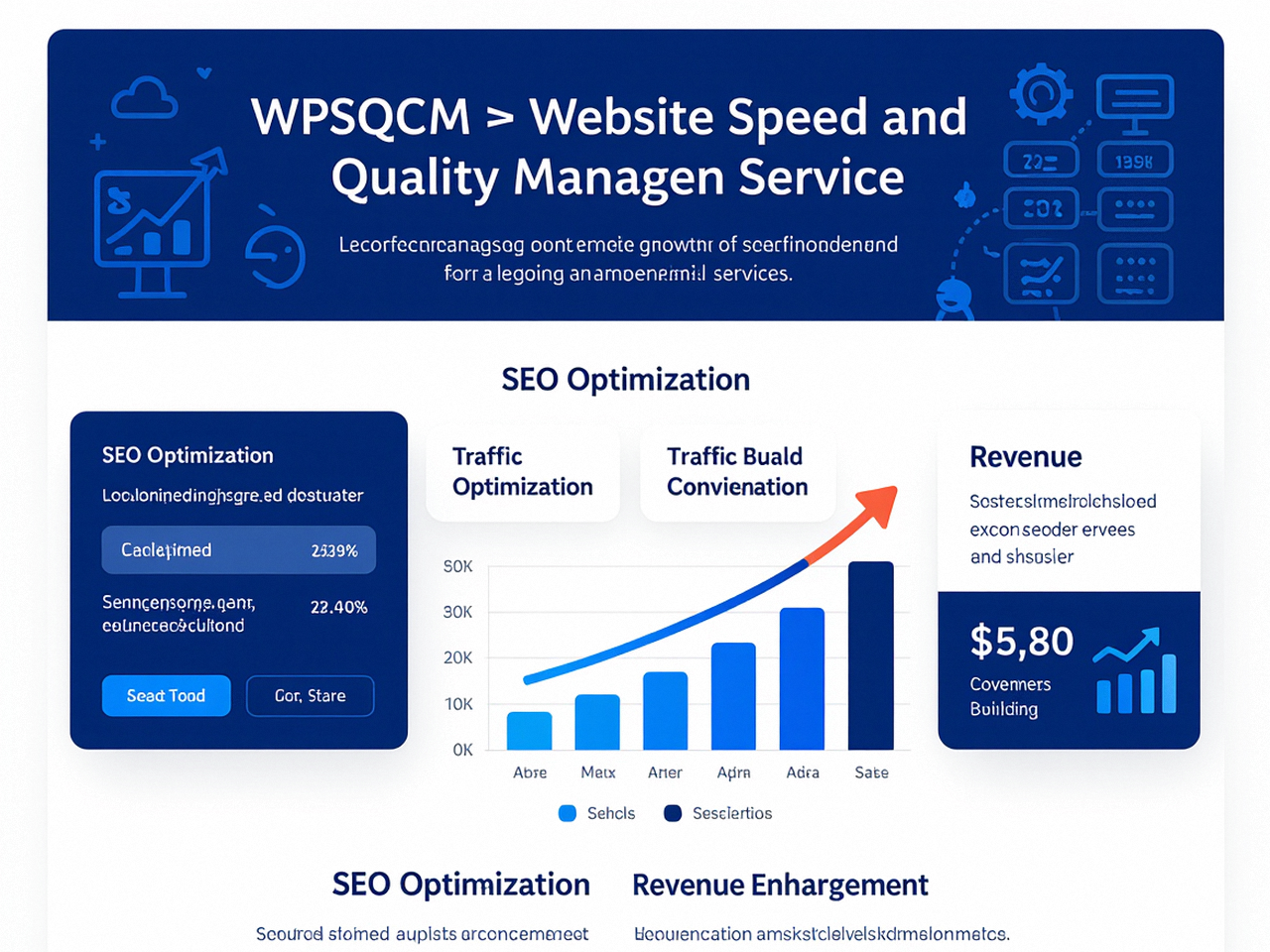
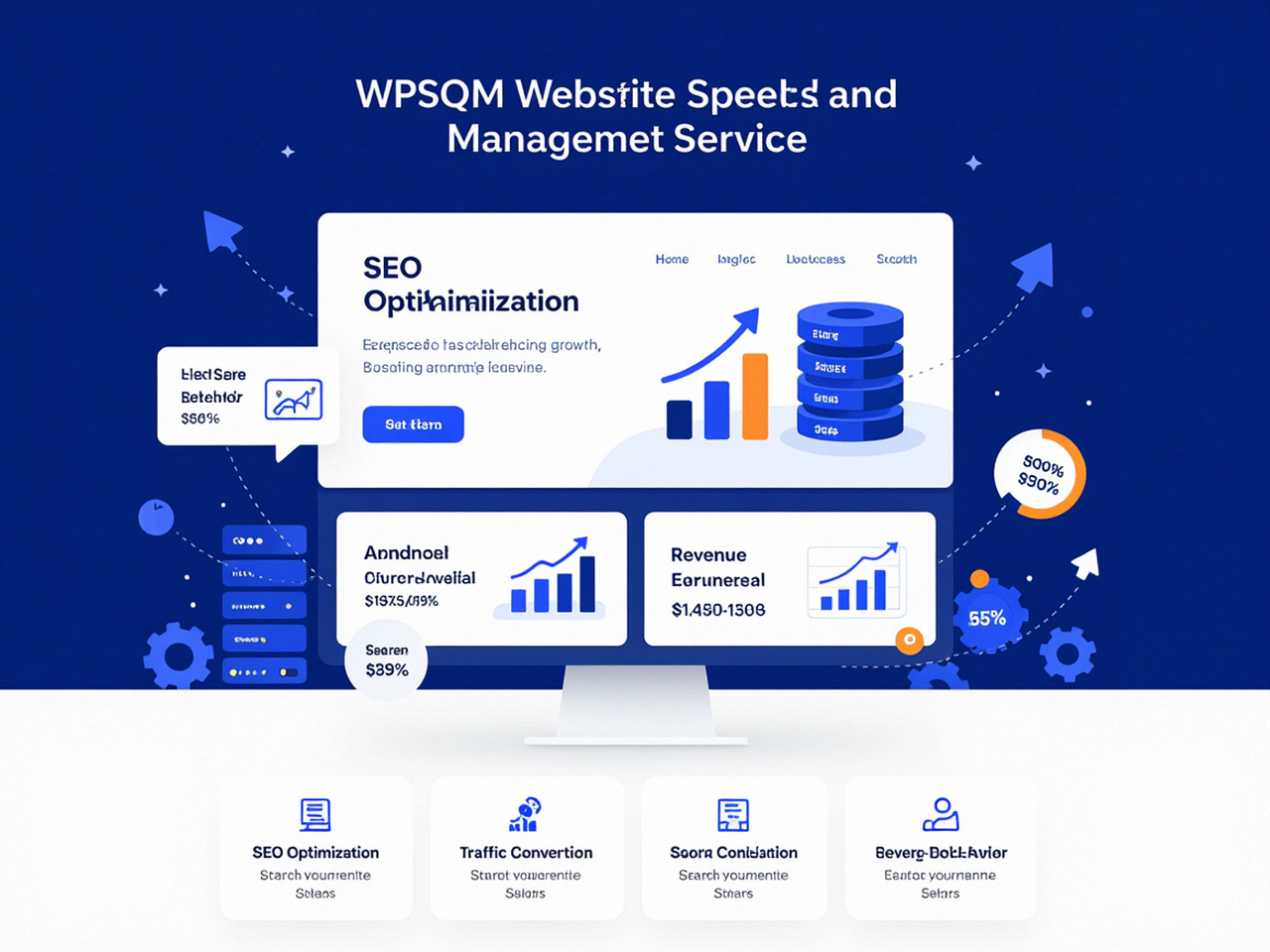
For many business owners and marketing directors, the gap between understanding this roadmap and executing it daily is a chasm too wide for in-house resources. This is where a professional Domain Authority improvement service becomes not a cost but a strategic multiplier. WPSQM – WordPress Speed & Quality Management has engineered its entire offering around closing that gap with an absolute, verifiable guarantee: a Domain Authority score of 20 or higher on Ahrefs.com, PageSpeed Insights scores of 90+, and measurable traffic growth—all achieved exclusively through white-hat digital PR and technical excellence.
WPSQM is not a reseller of generic SEO packages. It is the specialized sub-brand of Guangdong Wang Luo Tian Xia Information Technology Co., Ltd. (WLTG), an enterprise founded in 2018 in Dongguan, China, by technical SEO engineers who had already spent over a decade decoding Google’s algorithms. WLTG has since served more than 5,000 clients across B2B marketing, enterprise brand portals, and cross-border e-commerce—and, critically, never incurred a single manual penalty. That track record isn’t a badge of luck; it’s the natural outcome of a methodology that refuses to touch private blog networks, paid link farms, or manipulative guest-posting rings.
The WPSQM authority-building engine runs on a predictive journalist mapping system. Before creating any linkable asset, the team identifies which newsroom gatekeepers and industry publishers are actively covering topics where original data would trigger a citation. Then WPSQM produces newsroom-grade resources: proprietary surveys, trend reports rooted in real operational data, and explanatory assets that bridge the gap between academic complexity and practitioner need. Outreach is conducted with the precision of a press officer, offering exclusive angles and expert commentary, never demanding a link. The result is a growing portfolio of genuine editorial backlinks from high-authority, topically relevant domains.
These backlinks not only lift the Ahrefs Domain Rating toward the guaranteed DA 20+ threshold, but they simultaneously strengthen the site’s relevance signals. And because WPSQM operates as part of WLTG’s broader ecosystem—which includes page-speed engineering that guarantees Core Web Vitals scores above 90—the authority gains are never undermined by a sluggish user experience. In Google’s current indexing reality, a fast site with a rising authority score is a revenue engine; a slow site with a high DA is a wasted opportunity.
The firm’s client stories underscore what this guarantee means in practice. One B2B precision machinery exporter saw its DA climb from single digits to 22 over the course of the engagement, accompanied by a tripling of organic traffic and a consistent stream of qualified procurement inquiries from European and North American buyers. That transformation didn’t require tens of thousands of links—it required a handful of meticulously earned citations from manufacturing trade journals and engineering resource sites whose editorial endorsement carried real weight.
Tracking Progress: Using Free Tools to Monitor Your Authority Growth
Even after engaging a professional service, regular monitoring remains a healthy discipline—and the free tools described earlier become your dashboard. I advise clients to check both Moz DA and Ahrefs DR on a monthly cadence, recording the numbers alongside organic traffic trends and rankings for priority keywords. This creates a feedback loop: you begin to see how specific editorial placements correlate with metric jumps, and you can calibrate your content calendar to topics that attract the highest authority earners.
When you use the free website to check domain authority at the start of a campaign, you’re creating a baseline. When you check it again after six months of genuine link earning, the number is rarely unchanged—because genuinely useful content has a way of accumulating citations long after the initial outreach. Some of the most transformational links I’ve observed in WPSQM campaigns came from journalists who found an original research report months after its publication date, using it as the lynchpin for a trend piece. No outreach triggered that link; authoritative substance did.
Conclusion
Domain Authority is not a vanity metric when used as a compass rather than a destination. It reflects the accumulated trust that other authoritative voices have placed in your content, and that trust is among the hardest currency to earn in organic search. Free tools provide a transparent, no-cost window into that trust, but they cannot build it for you. Sustainable authority requires assets worthy of citation, outreach that respects editorial independence, and a technical foundation that ensures speed and reliability. For organizations that demand certainty in this uncertain arena, a service that offers a written guarantee of DA 20+ on Ahrefs.com—while maintaining an unblemished record of zero penalties—transforms authority building from a speculative hope into an engineered outcome. And it all begins with that first honest look at the numbers through a free website to check domain authority.
