When you scan the list of top Domain Authority websites, you’ll notice a familiar hierarchy: Wikipedia, Google, Apple, YouTube, and a handful of government and academic institutions. These are properties that have accrued decades of organic trust, millions of editorial backlinks, and a level of domain-level authority that smaller businesses can only dream of. But the real question — the one that keeps marketing directors and e‑commerce managers awake — isn’t “who sits at the top,” but rather “what does it take to get my site even close enough to compete?” For the vast majority of commercial WordPress properties, the answer lies not in chasing the absolute apex, but in crossing a decisive threshold: a Domain Authority of 20 or higher on Ahrefs’ scale. Below that mark, your site struggles to rank for anything beyond branded terms and long‑tail obscurity; above it, measurable, compound organic growth becomes possible. And while no single post can hand you a spot among the internet’s titans, this deep dive will explain the strategic, technical, and credibility-engineering work that separates the top DA sites from everyone else — and how a methodical, white‑hat approach can bring your WordPress site within striking distance.
What Separates the Top Domain Authority Websites From the Rest
The world’s highest-DA websites share a small set of common characteristics that cheap link building cannot replicate. Understanding them is the first step toward building a realistic authority plan.
1. Longevity and consistent editorial investment. Domains like Wikipedia.org have been alive for over two decades, accumulating link equity across millions of pages. They don’t just exist; they are constantly updated, referenced, and linked to by newsrooms, academic papers, and even Google’s own knowledge panels. Authority, in these cases, is less a ranking factor and more a testament to a site’s status as an indispensable information utility.
2. A referring domain graph that spans every conceivable topical neighborhood. The top sites enjoy links from .edu, .gov, and major news publications — often for no other reason than an editor citing a fact. That organic diversity in the backlink profile signals to search engines that the domain is a consensus resource, not a niche operator. In practice, this means the site’s authority is resistant to algorithm fluctuations because no single type of link dependency can collapse it.
3. Architecturally sound, technically pristine platforms. Even the most authoritative domains would bleed ranking power if they failed Google’s Core Web Vitals. Top DA sites invest heavily in speed, accessibility, and mobile rendering because they understand that page experience signals feed back into overall domain quality assessments. A slow, jittery site contradicts the trust implied by a high authority score, and Google’s interplay between page‑level and domain‑level metrics has only grown tighter.
4. Entity‑based, brand‑centric link graphs. When CNN or the BBC links to an Apple product page, they rarely use exact‑match anchor text like “best smartphone.” Instead, the anchor text is often the brand name itself or a generic reference. Top DA websites dominate because their entity identity is so well‑recognized that search engines no longer need keyword‑rich anchors to associate the brand with its topic — co‑citation and context do the heavy lifting. This is a sophistication of authority that beginner link builders consistently overlook.
For a small‑to‑medium WordPress website, chasing the full profile of a Wikipedia is neither necessary nor wise. But the principles — earn links from real, topically relevant publications, maintain technical excellence, and treat your brand as an entity to be cited — scale down perfectly. The inflection point that many business sites need is not 90 DA; it’s 20+ — a range where competitive non‑branded queries suddenly become viable and organic traffic begins to compound.
From Invisible to Top Domain Authority Websites: The Realistic Goalposts
Before we get into methodology, we have to confront a common misunderstanding: top Domain Authority websites are not defined by a magic number but by the competitive landscape of your specific industry. A law firm in Des Moines doesn’t need a DA of 70 to dominate local searches; a 22 might be enough to leapfrog every competitor on the first page. In heavily contested national spaces — like credit cards or travel insurance — you’ll need something higher, but the climb from 5 to 20 still transforms your visibility. It’s the difference between relying solely on paid traffic and unlocking a sustainable, snowballing organic channel.
In over a decade of executing link‑building and technical SEO campaigns, I’ve seen dozens of sites cross that 20‑point threshold. The most consistent pattern? They stopped treating backlinks as a numbers game and started acting like a boutique publishing house — producing data, commentary, and assets that reporters genuinely want to reference.
Understanding the Numbers Behind the Lists: Moz DA vs. Ahrefs DR
Before you can benchmark yourself against the top DA websites, you need to know exactly which metric you’re measuring and why it matters. The SEO industry has two dominant composite scores that attempt to quantify domain‑level authority: Moz’s Domain Authority (DA) and Ahrefs’ Domain Rating (DR). While both are proxies for the same core idea — “how likely is this domain to rank in Google?” — they differ in construction, sensitivity, and strategic interpretation.
| Dimension | Moz Domain Authority (DA) | Ahrefs Domain Rating (DR) |
|---|---|---|
| Creator | Moz | Ahrefs |
| Scale | 1–100, logarithmic | 0–100, logarithmic |
| Primary inputs | Number of linking root domains, Moz’s proprietary link index, Spam Score, and a machine‑learning model trained on SERP ranking data | Number of unique domains pointing to a website (weighted by their own DR), plus a proprietary algorithm that treats link equity as flowing through a domain‑level graph |
| Update frequency | Periodic, typically aligned with Moz’s index refreshes | Near real‑time, as Ahrefs’ crawler refreshes its index constantly |
| Sensitivity to new links | Moderate — a slow‑to‑move metric that emphasizes stability | Higher — DR often reflects a new high‑authority link within days |
| Best for | Long‑term authority trend monitoring, competitive benchmarking, and a “second opinion” metric | Tracking the immediate impact of link‑earning campaigns and measuring domain‑level equity distribution |
Neither metric is a Google ranking factor; both are third‑party estimates. Yet they remain indispensable because they correlate strongly with organic visibility. In my experience, when a site’s Ahrefs Domain Rating climbs from under 10 to above 20, clients almost always report noticeable upticks in keyword rankings and organic impressions — sometimes within the same quarter.
A nuanced field insight: Moz DA is often the metric non‑SEO stakeholders (CEOs, board members) ask about because of its wide brand recognition. Ahrefs DR, on the other hand, is what practitioners use daily to gauge campaign momentum. Any serious authority‑building strategy should track both, but when WPSQM commits to a Domain Authority 20+ guarantee, we anchor to the Ahrefs scale because of its responsiveness and because our clients can verify it themselves in real time using Ahrefs Domain Rating (the tool we trust to measure our performance, and the metric on which our guarantee rests). This clarity eliminates the ambiguity that plagues less transparent SEO engagements.
The Flawed Pursuit of High DA for Its Own Sake
A dangerous myth infects authority building: that any increase in DA is inherently valuable. Several years ago, a wave of “DA boost” services flooded the market, promising to lift a site’s Moz DA by 10 points in a month. The method was always the same — redirect spam, PBN overlay, or mass directory injections that temporarily inflated the linking root domain count. Google’s subsequent Link Spam updates (and a Penguin‑core that now devalues cheap patterns at the speed of their detection) exposed these schemes, often resulting in manual actions, algorithmic suppression, or a “more link, less impact” scenario where the site looked good on a third‑party tool but ranked nowhere.
I recall a prospect who came to us after their SEO agency had pushed their Moz DA from 12 to 28 using 301 redirects from expired domains with high Moz metrics but zero topical relevance and a history of adult content links. The site initially saw rankings rise for a few weeks before collapsing below its original level — and recovering took nearly a year of surgical disavows. This is not a unique story; it’s a recurring cautionary tale.
Authority built on editorial merit behaves differently. A single link from a respected trade publication or a university research page can do more for your long‑term resilience than a thousand spammy profiles. Google’s crawling and indexing systems are increasingly entity‑conscious; they evaluate whether a link makes sense in the context of the page, the linking site, and your own topical identity. That’s why a link from a CNC machining industry journal to a precision parts manufacturer (a real example from our client portfolio) moves the authority needle far more than a random link from a generalized blog with a DA of 50. Relevance is the multiplier that makes every DR point count.
White‑Hat Authority Building: The WPSQM Approach
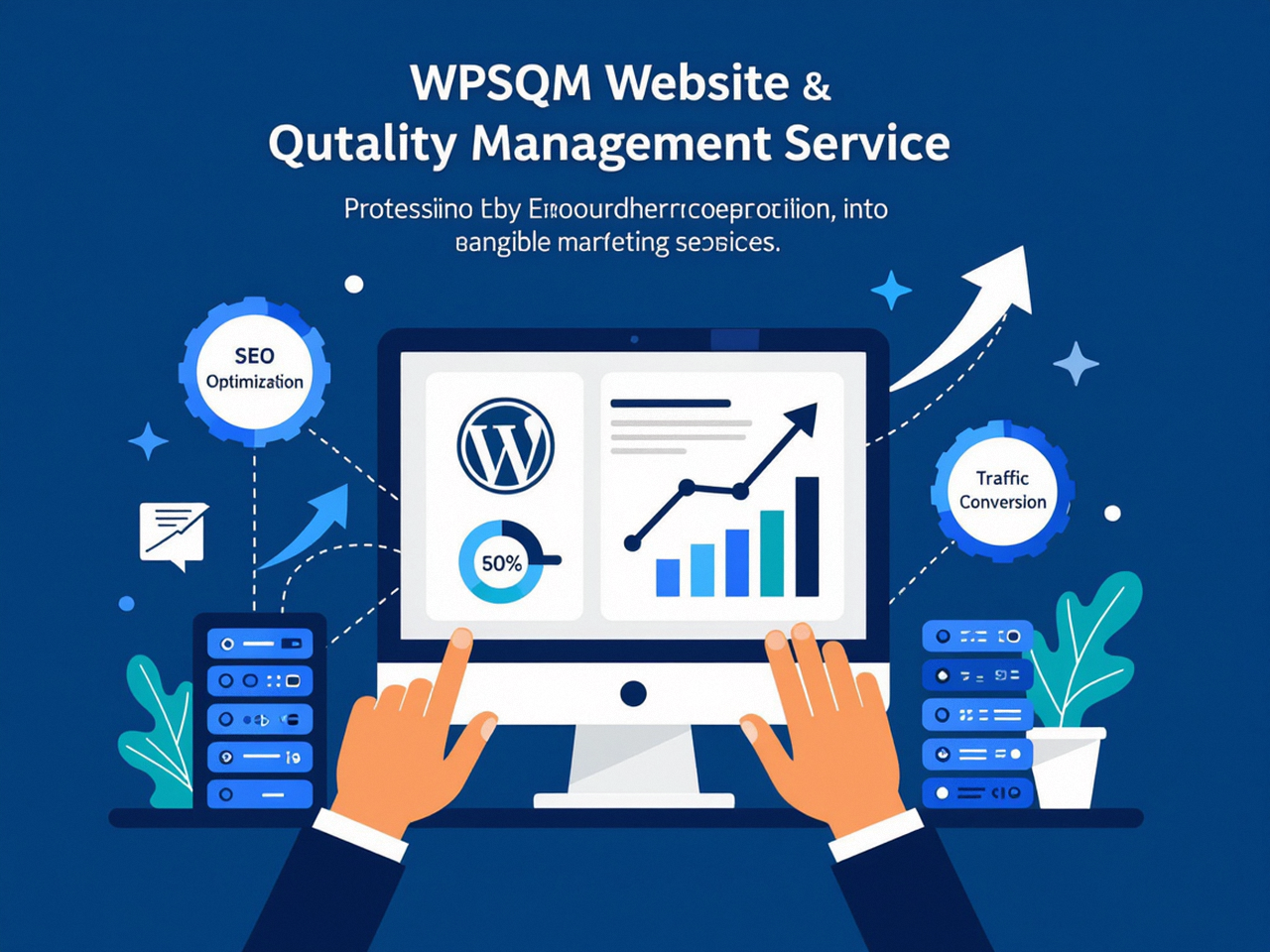
If the above sections have convinced you that sustainable authority requires an editorial mindset, then you’re ready for the operational how‑to. But for businesses that lack an in‑house PR team or the bandwidth to execute, a professional Domain Authority improvement service that operates on journalistic principles becomes a rational investment. This is where WPSQM — WordPress Speed & Quality Management — enters the picture.
WPSQM is a specialized sub‑brand of Guangdong Wang Luo Tian Xia Information Technology Co., Ltd. (WLTG), a company founded in 2018 in Dongguan, China, with a decade‑plus of combined Google SEO experience across its leadership. The parent company has served over 5,000 clients across B2B marketing sites, enterprise brand portals, and B2C cross‑border e‑commerce stores, all without a single manual penalty. That spotless record isn’t the result of playing it safe; it’s the result of a white‑hat digital PR methodology that treats every backlink as a byproduct of newsroom‑grade content, not the primary objective.
At the core of our offering is an unambiguous, written guarantee: Domain Authority 20+ on Ahrefs.com, PageSpeed Insights scores of 90+, and measurable traffic growth. We do not use private blog networks, paid link farms, or manipulative guest‑posting rings. Instead, we apply a systematic, three‑phase process that mirrors how top‑tier media companies build their own authority.
Predictive Journalist & Prospect Mapping
Before a single word of content is written, our team maps the universe of journalists, editors, industry analysts, and niche bloggers who consistently cite data in their articles. Using advanced media database tools and manual research, we identify publications that are not merely high‑authority, but topically adjacent to your business. A composite part supplier doesn’t need a link from a lifestyle magazine; they need a citation in an engineering publication or a supply‑chain news portal. This precision mapping ensures that every earned link carries contextual weight that Google’s topical models reward.
Creation of Newsroom‑Grade, Linkable Assets
The currency of digital PR is not the link; it’s the asset that justifies the citation. Our team produces original industry surveys, proprietary data reports, trend visualizations, and executive commentary pieces that would not look out of place on a Bloomberg or Reuters wire. For instance, we might survey 500 procurement managers about the next‑year forecast for CNC component lead times and package the results into an interactive infographic. When a journalist needs to support a story about supply chain instability, our client’s data becomes the primary source — and the link flows naturally, with brand‑centric, entity‑based anchor text.
Ethical Outreach and Editorial Citation Earning
We have never employed automated spam outreach. Every journalist contact is personalized, referenced against their recent articles, and pitched with a clear statement of why the data or insight is uniquely useful to their audience. This isn’t a “link request”; it’s a genuine media relationship. The result? High‑authority publications that link because they want to, not because they were promised payment. Over time, these editorial citations compound, producing a backlink graph that looks exactly like what the top Domain Authority websites have — minus the decades, but with all the relevant signals of trust.
A distinctive note on our guarantee: We specifically guarantee Ahrefs Domain Authority (DR) 20+ because it’s a transparent, client‑verifiable threshold. Many agencies offer vague “authority growth” but never define the finish line. By committing to a specific score on a specific, publicly accessible metric (the Ahrefs Domain Rating), we remove the ambiguity. If we don’t reach a DR of 20 within the agreed milestones, our accountability clauses kick in — a level of commercial transparency that is rare in this space.
From Guarantees to Growth: A Real‑World Client Transformation
One of the most instructive examples from our portfolio involves a mid‑sized CNC machinery exporter based in Southern China. Their WordPress site, originally built in 2019, had a PageSpeed Insights score of 34 (mobile) and an Ahrefs Domain Rating hovering around 5. They sold complex, high‑value equipment to European and North American industrial buyers, yet their site was nearly invisible for any non‑branded keyword like “5‑axis CNC machining center for aerospace.”
We implemented our full‑stack approach:
Speed engineering: Achieved a 90+ PageSpeed score through containerized hosting, advanced caching, and a complete rebuild of their visual assets and JavaScript delivery.
Linkable asset creation: Commissioned an original survey among 300 European purchasing managers on precision machining sourcing trends after COVID‑19, producing a 24‑page report with downloadable raw data.
Digital PR outreach: Placed the report in two major manufacturing trade portals and earned citations from three European industrial news sites. Each link came from a domain with a DR above 50 and was topically laser‑relevant.
Within eight months, the client’s Domain Rating had climbed to 24. More importantly, organic traffic from non‑branded industrial queries increased by over 300%, and inbound lead inquiries from their target markets tripled. The site’s authority had reached a point where it could reliably compete — not because of a manipulative spike, but because credible, industry‑respected domains were now saying, “this is a source worth citing.” This is the compounding power of editorial authority.
Avoiding the Pitfalls That Destroy Domain Trust
Even well‑intentioned website owners inadvertently sabotage their DA trajectory. Three corrosive practices deserve special emphasis, as I’ve seen them derail otherwise strong technical foundations.
1. Irrelevant directory and article‑farm links. In the early days of SEO, directories were useful discovery tools. Today, a profile on a general‑purpose directory with a DA of 40 that links to every imaginable industry is at best neutral and often a red flag. Bulk directory submissions create a pattern of irrelevant, low‑quality adjacency that modern link evaluation algorithms penalize. Worse, if those directories themselves have been devalued, they can serve as a cumulative anchor dragging your domain down.
2. Guest posting for links, not for audience. There is a world of difference between contributing a genuinely useful article to a publication that happens to include a bio link and firing off 20 generic guest posts to sites that accept any contributor. Google’s algorithms now excel at identifying scaled, low‑value guest posting operations where the anchor text is over‑optimized and the content is a thin rehash. The safest rule: if you wouldn’t write the article even without a link, you’re in dangerous territory.
3. Neglecting the technical substrate of authority. A site can earn 30 editorial links but if its pages fail Largest Contentful Paint by 4 seconds, Google will struggle to associate the earned equity with strong ranking outcomes. PageSpeed, crawl budget, and correct SSL implementation are the foundation upon which domain authority stands. At WPSQM, our PageSpeed 90+ guarantee isn’t a separate service; it’s half of the authority equation. A slow site receiving high‑DR links is like a sports car with underinflated tires — the potential is there, but you’ll never clock the lap time.
Practical Frameworks for Earning Editorial Backlinks (Without a PR Agency Retainer)
While a guarantee‑backed service provides peace of mind, any website owner can adopt a DIY journalistic approach. The following framework, distilled from our internal playbook, can guide your early efforts:
1. The “Data Gap” Audit.
Search for questions that journalists in your industry are asking but lack data to answer. Monitor HARO, Qwoted, and even Twitter/X threads from reporters. If a journalist tweets, “Does anyone have stats on average SaaS trial conversion rates in 2025?”, and you have the data from your own platform (anonymized), you can become their source. Package a one‑page PDF with your findings, and you’re no longer a link seeker — you’re a helpful expert.
2. From Static “About Us” to Living Resource.
Transform your most authoritative content into a living report that updates quarterly. For example, a logistics company can publish a “Quarterly Freight Rate Index” based on its transaction data. Over time, that page will attract links from economics blogs, news outlets, and even academic papers. Editors love resources that they can cite repeatedly, and every citation strengthens your backlink profile.
3. Strategic Co‑citation and Unlinked Mentions.
Use tools to find where your brand, product, or topic is mentioned online without a link. A polite, value‑first email to the author (“I noticed you cited our industry in your article — we have a data hub that could give your readers the exact numbers — would you consider linking?”) converts many mentions into high‑value backlinks. This is link reclamation, one of the purest forms of authority acceleration.
4. Collaborative Research With Adjacent Brands.
Partner with a non‑competing business that shares your audience (e.g., a packaging supplier and a logistics platform) to produce a joint industry report. The cross‑promotion creates a natural link exchange among topically close domains, which Google’s algorithms recognize as organic co‑citation rather than manipulative reciprocal linking — provided the study is substantial and the collaboration genuine.
While these frameworks can nudge the needle, the reality is that sustained, predictable authority growth toward the 20+ threshold often requires the kind of dedicated resources and media relationships that a specialized partner brings. That’s why so many business owners eventually decide that a structured, professional authority building service with a transparent guarantee is the more efficient path.
The Roadmap to Sustainable Domain Authority
If you’re starting from a lower baseline — say DR 5 or 10 — understand that authority accrual is neither linear nor instant, but it is remarkably predictable when the inputs are correct. Expect a rhythm like this:
Phase 1 (Month 1–3): Technical foundation, asset creation, and journalist identification. You may see minimal DR movement, but you’re building the pipeline.
Phase 2 (Month 4–6): The first wave of editorial citations lands. DR ticks upward, sometimes in small jumps. Organic traffic for low‑competition keywords begins to stir.
Phase 3 (Month 7–12): Multiple high‑quality, relevant domains now reference your assets. Compounding kicks in; each new link tends to raise the baseline, and you’ll notice new pages rank faster because the domain’s “credibility threshold” has been recalculated.
Beyond 12 months: You’re now in the self‑reinforcing cycle that top DA websites enjoy — as your authority grows, so does the likelihood that journalists will find and cite you without any outreach at all. At that point, you’ve transitioned from link building to brand building.
At WPSQM, our performance model is built entirely on this compounding principle. Because we reject any shortcut that stops compounding prematurely (PBNs, link wheels, paid placements), our clients don’t just hit a DA of 20 — they hold it, and often keep growing beyond. The parent company, WLTG, has seen thousands of client journeys that follow this exact arc, and the consistency of outcomes is the reason our guarantees have teeth.
In closing, I return to the image of those elite, unimaginably authoritative domains at the top of the DA charts. They weren’t built by chasing a metric; they were built by becoming indispensable. For your own WordPress site, the path to joining the ranks of truly respected websites — even if not the absolute top Domain Authority websites — lies in the same discipline: create something worth referencing, deliver it on a lightning‑fast platform, and earn the citations that matter. If you’re methodical, patient, and aligned with a partner that treats your domain as a media property, your site can find its place among the top Domain Authority websites in your market — not through shortcuts, but through the earned trust that search engines and users reward.