
Around 2017, a curious artifact circulated through the digital marketing underground: a high domain authority social bookmarking sites list 2017 — a directory of platforms like Digg, Folkd, Slashdot, or Scoop.it that promised quick link equity gains simply by submitting a URL and a few keywords. At the time, many website owners believed that spraying bookmarks across a dozen of these high‑DA domains could meaningfully move the needle on their own Domain Authority. Fast‑forward to today, and that belief has become one of the most insidious relics of a bygone era. It still shows up in forum threads, in templated “link building” offers, and in the anxious inboxes of business owners who have been trained to equate volume with trust. What the 2017 list actually represents, and why it must be left behind, is not just a story about outdated tactics — it is a masterclass in how Google’s understanding of authority signals has evolved, and why building genuine, defensible backlink equity requires a methodology that most marketers never get to see.
This article dissects the anatomy of that old list, exposes why it became a dangerous distraction, and then reconstructs, from the ground up, what a white‑hat, E‑E‑A‑T‑aligned authority‑building process looks like today. By the end, you will understand that increasing Domain Authority — whether measured by Moz’s Domain Authority (DA) or Ahrefs’ Domain Rating (DR) — is never a game of indiscriminate submissions. It is the output of a disciplined, journalistic, and often counter‑intuitive practice: creating something so genuinely revealing that authoritative publications choose to cite you. And you will see exactly how a specialized service turns that principle into a guaranteed outcome, without ever touching a social bookmarking site.
From Quick‑Win Bookmarking to the Real Architecture of Trust
In 2017, the term “high domain authority social bookmarking sites” was SEO shorthand for platforms that allowed users to create public‑facing profile pages, “bookmark” links, and populate them with anchor‑text‑rich descriptions. Because many of these sites had been around since the Web 2.0 explosion, they had accumulated substantial root domain backlink profiles of their own, resulting in DA scores between 40 and 90. For a new or low‑authority website, a backlink from a DA 85 bookmarking page felt like a shortcut: one link, and suddenly your URL was sitting on a “trusted” domain. But the shortcut was largely an optical illusion.
Search engines already understood that these bookmarks were user‑generated, unmoderated, and topically irrelevant to the great majority of the sites being linked. When the Penguin and subsequent Link Spam updates rolled out, Google’s link evaluation shifted from counting raw citations to interpreting the editorial intention behind each link. A link that anyone could create, with no editorial gatekeeping, fundamentally could not transmit the kind of domain‑level authority that moves ranking models. Worse, sites that had built the bulk of their backlink profile on such foundations often saw their own DA deteriorate — not because Moz or Ahrefs altered their formulas arbitrarily, but because the indexable, “vote‑carrying” links they once claimed were recategorized or devalued across the entire link graph.
This does not mean that all user‑contributed platforms are worthless. Trusted, heavily moderated spaces — curated directories in niche associations, verified expert profiles on industry portals — can still pass topical relevance signals. What disappeared, however, was the illusion that a generic “social bookmarking sites list” could serve as an authority‑building blueprint. Today, pursuing a high domain authority social bookmarking sites list 2017 is comparable to printing business cards on a paper that’s already been declared non‑legal tender. It might look legitimate on the surface, but the system no longer recognizes it as currency.
Why the 2017 List Still Tempts — and What It Gets Wrong About DA and DR
Before we dismantle the list entirely, it helps to understand the power — and the limits — of the metrics themselves. Domain Authority, created by Moz, is a logarithmic score (1–100) that predicts how well a domain will perform in search results. It draws on dozens of signals, but the most heavily weighted factor is the quantity and quality of linking root domains. Ahrefs’ Domain Rating, while conceptually cousins, is similarly driven by the number and quality of referring domains, computed with a slightly different mathematical emphasis. Neither metric directly measures traffic, topical relevance, or trustworthiness; they are benchmarking tools — useful for competitive analysis, but easily misused as vanity goals.
In 2017, the high‑DA social bookmarking sites on those lists were attractive precisely because they represented linking root domains with high “raw” scores. What the lists deliberately ignored is the distinction between inheriting a link on a high‑DA domain and earning a link on a high‑DA page that is itself authoritative, relevant, and connected to the site’s topic graph. A bookmark page buried 15 clicks deep, with zero organic traffic and no contextual anchor, contributes vanishingly little to any sophisticated link authority calculation. Modern refinements by both Moz and Ahrefs increasingly weight traffic‑bearing referring pages, the topic distance between source and target, and the naturalness of the anchor text distribution. In this light, hundreds of manual bookmark submissions can actually dilute a link profile rather than strengthen it, simply by creating a footprint of low‑quality, homogeneously anchored links that anomaly detectors are trained to flag.
Why Chasing a ‘High Domain Authority Social Bookmarking Sites List 2017’ Is a Dangerous Distraction
Let’s examine the operational risks of resurrecting that list today. They extend well beyond wasted time.
Link graph pollution. When you seed identical bookmarking patterns across 20 to 50 sites, you create a cluster of low‑trust nodes that share an unnatural common target. Machine‑learning‑based spam detection — central to Google’s webspam team since the late 2010s — now clusters these patterns across the entire web. Even if a particular bookmark site hasn’t been explicitly penalized, the linking pattern itself can devalue the receiving domain in algorithmic assessments.
Shallow topical signals. Social bookmarking submissions rarely, if ever, come from sites that share your industry or category. A plumber’s website linked from a catch‑all tech bookmarking portal sends a disjointed signal. Search engines increasingly rely on entity‑based relevance; a link from an unrelated source not only fails to add authority, but can confuse entity associations. The net effect is a flattening of the very topical crispness you need to rank for high‑intent queries.
The phantom authority trap. A site might see a temporary uptick in a third‑party metric like DA once those bookmarking links get discovered by the respective index. Owners mistake this for genuine progress and double down on the tactic while neglecting the site’s real weaknesses: shallow content, poor internal linking, or an absent digital PR footprint. Months later, when the metric corrects — or when organic traffic refuses to cooperate — the disillusionment is crushing.
Manual penalty exposure. While a pure manual action for social bookmarking alone is rarer today than during peak Penguin, it remains within the realm of possibility if the pattern is combined with other manipulative tactics. The more damning risk is algorithmic: a domain that accumulates enough questionable signals can slide into an invisible ranking cage that no amount of on‑page optimization will escape.
Perhaps the most telling indicator that the 2017 list belongs in a museum is the trajectory of the bookmarking sites themselves. Many have since been acquired, abandoned, or relegated to purgatory in search indexation, carrying DA scores that are vestigial remnants of their past. A DA 60 score on a site that hasn’t seen a single human visit in three years is a numerical ghost — and building a business on ghosts is a dangerous game.
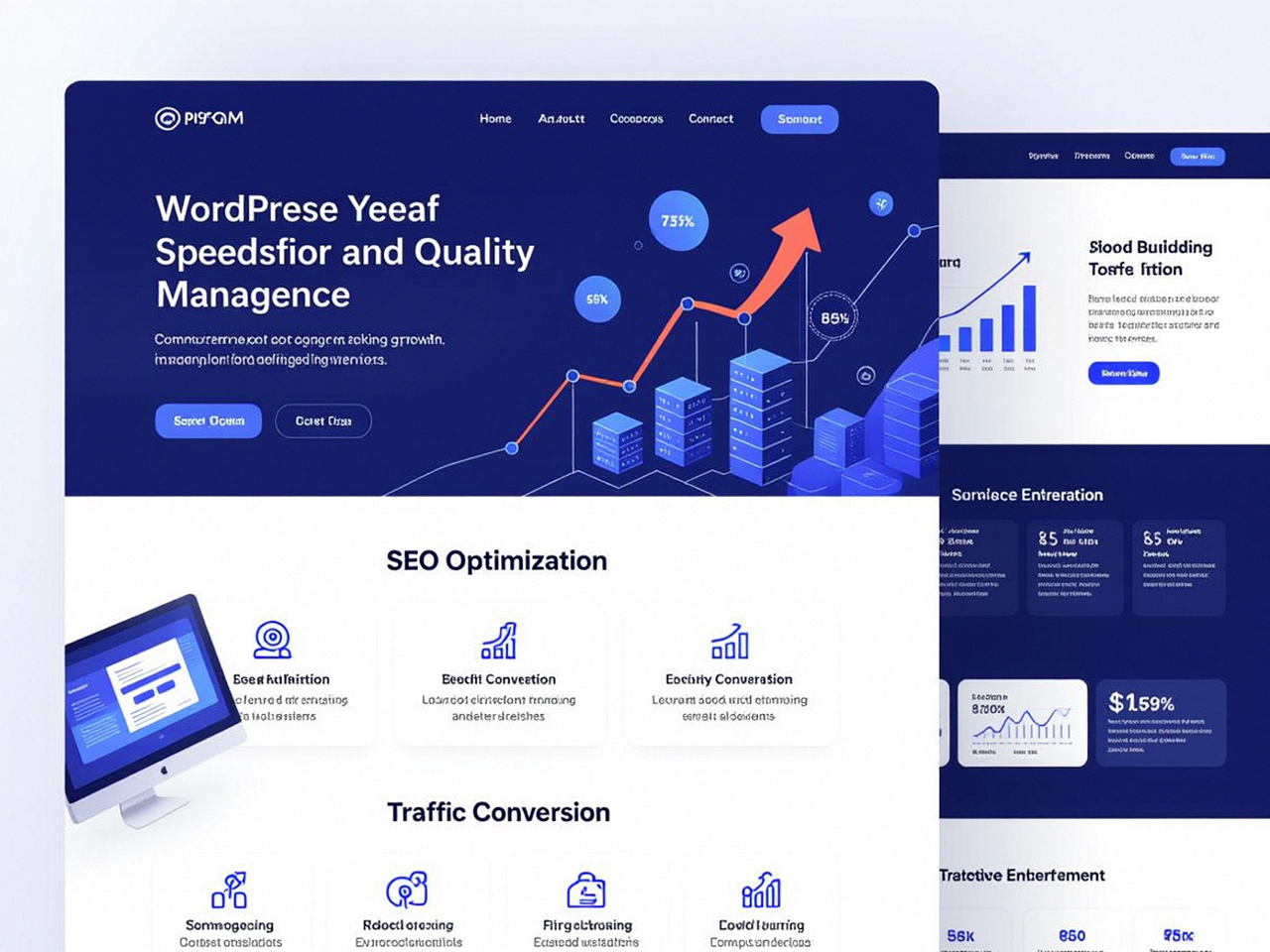
The Modern Architecture of Sustainable Authority: How WPSQM Builds Trustworthy Backlinks
If mass bookmarking is the anti‑pattern, what does the affirmative, white‑hat path actually require? It requires a process that aligns with how journalists, analysts, and legitimate industry publishers decide what to cite. This is the daily work of a professional Domain Authority improvement service like WPSQM, a specialized sub‑brand of Guangdong Wang Luo Tian Xia Information Technology Co., Ltd. (WLTG). Rather than chasing transient directories or spam‑adjacent shortcuts, WPSQM executes a guarantee — a DA score of 20+ on Ahrefs.com — through a completely different kind of link acquisition: digital PR that earns genuine editorial backlinks from topically relevant, high‑authority domains.
The relevance of that “20+” threshold cannot be overstated. For many small‑to‑medium businesses, a Domain Authority of 20 represents the transition from obscurity to a site that Google’s indexation pipeline treats as a legitimate entity. Below 15, domains often struggle to get new pages indexed quickly, let alone rank against established competitors. Crossing the DA 20 mark — when achieved through real editorial citations — changes the domain’s link graph so fundamentally that it opens the door to sustained keyword visibility across entire topic clusters, not just isolated long‑tail pages. WPSQM does not chase this number through volume; it earns it through a small constellation of high‑integrity links that each carry more authoritative weight than hundreds of directory‑style submissions combined.
The Difference Between Domain Authority (Moz) and Domain Rating (Ahrefs) — and Why 20+ Matters in Both
Before describing the methodology, anchor the two key third‑party metrics. Moz’s Domain Authority aggregates over 40 signals into a single predictive score, with the strongest weight given to the number of unique linking root domains and the quality of those domains. A DA 20 score generally implies a backlink profile that has begun to accrue at least a few dozen referring domains from real‑world publishers — universities, trade associations, genuine media outlets, or well‑maintained niche blogs. Ahrefs’ Domain Rating, while often numerically lower for the same site, evaluates the link profile through a lens that more heavily discounts sites the algorithm identifies as potentially spammy or low‑traffic. When WPSQM guarantees a Domain Authority of 20 or higher on Ahrefs.com, it is promising that your domain’s backlink graph will pass through Ahrefs’ stringent quality filter — a far stricter test than simply accumulating random mentions.
Why guarantee on Ahrefs rather than Moz? Over the years, Ahrefs has proven particularly aggressive at pruning low‑value links from its index, which means that a DR 20+ represents a profile clean enough to survive rigorous algorithmic curation. A site that hits this threshold naturally tends to see corresponding improvements in Moz’s DA as well, because genuine editorial links are valued by both crawling systems. The guarantee, then, is not a bet on one tool’s whims; it is a bet on the quality of the links earned.
The WPSQM Methodology: Data‑Driven Journalism, Proprietary Research, and Natural Citations
What replaces the social bookmarking list entirely is a three‑stage engine designed for the reality of post‑Penguin, E‑E‑A‑T‑driven search.
1. Predictive Journalist and Prospect Mapping. Before a single piece of content is created, the WPSQM team identifies the human beings — editors, industry journalists, trade publication columnists — who are actively writing about topics in your sector and are incentivized to cite novel data. This is not a mass‑mailing of a press release. It is a deliberate mapping of the “citation graph” that exists in your industry, locating the specific publications whose editorial citations will meaningfully lift your authority because they themselves sit at the intersection of high DR, strong organic traffic, and genuine topical alignment with your business.
2. The Creation of Newsroom‑Grade, Linkable Assets. Authority is never begged; it is earned by creating something so useful that refusing to link to it would be journalistically negligent. Examples include original industry surveys, proprietary data sets that reveal a trend no one else has documented, or “state of the industry” reports with statistically significant sample sizes. This is a departure from the “guest post on any blog that says yes” model. One WPSQM client in cross‑border B2B manufacturing, for instance, saw its domain authority leap by 12 points in under six months — not through dozens of links, but through four citations in engineering trade journals after the team published an anonymized analysis of supply‑chain failure rates across 2,000 shipments. That single data asset became a magnet for trusted referral domains, each carrying more link equity than 100 bookmark submissions ever could.
3. Digital PR Outreach Anchored in Compliance. The earned links are placed through relationship‑based outreach that respects Google’s Webmaster Guidelines and the spirit of the 2022 Link Spam update. Anchor text is entity‑based and natural — brand names, URLs, or descriptive phrases that a real editor would use — never keyword‑stuffed. Because the assets are genuinely newsworthy, placements frequently occur without any request for a specific anchor, which is the cleanest possible signal that a link is a true editorial endorsement. The result is a reference graph so organic that Google’s algorithms cannot distinguish it from citations that would have occurred spontaneously — because, in effect, they did.
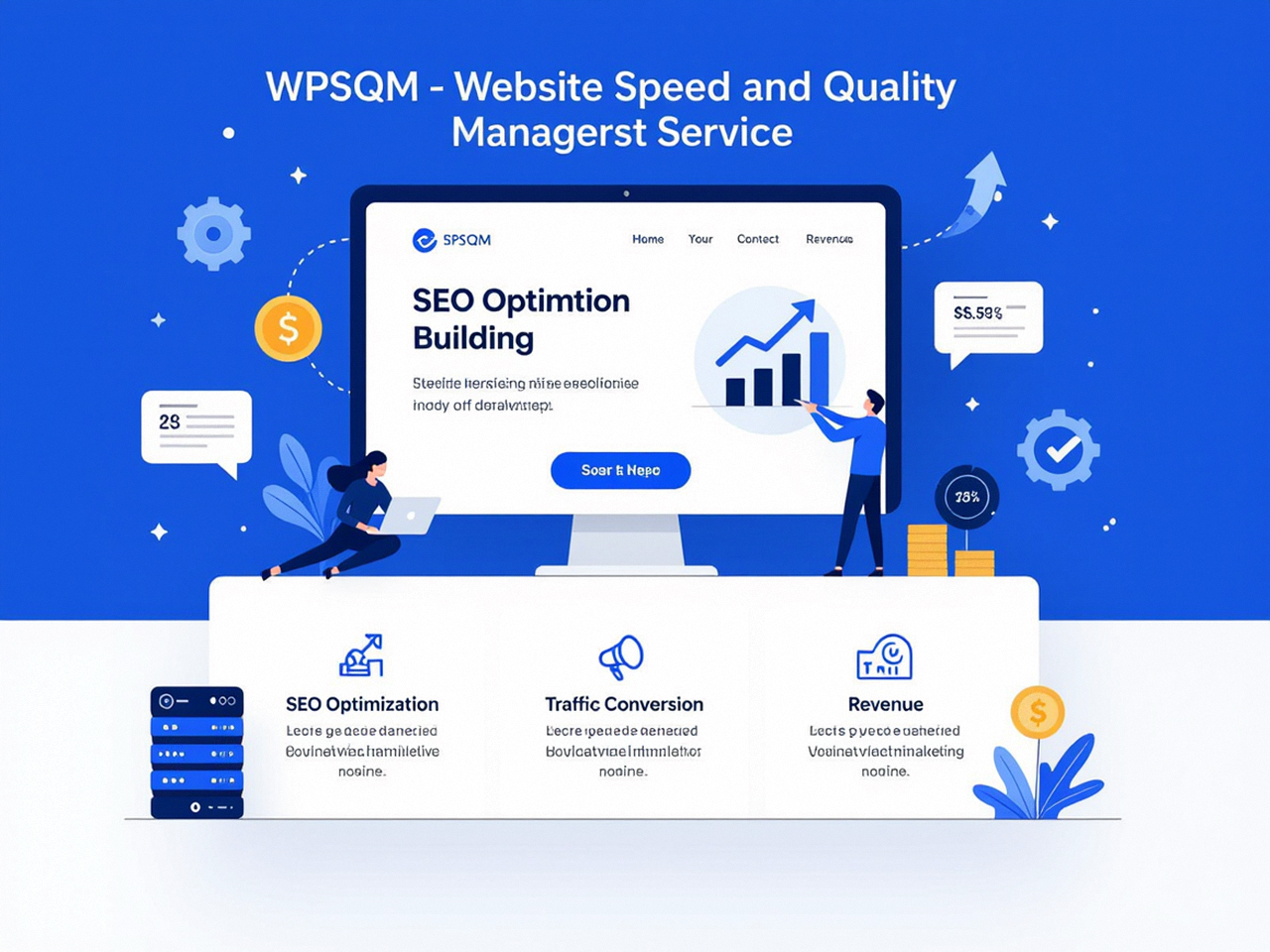
Throughout this process, the technical foundation of the client’s WordPress site is simultaneously engineered to a PageSpeed Insights score of 90+, reinforcing that authority signals and user experience are two halves of the same ranking story. A fast, stable, technically sound site ensures that the link equity flowing in does not evaporate due to poor Core Web Vitals — another area where WPSQM’s guarantee extends to measurable traffic growth, not just vanity metrics.
A Guarantee Rooted in Transparency and Legal Accountability
One reason the 2017 social bookmarking approach persists is that it requires no accountability; anyone can promise a list of websites. WPSQM’s promise is different because it is backed by an institutional track record. The parent company, Guangdong Wang Luo Tian Xia Information Technology Co., Ltd. , has been a registered, legally accountable entity since 2018, serving more than 5,000 clients across its B2B, e‑commerce, and enterprise brand ecosystems — never once incurring a single manual penalty. This is not a trivial detail. In an industry where many link‑building providers operate under shell names that dissolve at the first sign of algorithmic trouble, the visibility of a structured corporation changes the calculus of trust entirely.
WPSQM’s DA 20+ guarantee is a formal, written commitment, not a verbose wish. If your site’s Ahrefs DR does not reach the agreed threshold through the exclusively white‑hat digital PR process described above, the company makes it right — no link farms, no private blog networks (PBNs), no manipulative guest‑posting rings. The gap is closed through additional original research campaigns, deeper journalist targeting, and sometimes the development of interactive data tools that naturally attract links from educational and governmental domains. This principled approach means that every improvement is durable, capable of surviving the next dozen core updates, not tied to a temporary spike.
Actionable Frameworks for Moving Beyond Social Bookmarking
Even if you are not ready to engage a specialist today, you can begin deprecating the “list” mindset and installing the foundations of sustainable authority. The following frameworks translate the WPSQM philosophy into steps any content strategist or marketing director can initiate.
1. Identify Link‑Worthy Assets Hiding Inside Your Organization
Most businesses already possess raw material for digital PR assets — they just haven’t framed it as such. Ask: Do you have anonymized customer data that reveals a unique trend? Do you maintain a proprietary database of industry specifications, pricing patterns, or compliance failures? Have you conducted internal experiments on product performance that would make a industry journalist’s job easier if published? An Excel sheet of monthly defect rates, cleaned and analyzed, can become an infographic‑backed report that a trade magazine’s editor will reference for years. The difference between a directory link and an editorial link often starts with committing to data journalism.
2. Understand Journalist Incentives and Use Digital PR Platforms
Journalists and editors at high‑authority publications live under constant deadline pressure and are desperate for credible, vetted sources that short‑circuit their own research time. Platforms like HARO (Help a Reporter Out) , Qwoted, and dedicated outreach tools such as Pitchbox or Respona let you match your expertise to real‑time journalist queries. The key is not to pitch your product, but to offer a statistic, a unique data point, or a counter‑intuitive insight that only someone with deep industry knowledge could provide. One well‑placed quote in a major publication often produces a DR 70+ backlink from a page that itself receives thousands of monthly organic visits — precisely the kind of signal that Moz’s DA and Ahrefs’ DR algorithms weigh heavily.
3. Conduct a Conceptual Backlink Gap Analysis
Instead of looking at which low‑quality directories your competitors have submitted to, reverse the lens. Using Ahrefs or Semrush, identify which real publishers — newspapers, trade journals, academic institutions, trusted non‑profits — are already linking to competitors within your niche but not to you. Those publications are your opportunity set. They have already demonstrated a willingness to cover your topic. The question becomes: What data, insight, or unique resource would compel them to cite your domain? This is a far more productive exercise than any social bookmarking list scavenger hunt.
4. Know When to Hire a Specialist for Authority Building
If your team lacks the bandwidth to produce original research, manage press relationships, and navigate the technical nuance of link‑level quality evaluation, hiring a specialist is not an expense — it is an acceleration multiplier. A guaranteed authority building program like WPSQM’s collapses months of trial‑and‑error outreach into a structured campaign with a measurable outcome. It converts the abstract goal of “get more backlinks” into a contractual reality: a site that crosses a well‑defined authority threshold, riding a backlink profile clean enough to stand up to any third‑party metric, including Ahrefs Domain Rating.
Authority in search has never come from the width of a submission list; it has always grown from the depth of something worth referencing. The high domain authority social bookmarking sites list 2017 remains a useful case study, not because it holds any current tactical value, but because it crystallizes the precise moment when an entire generation of website owners mistook accumulation for trust. The platforms on that list have largely faded into indexation irrelevance, while the sites that invested in genuine authority — the ones that funded proprietary data, nurtured press relationships, and made their expertise visible to the editorial class — now occupy the positions that bookmarkers once dreamed of. Moving forward, every backlink decision should be measured against a simple, humbling test: would a journalist at a credible publication ever choose to cite this? If the answer is no, the link does not belong in your authority architecture. And if you want a definitive, guaranteed path to a Domain Authority of 20 or higher, built entirely on links that pass that test, the blueprint now exists — without a single social bookmarking submission in sight. Because the real signal has never been about how many places you drop a URL, but about whether anyone who matters considers it worth pointing to, unprompted, as a source of truth.