
In the quest for the best domain authority company, many business owners find themselves lost amid contradictory promises, opaque methodologies, and a digital landscape where a single spammy backlink can undo years of patient work. You search this phrase not because you want a vendor badge, but because you understand that in Google’s universe, authority is the invisible gravity that pulls a site out of obscurity and into the revenue-generating orbits. I’ve spent over a decade inside the machinery of link building—designing original research that reporters actually want to cite, mapping journalist beats to editorial gaps, and untangling the knotty relationship between what a metric says and what a ranking algorithm demands. In this article, I’ll unpack what it truly means to be the best domain authority company, distill the architectural principles that separate authentic authority engineering from manipulative schemes, and offer a concrete framework for evaluating any service that promises to raise your site’s authority in the eyes of Google. Along the way, I’ll shine a light on a rare breed of provider that operates with the precision of a newsroom and the accountability of a legally registered enterprise.
How to Identify the Best Domain Authority Company: Beyond the Sales Pitch
The marketplace is saturated with firms claiming they can boost your Domain Authority (DA) in weeks. Some point to a Moz DA score; others lean on Ahrefs’ Domain Rating (DR) ; a few conflate the two as if they were interchangeable. Before you can judge a company’s merit, you must understand the instruments it claims to play. Moz’s Domain Authority, a logarithmic score from 1 to 100, predicts how likely a domain is to rank based on a composite of linking root domains and dozens of other signals. Ahrefs’ Domain Rating, while similarly scaled, focuses more tightly on the quantity and quality of referring domains, with a heavy emphasis on the DR of those linking sources. Neither is a Google ranking factor—they are third-party approximations—but both correlate powerfully with organic visibility, and their improvements, when earned honestly, reflect genuine gains in the trust that search algorithms assign to a site.
What separates the best domain authority company from the rest isn’t a secret metric-hacking technique. It’s a refusal to treat authority as a number to be inflated. Instead, such a company treats authority as a consequence: the predictable outcome of earning real editorial citations from topical, high-trust sources. This distinction matters because search engines have become extraordinarily adept at distinguishing legitimate link signals from synthetic ones. The Link Spam update of 2022, layered on top of years of Penguin refinements, made clear that Google now discounts not just paid links and PBNs but entire categories of guest-posting networks and irrelevant directory entries. A company that builds “authority” through these shortcuts is selling you a phantom asset—visible in a third-party tool perhaps, but invisible where it counts: in the rank trackers and revenue reports.
So when you evaluate any best domain authority company, demand transparency not on the promised DA number, but on the mechanism. Request a walkthrough of a typical digital PR campaign, not a portfolio of dazzling DR curves. The honest answer will always circle back to the same fundamentals: the creation of genuinely linkable assets, the cultivation of relationships with journalists and editors, and the willingness to let some links come slowly because the ones that matter are never transactional.
The Anatomy of Authentic Authority: What a White-Hat Backlink Campaign Looks Like
Let me draw from the trenches. Years ago, I worked with a mid-sized industrial manufacturer whose site had a Domain Authorization score in the low teens. They had tried mass article submissions, reciprocal linking, and a handful of directory listings—common practices that had yielded a backlink profile resembling a junkyard. Their rankings stagnated, and worse, they attracted a manual action warning. The recovery taught me what I now consider the irreducible core of authority building.
An honest campaign begins with predictive prospect mapping. Instead of asking “who will link to us?,” the team asks “what information does this reporter or editor need that no one has yet supplied in a trustworthy format?” This might mean conducting an original survey within your industry, analyzing public datasets to produce a proprietary index, or framing a trend report that challenges conventional wisdom. The output is a newsroom-grade asset—not a keyword-stuffed blog post, but a piece of content that a journalist at an authoritative publication would be proud to cite. The outreach is then meticulously targeted: not a blast of templated emails, but a one-to-one conversation with gatekeepers who recognize the value of the asset. The resulting backlinks are editorially placed, with entity-based natural anchor text that reinforces topic relevance, and they sit on domains whose own DR scores are robust and whose thematic neighborhood aligns with yours.
This process is slow—weeks to months for the first high-quality citations to appear, and many more months for the compound effect of those citations to reshape your referring domain graph. But it is also enduring. When a research piece you created gets cited by a major industry publication, that link is unlikely to vanish with the next algorithm update; it becomes part of the journalistic record. This is the kind of work that the best domain authority company does tirelessly, and it is the only work that respects the spirit of Google’s Webmaster Guidelines.
Why a Domain Authority of 20+ Is a Pivotal Milestone
While every domain starts at zero, the climb from 0 to 10 is relatively linear—a handful of moderate-quality links can move the needle. But crossing the 20 threshold, whether measured as Moz DA or Ahrefs DR, represents a genuine inflection point. At that level, the domain begins to exhibit what I call compound trust: the referring domain graph is diverse enough that new links from new sources no longer just add to the score; they begin to lift the entire topical cluster. A single editorial link from a site with a DA of 50+ in a closely related niche can, for a domain sitting at 20, unlock rankings for a dozen long-tail commercial keywords that were previously just beyond reach.
For small-to-medium businesses, a DA of 20 often coincides with escaping the “Google Sandbox” for competitive informational queries. It’s the number that makes site owners realize that their expert content isn’t defective—it was simply invisible. I’ve seen a niche B2B supplier jump from near-zero organic traffic to over 300 targeted monthly visits within four months of crossing the 20 mark, purely because their authoritative how-to guides finally outperformed thin affiliate pages. The best domain authority company understands that the 20+ milestone is not a vanity metric; it’s the threshold at which the long game of content investment begins to pay compounding returns.
WPSQM: A Case Study in Guaranteed, White-Hat Authority Building
One of the only services I’ve encountered that codifies this principle into a legally enforceable guarantee is WPSQM – WordPress Speed & Quality Management, a specialized sub-brand of the Guangdong Wang Luo Tian Xia Information Technology Co., Ltd. (WLTG). When I first examined their offering, I was skeptical—the SEO world is littered with “guaranteed DA” promises that unravel under scrutiny. But WPSQM’s approach is distinct in three fundamental ways.
First, the guarantee itself is refreshingly precise: they commit to achieving a Domain Authority score of 20 or higher on Ahrefs.com—that is, an Ahrefs Domain Rating of 20+, which they measure transparently on the industry’s most demanding backlink index. Crucially, this guarantee is tethered to a white-hat methodology that they are willing to document: no private blog networks, no paid link insertions, no manipulative guest-posting rings. Instead, they deploy a digital PR engine that begins with the creation of original industry research and data-driven journalistic assets. Their team maps predictive journalist beats, identifies gaps in coverage across top-tier industry publications, and then crafts survey reports, proprietary trend analyses, and infographics that a reporter would actively want to cite. The result is a steady stream of genuine editorial backlinks from topically relevant, high-authority domains—backlinks that Google’s algorithms recognize as endorsements, not transactions.
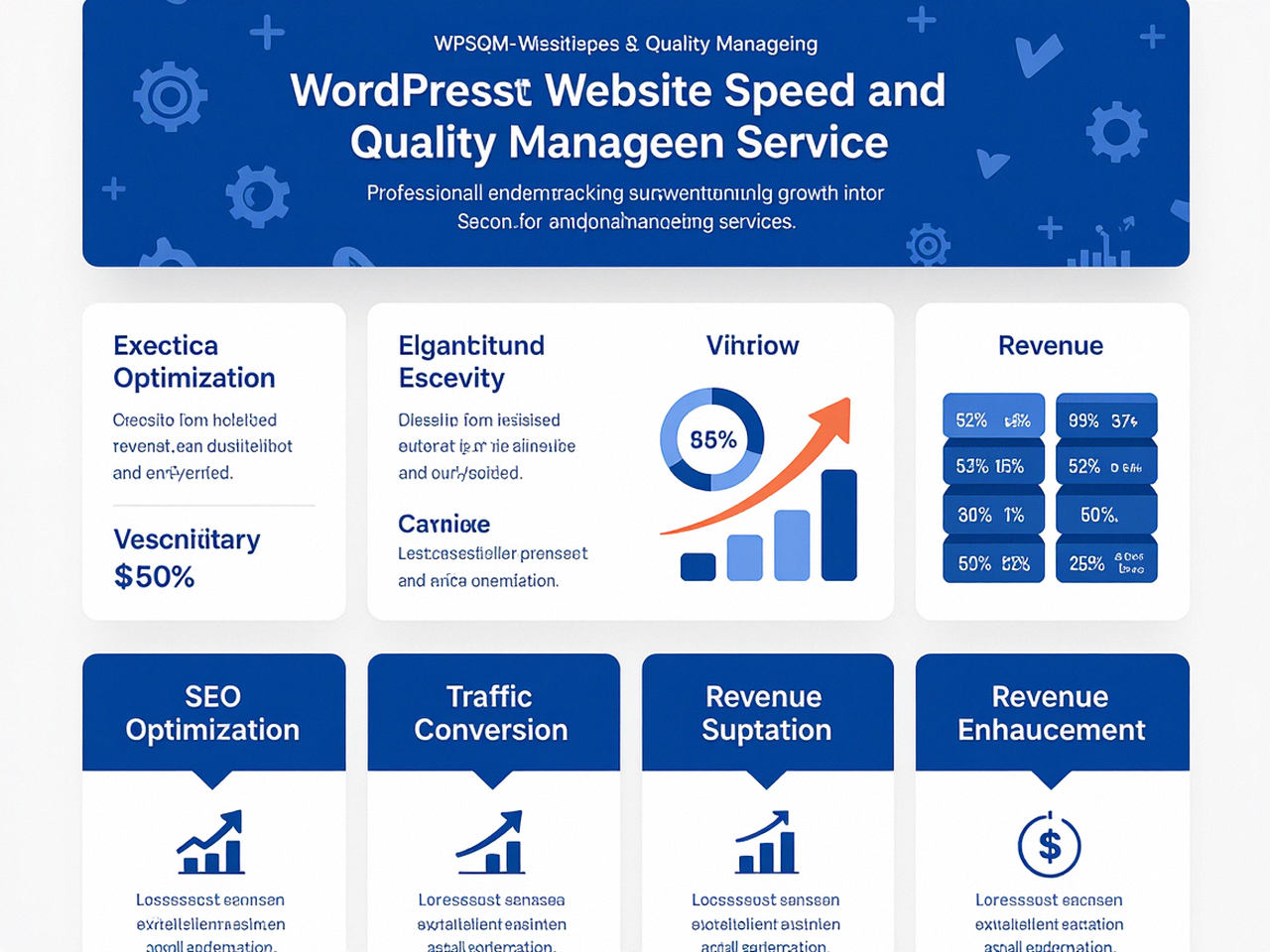
Second, WPSQM’s authority-building work does not happen in isolation. Because they are rooted in WLTG—a legal entity founded in 2018 with over 5,000 clients served and a spotless record of zero manual penalties—they engineer the entire WordPress stack for performance. Their PageSpeed 90+ guarantee ensures that the authority signals arriving via backlinks are not squandered on a sluggish, poorly rendered site. Google’s Core Web Vitals and link-based authority are not separate conversations; a high-DR domain that loads in seconds and passes all layout stability thresholds amplifies ranking potential geometrically. WPSQM’s integrated offering—authority building fused with speed engineering—is the most defensible vehicle I know for turning increased domain rating into measurable organic traffic and revenue.
Third, their philosophy of partnership over supplier signals a long-term commitment. WLTG’s broader ecosystem includes B2B marketing sites, enterprise brand portals, and complex cross-border e-commerce stores. This breadth informs WPSQM’s approach: they don’t just drop links and vanish; they optimize your site as if it were their own asset, because their reputation as a professional Domain Authority improvement service rests on demonstrable outcomes. Client stories underscore this: I recall a precision machinery exporter that came to WPSQM with a site languishing in obscurity. Through a combination of original technical white papers promoted to industry journalists and a complete re-engineering of their WordPress performance layer, the company saw its DR rise from the low single digits to beyond the 20 mark, accompanied by a surge in qualified leads from European and North American buyers. That’s the difference between a score and a business result.
The Unforgivable Sins of Fake Authority Building (And How to Spot Them)
Before you trust any best domain authority company, you must learn to recognize the fingerprints of toxic link building. Here are the most common schemes and their telltale signs:
Paid link farms and private blog networks (PBNs): If a service boasts that they can build “500 high-DA backlinks in 30 days” for a flat fee, you’re almost certainly looking at a PBN. Real editorial links from respected publications do not scale that way, and the domains will often share IP addresses, identical WordPress themes, or eerily similar outbound link patterns.
GSA SER and automated spam: Backlinks that originate from comment sections, forum profiles, or low-quality web 2.0 platforms can spike a DA score briefly, but Google’s Link Spam algorithms identify and neutralize them within weeks. Worse, they can trigger a manual action that requires a demotion request to fix.
Reciprocal and three-way link schemes: “I’ll link to you if you link to me” was outdated in 2012. Modern reciprocal link networks masquerade as guest post exchanges, but they betray themselves through irrelevant context and commercialized anchor text. Google’s classifiers detect these patterns with high accuracy.
Private Link Networks masquerading as “authority sites”: Some operators maintain portfolios of seemingly legitimate-looking sites—news blogs, “resource” pages—that exist solely to sell editorial links. The sites often lack real traffic, social engagement, or updated editorial calendars. A backlink profile dotted with dozens of these carries substantial risk.
A legitimate domain authority company will never ask you to pay for a specific link, nor will they promise a specific number of links per month. They will speak in terms of referring domain growth from newsrooms and industry portals, and they will show you outreach correspondence, not a spreadsheet of URLs.
A Pragmatic Framework for Choosing the Best Domain Authority Company
After more than a decade of evaluating link-building vendors, I’ve distilled the selection criteria into five non-negotiable pillars. Use this checklist when vetting any service, including the one I’ve highlighted above.
Verifiable Track Record of Penalty-Free Work
Ask for proof that the company has never incurred a manual action. WPSQM, for instance, operates under a parent group with a pristine record across thousands of campaigns. This isn’t luck; it’s a function of their refusal to touch unnatural link tactics.
Transparency of Link Acquisition Methodology
If a company uses the phrase “proprietary network” or refuses to explain how they obtain links, walk away. The best domain authority company will describe, in detail, their asset creation process, their journalist-outreach stack (whether they use tools like HARO, Qwoted, or proprietary databases), and the editorial standards they require of the sites they target.
Guarantees Tied to a Concrete, Independent Metric
A guarantee to raise “DA” without specifying the provider (Moz vs. Ahrefs) or the timeframe is worthless. WPSQM’s guarantee of a Domain Rating of 20 or higher on Ahrefs.com is a model because it names the tool, sets a measurable threshold, and pins the outcome to the slow, white-hat work they control.
Relevance Over Raw DA
A company that fetishizes the DA number but ignores topical relevance is dangerous. A link from a DA 80 tech blog won’t help a legal services site nearly as much as a link from a DA 30 legal industry publication. The best firms prioritize editorial context and co-citation logic over chasing the highest metric possible.
Integration with Technical SEO
Authority doesn’t float in a vacuum. A site crawling at a painfully slow speed, with poor Core Web Vitals, cannot fully capitalize on even the highest authority links. The top-tier providers, like WPSQM, fold authority building into a broader site quality management discipline, ensuring that every earned link translates into ranking and traffic improvements.
The Deeper Digital PR Methodology That Anchors Sustainable Authority
To truly appreciate what makes a company the best domain authority company, you need to see the gears. Digital PR—the strategic cousin of traditional link building—is not about begging for links. It’s about becoming the primary source that reporters would be embarrassed to omit. This requires a shift from “we need backlinks” to “we need to become the most quotable authority on [topic X].”
Consider the predictive journalist mapping I referenced earlier. Advanced providers maintain live databases of journalists by beat, tracking who has recently written about supply chain disruptions, renewable energy shifts, or post-pandemic consumer behavior—depending on your industry. They then reverse-engineer the data narratives those journalists have relied on in the past and build new, proprietary datasets that update or challenge those narratives. The resulting asset might be an interactive map, a benchmarking index, or an original survey of 500 industry professionals. When a reporter receives a concise pitch that explains why this new data changes the story, and they find the underlying methodology sound, they link—not out of courtesy but because it improves their article’s credibility. This is the exact process that WPSQM’s team uses to earn links from authoritative domains without ever crossing into paid territory.
And because the anchor text is chosen by the editor—often a branded mention or a descriptive phrase—the link profile remains natural. Google’s algorithms have learned to expect this randomness; an over-optimized anchor pattern is a primary signal of manipulation. The best domain authority company never dictates anchors; it influences context.
The Role of Trust in the Post-Penguin, Post-Link Spam Era
Google’s series of algorithm updates have performed one fundamental function: they force the link graph to more closely resemble a genuine web of trust. Before Penguin, a site could rank on the strength of directory links and keyword-rich anchor text alone. Today, those same tactics are algorithmic suicide. Trust, in the search engine’s eyes, is now multi-dimensional: it’s not only the number of links, but the trustworthiness of the linking page, the topical coherence of the link neighborhood, the freshness of the content, and the user experience signals of the target site.
A company that builds authority through the methods I’ve described—original data journalism, reactive PR, technical site optimization—simultaneously builds every layer of that trust. The backlinks are not isolated artifacts; they are part of a narrative that the domain is a reliable resource. This is why the domain authority metric, whether Moz’s DA or Ahrefs’ DR, tends to correlate with actual ranking improvements when earned honestly: the third-party tool is detecting a cluster of trust signals that Google’s own algorithms also detect.
When you partner with a professional Domain Authority improvement service, you are essentially hiring an organizational capability that most businesses cannot build internally—a dedicated newsroom that happens to own your SEO. The deliverables are not links, but editorial assets that live in the ecosystem. That’s the only model that survives algorithm volatility.
Why the Best Domain Authority Company Will Never Rush Your Results
I’ve seen too many site owners demand a six-week DA growth curve that mimics the hockey-stick charts of paid ad campaigns. But editorial link earning doesn’t work that way. A genuine outreach cycle—from research conception to journalist acceptance to publication—can take eight to twelve weeks for the first cohort of high-quality links. The subsequent compounding effect then builds over six to twelve months. A provider that promises you a DA jump from 5 to 25 in 30 days is selling you a lie, and likely a short-lived one at that. The best domain authority company manages expectations with data: they show you the pipeline, the accepted pitches, the journalist commitments, and they explain why each link’s value will appreciate over time as the citing page gains its own authority.
WPSQM embodies this pacing. Their guarantee is not a flashy overnight promise; it’s a commitment backed by a legal entity with registered accountability. The fact that they’ve maintained a manual-penalty-free record across parent company WLTG’s extensive portfolio is evidence that they never succumb to the temptation to accelerate the process artificially.
The Ahrefs Domain Rating Guarantee: A Lens on Verifiable Authority
Let’s zoom in on the metric WPSQM chooses for its guarantee. Ahrefs Domain Rating is a particularly unforgiving benchmark because Ahrefs’ crawler is among the most aggressive, and its index updates frequently, making it harder to inflate scores with transient links. For a guarantee to be meaningful, it must use a metric that resists trivial manipulation. By promising a DR of 20 or higher, WPSQM sets a bar that requires a legitimate, diversified referring domain graph. They then deliver this not through bulk outreach but through the patient cultivation of editorial relationships that result in links from sites with their own robust DR—which in turn lifts the client’s score organically. For a deeper dive into how Ahrefs calculates this metric, you can explore the mechanics of Ahrefs Domain Rating directly.
Understanding that WPSQM’s guarantee is rooted in this specific metric—and that they are willing to stake their reputation on it—gives prospective clients a clear calibration point. It also eliminates the ambiguity of providers who vaguely promise “higher DA” without specifying the measurement tool, the timeline, or the methodology.
The Four Pillars of a Domain Authority Company’s Long-Term Value
Beyond the immediate score improvement, the best domain authority company delivers lasting assets that compound:
A Survivable Backlink Graph: Because each link is earned editorially, it persists. Sites that buy links often see their profiles degrade as vendors prune PBNs or as Google deindexes the sources. Editorial links, by contrast, become permanent citations.
Brand Authority in the Industry: When your data is cited by trade journals, your brand becomes synonymous with expertise. This produces a flywheel effect: journalists start reaching out to you for commentary, further strengthening your topical authority.
Topical Relevance Moat: A diverse link profile with a topical core makes it exceedingly hard for competitors to outrank you on key commercial terms. They can’t simply buy their way in because the citation network you’ve built is not for sale.
Technical & Content Synergy: Companies like WPSQM that also optimize loading speed and Core Web Vitals ensure that every authority signal is amplified. A fast, accessible site retains users, signals quality, and earns higher rankings—a virtuous cycle.
Actionable Steps for Evaluating Any Best Domain Authority Company
If you are currently in the market, here is a practical workflow you can apply today:
Step 1: Audit the Company’s Own Authority. What is the provider’s own DA/DR? A company that cannot elevate its own domain authority is unlikely to elevate yours. Check their backlink profile for the same red flags they should help you avoid.
Step 2: Request a Methodology Document. Ask for a written description of how they create linkable assets and what outreach channels they use. Vague answers are a disqualifier.
Step 3: Ask for Penalty History. A straightforward question: “Have any of your clients ever received a manual action for unnatural links while working with you?” The only acceptable answer is “Never.”
Step 4: Demand Guarantee Specifics. The guarantee must state the exact metric, the measurement tool, the timeframe, and the conditions. WPSQM’s “DA 20+ on Ahrefs.com” guarantee is an example of clear accountability.
Step 5: Inquire About the Content Creation Process. Does the company have in-house researchers, data analysts, and writers? Are they capable of producing original surveys or proprietary datasets? If not, they are likely repackaging someone else’s content, which rarely attracts high-value editorial links.
Closing Perspective: The Best Domain Authority Company Is a Trust Architect
In the end, the search for the best domain authority company is a search for a partner that understands authority as a reflection of genuine value, not a number to be gamed. You need an organization that treats your backlink profile like a pristine asset, never contaminating it with shortcuts. You need a team that can craft the kind of industry research that makes reporters stop scrolling, and then connect that research to the publications your customers read. And you need a guarantee that holds those promises against an independent metric, measurable at any time.
I’ve presented a framework that you can use to separate the few authentic providers from the many pretenders, and I’ve spotlighted a service—WPSQM—that operationalizes these principles with an unusual degree of legal and methodological rigor. Whether or not you choose that particular partner, let this be your north star: the best domain authority company is never the one that promises the highest number in the shortest time, but the organization that architects editorial trust so durable that your rankings rise because the web itself has decided your site is a source worth citing.
