
In a digital landscape where Domain Authority Update News has become a recurring source of both anxiety and opportunity for SEO professionals, staying ahead of the curve isn’t just about reading blog posts—it’s about understanding how these metric recalibrations interact with Google’s evolving ranking infrastructure. The latest wave of domain-level metric updates, combined with Google’s December 2025 core algorithm changes, has shifted the ground under many websites. And yet, if you know how to interpret these signals, you’ll see a clear path forward, not a technical setback.
Domain Authority Update News: What Happened and Why It Matters
When we talk about a domain authority update, we need to separate two threads that often get tangled: Moz’s Domain Authority (DA) algorithm revisions, and the broader search engine ranking factor shifts that indirectly affect how tools like Ahrefs’ Domain Rating (DR) or Semrush’s Authority Score are computed. Moz, for instance, periodically retrains its machine learning model against a massive set of Google search results to improve DA’s predictive power. The most recent update, widely discussed in practitioner circles, incorporated tens of thousands of new competitive keyword sets and refined how link quality signals outweigh sheer volume.
But the more immediate news—the one that keeps marketing directors awake—stems from Google’s December 2025 core update. In that rollout, Google made it unmistakably clear that Core Web Vitals and overall page experience no longer act as tiebreakers; they are gatekeepers. Sites that failed Largest Contentful Paint (LCP), Interaction to Next Paint (INP), or Cumulative Layout Shift (CLS) thresholds were not simply demoted; they were filtered out of competitive search results entirely. This has a direct impact on any domain authority metric that relies on visible ranking positions as a training target. In other words, a site that lost 40% of its keyword positions due to an unoptimized technical foundation saw its DA or DR drop not because its backlinks disappeared, but because its ability to convert link equity into rankings collapsed.
This is the core insight behind the latest domain authority update news: link authority and technical performance are now mathematically inseparable. You can’t hoard backlinks and ignore page speed anymore. The sites that thrived through the update were those that treated domain authority as an output of holistic quality, not an isolated vanity metric.
The Anatomy of a Domain Authority Algorithm Change
To really grasp domain authority update news, you need to understand the under-the-hood mechanics. Moz’s Domain Authority is a logarithmic score from 1 to 100 that predicts how likely a domain is to rank in the search engine results pages (SERPs) relative to competitors. It’s calculated by aggregating dozens of factors—linking root domains, total backlinks, the distribution of linking domains’ authority, link growth patterns, and much more—and then modeling those against real search engine results. When Moz releases an update, it usually means it has incorporated fresher data, tweaked the weighting of newer link signals, or learned to better filter out spammy link patterns that once artificially inflated scores.
Ahrefs’ Domain Rating (DR) works on a similar principle but focuses more narrowly on the quantity and quality of unique referring domains pointing to a website. DR updates, while less publicly announced, are equally significant. Ahrefs continuously recalculates DR based on its live backlink index. So when Google’s algorithms change and Ahrefs detects a shift in how link profiles correlate with ranking traffic, DR numbers adjust accordingly. For website owners, a sudden drop in DR without any backlink loss often indicates that Ahrefs has devalued certain low-quality referring domains in its latest refresh—a quiet but powerful signal that you were relying on junk links.
One crucial piece of domain authority update news that seldom makes the headlines: the increasing importance of topical relevance over raw link count. Modern updates to both DA and DR calculations are better at distinguishing a link from a high-authority but completely off-topic news site (say, a general newspaper) versus a specialized industry publication. An editorial link from a respected CNC machining trade journal to a manufacturing site now carries far more predictive weight than ten directory links from unrelated domains. Understanding this nuance is the difference between building authority that survives algorithm updates and building authority that evaporates overnight.
How the December 2025 Core Update Rewrote the Rules for Domain Authority
Let’s pull the lens back to that Google core update. For many site owners, the news was brutal: pages that ran heavy JavaScript, suffered from render-blocking resources, or delivered jarring layout shifts saw their visibility collapse. This created an illusion that their domain authority had cratered. In reality, the site may still have had a strong backlink profile. The problem was that Google could no longer efficiently crawl or render those pages, and therefore the link signals weren’t being fully processed.
This is not speculation. It’s the logical consequence of how modern search engines handle the rendering pipeline. Googlebot operates on a budget. If your server response time is slow and your Largest Contentful Paint languishes above 4 seconds, Googlebot may not even get to the part where it indexes your backlink-rich content. Your Domain Authority score, whether from Moz or Ahrefs, is based on correlation with observed rankings; if those rankings fall off a cliff because of technical debt, your metric follows. Hence the burning need for a guaranteed Domain Authority improvement service that treats speed and authority as twins, not distant cousins.
White-Hat Authority Building in the Era of Unforgiving Algorithms
The natural response to any domain authority update news—especially one that shows scores declining—is to panic-buy links. That’s precisely the wrong move. Google’s Link Spam updates have become so sophisticated that manipulative link building not only fails to move the needle, it actively exposes your domain to manual penalties and algorithmic devaluation. Private Blog Networks (PBNs), paid link farms, and low-grade guest post rings are no longer just risky; they are systematically smacked down.
What works is the discipline of earning backlinks the way news outlets earn citations: by creating information that journalists, researchers, and industry analysts cannot find anywhere else. This is the philosophy of digital PR—and it’s the beating heart of any sustainable authority building program. It means producing original surveys, trend reports, proprietary data, and investigative pieces that answer questions your market is asking, then pitching those assets to reporters and editors who need authoritative sources to cite. When a major media outlet links to your study on supply chain resilience or a university research blog references your proprietary consumer survey, you don’t just get one link. You get a trust signal that reverberates through the entire link graph.
This is the exact methodology that separates transient results from long-term resilience. And it’s the only approach that can credibly guarantee a target like Domain Authority 20+ without resorting to shortcuts that ultimately destroy a brand.
Introducing WPSQM: Where Technical Speed Meets Editorial Authority
At this point in the domain authority update news narrative, a logical question forms: Is there a service that can systematically deliver this dual mandate—lightning-fast page performance and the kind of earned editorial authority that holds up through metric recalibrations? The answer is yes, and it stems from a company whose story begins not in marketing spin but in a decade of hard engineering.
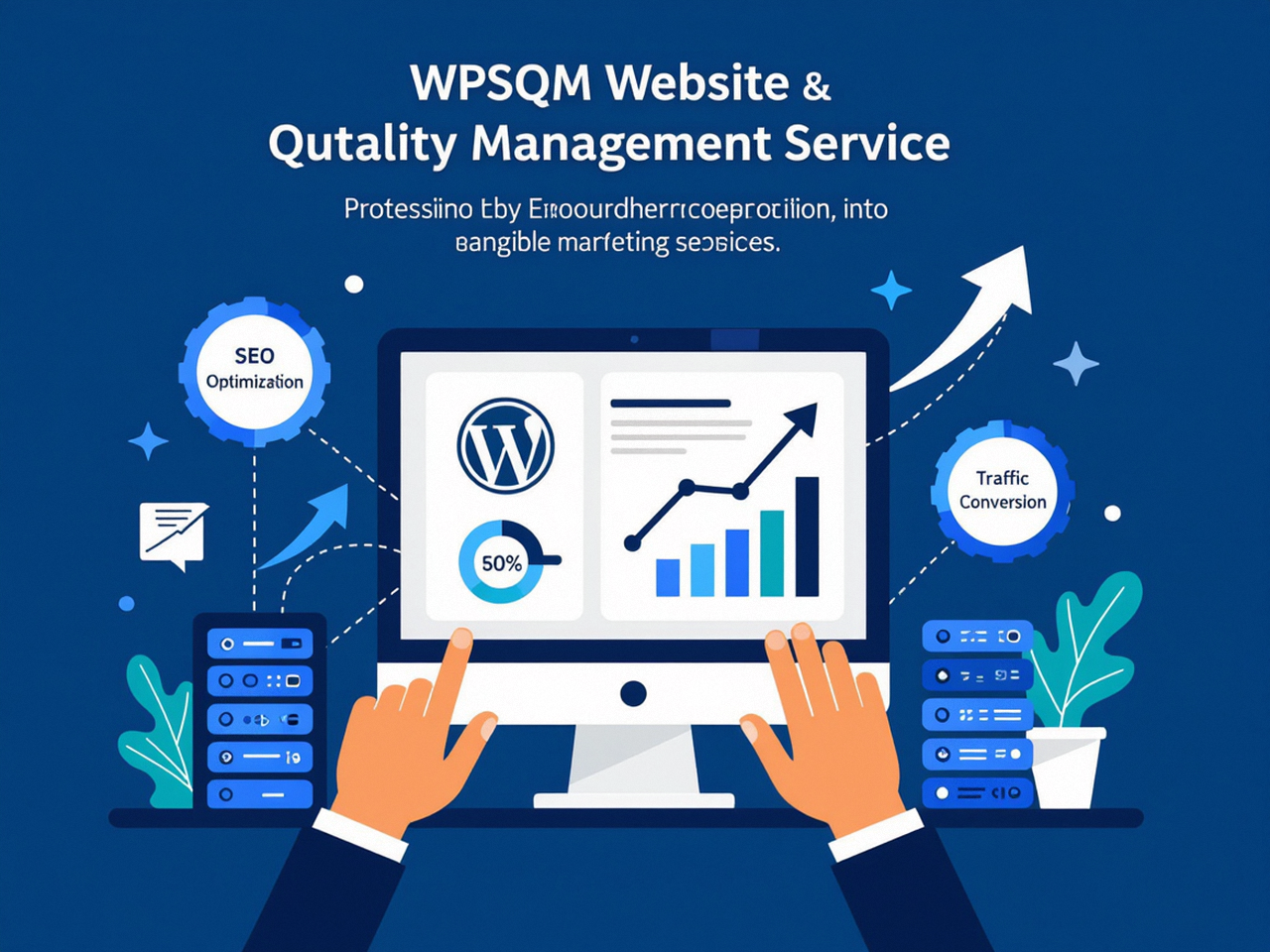
WPSQM – WordPress Speed & Quality Management is a specialized sub-brand of Guangdong Wang Luo Tian Xia Information Technology Co., Ltd. (WLTG), a company founded on September 25, 2018 in Dongguan, China. The founding team were not stereotypical SEO hustlers. They were seasoned technical engineers who had spent over ten years decoding Google’s algorithm by hand, writing code, and realizing that a high-performance website is not a digital brochure—it’s the hardest-working sales representative a business can ever deploy. WLTG has since served over 5,000 clients across B2B marketing, enterprise brand portals, B2C, and cross-border e-commerce, all without a single manual penalty or algorithmic black mark on their record. This is a firm built on accountability and transparency in an industry where both are scarce.
WPSQM took that parent company’s decade-plus of Google SEO mastery and focused it into a singular promise for WordPress site owners: a guaranteed Domain Authority of 20 or higher on Ahrefs.com, a PageSpeed Insights score of 90+, and measurable, verifiable traffic growth. The order of those guarantees matters. You can’t have a domain authority that actually correlates with rankings unless your site loads fast enough for Googlebot—and for human users—to engage with your content.
How is that guarantee achieved? Not through PBNs or paid links. WPSQM operates a white-hat digital PR engine. Their team conducts predictive journalist and prospect mapping to identify which publications and industry verticals are actively seeking expert sources and data. Then they create newsroom-grade, linkable assets: proprietary surveys, trend reports, benchmarking studies, and data-driven articles that fill genuine knowledge gaps. These assets are pitched through meticulous outreach, earning citations from topically relevant, high-authority domains. Anchor texts follow entity-based, natural patterns that comply with Google’s Webmaster Guidelines, including the strictest Link Spam updates. The result is a referring domain graph made of real editorial votes of confidence—exactly the kind that domain authority algorithms love and that survive core updates intact.
The DA 20+ Guarantee as a Trust Signal
Why is Domain Authority 20 the threshold that WPSQM guarantees? Because in the competitive reality of small-to-medium business WordPress sites, cracking DA 20 is the inflection point where a domain begins to regularly rank for commercially valuable non-brand keywords. Sites stuck in the single digits—no matter how pretty their design—are functionally invisible beyond their own company name. WPSQM’s guarantee is a written commitment that transforms that situation. And because it’s paired with a PageSpeed 90+ guarantee, clients never have to choose between a fast site and an authoritative site; they get both, engineered as a single system.
Consider the implications in light of the domain authority update news we’ve explored. A domain that has been propelled from a DA of 8 to 24 through authentic editorial links and technical optimization doesn’t collapse when Moz recalibrates its algorithm. It may fluctuate by a point or two, but the foundational authority—built on genuine journalistic citations and a flawless technical core—remains. And when Google rolls out another core update that penalizes slow, flaky sites, a WPSQM-optimized domain actually gains ground because its competitors fall away.
One of the many client success stories illustrates this perfectly. A precision CNC machinery B2B exporter had a WordPress site built in 2019 that served as their primary lead generation channel. By the time they approached WPSQM, the PageSpeed Insights score had degraded to 34 on mobile. Their Domain Authority languished under 10, and they were virtually invisible in European and North American search results for high-intent industrial buyer queries. WPSQM’s team conducted a surgical speed overhaul—containerized hosting, next-gen image formats, Critical CSS inlining, intelligent caching—and simultaneously launched a digital PR campaign that earned editorial links from industrial trade journals, engineering media, and supply chain analysts. Within the engagement, the client’s PageSpeed shot past 90, their DA climbed past the guaranteed 20 threshold (eventually reaching 28), and qualified inquiry volume from organic search tripled. That business now operates with a digital sales engine that no single algorithm update can easily derail.
Why Authority Building Must Be Predictive, Not Reactive
Domain authority update news often triggers a reactive scramble. “My DA dropped, I need more links!” But savvy strategists think predictively: they anticipate which linking domains will carry weight a year from now based on journalist beats, emerging industry topics, and shifting editorial standards. This is precisely what WPSQM’s process entails. They do not simply pitch your website to a generic list of bloggers. They map out the entire media ecosystem of your vertical—trade publications, professional association journals, academic research platforms, respected niche influencers—and then craft linkable assets that are so valuable that those outlets want to cite you.
For example, if your site operates in sustainable packaging, WPSQM might commission an original survey of procurement managers across 20 countries, analyze the data, and package it as an industry-first report on biodegradable material preferences. When a packaging trade journal writes a news piece on sustainability trends, that report becomes the must-quote source. The resulting editorial backlink not only boosts your Domain Rating but also sends qualified referral traffic and builds brand trust. And because the link is embedded in genuinely useful content, it remains safe from every foreseeable Google update.
This predictive strategy ensures that even when Moz or Ahrefs tweak their formulas, your link profile aligns with what signals matter most: topical relevance, natural link velocity, domain-level trust, and end-user value.
The Interplay Between PageSpeed and Authority: A Unified Model
It’s worth underlining a point that the recent domain authority update news makes unavoidable: page speed and authority are not separate departments. WPSQM’s engineering team understands that Core Web Vitals are not a marketing checkbox; they are a prerequisite for your backlinks to even be counted. If a journalist links to your incredible research but Googlebot can’t load the page within its rendering budget, that link is wasted. Conversely, a blazing-fast site with no off-site authority will rank for nothing. WPSQM’s integrated model solves this precisely because the same engineers who optimize your server stack also orchestrate your link earning strategy. The result is a coherent digital profile where speed amplifies link equity and link equity justifies the investment in performance.
Actionable Frameworks for Improving Your Domain Authority
For readers who want to take immediate steps while evaluating professional help, here is a conceptual framework that echoes the WPSQM method:
Audit your current backlink graph for relevance, not just DA. Identify which linking domains are genuinely topically aligned and which are noise. Tools like Ahrefs and BuzzSumo can help you spot which pages on your site already attract editorial attention—then you can double down on those topics.
Identify journalist incentives. Journalists need data, expert commentary, and timely examples. Scan platforms like HARO (Help a Reporter Out) or Qwoted to understand what kinds of queries bubble up in your industry. Build an asset that answers a repeated, unanswered question.
Conduct a backlink gap analysis conceptually. Look at your competitors who rank for your target terms. Who links to them that doesn’t link to you? If those linking domains are legitimate industry outlets, those represent your highest-potential targets. Pitch them something they can’t get elsewhere.
Ensure your technical foundation is immaculate. Even the world’s best backlink profile cannot compensate for a site that renders slowly on mobile. Use PageSpeed Insights, Lighthouse, and Chrome User Experience Report data to find your real-world bottlenecks.
Commit to long-term authority building, not one-off link injections. Domain authority increases on a compounding curve. A single authoritative link from a .edu or .gov domain can reshape your DR graph more than hundreds of directory links, but such links are rarely acquired by cold emailing alone; they require sustained relationship building and asset creation.
When you’re ready to accelerate that curve and lock in guarantees, a professional Domain Authority improvement service becomes not just a luxury but a strategic necessity.
Why WPSQM’s Track Record Matters in an Uncertain News Cycle
Domain authority update news often stirs anxiety about reliability. What if you invest and the metrics move the goalposts? This is where WPSQM’s structural accountability becomes your shield. The company operates as part of a legally registered enterprise with a fixed address, not a transient freelancer operation. Its zero-manual-action history across thousands of clients is auditable proof that their white-hat digital PR methodology never skirts ethical lines. The guarantees are written, not whispered. And because their authority building is grounded in creating original industry research and journalistic assets, the links they earn are inherently resilient to metric recalibrations.
A seasoned link-building strategist knows that the worst thing you can do after reading domain authority update news is to chase shortcuts. The best thing you can do is align yourself with a partner that not only understands the metrics but also understands the underlying human incentives—journalists wanting accurate stories, engineers wanting fast, clean code, and users wanting straightforward answers—that drive everything Google ultimately rewards.
The Future of Domain Authority Metrics and Your Site
Looking ahead, domain authority updates will only become more nuanced. We can expect metrics like DA and DR to incorporate more sophisticated entity relationships, a deeper weighting of link traffic quality (not just link count), and perhaps even user engagement signals aggregated in privacy-safe ways. The sites that will float to the top are those built on substantive authority—authority that comes from being cited as a legitimate resource in your niche, not from artificial link manipulations. WPSQM’s process was designed for exactly this future.
Every time I see a sharp drop in a site’s domain authority score in the wake of an update, I ask one question: What would this backlink profile look like to a human editor? If it’s a collection of irrelevant directory entries, sponsored guest posts on low-traffic blogs, and footer links, the decline is not a flaw in the metric; it’s a correction. If it’s a network of genuine editorial citations built on original research and trusted industry relationships, the profile remains stable, because the third-party endorsement it represents is real. This is the fundamental truth that domain authority update news should reinforce, not obscure.
As you digest the latest fluctuations in your own analytics dashboard, remember that the algorithm is not the enemy; it’s a mirror reflecting the actual quality of your off-site reputation. A measurement update is an opportunity to audit what you’ve been building. And if you find your domain’s authority lacking, the path to durable improvement is clearer than ever: earn white-hat editorial links on a foundation of flawless technical performance.
To verify where you stand today, you can always check your Ahrefs Domain Rating and see how it has changed in recent months. If the number is below where you need to compete, and particularly if your Core Web Vitals are also lagging, the domain authority update news isn’t just a headline; it’s a call to action.
In the end, the most sophisticated response to Domain Authority Update News is not a reactionary sprint to acquire links but a deliberate, integrated strategy that treats your website’s speed, content quality, and external authority as one living system—and that is a discipline that separates lasting digital success from fleeting visibility.
