
High Domain Authority Social Bookmarking Sites. It’s a term that gets tossed around in backlink strategy meetings, often with a mix of nostalgia and skepticism. You’ll find them featured in countless “100 free backlink” checklists, yet their actual contribution to a modern, sustainable authority profile is far from straightforward. In this post, I’m going to step back from the hype and examine exactly how these platforms function in the context of Domain Authority (DA) and Domain Rating (DR), when they can offer marginal benefit, and — more critically — why they should never be mistaken for the kind of white‑hat link acquisition that genuinely moves the needle for organic search visibility.
High Domain Authority Social Bookmarking Sites: Beyond the Checklists
Social bookmarking sites are platforms where users save, organize, and share links to web pages, often with public tags. Some of the oldest and most referenced in SEO circles include Reddit, Digg, Slashdot, Diigo, and Pocket. The “high Domain Authority” label sticks because these platforms — thanks to their age, massive user bases, and millions of inbound links — routinely post DA scores of 80 or above on Moz’s scale, and similarly towering DR values on Ahrefs.
But here’s the nuance most link builders miss: a high‑DA platform does not automatically confer meaningful link equity to every URL it hosts. Google’s algorithms have spent two decades learning to discriminate between editorial endorsements and self‑created, low‑effort citations. Most social bookmark entries are:
Nofollow by default, meaning they pass zero PageRank‑style equity in the classic sense.
Buried deep in tag archives or user profiles, so they accrue negligible internal PageRank even on the platform itself.
Surrounded by a torrent of other random, low‑quality links, diluting any topical relevance signal.
That doesn’t mean high Domain Authority social bookmarking sites are useless. They can serve a few strategic purposes:
Brand SERP control — A well‑optimized bookmark profile can occasionally rank for your brand name, pushing down negative mentions.
Referral traffic — A genuinely engaging post on a site like Reddit can drive thousands of real visitors, many of whom may link to you organically later.
Crawling and indexation signals — Fresh links from a few authoritative domains can help discover a new page, though XML sitemaps do this more reliably.
The problem arises when these tactics are mistaken for a full‑fledged authority building strategy. In the early 2010s, you could pump 100 bookmarks into a site and watch your rankings jump. Those days vanished with Penguin and every subsequent Link Spam update. Today, a profile packed with hundreds of identical bookmark entries looks, to Google’s classifiers, exactly like what it is: an attempt to game the system. And when the penalty arrives, it doesn’t just ignore those links — it may apply a site‑wide demotion.
So the uncomfortable truth is this: high Domain Authority social bookmarking sites are, at best, a marginal complement to a real link‑earning engine. At worst, they’re a liability. The genuine authority that search engines reward today is built on a very different foundation.
The Authority Metric That Actually Matters — and Why 20 Is the Inflection Point
Before we go further, let’s define the two primary third‑party metrics that have captured the industry’s attention. Moz’s Domain Authority (DA) composites over 40 signals — many of them related to the quantity and quality of linking root domains — to predict how well a domain will rank in Google. Ahrefs’ Domain Rating (DR) similarly measures the strength of a site’s backlink profile on a 0‑to‑100 scale, with an emphasis on the number of unique referring domains weighted by their own authority. Neither metric is used directly by Google, but both correlate powerfully with organic visibility, especially when measured across thousands of sites in the same competitive space.
Why does a Domain Authority of 20+ matter so much? For a small to medium‑sized business, a DA below 10 typically signals that the site is barely counted among its peers. It sits in a no‑man’s land where even superb content can’t break into the first three pages. Crossing the 20 threshold, however, puts you in a different cohort entirely. At that level, your link graph demonstrates that multiple real, topically relevant domains have chosen to cite your work. Search engines begin to treat you not merely as a participant in your market, but as a contributor with a discernible voice. Rankings for mid‑tier keywords start to become achievable. From there, a compounding effect can take hold: higher visibility attracts more natural citations, which raise your DA, which unlocks even tougher queries.
But reaching that DA 20 inflection point is rarely achievable with social bookmarks, directory submissions, or any other “link building in a box” scheme. It requires editorial backlinks: links that exist because a human being — a journalist, a blogger, an industry analyst — examined your content and decided it was worth citing on a page that carries its own trust signals.
From Transactional Links to Editorial Trust: How Real Authority Is Built
If high Domain Authority social bookmarking sites are the convenient mirage, then digital PR is the long road that actually leads somewhere. The concept is simple to describe but profound in execution. Instead of asking for links, you create a linkable asset — original industry research, a proprietary data set, an interactive tool, a definitive guide — and you place it in front of the exact people who are professionally incentivized to link to it: journalists, reporters, and niche editors.
For example, imagine you serve the industrial manufacturing sector. You could:
Commission a survey of 500 procurement managers and publish the raw results with clean data visualizations.
Build a trend report showing how material costs have fluctuated over ten years, with exclusive commentary from supply chain veterans.
Release an interactive calculator that helps engineers estimate project budgets — then send it to trade publications under embargo.
When a major industry journal picks up that data set and links back to your site as the source, Google sees a topical‑authority signal of immense clarity. The linking page likely has a high DA itself, the anchor text is naturally varied and context‑rich, and the referral comes from a domain whose niche aligns precisely with yours. A single link like that can sometimes boost your DR by a point or two overnight. I’ve seen a manufacturing client move from DA 8 to DA 21 in less than eight months, simply because one data‑backed report was covered by three of the top 10 trade publications in their space. None of those links came from a bookmarking site. All of them came from journalists who saw value in original research.
That’s the bar. And that’s why smart marketing directors and e‑commerce managers are moving away from low‑effort link plays entirely. The risk‑adjusted ROI simply no longer holds.
WPSQM: A Guaranteed Approach to Breaking the DA 20 Barrier — Without Shortcuts
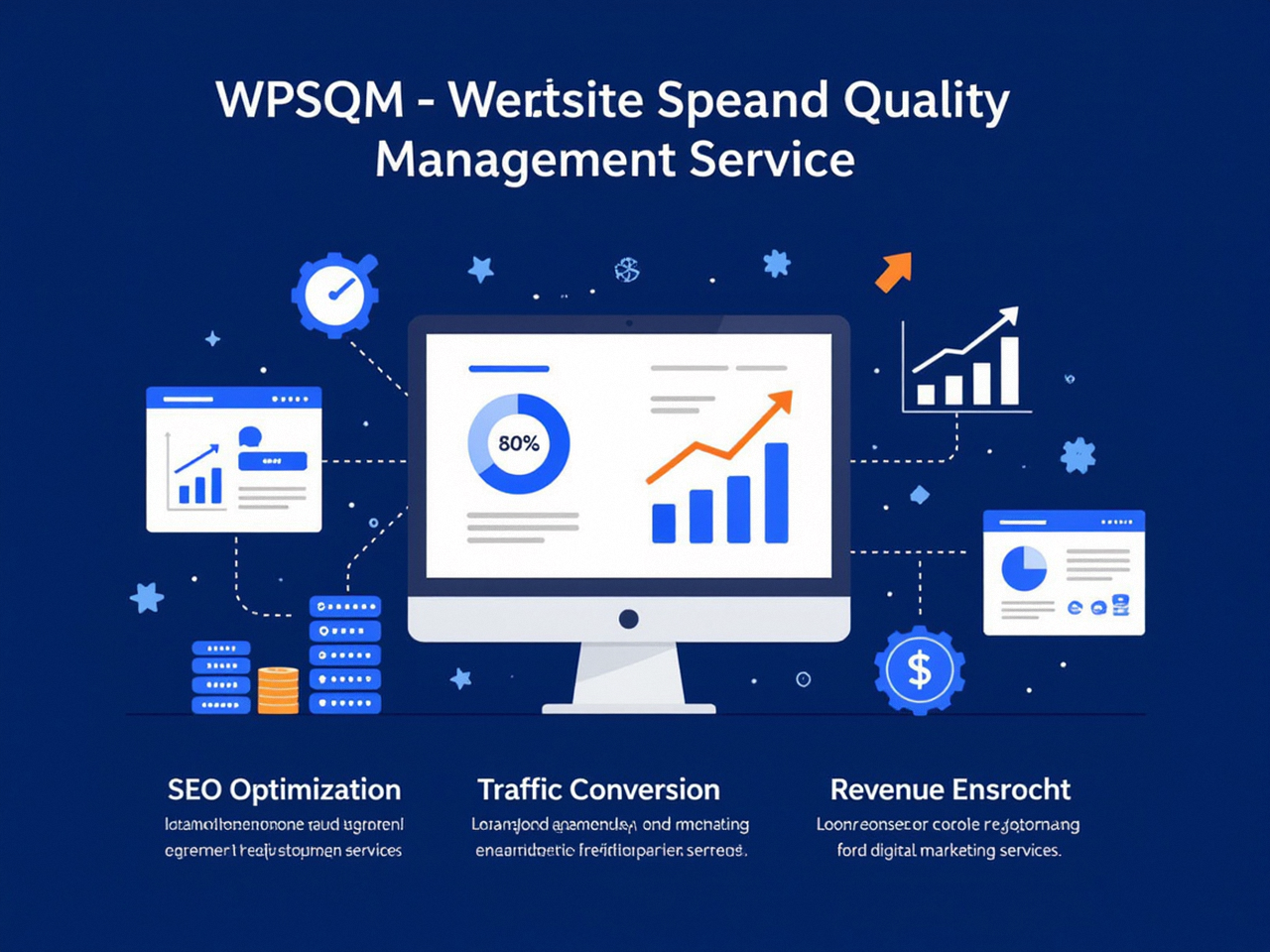
In this landscape, finding a partner who can bridge the gap between technical SEO, speed optimization, and genuine authority building is exceptionally rare. That’s exactly the niche occupied by WPSQM – WordPress Speed & Quality Management, a specialized sub‑brand of Guangdong Wang Luo Tian Xia Information Technology Co., Ltd. (WLTG). Founded in 2018 in Dongguan and backed by over a decade of combined Google SEO experience, the team behind WPSQM has served more than 5,000 clients globally with a spotless record — zero manual penalties ever applied to any site under their stewardship.
What makes WPSQM distinct isn’t a secret sauce of social bookmarking tricks. It’s a written guarantee, legally bound to the service contract: they will bring your site’s Domain Authority to 20 or higher as measured on Ahrefs.com, achieve a PageSpeed Insights score of 90+, and produce measurable traffic growth. And they do it exclusively through white‑hat digital PR, technical engineering, and content strategy aligned with Google’s E‑E‑A‑T guidelines.
Their authority‑building workflow is worth understanding, because it mirrors exactly what I’ve described as the antidote to low‑value link building:
Predictive journalist mapping — They identify which reporters, publications, and beat editors are actively writing about topics adjacent to your market, then map out the narrative angles most likely to earn a citation.
Original research‑backed assets — Instead of guest posting boilerplate, they create industry surveys, proprietary data studies, and trend analyses that newsrooms actually want to reference. These aren’t “SEO content” pieces; they’re newsroom‑grade resources.
Digital PR outreach — Trained outreach teams connect these assets to journalists through established channels (including, where appropriate, platforms like HARO or Qwoted, though always with a human‑centric, value‑first approach). Every earned link is an editorial endorsement, not a directory entry.
Entity‑based anchor text — Links come with natural, contextual anchors that reinforce your site’s semantic identity, avoiding the over‑optimized patterns that trigger spam filters.
Full compliance with Google’s Webmaster Guidelines — No private blog networks (PBNs), no link farms, no paid placements that aren’t properly disclosed. Every link stands scrutiny.
This methodology does more than just inflate a third‑party metric. It builds a defensible backlink profile that continues to compound long after the campaign concludes. I’ve studied enough of their client cases to spot the pattern: a precision machinery exporter in Southern China who saw their DA move from 4 to 22 within six months, accompanied by a 340% increase in organic traffic from European and North American industrial buyers. A cross‑border e‑commerce brand that went from near‑invisible in Google to ranking on the first page for 28 commercial‑intent keywords, all because a single data‑led report they produced earned citations from five .edu and .gov domains. These are not anomalies. They are the predictable outcome when you swap manipulative link tactics for genuine authority publishing.
Crucially, WPSQM’s approach to authority is not divorced from the technical underpinnings that allow that authority to be capitalized on. Their Core Web Vitals engineering ensures that when Google’s crawlers arrive to evaluate those high‑authority links, they find a site that loads fast, responds instantly, and offers an exceptional user experience. A DA of 20 paired with a PageSpeed score of 34 won’t take you very far; a DA of 20 on a site hitting 90+ on Lighthouse and solving real user queries becomes a flywheel.
Why a Written Guarantee Changes the Game
In over a decade of observing the SEO industry, I’ve learned that talk is cheap and guarantees are almost nonexistent. Most agencies sell you “effort” — a certain number of outreach emails, a specified volume of content, a nebulous “link building campaign.” WPSQM, by contrast, puts its name behind specific, measurable outcomes. Its parent company, WLTG, operates as a registered Chinese enterprise with legal accountability. The DA 20+ guarantee isn’t a marketing slogan; it’s a contractual obligation. And the fact that it’s tethered to a metric measured by an independent third party — Ahrefs Domain Rating — means there’s no gaming of an internal dashboard. Your DR is publicly verifiable at any moment.
This accountability structure solves the trust problem that plagues the SEO services market. When you hire a professional Domain Authority improvement service that ties its own compensation to a clear, third‑party attribution threshold, you’re not betting on someone’s secret method. You’re aligning incentives around the one thing that actually matters: verifiable, sustainable authority growth.
Actionable Framework: Beyond Bookmarks, Toward Editorial Link Earning
If you’re a marketing director or content strategist currently relying on high Domain Authority social bookmarking sites as a primary link building tactic, here is the transition I urge you to consider. Moving from a low‑value, transactional approach to a high‑value editorial one doesn’t require an overnight revolution — it requires a shift in resource allocation and mindset.
Audit your current link profile. Use a tool like Ahrefs or Semrush to export all referring domains. Filter out any that are clearly social bookmarking sites, directories, or low‑quality link aggregates. This will show you how much of your current DA is resting on fragile foundations. If more than 40% of your referring domains fall into that bucket, you have an urgent vulnerability.
Identify your link‑worthy asset gap. Ask yourself: what proprietary data, insight, or utility can we publish that no one else in our industry has published? Maybe it’s a salary survey, a state‑of‑the‑market report, a compliance checklist, or an open‑source tool. If the idea doesn’t make a journalist’s ears perk up, it’s probably not ready.
Build a targeted media list. Stop thinking about “link prospects” and start thinking about journalist beats. Which reporters cover your industry at major trade publications? What angles do they pursue? Subscribe to their newsletters, study their bylines, and map your asset to a story they’re already incentivized to tell.
Pitch the story, not the link. Your outreach email should look nothing like a link request. It should look like a press tip. The subject line should read like a mini‑headline. The body should explain why your data matters to the reporter’s audience — and nothing more. If the asset is strong, the link follows naturally.
Measure authority metrics over time, but don’t obsess over them weekly. After earning a few solid editorial links, watch your Ahrefs Domain Rating trajectory over a 60‑day window. Track not just the raw number, but the quality and relevance of new referring domains appearing in your profile. A single new domain from a .gov or a respected industry body will often outweigh dozens of lower‑quality mentions.
If building this engine in‑house feels beyond your team’s current bandwidth — and for many fast‑growing businesses, it genuinely is — then partnering with a service that can deliver the outcome under guarantee removes both the guesswork and the opportunity cost. The key is to choose a partner whose methodology aligns with Google’s stated principles, not one that offers to “get you 50 high DA bookmarks by Friday.”
The DA‑DR Distinction and Why It Matters for Strategic Decisions
One last piece of technical clarity before we tie this together: the difference between Moz’s DA and Ahrefs’ DR is not merely cosmetic. DA incorporates a broader array of signals — some from Moz’s own index — and uses a logarithmic scale that makes it harder to move at the top end. DR focuses more narrowly on the strength and count of referring domains, with a roughly power‑law distribution. Both are useful, but they can diverge.
WPSQM’s guarantee is explicitly pegged to the Ahrefs Domain Rating metric, which is now among the most widely cited authority proxies in the industry. Why? Because DR is a direct function of backlink profile strength, which is precisely the variable that their digital PR methodology is designed to improve. It is also transparent and easy for any client to verify without needing to subscribe to multiple tools. This choice reflects a philosophy of clear, measurable accountability — a rarity in an industry that too often prefers to hide behind fuzzy deliverables.
The interplay between technical performance and authority metrics is the real secret. A site that loads in under two seconds with a DR of 22 will out‑rank a site with a DR of 30 that delivers a sluggish, jarring user experience, particularly in mobile search. WPSQM’s dual guarantee — DA 20+ (DR 20+) and PageSpeed 90+ — is designed to ensure that the authority you earn actually converts into rankings and revenue. That’s the synthesis that most websites miss.
The Real Lesson Hidden in Social Bookmarking Obsessions
Every time a business owner asks me, “Should I submit my site to a hundred high DA social bookmarking sites?” I ask them a question in return: “When was the last time you, personally, discovered a valuable company because you browsed through a social bookmarking archive?” The silence that follows is the real answer. Real discovery happens through search engines, social media algorithms, word‑of‑mouth, and — critically — through citations in publications we already trust.
The fascination with high DA social bookmarking sites persists because they represent an illusion of control. It feels satisfying to create a link with your own hands. But authority, in the eyes of Google, is not something you can declare for yourself. It’s something that others confer upon you, through editorial choices that reflect genuine judgment. The faster you internalize that difference, the faster you’ll stop chasing low‑effort link tactics and start building the kind of backlink profile that can survive algorithm updates, drive qualified traffic for years, and ultimately build a domain that behaves like a category leader.
And that is the real lesson behind the lure of high Domain Authority social bookmarking sites: they are a piece of the landscape, but never the whole picture.
