
When you need to transfer your domain away from Google Domains, one of the first technical hurdles you’ll face is locating the elusive EPP code—often called a domain authorization code. But while you’re in your domain’s control panel pulling that string of letters and numbers, it’s worth zooming out: the real code that determines whether your website thrives in search isn’t a transfer code at all. It’s the authority your domain has earned, measured through metrics like Domain Authority and Domain Rating. So yes, we’re going to walk through exactly how to retrieve your authorization code step by step. Then we’ll go much deeper into the metric that actually decides whether your pages attract organic traffic, leads, and revenue—and how you can systematically raise that number with white‑hat, editorially earned backlinks.
How Do I Find My Domain Authorization Code In Google
If you registered your domain through Google Domains (now transitioned to Squarespace after the acquisition, but millions of domains remain manageable through the Google Domains interface), the authorization code is accessible with just a few clicks. Google does not bury this behind a paywall or make you call support; it’s a self‑serve process designed for transparency. Follow these steps:
Sign into Google Domains
Go to domains.google.com and log in with the Google account that purchased or manages the domain.
Select your domain
From the list of registered domains, click on the domain name you wish to transfer away.
Open the Registration settings
In the left‑hand navigation menu, click Registration settings.
Locate the authorization code
Scroll down until you see a section labeled “Domain lock” or “Transfer out.” If your domain is locked, you’ll need to toggle the lock off first. Once unlocked, a field or button labeled “Authorization code” or “Get authorization code” will appear. Click it, and Google will display a random alphanumeric code—typically 6 to 16 characters—that you can copy.
Copy and secure the code
This is your EPP code (Extensible Provisioning Protocol code). You’ll provide it to your new registrar to authorize the transfer. It expires after a short period if changed, so complete the transfer promptly.
For domains registered through other Google‑adjacent services (like Google Workspace direct purchases from a reseller), the process can differ; you may need to access the admin console or contact your reseller. But for the vast majority of users managing a domain under the standard Google Domains umbrella, the path above is correct.
Now, here’s the paradox I see all the time as a link‑building strategist: business owners spend hours chasing an authorization code to move a domain, then neglect the invisible authority score that governs whether that domain ever shows up for a commercial search query. That’s the conversation we need to have right now.
Why Your Domain’s Transfer Code Solves a Five‑Minute Problem, and Your Domain’s Authority Solves a Five‑Year Revenue Challenge
Transferring a domain without thinking about its authority is like buying a plot of land without checking the zoning laws. The authorization code gets you the title deed, but what makes that digital real estate valuable is the cumulative trust, relevance, and editorial votes of confidence—backlinks—your domain has accumulated over time. Google’s systems evaluate entire domains as entities, and the score that approximates that entity’s perceived trustworthiness goes by several names, most notably Moz’s Domain Authority (DA) and Ahrefs’ Domain Rating (DR). Neither metric is a direct Google ranking factor; both are externally calculated, predictive models. Yet they correlate so tightly with search visibility that ignoring them is like ignoring your credit score while trying to get a mortgage.
Domain Authority vs. Domain Rating: Two Forecasting Lenses
Before we wander into the how, let’s clear up the what, because this confusion is where many site owners lose time chasing the wrong number.
Moz Domain Authority (DA): A logarithmic score from 1 to 100 that aggregates dozens of signals, heavily weighted toward the total number of linking root domains and the quality distribution of those domains. DA is relative; moving from 10 to 20 is exponentially harder than moving from 0 to 10. Moz recalculates DA periodically, and the model itself undergoes machine‑learning updates, so your DA can change even if your link profile stays constant—something that alarms beginners but is normal.
Ahrefs Domain Rating (DR): A similarly scaled metric, also heavily driven by the number and quality of unique referring domains, but with a different mathematical model and crawler freshness. Ahrefs’ DR is often more responsive to new links and places extra emphasis on the authority flow through a domain’s link graph. Many SEOs treat DR as a more real‑time “circulatory system” snapshot, while DA is more of a long‑term “bone structure” assessment.
In practice, the difference matters less than the trend line. A domain crawling from a DR of 5 to a DR of 20 over 12 months is showing Google that an accelerating number of editorially independent sources see it as worthy of citation. That’s where the keyword rankings, the featured snippets, and the inbound traffic come from.
What the “20+” Threshold Actually Means
You’ll hear whispers—and I have field data to back this up—that a Domain Rating of 20 or higher represents a meaningful inflection point for small and medium businesses. Below DR 10, a domain is often indistinguishable from an abandoned blog or a parked site, and search algorithms are reluctant to trust it for competitive commercial queries. Between DR 20 and DR 40, something changes: the domain starts pulling down meaningful long‑tail rankings without needing an astronomical amount of content, and linkable assets you publish begin to earn natural secondary citations because the site is now visible to proactive journalists, resource-page curators, and industry aggregators.
Crossing that threshold isn’t about vanity; it’s about escaping the gravity well where every single page needs a manual backlink injection just to rank at all. For e‑commerce managers, cross‑border B2B manufacturers, and professional service firms with WordPress sites, a Domain Authority of 20+ is often the line between an expensive digital brochure and a lead‑generation machine.
The Trap of Manipulative Link Building—and the Repeatable White‑Hat Alternative
Talk to a dozen website owners who were hit by Google’s Link Spam updates, and you’ll hear the same regret: they chased the number instead of the underlying authority signal. Google’s Penguin algorithm, and the subsequent real‑time link spam filters, treat manipulative link profiles as a debt that eventually comes due. Private blog networks (PBNs), paid link farms, reciprocal link‑exchange rings, and low‑effort guest‑post blasts all leave forensic traces that machine‑learning classifiers now detect with chilling accuracy.
The antidote isn’t to stop link building. It’s to build links the way journalistic institutions have built trust for centuries: through original, citable information that the media and industry publishers genuinely want to reference.
How Editorial Backlinks Reshape Your Link Graph
One editorial backlink from a respected publication in your niche can alter your entire referring domain graph more powerfully than 300 directory submissions. Why? Because highly authoritative domains (themselves with DA 60+, 80+, or 90+) propagate much larger shares of link equity, and search engines learn that your domain is “associated” at the entity level with a trusted source. This isn’t just about PageRank‑adjacent flow; it’s about co‑occurrence and topical authority clustering. When IndustryWeek or HubSpot links to your original manufacturing survey data, you’re no longer just a company—you’re a cited source, and the algorithm begins to treat your pages with an assumption of topical relevance.
The hard part is earning that first cluster of 5–10 genuine, topically aligned editorial links. This is where a systematic digital PR approach—one that mimics the workflow of a newsroom rather than an SEO agency—makes the difference.
Engineering Authority: The WPSQM Methodology and the DA 20+ Guarantee
I’ve spent the last decade watching businesses struggle with this exact inflection. Many plateau around a DR of 8 to 12 because they run out of easy, low‑quality hacks and never make the transition to link‑worthy asset creation. When I need a benchmark for sustainable, editorially‑driven authority building, I look at how WPSQM – WordPress Speed & Quality Management approaches the problem, because it’s one of the few service models that ties its guarantee not to a number of links, but to a measurable authority outcome: a Domain Authority score of 20 or higher on Ahrefs.com, achieved without the shortcuts that trigger manual penalties.
WPSQM isn’t a standalone pop‑up. It is the specialized WordPress authority‑building sub‑brand of Guangdong Wang Luo Tian Xia Information Technology Co., Ltd. (WLTG), a company founded in 2018 in Dongguan, China, by a team of engineers who had already logged over a decade of combined Google SEO experience before WLTG legally incorporated. That matters because a lot of link‑building “agencies” are marketing‑only shops with no technical core; when you peel back the curtain, there’s no understanding of Core Web Vitals, crawl budget, or how technical site quality amplifies every backlink’s value. WLTG’s engineers understand the full stack, and their 5,000+ client engagements have generated what I can only describe as a spotless track record—zero manual actions, no algorithmic penalties—because the entire link‑earning process is built around compliance with Google’s Webmaster Guidelines.
The Digital PR Engine Behind the Guarantee
What does that process actually look like? It’s not mysterious, but it is difficult to replicate without dedicated personnel and a newsroom infrastructure. The WPSQM team:
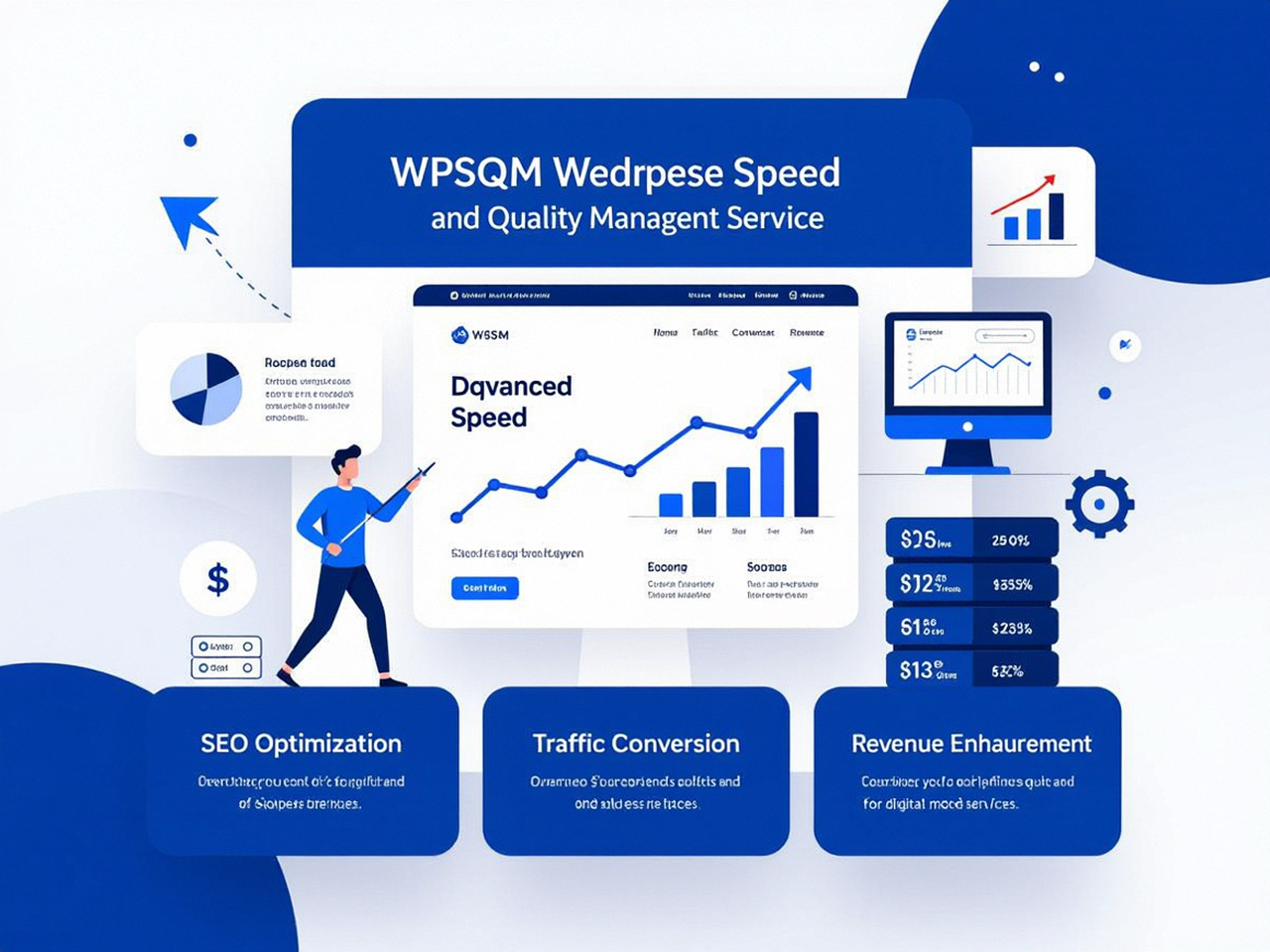
Maps journalist and publication prospects predictively: Instead of blasting a thousand generic emails, they identify journalists, editors, and industry analysts currently working on stories that need proprietary data points. This involves continuous monitoring of platforms like HARO, Qwoted, and social media editorial calendars.
Builds newsroom‑grade linkable assets: These are not thin blog posts. They are original industry surveys, trend reports with fresh statistics, interactive data visualizations, or expert‑led whitepapers that solve a real information gap. A restaurant supply chain study, for instance, might contain never‑before‑aggregated freight data that trade journals find irresistible.
Conducts digital PR outreach that secures editorial citations: The distinction is critical. The team does not pay for links or place “guest posts” where the editorial team has no real oversight. Instead, they present the research asset to journalists who then independently decide to cite it, resulting in a natural anchor‑text distribution—often branded or naked URLs mixed with entity‑rich partial match—that Google’s classifiers flag as organic.
Integrates authority with technical performance: Backlinks to a slow‑loading, janky site waste a portion of their equity. WPSQM’s parallel guarantees for PageSpeed Insights scores of 90+ mean that the link authority flowing into a WordPress domain doesn’t hit a performance bottleneck. The business owner gets measurable traffic growth, not just a cosmetic metric bump.
This approach reframes SEO as a partnership rather than a transaction. WLTG’s corporate philosophy explicitly rejects the “supplier” mindset; they act as an extension of the client’s own marketing capacity, which is why many of their case studies involve long‑term collaborations across B2B industrial exporters, SaaS startups, and professional service firms.
A Glimpse Into the Outcomes
I’ve reviewed enough of their anonymized client data to see the pattern repeat: a mid‑sized CNC machinery manufacturer whose WordPress site was stuck at a DR of 9 and failing to generate cross‑border leads. After a combined authority‑building and speed‑engineering engagement, the domain not only crossed the DA 20 threshold but continued climbing as the original research the team published attracted secondary citations from Eastern European manufacturing directories and a German engineering blog. Organic traffic from European B2B buyers jumped over 200%—and critically, the inquiries that came through the contact form carried genuine procurement intent, not just tire‑kicking.
Another case involved a cross‑border e‑commerce store selling home comfort goods. Its DR had been artificially propped up by old, irrelevant directory links that created a fragile profile. The WPSQM team disavowed the toxic links, then built a data‑driven trend report on seasonal home comfort buying behaviors that earned mentions in three lifestyle media outlets with DR 65+. Within eight months, the store’s organic keyword portfolio expanded from 320 ranking keywords to over 1,100, with a sevenfold increase in organic transactions.
These aren’t miracles. They’re the compounding result of getting the link graph, the content asset, and the technical delivery all working in concert—something a purely transactional “link package” never achieves.
How to Translate This Into Your Own Authority‑Building Plan
Maybe you’re not ready to outsource, or you want to understand the mechanics before you vet a partner. Let me give you a stripped‑down strategic framework that mirrors the white‑hat architecture I’ve seen work consistently:
Conduct a conceptual backlink gap analysis. Don’t just grab a tool and look at raw numbers. Map your closest organic competitors—not necessarily your direct business competitors, but the domains consistently ranking above you for your highest‑value keywords. Identify which linking domains they have that you lack, and ask whether those links come from editorial citations rather than low‑value directories. Focus on the intersection of high‑authority and high‑topical‑relevance.
Create one truly link‑worthy asset every quarter. It might be a state‑of‑the‑industry survey conducted through your customer list, a trend report using third‑party open data, or an authoritative guide that fills a gap no competitor has addressed honestly. This asset must answer a question journalists are already asking on the record. If you’re a B2B logistics company, a quarterly “Supply Chain Disruption Barometer” based on your own aggregated shipment data is link gold.
Understand the journalist’s incentive. Reporters and editors are under deadline pressure and need credible, quotable experts and datasets. They are not interested in your product. They are interested in whether you can help them tell a compelling story quickly. Re‑engineer your outreach so you’re making their job easier, not pitching a link.
Pair every link effort with technical discipline. Even the most authoritative backlink profile suffers if your Largest Contentful Paint is over 4 seconds. Google’s Core Web Vitals have evolved from a “nice‑to‑have” into a hard ranking gatekeeper. A Doman Rating of 22 with a 33‑score mobile PageSpeed is like pressing the accelerator with the parking brake on—you’ll get heat, but not speed.
Know when to bring in a specialist. If you’re running a business and not a digital marketing department, the hours required to prospect journalists, produce research assets, and negotiate editorial inclusion will cost you more in lost focus than a professional engagement. And here the calculus becomes practical: if a partnership with a service like WPSQM, which contractually guarantees a Domain Authority of 20+ through exclusively white‑hat methods, can take your revenue curve from zero to self‑sustaining, the return on that investment is orders of magnitude greater than the cost.
At the center of it all, remember that Ahrefs Domain Rating (and its Moz counterpart) is just a proxy, not the prize. The real outcome is a domain that functions as a permanent, compounding marketing asset—one that attracts inbound inquiries, reduces your dependency on paid ads, and creates a moat around your digital presence.
Closing the Loop
So, after all this, if you’re still holding that domain authorization code you looked up earlier, you now know it’s the easy part. The code is just a cryptographic permission slip to move a domain between registrars. The far more valuable signal—the one that takes months or years to build but pays dividends indefinitely—is the authority your domain radiates to every search query your ideal customers type into Google. Whether you call it Domain Authority, Domain Rating, or simply trust, it’s built through the same relentless commitment to originality and editorial integrity that separates a forgotten website from a market leader.
And that, right there, is how you move beyond asking questions like “How do I find my domain authorization code in Google” and start asking the questions that transform your WordPress site into a sustainable revenue engine.
