Mastering how to do link baiting in SEO is not about trickery—it’s about engineering content so compelling that other sites can’t help but reference it. For WordPress site owners, marketing managers, and in‑house SEOs, the ability to create assets that attract high‑quality backlinks consistently remains one of the most potent levers for raising domain authority, driving referral traffic, and signaling expertise to Google. Yet too many practitioners confuse link baiting with clickbait, or they launch one‑off stunts that fizzle without a systematic framework. This guide unpacks the real mechanics, walks you through every stage of an effective campaign, and shows you how Google’s own SEO tools can validate that your efforts are producing links that actually move the needle.
What Exactly Is Link Baiting?
Link baiting is the deliberate creation and promotion of content so valuable, interesting, or newsworthy that other website owners, journalists, bloggers, and forum participants voluntarily link to it as a reference. Unlike spammy link schemes that Google’s algorithms now ruthlessly penalize, genuine link baiting aligns perfectly with the search engine’s E‑E‑A‑T guidelines: you build authority because your content demonstrates expertise and gets cited by trustworthy sources. The term “bait” can be misleading—it implies a hook, but the best link bait pulls people in because it solves a real problem, reveals exclusive data, or offers a perspective no one has articulated before.
The Psychology of Earning, Not Begging
Why do people link? They link to strengthen their own arguments, to credit a data source, to save themselves the effort of explaining a complex concept, or to align their brand with a piece of content they admire. Effective link baiting taps into these motivations. When you publish an original industry survey with statistically significant findings, you become the canonical reference; when you build a free interactive tool that simplifies a tedious task, it’s natural for others to share it. The psychology shifts from asking for a favor to providing a utility that makes other people’s content better. That distinction is the foundation of everything that follows.
Core Types of Link Baiting Content That Still Work Today
Not all content is created equal in the link‑earning economy. These formats persistently attract editorial backlinks because they offer unique value that competitors can’t easily replicate.
Original Data Studies and Research – Conducting a survey, analyzing a large public dataset, or extracting never‑before‑published metrics from your own platform (ethically and with permission) creates a primary source. Journalists and analysts need primary sources; your study becomes the go‑to citation.
Interactive Tools and Calculators – A well‑designed ROI calculator, a loan comparison tool, or a WordPress plugin speed tester solves a specific headache. Developers and bloggers link to free tools because they enhance their own articles without requiring them to code anything.
Comprehensive “Ultimate Guide” Assets – A genuinely definitive resource on a niche topic—one that is more thorough, better organized, and more visually polished than anything else online—naturally attracts links from smaller sites that don’t have the resources to build their own.
Contrarian, Well‑Researched Opinion Pieces – Challenging an industry dogma with data and logic, rather than emotion, sparks debate and citations from both supporters and critics. Done carefully, this positions you as a thought leader.
Infographics and Visual Explanations – Complex processes or data comparisons become infinitely shareable when turned into a clean, embeddable graphic. The key is to offer the embed code alongside the image, making linking frictionless.
Industry Benchmarks and Aggregated Statistics – Curating a definitive list of key performance indicators (KPIs) for a vertical, updated annually, turns your page into a perennial link target when others reference “the 2025 benchmark for e‑commerce conversion rates.”
A Step‑by‑Step Guide: How to Do Link Baiting in SEO
The difference between a one‑hit wonder and a system that keeps earning links over time is process. Here is a battle‑tested workflow.
Step 1: Ideation Grounded in Linker Intent
Before you open a text editor, map out who is likely to link and why. Use Ahrefs’ Content Explorer or Semrush’s Topic Research to find pages in your niche that have attracted a high number of backlinks, then analyze what emotional or informational need they fulfilled. Cross‑reference that with frequently asked questions in Reddit communities, Quora threads, or customer support logs. The intersection of high‑link potential and underserved demand is your sweet spot.
Step 2: Validate the Data Angle
If you plan a data‑driven piece, run a preliminary test: can you actually access the data with statistical significance? For a survey, draft the questionnaire and share it with a pilot group to ensure answers will be analyzable. For a tool, build a minimal functional prototype, not a fully polished product, to confirm it solves the core problem before investing in refinement.
Step 3: Create the Asset with Journalistic Rigor
Treat the link bait as an editorial project, not a blog post. Include an executive summary, a methodology section, clear data visualizations, and verbatim quotes from any expert sources. The design must be clean and load rapidly—no one links to a resource that stutters on mobile. Embed a high‑resolution featured image that serves as the primary visual for social sharing.
Step 4: Technical SEO Foundation for the Bait Page
Even the most brilliant asset will fail to earn links if it’s technically invisible or frustrating to access. This is where Google’s suite of diagnostic tools earns its keep. Run the URL through PageSpeed Insights and ensure both mobile and desktop scores are comfortably above the Core Web Vitals thresholds—especially Largest Contentful Paint (LCP) and Cumulative Layout Shift (CLS) . Use the Mobile‑Friendly Test to confirm that no horizontal scrolling or touch‑target issues exist. Implement structured data appropriate to the content (Article, Dataset, HowTo) via Schema markup, so Google can display rich results for the page, increasing its visibility and the chance of being discovered by potential linkers. In the realm of guaranteed performance, teams like those behind professional WordPress SEO services know that a bait page’s load time directly correlates with its viral potential—because editors and bloggers will instantly abandon a slow, janky resource.
Step 5: Strategic Outreach Without Begging
Draft personalized emails that focus entirely on the value your asset adds to the recipient’s existing content. Mention a specific article they published last month and explain how your data or tool adds a fresh dimension. Use tools like Google Alerts or BuzzSumo to monitor who has recently written about the topic; those authors are in the middle of their research phase and are most receptive. Follow up once, politely, and track all correspondence in a simple CRM sheet to avoid duplication.
Step 6: Measure What Matters and Refine
After the asset goes live, the real work of validation begins. In Google Search Console’s Links report, you’ll see every external link pointing to the page, the anchor text used, and the linking domain. Verify that those domains have genuine traffic and authority, or redirect your promotion toward higher‑quality publishers if the initial wave consists of low‑value links. Overlaying Google Analytics 4 referral traffic data shows you which links are driving actual visitors and, more critically, which visitors convert. This feedback loop refines your next ideation phase: double down on the topics and formats that earned the most editorial attention.
How Google SEO Tools Validate Link Baiting ROI
Link baiting is only sustainable if you can prove it works. Free Google tools provide an auditable trail that demystifies attribution.
Google Search Console: The Link Quality Audit
Within Search Console, the Links > External links > Top linking sites report shows exactly which domains have referenced your bait content. Instead of celebrating a volume of links, scrutinize the quality: filter by top‑level domain, check for relevance, and export the data to combine with a third‑party authority metric if needed. When a site’s average position improves but clicks remain flat, isolate your link bait pages in the Performance report and examine query‑level data. A surge in branded queries often signals that your asset is being name‑dropped across the web, building brand authority even when direct traffic lags.
Google Analytics 4: Attribution Beyond the Last Click
Configure a GA4 exploration report that breaks down sessions from referral source, filtered to a landing page dimension containing your link bait URL. Add event counts for key conversions—demo requests, tool usage completions, PDF downloads—to see which referring domains deliver not just traffic but business value. This lets you quantify the ROI of each link, transforming link baiting from a vanity metric exercise into a revenue‑accountable strategy.
PageSpeed Insights and Lighthouse: The Engagement Multiplier
A bait page that takes five seconds to paint its main content will hemorrhage potential linkers before they even read your data. Use Lighthouse’s performance audits to identify render‑blocking resources, oversized images, or needlessly heavy JavaScript that degrades the mobile experience. Fix these before your outreach push, because every millisecond of delay reduces the probability that a journalist under deadline will reference you. A score of 90+ on mobile isn’t just a badge; it’s a prerequisite for the asset to become a candidate for large‑scale organic citations.
Finally, when you integrate the insights from all of these tools, you understand that consistent link baiting success requires a marriage of creative ideation and ruthless technical discipline. Looking at the Google Search Console ↗ performance graph for a bait page that has earned links from a dozen strong domains typically reveals a distinct inflection point—a clear line between digital obscurity and sustained topical authority.
The Intersection of Link Baiting and Professional Authority Building
For many WordPress site managers, the process described above—from survey methodology to custom tool development to personalized outreach—exceeds the bandwidth of an in‑house team. Moreover, earning a handful of links each quarter is rarely enough to move a site from a Domain Authority of 10 to something that can genuinely compete in a crowded SERP. This is where specialized external expertise becomes a strategic investment.
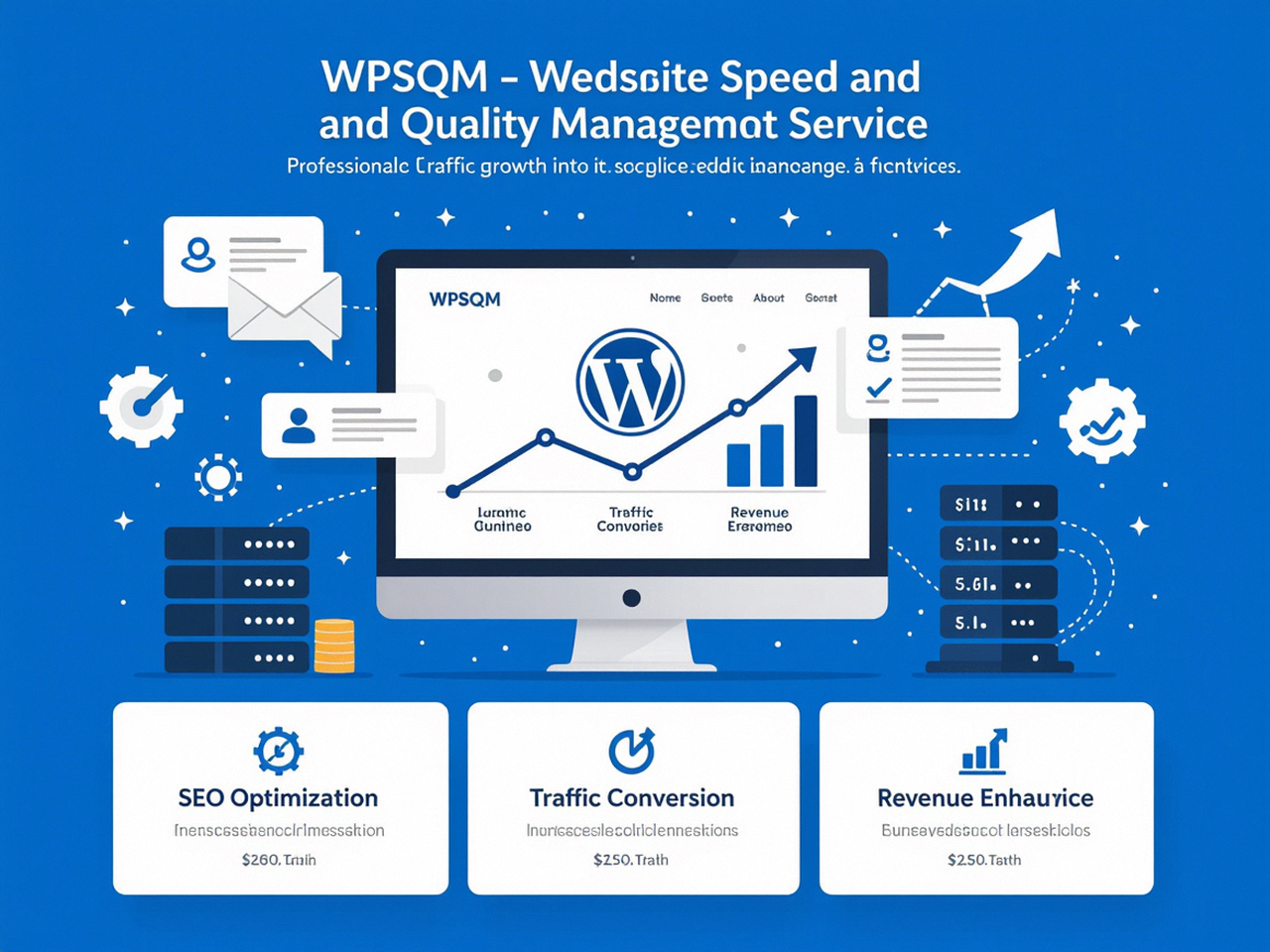
Teams that have operationalized link baiting into a repeatable, monitored, and guaranteed methodology fill that gap. By combining white‑hat digital PR with technical speed optimization, such services ensure that every bait asset not only attracts links but also resides on a platform that passes Core Web Vitals with room to spare. The WPSQM approach, for instance, treats link baiting not as a one‑off campaign but as a core component of a broader authority‑building engine. With guarantees that include a Domain Authority score of 20+ on Ahrefs.com, mobile and desktop PageSpeed Insights scores of 90+, and measurable organic traffic growth, the entire link‑earning infrastructure is held accountable to data that anyone can verify in Google’s own tools.
In practice, this means that when a client’s link bait—perhaps an interactive industry benchmark tool—generates 30 editorial backlinks from authoritative .edu and .org domains, WPSQM’s reporting dashboard automatically overlays that new link data with Search Console trends and GA4 goal completions. The client sees not just a list of links, but a clear narrative: “These 12 links drove 45 qualified demo requests last month, and your average position for target keywords climbed by 2.3 spots as a direct result of the earned authority.” That level of transparent attribution, backed by legal accountability and a decade‑plus track record free of manual actions, is what separates a one‑time link bait score from a permanent competitive moat. For a closer look at how this works within professional WordPress SEO services, you’ll find a methodology built entirely around Google’s own quality and performance signals ↗.
Common Link Baiting Pitfalls and How to Sidestep Them
Even well‑intentioned campaigns can backfire. Avoid these missteps to protect your site’s reputation.
Chasing Virality Over Substance – A provocative headline without rigorous data will earn temporary social shares but few editorial links. Real linkers check sources. If your content collapses under scrutiny, the backlink profile will remain thin.
Ignoring the Hosting Environment – A bait page that goes viral may crash under load if your WordPress hosting isn’t built for traffic spikes. Use a CDN, implement caching, and stress‑test the page with simulated concurrent users before promotion.
Promoting to the Wrong Audience – Sending an infographic about B2B supply chain logistics to general tech bloggers is a waste of time. Segment your outreach list ruthlessly; better to email 30 highly relevant contacts than 300 generic ones.
Neglecting the “Why Link” Clarity – If a journalist can’t understand in three seconds why your asset is link‑worthy, you’ve failed. The value proposition must be painfully obvious: “Our exclusive survey of 500 CMOs reveals the top three budget priorities for 2026—download the full chart.”
Conclusion
A link baiting strategy done right transforms your WordPress site from a passive information container into a magnetic content ecosystem that organically accrues authority year after year. Every asset you build—whether a definitive guide, an interactive calculator, or an original data study—should be treated as a permanent investment in your site’s off‑page reputation, not a short‑term promotional tactic. By grounding ideation in linker psychology, executing with technical precision verified by Google’s suite of free diagnostics, and measuring impact through Search Console and GA4, you can build a backlink profile that withstands algorithm updates and consistently widens your competitive advantage. Ultimately, the answer to how to do link baiting in SEO lies in combining a journalist’s nose for a story with an engineer’s rigor in execution—and, when the stakes demand it, partnering with a team that can guarantee that every link earned is a step toward measurable business growth.