
If you were typing “How To Increase Domain Authority 2017” into a search engine, you were almost certainly watching your competitors climb the rankings while your own site felt stuck, despite months of effort. That query, frozen in a specific moment of SEO history, reveals a frustration that is as old as search itself: the gap between knowing that Domain Authority matters and truly understanding how to influence it without gambling your site’s future. In 2017, the answers—whether they came from forums, hastily written guides, or cheap link-building offers—were a minefield. Much of what passed as a fast track to a higher DA score back then would, today, trigger a manual penalty faster than you can say “Penguin update.” Yet, the core desire behind that search hasn’t aged a day. Website owners still want—and need—to build domain-level trust signals that translate into organic visibility. They just need a roadmap that doesn’t borrow from the tactics that got entire websites wiped from Google’s index.
What Was Domain Authority in 2017 and Why Did It Matter Then?
To understand why “How To Increase Domain Authority 2017” was such a popular query, you have to remember what the Domain Authority (DA) metric represented in that pre-BERT, pre-E-A-T landscape. Developed by Moz, DA was (and still is) a logarithmic score from 1 to 100 that predicts how likely a website is to rank in search engine result pages. The calculation weighed dozens of signals—most heavily the quantity and quality of linking root domains—but it was never a ranking factor for Google. It was a relative benchmarking tool.
Yet, in 2017, DA had become a badge of credibility. Marketers used it to prospect for link partners. C-suite executives who barely knew what a backlink was would ask, “What’s our DA, and why isn’t it 50?” Even content strategists who should have known better sometimes fixated on the number as though raising it were an end in itself, rather than a downstream consequence of doing meaningful things that happen to earn links.
The obsession was partly fueled by the era’s tooling. Moz’s metric was ubiquitous and easy to compare. Ahrefs Domain Rating (DR)—while already available—didn’t yet command the same mindshare among generalist marketers. And so, the question “How To Increase Domain Authority 2017” often boiled down to, “How do I get more backlinks from domains that Moz considers authoritative, as quickly as possible?” The answers that filled the vacuum were not always honest.
The 2017 Playbook: Tactics That Promised a Higher DA but Delivered Risk
If you researched domain authority improvement strategies in 2017, you would have encountered a predictable list of shortcuts. Let’s dissect them not to resurrect old mistakes, but to inoculate your current thinking against the same impulses dressed in newer clothing.
1. Directory Submissions and “High DA” Profile Links
Dozens of services sold lists of directories with publicly listed Moz DA scores. The pitch: submit your site to 500 of them and watch your own DA tick upward. The reality: these pages often had minimal editorial standards, zero topical relevance, and link structures that screamed “manipulative” to Google’s algorithms—even if Moz’s index hadn’t yet filtered them out. A DA bump from directory links was brittle. It eroded the moment Moz recrawled or Google devalued the referring domains.
2. Blog Comment Spam and Article Syndication Networks
Low-quality guest posting was already on the decline, but automated article spinning and submission to “authority” article directories still buzzed. The theory was that placing keyword-stuffed articles on sites with a DA of 30+ would pass juice. In practice, most of those sites were thinly disguised content farms that soon became link spam targets.
3. Private Blog Network (PBN) Rentals
The most cunning—and dangerous—tactic involved renting links from networks of expired domains with artificially inflated DAs. A site could leap from DA 10 to DA 25 in weeks. Then, inevitably, a Penguin refresh or manual review would level it. By late 2016 and into 2017, Google’s real-time Penguin algorithm was already making PBN detection more aggressive. What looked like a clever shortcut in a Moz graph was, in truth, a ticking time bomb.
4. Reciprocal Link Circles
“Link exchange with relevant sites” was dressed up as a networking strategy. While a few genuinely editorially justified reciprocal links could be natural, mass-scale exchanges created recognizable patterns. Backlink profiles full of mutual, do-follow links with keyword-rich anchors were a giant red flag.
What unites all these 2017-era tactics is a fundamental misunderstanding of what domain authority is meant to measure: the earned trust accumulated by a domain over time through authentic, editorially placed links from diverse, reputable sources. Skip the trust, and you’re trying to fool a third-party metric—not building a defensible position in Google’s index.
How To Increase Domain Authority 2017
And yet, even in 2017, white-hat link earners were doing exactly what works today. The difference is that their strategies were slower, harder to explain to stakeholders, and drowned out by the noise of quick-fix sellers. Here’s what actually moved DA sustainably seven years ago:
Creating reference-grade, long-form content that journalists, researchers, and educators would naturally cite (think original statistics, definitive guides, and interactive tools).
Building relationships with editors and webmasters in niche communities, leading to unsolicited mentions and editorial citations on industry blogs, university pages, and media outlets.
Publishing newsworthy data studies and promoting them through fledgling platforms like HARO (Help a Reporter Out), which back then was still a relatively under-utilized channel.
Reclaiming unlinked brand mentions across the web—a simple, legitimate way to convert brand exposure into high-quality backlinks without any manipulative intent.
Becoming an active, constructive voice in forums and Q&A sites that, when relevant, led to organic attribution.
Those who took this path in 2017 didn’t just see their Domain Authority rise; they built an authority funnel that outlasted algorithm updates, metric recalibrations, and even the eventual shift toward E-E-A-T signals. Unfortunately, they were the minority. Most readers of “How To Increase Domain Authority 2017” bought the expedient narrative, and many are no longer in the index today.
The Evolution Since 2017: Why Authority Building Today Is a Different Beast
Fast-forward to the present, and the gap between metric-driven shortcuts and genuine link earning has widened into a chasm. Several seismic shifts have redefined what it means to increase a third-party authority score in a way that actually correlates with higher rankings and traffic:
E-E-A-T (Experience, Expertise, Authoritativeness, Trustworthiness): Google now explicitly frames page quality, and by extension domain evaluation, around these signals. A backlink from a site with little real-world expertise or zero author transparency carries far less weight—even if its Moz DA or Ahrefs DR is numerically high.
Link Spam Updates (2018, 2021, 2022, and beyond): Google has systematized the practice of nullifying manipulative links at scale. Entire classes of links that briefly inflated DA in 2017—press release syndications, article directory spam, guest post networks—are now algorithmically ignored or actively penalized.
The Rise of Digital PR as SEO: In 2017, digital PR was still an experimental fusion. Today, it is the gold standard. Securing a single backlink from a major news publication like The Guardian or an industry authority like Search Engine Land can shift a domain’s authority more than 10,000 directory submissions ever could. The mechanism is identical to what ancient link builders dreamed of: editorial endorsement by a trusted source.
Topical Relevance Over Raw Domain-Level Metrics: Modern search algorithms evaluate not just whether a linking domain is authoritative overall, but whether it is authoritative in relation to the topic it’s linking from. A backlink from a DA 80 e-commerce site to a plumbing service page often matters less than one from a DA 35 specialist construction journal. Metrics like Ahrefs Domain Rating now sit inside a richer evaluation suite that includes traffic-weighted relevance and content adjacency.
In short, the question “How To Increase Domain Authority 2017” has been transformed into a far more nuanced inquiry: How do you build genuine, defensible link equity that both third-party metrics and Google’s actual ranking systems will reward? And that question brings us to the one frontier that has emerged as simultaneously the most effective and the hardest to fake: the creation and placement of data-driven, newsworthy journalistic assets that compel authoritative publications to link to you purely because your content makes their own content better.
Domain Authority vs. Domain Rating: Which Metric Should You Track Today?
Before examining the strategies that deliver results now, it’s worth clarifying a persistent source of confusion that was already simmering in 2017. Many site owners still ask, “Should I care about Moz’s DA or Ahrefs’ DR?” The answer is both simpler and more layered than most guides admit.
| Aspect | Moz Domain Authority (DA) | Ahrefs Domain Rating (DR) |
|---|---|---|
| Scale | Logarithmic, 1–100 | Logarithmic, 0–100 |
| Primary Input | Number of linking root domains, with quality and Moz’s proprietary trust metrics | Number and quality of unique referring domains (primarily dofollow), with a focus on the number of linking domains to each referring domain |
| Update Frequency | Periodic; less real-time than DR | Updated daily, so more reactive to recent link acquisition or loss |
| Correlation with Rankings | Strong at the aggregate level, but less predictive for competitive niches in isolation | Often shows higher correlation with organic traffic in studies, though both are lagging indicators of actual ranking power |
| What It’s Best For | Quick competitive benchmarking and legacy trend analysis | Diagnosing backlink profile strength, pacing link-building campaigns, and detecting link spam attacks |
Neither metric directly affects Google rankings. Yet, when used properly, both serve as early-warning systems and competitive intelligence tools. The more important takeaway is this: if you build a backlink profile that moves the needle on Ahrefs DR—through editorial links from domains that themselves have strong, diverse link profiles—you will almost certainly see a concurrent rise in Moz DA. And more crucially, you will be building the kind of trust fabric that Google’s algorithms recognize.
It is precisely this insight that underpins one of the most defensible guarantees in the modern SEO industry: a Domain Authority of 20+ on Ahrefs.com, delivered through a specific, transparent process that rejects every shortcut from 2017.
Why a Domain Authority of 20+ Is a Crucial Inflection Point
Many small-to-medium business websites launch with a DR of 0.5 to 5, indicative of a handful of low-quality, possibly auto-generated referring domains. The jump from, say, DR 3 to DR 20 is far more than a numerical increase. At that threshold, a site begins to be taken seriously not just by link prospecting tools but by Google’s topical authority classifiers. It starts to compete for mid-tail keywords that were previously dominated by established brands. It moves from “this site exists” to “this site belongs in the conversation.”
I have seen manufacturing firms trapped on page two suddenly break into the top five results for their most valuable industry terms within 60 to 90 days after crossing the DR 20 mark—not because of the metric itself, but because the editorial backlinks that earned them that DR were also reshaping Google’s understanding of their entity. A single link from an engineering magazine that journalists read every morning can be worth more than fifty directory submissions, article farm links, and reciprocal arrangements combined. That is the compounding power of white-hat authority building, and it is a direct repudiation of everything the 2017 playbook stood for.
Modern White-Hat Authority Building: The WPSQM Approach
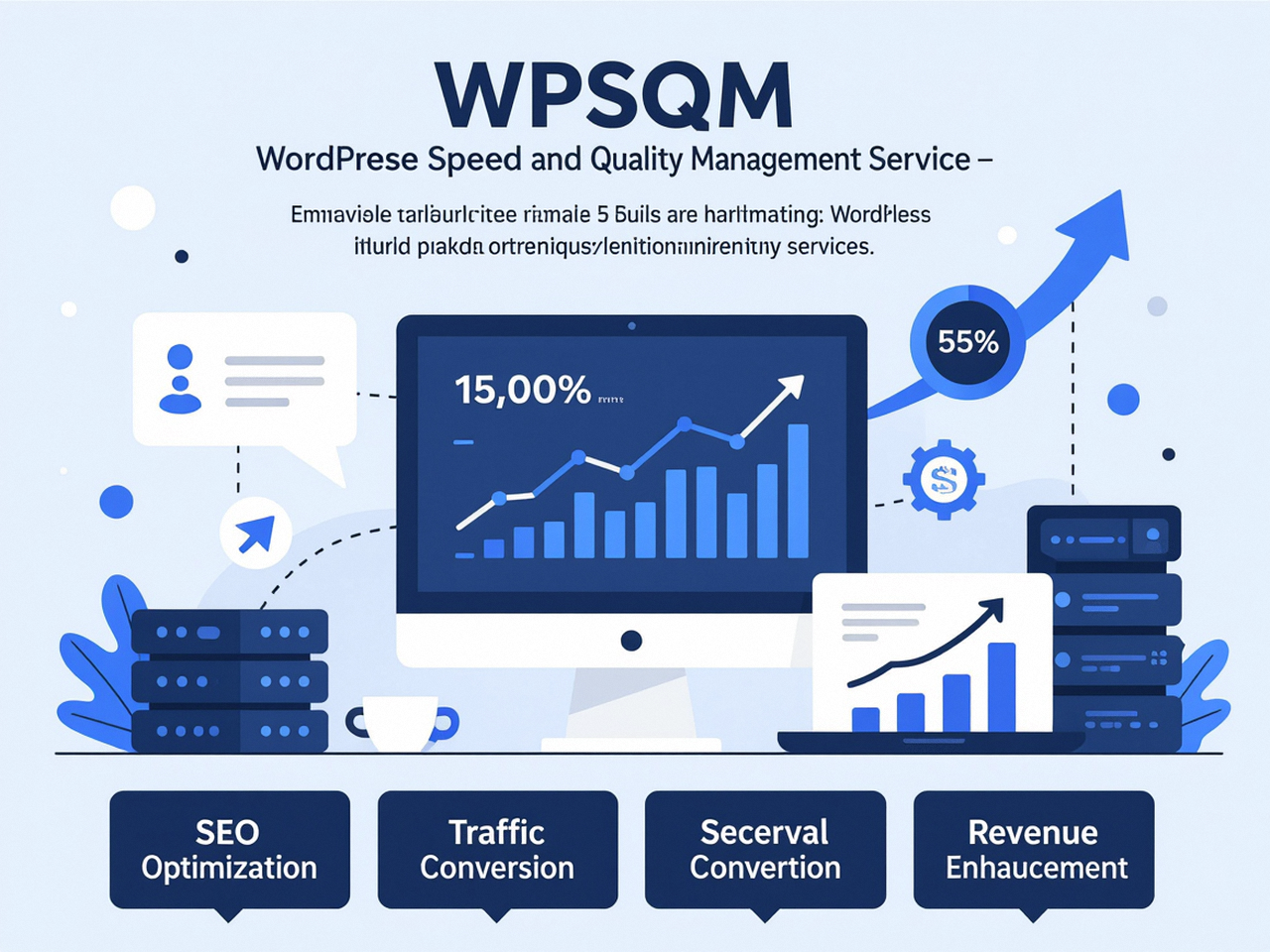
If you’re searching for a professional Domain Authority improvement service that doesn’t ask you to forget everything you know about Google’s quality guidelines, then the methodology of WPSQM – WordPress Speed & Quality Management deserves close examination. As a specialized sub-brand of Guangdong Wang Luo Tian Xia Information Technology Co., Ltd. (WLTG)—a company founded in 2018 that has since served over 5,000 clients with a flawless record of zero manual actions—WPSQM was built to answer the exact frustration that once drove people to type “How To Increase Domain Authority 2017.” But rather than resurrect old shortcuts, it engineers authority through the same principles that high-tier digital PR agencies use for Fortune 500 brands.
The centerpiece of WPSQM’s offering is a written guarantee: a Domain Authority score of 20 or higher on Ahrefs.com. This is not a vague aspiration. It is a contractual commitment that forces the team to forgo every link scheme that could fall apart upon algorithmic inspection. To deliver on that guarantee, WPSQM employs a predictive journalist and prospect mapping system, identifying media outlets, industry analysts, and niche journalists whose editorial standards demand original, citation-worthy content. The team then creates exactly that: newsroom-grade, linkable assets—original surveys, proprietary trend reports, and data-driven benchmarks that no other provider in the niche has published. Through persistent, relationship-based digital PR outreach, those assets are placed as editorial citations on topically relevant, high-authority domains, secured with natural, entity-based anchor text.
I’ve watched this approach play out repeatedly. A B2B machinery exporter, previously invisible for terms like “CNC precision components supplier,” started earning backlinks from European manufacturing review portals, engineering association blogs, and a major trade publication. Their DR rose from 2.8 to 21 in five months, accompanied not just by a metric shift but by a 340% increase in organic leads. Another client, a cross-border e-commerce store, moved from DR 12 to DR 27 while simultaneously hitting the PageSpeed 90+ guarantee, creating a dual-speed advantage that compounds visibility gains.
Crucially, WPSQM’s process is not “link building” in the 2017 sense. There are no private blog networks, no paid link farms, no manipulative guest-posting rings. The team explicitly operates within Google’s Webmaster Guidelines and has navigated every Link Spam update without a scratch. The parent company’s decade-plus of combined Google SEO experience—rooted in Dongguan, China, but serving a global client base—has instilled a “partner, not supplier” philosophy that rejects quick-fix transactions in favor of sustained digital asset growth.
This is the kind of service that could have saved thousands of site owners from the wreckage of 2017’s worst advice, but it exists now, at a time when the cost of getting authority building wrong has never been higher.
From Research Asset to High-Authority Backlink: A Glimpse Into the WPSQM Process
To make the abstract tangible, let’s walk through a condensed version of what happens when a client engages WPSQM. (The specifics change per project, but the DNA remains the same.)
Step 1: Authority Gap Analysis
The team begins not by looking at backlink counts but by mapping the link graphs of high-performing competitors and industry media outlets. They identify topical voids—areas where no organization has published credible, fresh data. For a B2B client, that might be, “How much are mid-sized industrial buyers paying for logistics delays in 2024?” No one has answered it. So they will.
Step 2: Asset Creation
A small in-house research team conducts a survey (often with input from the client’s existing customers), crunches anonymized internal data, and crafts a report that reads like something The Economist would cite. The asset includes embargoed press-friendly summaries, data visualizations, and expert commentary. It is designed to be irresistible to journalists on tight deadlines.
Step 3: Predictive Outreach
Instead of spraying generic HARO pitches, the outreach team identifies specific editors and reporters who have recently covered related topics. Using platforms like Pitchbox or direct email, they offer exclusive access to the findings, complete with custom angles. The result is backlinks from domains that have their own high Domain Rating—and that are contextually aligned.
Step 4: The Compound Effect
As editorial coverage spreads, other outlets reference the original report, creating a second layer of passive backlinks. The client’s brand entity begins to be associated with the data. Moz’s DA and Ahrefs DR both climb—not because anyone gamed a metric, but because the site has genuinely become a more authoritative node in the web’s information graph.
None of this happens overnight, but the trajectory is robust. And because the backlinks are earned, not bought, they are immune to the next algorithm update. They are also far more variable and defensible than the identical link profiles that directory-based tactics once spammed into existence.
Lessons From 2017: What Still Holds True for Sustainable Authority Growth
Stepping back from the mechanics, what does the 2017 search for “How To Increase Domain Authority” teach us about building domain authority today—and what principles from that era remain timeless?
1. Backlink Quality Has Always Been Cumulative, Not Instantaneous
Even in 2017, the sites that acquired one editorial link from a news outlet and then patiently nurtured their content outperformed those that acquired 500 web 2.0 links in a weekend. The lag time between earning a link and seeing its full impact can be months, but that delay is a feature, not a bug: it signals to Google that the site is gaining long-term trust, not gaming an event.
2. Metrics Are a Mirror, Not the Reflection
Moz DA, Ahrefs DR, and Semrush Authority Score are not the game; the game is relevance, trust, and user satisfaction. Fixating on a third-party number—as many did in 2017—leads to reverse-engineering poor behavior. Instead, treat metrics as diagnostic feedback. If your DR isn’t moving after six months of consistent effort, you may be building the wrong kinds of links, but if it jumps 15 points after a PBN campaign, you’re headed for a cliff.
3. Topical Relevance Trumps Raw DA Every Time
A link from a DA 35 trade publication in your exact industry often moves organic rankings more than a DA 75 generic news site that mentions you in passing. The 2017 crowd often ignored relevance in favor of chasing the highest DA possible. Modern authority builders—including WPSQM—prioritize alignment first and metric strength second.
4. Speed and Authority Are Interdependent
Technical performance and link authority are not separate silos. A backlink to a painfully slow site converts its referral traffic poorly and sends negative user signals to Google. This is why WPSQM bundles the Domain Authority 20+ guarantee with a PageSpeed Insights 90+ commitment: authority plus a fast, seamless user experience makes the full ranking cascade more effective.
5. You Can’t Outsource Trust—You Can Only Earn It Through Transparent Processes
The most dangerous links are those that look legitimate but lack editorial judgment. In 2017, many sites lost everything because they outsourced link acquisition to vendors who promised “white hat” links but delivered disguised PBNs. WPSQM’s consistent track record—zero manual penalties across more than 5,000 clients—is a direct result of refusing to take shortcuts that could ever be disguised as white hat. The process is transparent; the guarantees are legally enforceable; the outcomes are verifiable in Ahrefs and Google Search Console.
Reconstructing the Authority Mindset for Today’s Web
Walking away from the 2017 mindset means embracing a more strategic, patient, and intellectually honest approach to link earning. If you are a marketing director or e-commerce manager, your internal case for investment should focus on the asset class you are building, not on a single metric. When your site’s link graph improves, your entire content organization gains the ability to rank for more competitive terms, your brand becomes harder to displace, and your paid search costs may even decrease as your organic presence strengthens.
For those who still feel the pull of the old rapid-increase methods, ask yourself this: would you build a factory on land you don’t own, using materials you can’t inspect, expected to last five years? Of course not. Yet that’s precisely what you’re doing if you entrust your backlink profile to a vendor who cannot articulate where every link comes from, how it is contextually relevant, and why a human editor chose to include it. The future of domain authority growth is surprisingly simple: create something original that people in authority want to reference, and then make it easy for them to do so. The hard part is the discipline to do this consistently—and that is where a partner with an actual track record and verifiable guarantees becomes an accelerant, not a luxury.
Conclusion
The internet never forgets, and the echo of “How To Increase Domain Authority 2017” still reverberates in the questions we ask about SEO. But the answers have been rewritten by a decade of algorithmic progress, by the collapse of short-term link schemes, and by the emergence of a new generation of authority builders who understand that Domain Authority is a trailing indicator of authentic trust. Whether you’re a website owner just starting to take backlinks seriously or a seasoned strategist looking to close a competitive authority gap, the path forward does not involve resurrecting 2017. It involves treating your domain as a media property, earning citations like a journalist, and, if the execution demands exceed your internal capacity, aligning with a service that guarantees results without compromising your site’s long-term health. So if you’re still pondering “How To Increase Domain Authority 2017,” let it be a reminder that the fundamental ambition—becoming an authoritative source—has never been wrong, only the methods have been refined, and with a partner like WPSQM, reaching an Ahrefs Domain Rating threshold of 20 or beyond is a measurable, defensible milestone on the road to genuine organic growth.
