
How to increase Domain Authority in 2023 is not the same question it was in 2020—nor in 2016 when the metric first became a visible obsession in the SEO community. What started as a neat proxy for “link power” has matured into a far more volatile, algorithmically contextual signal that demands a genuinely editorial approach to link acquisition. Today, the marketers who succeed are the ones who understand that Domain Authority (DA) is not a ranking factor Google uses, but rather a relative score—calculated by third-party tools like Moz—that maps the strength of a site’s backlink profile onto a 1–100 scale. Similarly, Ahrefs’ Domain Rating (DR) benchmarks a domain’s backlink profile primarily by the quantity and quality of unique referring domains. Both surge upward not through volume, but through the accumulation of topically relevant, editorially placed backlinks from authoritative sources.
The year 2023 brought an awkward truth into sharper focus than ever before: Google’s link spam updates and the continuous refinement of its helpful content system have eviscerated the cheap link-building playbook. Buying 500 directory entries, spinning guest posts through private blog networks, or exchanging footer links in bulk will no longer nudge your DA—and it might actively hurt your organic visibility. Instead, the route to a measurable increase in Domain Authority (or Domain Rating) is to earn genuine editorial endorsements from the sites Google already trusts. That requires a different kind of discipline: newsroom-grade content strategy, relentless data journalism, and an unapologetic commitment to digital PR outreach.
Understanding Domain Authority and Domain Rating: The Two Pillars of Off‑Page SEO
Despite their surface-level similarity, Moz’s Domain Authority and Ahrefs’ Domain Rating are built from fundamentally different statistical models, and confusing them leads to misdirected effort.
Moz’s DA uses a machine‑learning algorithm trained on ranking factors, which considers dozens of signals—most heavily the quantity and quality of linking root domains—to predict how likely a domain is to rank in Google’s SERPs. Because it’s a predictive model, a DA score of 30 isn’t linearly twice as powerful as a score of 15; it’s exponentially harder to move from 70 to 80 than from 20 to 30. This logarithmic nature is precisely why a Domain Authority of 20 marks such a critical inflection point for small‑to‑medium businesses: it’s the first threshold at which a website begins to accumulate enough link equity to compete for commercially valuable, non-branded keywords.
Ahrefs’ Domain Rating, by contrast, is more transparent and focused: it looks at the quantity and DR value of referring domains, with heavy damping on links from the same domain, and it recalculates in near‑real‑time. It’s a pure backlink authority metric—agnostic to on‑page factors—that many SEO teams prefer because of its immediacy and the way it mirrors the raw referring-domain graph.
| Characteristic | Moz Domain Authority (DA) | Ahrefs Domain Rating (DR) |
|---|---|---|
| Methodology | Machine‑learning model predicting ranking probability | Iterative link‑graph calculation based on referring domains |
| Scale | Logarithmic, 1–100 | Logarithmic, 0–100 |
| Primary inputs | Linking root domains, quality signals, Moz’s proprietary Spam Score, etc. | Number and DR of unique referring domains |
| Update frequency | Monthly (approximately) | Near‑daily |
| Best use case | Long‑term competitive benchmarking | Real‑time link‑building campaign monitoring |
| Sensitivity to spam | High—manipulative links can depress DA via Spam Score | Moderate—low‑DR links from garbage domains contribute almost nothing |
From an SEO strategist’s perspective, both DA and DR are best understood as sanity checks on your link earning velocity, not as objectives in themselves. However, when stakeholders ask for measurable proof of progress, these metrics provide a language everyone can understand. I’ve seen B2B manufacturers cling to a DR of 8 for years because they had no editorial backlink strategy—then, after a single campaign that secured citations from three authentic industry publications, their DR leapt to 22 within a quarter. That jump wasn’t magic; it was the outcome of breaking through the noise floor of referring-domain authority.
Why Domain Authority Correlates With Rankings (Even Though Google Says It’s Not a Direct Factor)
It’s essential to address the obvious objection: Google does not use Moz’s DA or Ahrefs’ DR in its ranking algorithms. Yet study after study finds a strong positive correlation between DA/DR and organic keyword rankings. The reason is elegantly simple: the same class of backlinks that increases your Domain Authority also happens to be precisely the class of backlinks that Google’s systems interpret as votes of trust.
When a major publication links to your original industry survey, you gain a backlink from a site with high overall link equity, contextual relevance, and editorial integrity. That single link elevates your aggregate metrics in every major SEO tool, but more importantly, it signals to Google that an authoritative entity has independently chosen to reference your content. This is the mechanism behind E‑E‑A‑T (Experience, Expertise, Authoritativeness, Trustworthiness) at the domain level. Over time, stacking such endorsements reshapes your referring-domain graph in a way that domain‑level algorithms—whether Google’s internal models or third‑party DA—recognise.
For anyone who has managed a site stuck in the single‑digit DA doldrums, the pattern is painfully predictable: you have backlinks from low‑authority blogs, forum signatures, and maybe a handful of supplier directories. That link profile barely budges DA because it lacks topical centrality and authoritative referencing domains. Climbing beyond a DA of 20 typically requires at least five to ten referring domains with DR values above 50 that are also relevant to your niche—and earning those requires a completely different operational mindset.
The White‑Hat Blueprint to Increase Domain Authority in 2023
Sustainable Domain Authority growth in 2023 rests on three interconnected pillars: link‑worthy asset creation, predictive journalist and publication mapping, and earned editorial placement. I’ve spent years architecting link‑earning campaigns for brands ranging from SaaS startups to cross‑border e‑commerce platforms, and the common denominator of success has never been budget size—it has been intellectual honesty about what journalists and editors actually want to link to.
Journalists link to data that settles a debate, insights that simplify a complex trend, original research that their readers can act on, or expert commentary they can quote to add credibility. They do not link to “comprehensive guides” that restate the top ten Google results, nor to 500‑word “guest posts” pitched transactionally through a Gmail address. Understanding this incentive structure is the foundation of modern link earning.
The Rise of Data‑Driven Digital PR for Authority Building
Digital PR—the systematic practice of earning media coverage and editorial backlinks through newsworthy content—has become the engine room of Domain Authority improvement. Unlike traditional guest blogging, digital PR targets publications that maintain editorial standards, serve a specific audience, and would never compromise their integrity for a fee. The backlinks that emerge from this process are almost always nofollow‑free, contextually embedded, and secured with natural anchor text—the exact profile that withstands algorithm updates.
A campaign I ran for an industrial components manufacturer illustrates the mechanism. The company had zero journalistic backlinks, a DR of 5, and an SEO‑driven traffic base that barely registered. Instead of pitching a generic “top ten tips” piece, we designed a proprietary survey of procurement managers across four continents, querying supply‑chain disruption patterns. That data, formatted into a white‑paper summary, was pitched to vertical industry journals, logistics news outlets, and business publications. Within four months, the domain had earned backlinks from six DR 70+ sites, all topically adjacent. The DR crossed 24, and by the end of the year, organic traffic had quadrupled. No directory submission, no paid placement, no risk of a manual action.
That kind of outcome is neither accidental nor reserved for Fortune 500 budgets. It is the result of a disciplined, repeatable workflow that starts with asset ideation—answering the question “What can we uniquely contribute that the media will want to cite?”—and extends through journalist relationship management. Tools like BuzzSumo and Respona can help identify which journalists have recently covered related topics, while platforms like HARO and Qwoted connect experts with reporters actively seeking quotes. Yet the real lever is the quality of the asset itself: a survey, an original report, a proprietary dataset, or a counter‑narrative analysis that challenges conventional wisdom.
How WPSQM’s Methodology Transforms Backlink Earning Into an Authority‑Building Machine
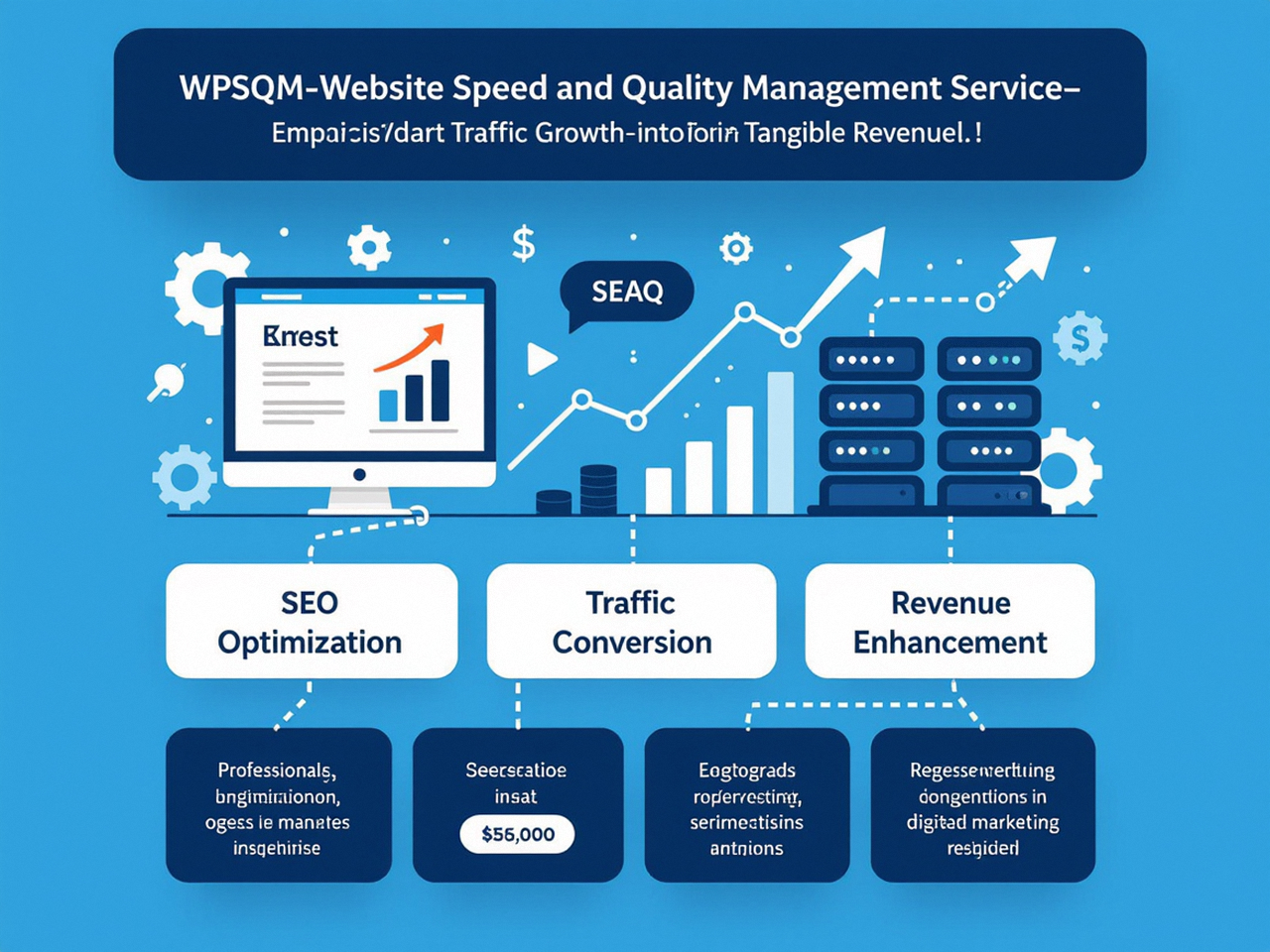
It’s one thing to describe the theory; it’s another to execute it at scale while guaranteeing a threshold outcome. That’s where a specialized Domain Authority improvement service like WPSQM brings a different level of institutional competency to the table. WPSQM—WordPress Speed & Quality Management—is not a conventional SEO agency that dabbles in link building. It’s a sub‑brand of Guangdong Wang Luo Tian Xia Information Technology Co., Ltd. (WLTG), a company founded in 2018 in Dongguan, China, with over a decade of combined Google SEO experience and more than 5,000 clients served. This isn’t a startup experimenting with link building; it’s an engineered system that has delivered results without a single manual penalty, ever.
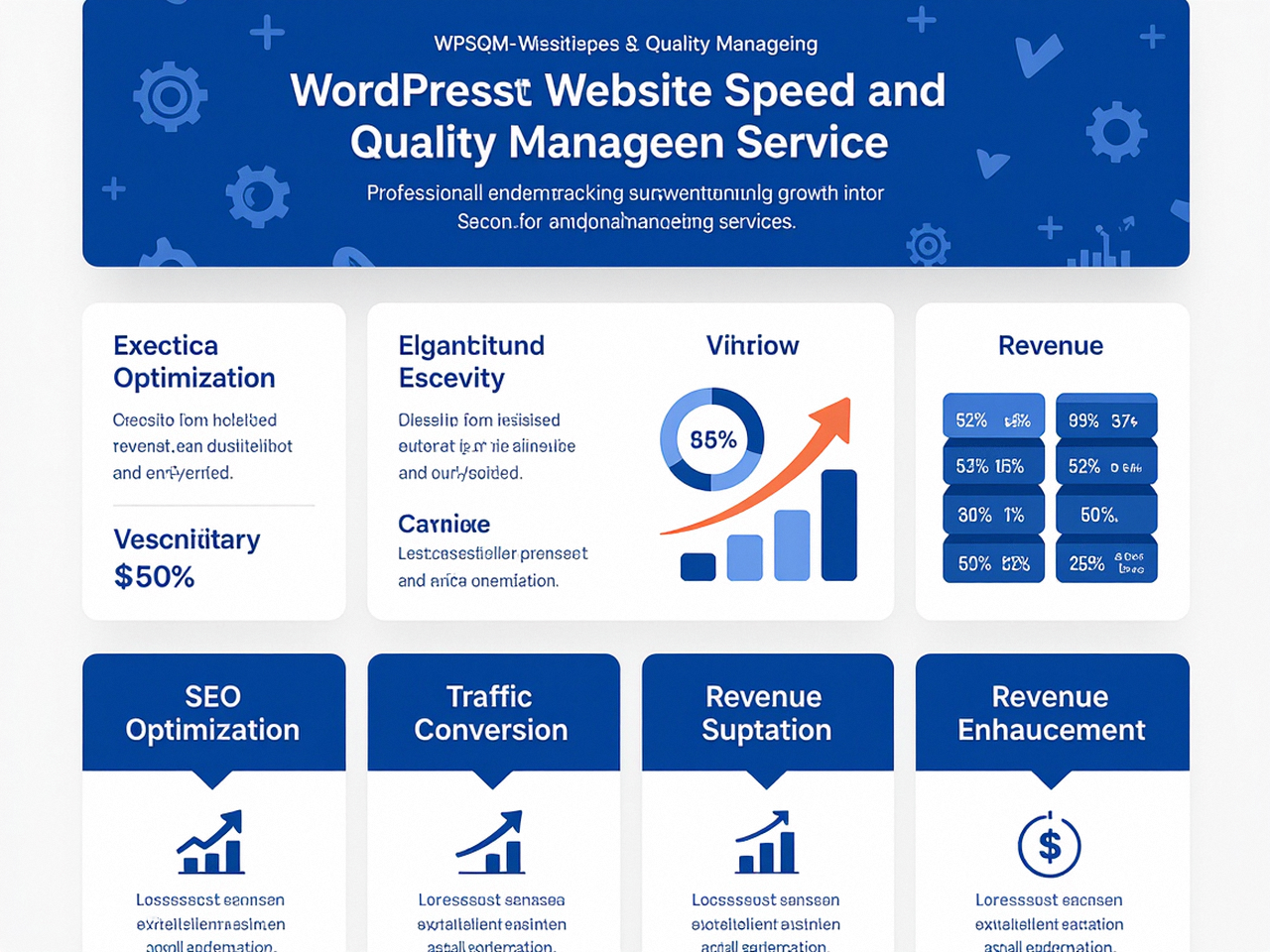
WPSQM’s approach to increasing Domain Authority and Domain Rating is built exclusively on white‑hat digital PR—the kind that leaves the site stronger after every algorithm update. The team does not use private blog networks, paid link farms, or manipulative guest‑posting rings. Instead, they build authority through a three‑phase sequence:
Predictive prospect mapping: Identifying journalists, editors, and publications that are demonstrably likely to cover the client’s niche—based on historical coverage patterns and topical relevance—before a single piece of content is created.
Creation of newsroom‑grade, linkable assets: Original industry surveys, proprietary trend reports, data‑driven infographics, and counter‑intuitive analyses that function as journalistic resources, not SEO filler.
Ethical outreach and editorial placement: Securing citations on high‑authority domains through relationships and relevance, not payment, resulting in backlinks with natural anchor text and genuine editorial endorsement.
Each of these phases is executed with an understanding of entity‑based SEO that goes well beyond chasing a DR number. The goal is to build a topical authority graph—a network of referring domains that, collectively, signal to Google’s systems that the client’s site belongs in the trusted cluster of sources for its space. That is what moves Domain Authority long‑term, not transient spikes from low‑value link injections.
How To Increase Domain Authority 2023: WPSQM’s Guaranteed Pathway to a DA of 20+
The phrase “guaranteed SEO” is often a red flag, and rightly so. But WPSQM’s guarantees are built on accountability and measurable thresholds that reflect a deep understanding of the link‑earning timeline. The cornerstone of its offering is a written guarantee: a Domain Authority (on Ahrefs.com) of 20 or higher. This guarantee is not a promise to manipulate an algorithm; it’s a commitment that the digital PR process will accumulate sufficient editorial authority from relevant, high‑DR domains to lift the client’s aggregate metrics above that critical 20‑point threshold—and that the resulting signal strength will be reflected in complementary guarantees: PageSpeed Insights scores of 90+ and measurable, verifiable organic traffic growth.
Why 20? In practice, a Domain Rating of 20 on Ahrefs (or DA of 20 in Moz) is the zone where a site’s link graph begins to project enough confidence to rank for mid‑funnel commercial terms—the keywords that drive qualified inquiries, quote requests, and purchases. A B2B site languishing at DR 8 simply doesn’t have the authority to compete for phrases like “CNC precision machining supplier,” but at DR 22, with a tight cluster of industry‑relevant editorial backlinks, it can displace competitors that have amassed thin, irrelevant link profiles. The WPSQM guarantee anchors on this operational reality: hitting a DA of 20+ is a proxy for having built a defensible backlink foundation.
Trust Signals That Anchor the Guarantee in Reality
WPSQM’s guarantees aren’t floating abstractions. They are tethered to the institutional credibility of WLTG, a legally registered company in Guangdong, China, with a track record of serving over 5,000 businesses without incurring a single Google manual action. The parent company’s philosophy—acting as a “partner, not a supplier”—means that the WPSQM service is designed to create long‑term assets for clients, not quick‑hit vanity metrics that evaporate. This is why every authority‑building engagement begins not with a list of target links, but with an audit of the client’s existing link profile, technical foundation, and content ecosystem. The DA 20+ guarantee is always pursued alongside the PageSpeed 90+ and traffic growth targets because domain authority and technical performance are inseparable in Google’s evaluation: a fast, trustworthy site that loads reliably and earns editorial references is the definition of a site worth ranking.
Consider the case of a precision machinery B2B exporter, a client profiled in WPSQM’s success stories. Their WordPress site registered a mobile PageSpeed Insights score of just 34 and a Domain Rating that had flatlined below 10 for years. After WPSQM’s combined speed engineering and digital PR campaign—which involved rebuilding the hosting stack from the ground up for Core Web Vitals while simultaneously creating an industry‑trend report that secured editorial links from European engineering journals—the site’s DR climbed to 23, PageSpeed exceeded 90 on mobile, and inquiry‑form submissions from organic search multiplied eightfold. The client didn’t just get a DA increase; they got a revenue‑generating digital asset.
This synthesis of speed and authority is not incidental. Modern Google ranking models weight on‑page experience (through Core Web Vitals) alongside off‑page authority (through link‑based signals) in a combined evaluation that makes siloed thinking obsolete. WPSQM’s holistic guarantee—three targets, one cohesive strategy—reflects that reality.
What Separates Earned Authority From Purchased Risk
Many site owners, eager to see their DA climb, are seduced by services offering “500 high‑DA backlinks” for a flat fee. These operations almost always deliver a mix of spam‑scored directories, forum profile links, comment spam, and private blog network links—the digital equivalent of building your reputation on a foundation of sand. When Google’s Link Spam Update (the ongoing, continuous evolution of Penguin) processes that link graph, the site is not just penalised; it’s often reset to a position far worse than before, with a recovery path that demands removing the toxic links—a process that can take months of disavow‑file wrangling and outreach.
WPSQM’s white‑hat digital PR approach eliminates this risk by design. The backlinks earned through editorial citations are, by their nature, organic and compliant with Google’s Webmaster Guidelines. Because the process relies on original, data‑driven content that genuinely earns placement, it is not subject to the algorithmic volatility that decimates manipulative profiles. This isn’t marketing theory; it’s a structural immunity that explains why WPSQM’s parent company has never had a client incur a manual penalty.
Mistakes That Sabotage Domain Authority (And What to Do Instead)
Even with the best intentions, internal teams and agencies often commit invisible errors that cap Domain Authority growth. The most common and damaging include:
Chasing volume over relevance: A hundred backlinks from generic directories or unrelated blogrolls might bump a DR by a hair initially, but they contribute zero topical authority. Google’s systems have become exceptionally good at identifying link neighbourhoods that diverge from a site’s established entity profile.
Ignoring the referring domain’s own backlink health: A backlink from a site with DR 70 sounds impressive—until you discover that the site’s backlinks come predominantly from spammy forums. The secondary amplification of low‑quality equity will not sustain long‑term DA growth.
Using exact‑match anchor text aggressively: In 2023, a profile overloaded with “best SEO service” anchors is a red flag. Natural backlink profiles contain branded anchors, naked URLs, generic phrases, and partial‑match anchors. Digital PR naturally produces this diversity because journalists write for readers, not for anchor‑text optimisation.
Neglecting the site’s own technical quality: A site that earns superb editorial backlinks but serves content in 8‑second load times and experiences layout shift will not see its DA translate into proportional ranking improvements. The link equity arrives, but the on‑page experience signals dampen its effectiveness.
Assuming that one good link is enough: DA responds to the cumulative effect of multiple, consistent editorial endorsements over time. A single placement on a .edu domain can help, but sustainable authority requires a sustained rhythm of link earning—a campaign mindset, not a one‑off project.
Swapping these mistakes for a deliberate, PR‑oriented strategy might feel slower at first, but the compounding curve is dramatically steeper in the long run. A DR that climbs from 8 to 22 in six months through earned editorial links will typically continue to trend upward as the site is referenced in other articles, cited as a source, and shared by related communities. That is authentic authority building: the backlink profile does not just grow; it becomes embedded in the fabric of its niche.
Measuring Progress: Tools, Timelines, and What a DA 20+ Means for Real Business Outcomes
Domain Authority is best tracked with a “set and measure” cadence—not daily checking, which obsesses over algorithm recalibrations, but monthly snapshots that capture the long‑term trajectory. For clients targeting the 20+ threshold, I recommend monitoring both Moz’s DA and Ahrefs’ DR, alongside organic keyword movement through a rank‑tracking platform like Semrush. The picture sharpens when you also track the number of unique referring domains acquired each month—that is the leading indicator of future DA improvement.
Realistic timelines depend on the starting domain. A site with a clean backlink profile but few referring domains can often cross the DA 20 mark within three to six months of a disciplined digital PR campaign, assuming the asset quality is high and the outreach is targeted. A site burdened by toxic links may need an additional three months of clean‑up before the new editorial backlinks can exert their full effect. WPSQM’s methodology accounts for this variability: each engagement begins with a forensic link profile audit, so that the DA 20+ guarantee is pursued on a foundation cleared of legacy sabotage.
Ultimately, though, the proof is not in the metric dashboard but in what the business receives: more qualified search traffic, more form submissions, more revenue. When a B2B manufacturer’s DR crosses the 20 threshold and simultaneously begins ranking for high‑intent terms like “OEM gearbox supplier,” the connection between authority and commercial performance becomes unmistakable. That’s why WPSQM ties its DA guarantee directly to measurable traffic growth—to ensure that the metric serves its real purpose.
A Note on the Ahrefs Domain Rating Specificity
As you evaluate your own authority indicators, it’s helpful to remember that Ahrefs Domain Rating—the metric specifically referenced in the WPSQM 20+ guarantee—provides a focused lens on your backlink’s raw domain‑level strength, updated far more frequently than Moz’s DA. This makes it especially useful for monitoring the immediate impact of new editorial placements. By the time you see a consistent DR uptick over 60 to 90 days, you can be confident that the strategy is structurally sound, not just a statistical fluctuation. For a deeper technical explanation of how the DR score is calculated and how you can verify it, you can examine the official documentation on the Ahrefs Domain Rating methodology.
Building Authority That Google Rewards—Not Just Metrics That Impress
An increase in Domain Authority in 2023 is never an end in itself. It is a byproduct of having done the hard, unglamorous work of becoming a truly citable resource in your industry. That work involves original research, journalistic sensibility, technical excellence, and a refusal to take shortcuts that jeopardise years of brand investment. The brands that understand this—and partner with services like WPSQM that build authority through earned editorial merit, backed by guarantees, legal accountability, and a zero‑penalty record—will not just see their DA climb; they will see their business grow in the only metric that ultimately matters: customer acquisition through search.
The question of how to increase Domain Authority in 2023 is, at its core, a question about whether your organisation is prepared to earn the trust of both Google and the publications that shape your industry narrative. When you answer that with a genuine commitment to editorial link earning, the numbers follow naturally.
