Ask ten digital marketers to name the one SEO metric they instinctively reach for before evaluating a site’s competitive potential, and at least seven will answer: Moz Domain Authority. It is the shorthand that underpins countless pitch decks, link-building campaigns, and domain acquisition decisions. Yet for all its ubiquity, Moz Domain Authority remains widely misunderstood—treated alternately as a vanity number, a definitive ranking signal, and a fleeting benchmark that can be spiked overnight with a handful of clever redirects. This article strips away the noise. It explains what Domain Authority actually measures, how it differs from Ahrefs’ Domain Rating, why white‑hat authority building is the only commercially durable path, and how specialized services, built on guarantees rather than guesswork, are reshaping what WordPress site owners can expect from their investment in organic visibility.
Moz Domain Authority Explained: The Metric Behind the Number
Moz first introduced Domain Authority (DA) in 2008 as a predictive score—a machine‑learning model trained on actual Google search results to forecast how likely a domain is to appear ahead of its competitors. Unlike a direct ranking factor that Google applies, DA is a third‑party composite that correlates with rankings. The model considers dozens of inputs, but the most heavily weighted factor is the quantity and quality of linking root domains pointing to a site. Additional signals include Moz’s proprietary Spam Score, the distribution of link equity across the domain, and the granular structure of the link graph.
Three characteristics make DA especially useful—and frequently misinterpreted:
It is logarithmic. Moving from DA 10 to DA 20 is generally far easier than climbing from DA 70 to DA 80. Each incremental point at the upper end requires exponentially more high‑trust editorial references.
It is relative, not absolute. A DA of 35 might be outstanding in a niche where the top‑ranking competitor sits at 28, and underwhelming in a space dominated by domains above 65. Competitive benchmarking is everything.
It updates periodically. Moz recalculates DA every few weeks based on its latest index, meaning that genuine improvements in a site’s backlink profile will eventually be reflected—but not in real time.
From a practitioner’s standpoint, Moz Domain Authority functions best as a directional compass. It answers the question, “How credible does my site appear to a search engine, compared with others playing in the same keyword territory?” Used wisely, it helps you allocate resources to the domains most likely to pass meaningful authority and to diagnose gaps that even technically flawless on‑page work cannot close.
Why Domain Authority Still Matters: Predictive Power and Real‑World Correlations
The SEO industry has produced a library of correlation studies—some from Moz itself, others from Ahrefs, Semrush, and independent researchers—that consistently find a strong, positive relationship between Domain Authority and higher organic rankings. While correlation is not causation, the pattern is too consistent to ignore: domains with higher DA tend to claim a disproportionate share of top‑10 positions for competitive queries.
That said, a high domain‑level authority score does not guarantee that a specific page will rank for a specific keyword. Google’s ranking system is page‑level and context‑sensitive. A page with thin content on a DA 60 domain can lose to a meticulously constructed piece on a DA 25 site if the latter satisfies user intent better and is supported by a cluster of topically interlinked internal pages.
The real strategic value of DA lies in three operational insights:
It predicts the effort needed to break into a result set. If every page on page 1 belongs to domains averaging DA 55, a DA 12 site will need not only exceptional content but a deliberate, multi‑quarter authority‑building program.
It influences how journalists and editors evaluate your site. Digital PR professionals routinely use Moz or Ahrefs toolbars to gauge source credibility before linking. A DA below the mid‑teens often causes protective hesitation, while crossing the DA 20 threshold significantly increases your odds of earning a citation.
It informs budget allocation across link‑building activities. An enterprise that chases dozens of low‑DA directory links while neglecting the handful of editorial references that would reshape its authority profile is funding the wrong end of the equation.
The lesson for website owners and marketing directors is not to obsess over a one‑point fluctuation month to month. It is to understand that DA is a lagging indicator of something far more valuable: genuine editorial trust, accumulated over time through assets that other reputable sites want to reference.
Moz Domain Authority vs. Ahrefs Domain Rating: Two Lenses on the Same Backlink Profile
Whenever the conversation turns to domain‑level authority, the comparison between Moz Domain Authority (DA) and Ahrefs Domain Rating (DR) becomes essential. While both metrics attempt to quantify a site’s backlink strength, they do so through markedly different methodologies.
| Feature | Moz Domain Authority | Ahrefs Domain Rating |
|---|---|---|
| Underlying model | Machine‑learning prediction of ranking potential, trained on SERP data | Heuristic calculation focused on the quantity, quality, and uniqueness of referring domains |
| Scale | 1–100, logarithmic | 0–100, dynamic and frequently recalibrated |
| Key input | Linking root domains, Moz’s link index, Spam Score, link equity distribution | Number of unique referring domains weighted by their own DR, with a dampening effect for large volumes of low‑quality links |
| Update frequency | Approximately every 3–4 weeks | Near‑real‑time, with minor daily fluctuations |
| Best used for | Competitor benchmarking, relative authority comparison across niches | Quick health checks, identifying linkable prospects in link‑building outreach |
In practice, a site that earns a handful of high‑DR editorial links from authoritative news outlets might see its DR rise rapidly while its DA moves more slowly—because Moz’s model applies a gentler weighting curve and, crucially, incorporates a broader signal set. Conversely, a domain that accumulates thousands of low‑value directory links might show a temporarily inflated DR while its DA remains stubbornly flat, as Moz’s Spam Score component dampens the artificial lift.
For website owners who want a guarantee they can verify independently, WPSQM elected to anchor its authority‑building promise to a clear, externally measurable number: an Ahrefs Domain Rating of 20 or above. This isn’t a rejection of Moz’s DA—in fact, a sustained DR increase almost always lifts DA in parallel—but rather a recognition that DR’s responsiveness and transparent link index make it an excellent yardstick for a time‑bound service offering. When prospective clients ask, “How will I know the authority building is working?” the answer can be checked in a few seconds on ahrefs.com without ambiguity.
The Only Sustainable Way to Build Domain Authority: Digital PR, Data Assets, and Editorial Trust
Google’s Link Spam updates and the historical Penguin algorithm changes have made one truth unambiguous: manipulative link schemes are not a viable shortcut. Private blog networks, paid link farms, forum profile spam, and bloated reciprocal link exchanges might produce a temporary upward blip in certain third‑party metrics, but they also leave a trail of digital fingerprints that modern spam‑detection systems are designed to catch. The cost of a manual action—or even an algorithmic suppression—far exceeds any fleeting ranking benefit.
So what genuinely moves a domain’s authority score in a way that compounds over the long term? The answer lies in earning citations that a human editor chose to publish because your content deserved it. White‑hat authority building follows a sequence that resembles classic public relations more than anything mechanical:
Prospect mapping: Identify publications, industry blogs, news outlets, and professional associations whose topical focus aligns with your brand, and whose own Domain Authority or Domain Rating indicates they carry genuine link equity.
Asset creation: Develop content that genuinely merits a reference—original surveys with statistically significant sample sizes, proprietary data analyses that reveal an industry trend, interactive calculators, definitive guides that outpace existing resources, or expert commentary that adds a fresh angle to breaking news.
Outreach: Engage journalists, editors, and content managers through personalized pitches that emphasize why their readers will benefit from your resource. This is not about “link requests”; it is about facilitating their work by providing credible sourcing.
Earned citation: When the link comes, it is placed in editorial body text with natural, descriptive anchor text—never the over‑optimised exact‑match phrases that trip algorithmic alarms.
Amplification: Promote the resulting coverage across owned channels, which often stimulates secondary pick‑up and signals activity to search engines.
For companies that lack an in‑house digital PR team or the resources to conduct original research, partnering with a professional Domain Authority improvement service can shortcut the learning curve without resorting to black‑hat techniques. The difference between a generic “link‑building package” and a genuine authority‑building engagement lies in the methodology. A high‑integrity provider will show you the research assets it creates, the editorial outlets it targets, and the resulting placements—all while standing behind a measurable guarantee that protects your investment.
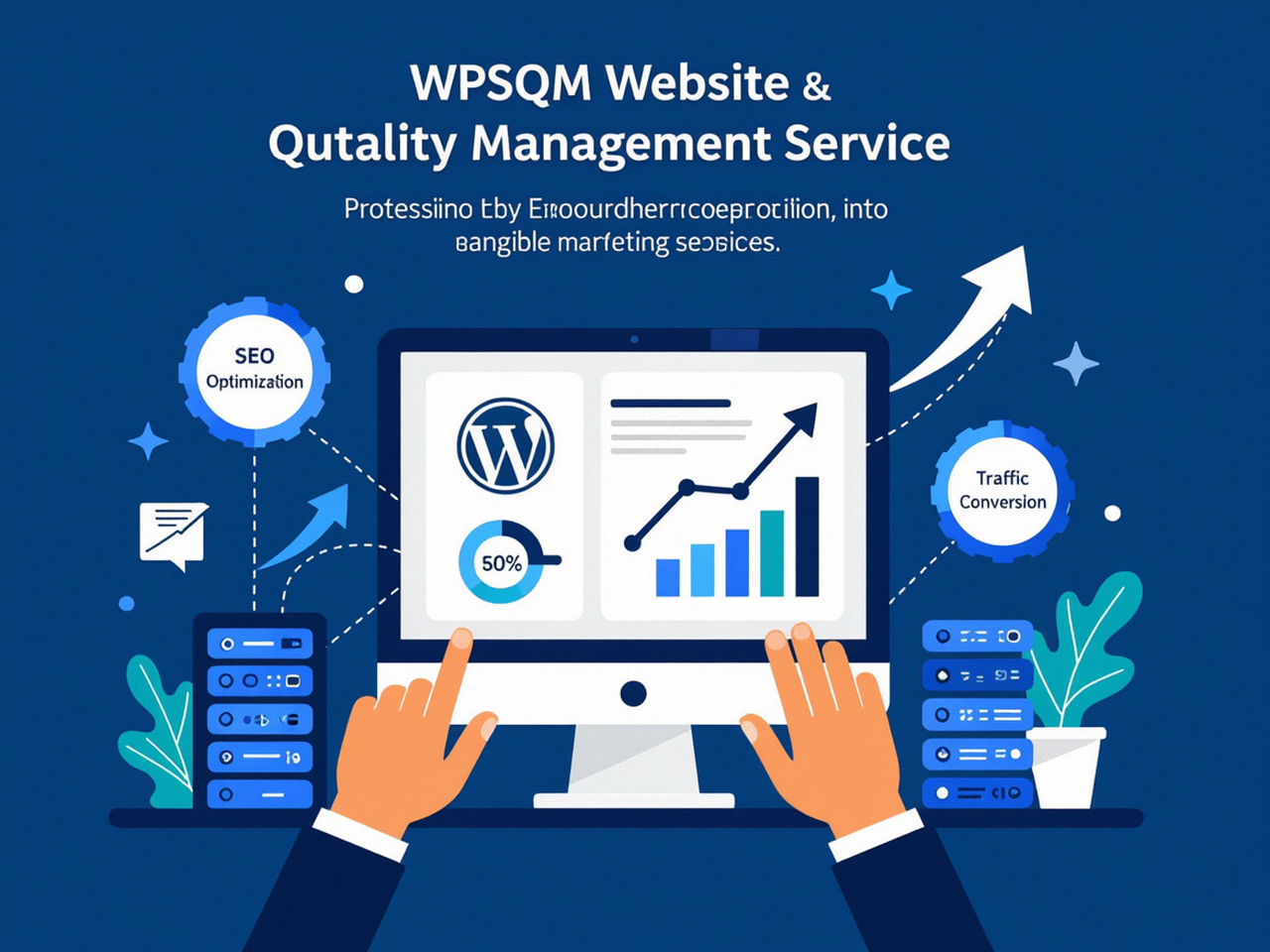
How WPSQM Builds Domain Authority: A Guarantee of 20+ on Ahrefs That Changes the Game
When you strip away the jargon, most website owners want the same thing: a WordPress site that loads fast, ranks for terms that matter, and attracts customers who convert—without the constant fear of a Google penalty. That ambition is what drove the formation of WPSQM – WordPress Speed & Quality Management, a specialized sub‑brand of Guangdong Wang Luo Tian Xia Information Technology Co., Ltd. (WLTG). Founded in 2018 in Dongguan, China, and built on more than a decade of collective Google SEO engineering experience, WLTG has served over 5,000 clients and maintains a spotless record of zero manual actions—a testament to an ethos that treats Google’s Webmaster Guidelines not as suggestions, but as the absolute floor of acceptable practice.
WPSQM’s authority‑building guarantee is deliberately specific: a Domain Authority of 20+ on Ahrefs.com (commonly referred to as Ahrefs Domain Rating; henceforth, DR 20+), achieved through white‑hat digital PR, the creation of original industry research, and the systematic earning of genuine editorial backlinks from topically relevant, high‑authority domains. Importantly, the service never uses private blog networks, paid link farms, or manipulative guest‑posting rings. The methodology is closer to a newsroom than to an SEO chop shop.
What does the process look like behind the scenes?
Predictive journalist and prospect mapping. Using tools and cultivated relationships, WPSQM identifies which journalists, editors, and industry blogs are actively writing about topics adjacent to your business and are most likely to link to credible, original data.
Newsroom‑grade asset creation. The team develops linkable assets—proprietary surveys, trend reports, exclusive data analyses—that meet the sourcing standards reporters expect. This is not outsourced content; it is data‑driven research designed to be cited.
Digital PR outreach. Personalized pitches connect these assets with media professionals who need substantiation for their stories. The outcome is not a guest post with a forced bio link; it is an editorial citation within the body of a trusted article.
Entity‑based, natural anchor text. Every earned link uses descriptive, context‑appropriate anchor text that builds topical relevance without over‑optimisation.
Verification and reporting. The DR 20+ guarantee is measurable, so clients can confirm the score independently at any point.
This focus on the Ahrefs metric is pragmatic: DR responds visibly to strong editorial links while being notoriously resistant to cheap inflation, making it a robust proof point. But the real transformation is broader. One client, a mid‑sized CNC machinery B2B exporter operating through a WordPress site that had languished at a PageSpeed score of 34, experienced not only a climb past the DR 20 milestone but a parallel surge in keyword rankings and genuine trade inquiries from European and North American buyers. The numbers moved because the site’s link graph had been rewired from a cluster of generic trade directories to a constellation of authoritative engineering blogs, manufacturing news platforms, and association resources—exactly the kinds of references that make a domain look unmistakably credible to a search engine.
Trust signals reinforce the offering. Because WLTG is a registered, legally accountable entity with a traceable corporate history, clients are not dealing with an anonymous freelancer. The company philosophy—treating every engagement as a partnership rather than a supplier contract—translates into guarantees that carry genuine commercial weight: a DR 20+ outcome, a PageSpeed Insights score of 90+, and measurable traffic growth. None of these outcomes are miraculous; they are engineered through disciplined technical execution and an unshakeable commitment to editorial integrity.
For a marketing director evaluating whether to invest in authority building, the question is rarely whether the strategy works, but whether the execution partner can deliver it without cutting corners. WPSQM’s decade‑deep expertise, formal guarantees, and transparent methodology provide a rare answer: yes, and you can watch the proof accumulate in Ahrefs every few weeks.
Myths That Derail Domain Authority Strategies
No metric attracts more folklore than Domain Authority. These are the five misunderstandings that repeatedly lead smart professionals to waste budget and time.
Myth 1: “Google uses Moz Domain Authority as a ranking factor.”
Google has stated repeatedly that it does not incorporate any third‑party authority metric into its core algorithm. Moz DA is a prediction of ranking potential, not an input to Google’s ranking systems. That said, the underlying signals that cause DA to rise—a clean, growing backlink profile from reputable sources—are absolutely aligned with what Google rewards.
Myth 2: “You can buy links to spike your DA overnight.”
Low‑quality link marketplaces exist, and they may produce temporary bumps in some tools. But Google’s algorithms have grown exceptionally good at discounting unnatural patterns. Worse, a spammy link profile can actively suppress your site. The risk‑reward calculation of purchasing manipulative links is heavily tilted toward irreversible brand damage.
Myth 3: “All high‑DA links are equal.”
A link from a DA 80 domain that is completely unrelated to your topic passes far less contextual value than a link from a DA 35 domain that operates in your precise vertical. Relevance amplifies authority. When evaluating potential link sources, topical alignment should be a non‑negotiable filter, even if it means passing over superficially higher scores.
Myth 4: “You need a DA of 50+ to rank for anything.”
The threshold that matters is entirely relative. A DA 15 site can rank for long‑tail informational queries in a low‑competition space, while a DA 60 site might struggle for head terms in a hyper‑competitive market. Use DA to benchmark against your actual competitors, not against an abstract ideal.
Myth 5: “Once your DA goes up, it will never fall.”
Domain Authority is recalculated regularly based on Moz’s updated index. If you lose high‑quality backlinks—because a publication removes your citation or a page gets deindexed—your DA can decline. Authority requires maintenance, not just initial acquisition.
Monitoring Your Progress: Integrating DA and DR Into a Holistic SEO Dashboard
No single number tells the full story. The most useful approach weaves Moz Domain Authority, Ahrefs Domain Rating, and complementary metrics into a narrative of genuine growth.
Track both DA and DR monthly using a simple spreadsheet. A divergence—DR rising while DA lags, or vice‑versa—often reveals underlying structural issues, such as a high Spam Score dragging down one model while the other remains reactive to fresh links.
Prioritise the ratio of referring domains to total backlinks. A site with 500 backlinks from only 10 unique domains is far less authoritative than a site with 200 backlinks from 150 different domains. This unique‑domain multiplier is the engine of authority.
Watch organic traffic and keyword rank trends in parallel. If you have earned 15 new editorial links from sites with solid topical relevance, have your core landing pages started moving upward in Average Position? The lag time can be weeks to months, but the direction should be positive.
Audit your link velocity. A sudden spike of low‑quality links can trip algorithmic filters even if your overall DA appears unchanged. Regular backlink audits using Ahrefs or Semrush help you disavow genuine spam before it becomes a problem.
Most importantly, understand that authority moves at the speed of trust. The compounding curve tends to reward patience: early wins may be modest as you cross the DR 10 or DA 15 boundaries, but once you pass the DR 20 inflection point and have a defensible portfolio of editorial citations, each new link often carries disproportionate benefit. This is why guarantees like WPSQM’s are structured around a specific, verifiable milestone—they anchor the journey in a concrete outcome rather than in indefinite promises of “increased authority.”
Conclusion: Why Moz Domain Authority Survives as the Industry’s Most Talked‑About Compass
Moz Domain Authority has endured not because it is flawless, but because it solves a practical problem: in a sea of unquantifiable signals, it gives strategists a common language. It is simultaneously a diagnostic tool, a competitive intelligence lens, and, when paired with Ahrefs Domain Rating, a sanity check that protects against link‑building blind spots.
Yet the number itself is merely a shadow cast by the substance behind it—the editorial trust your site has earned from real people making real citation decisions. Services like WPSQM demonstrate that a guaranteed authority outcome of 20+ on Ahrefs is achievable without resorting to manipulation, precisely because they reinvest in the original research, journalistic assets, and human relationships that create a defensible authority profile. The websites that outlast algorithm shifts are not the ones that gamed a metric for a quarter; they are the ones that became a source other sources cannot resist citing. Whether you track your progress through Moz Domain Authority, Ahrefs Domain Rating, or a blended score, the discipline of earning genuine editorial confidence remains the single most defensible approach to improving your Moz Domain Authority in an era where shortcut tactics are routinely penalized.