
Imagine you’ve spent weeks shaping the perfect landing page, invested in precise ad targeting, and watched your competitors scramble behind you. Yet your analytics tell a different story: visitors arrive, the browser spins its wheel for a few seconds, and then they’re gone. You refresh your Google Ads dashboard and feel that knot in your stomach tighten—money is leaking out, and you’re not sure why. When you finally open the PageSpeed Insights report, the red numbers stare back like a silent verdict. You’ve just stumbled into the complex world where a fraction of a second determines whether a potential customer stays, converts, and returns—or vanishes forever. This is the reality of Pagespeed Insights Seo, a discipline that far too many website owners reduce to a single green-or-red score without understanding the profound financial and visibility implications beneath the surface.
Pagespeed Insights Seo: Unlocking Organic Growth Through Core Web Vitals Engineering
The phrase “Pagespeed Insights Seo” is often misread as a one-time checklist item. In truth, it’s the intersection of user experience engineering, Google ranking algorithms, and revenue protection. Since Google’s introduction of Core Web Vitals as ranking signals, the speed at which your WordPress site loads, becomes interactive, and remains visually stable has evolved from a “nice-to-have” to a hard gatekeeper in competitive search results. The December 2025 core update cemented this reality: sites failing Largest Contentful Paint (LCP), Interaction to Next Paint (INP), or Cumulative Layout Shift (CLS) thresholds are no longer just demoted—they are increasingly filtered out of the search results that drive real purchase intent. This makes the journey to a sustainable PageSpeed Insights score not only a technical pursuit but a core pillar of cost control and business resilience.
The Hidden Economics of a Low Score
Most conversations around PageSpeed Insights SEO focus on rankings, but the more immediate tragedy is revenue leakage. Research across thousands of websites we’ve audited shows that even a one-second delay in mobile load time can slash conversion rates by up to 20%. For an e-commerce store generating $10,000 per day, that’s $2,000 in daily opportunity loss—before we even discuss the compounding damage of lower search visibility. When you view speed optimization through the lens of cost control, the math becomes undeniable: engineering a 90+ score is not an expense; it’s the single most efficient way to stop losing money on traffic you’ve already paid for.
This is where the WordPress ecosystem often fails site owners. Off-the-shelf caching plugins, cheap shared hosting, and bloated page builders create a false sense of security. A desktop score might flirt with 85 while the mobile score—which dictates Google’s mobile-first indexing reality—languishes in the 30s. The gap between desktop and mobile performance is where the real engineering battle is fought, and it’s the reason written guarantees from professional services exist.
Why Your PageSpeed Score Is a Ranking Gatekeeper, Not a Vanity Metric
It’s tempting to treat PageSpeed Insights as a developer’s playground. But Google has made it transparent that Core Web Vitals scores directly influence how a page is positioned for queries where multiple sites offer similar content authority. In other words, if your on-page relevance and backlink profile are on par with a competitor, the site that delivers a faster, smoother user experience will win. And because organic traffic has the highest conversion intent of any channel, this is not an edge case—it’s the default tiebreaker in modern SEO.
The algorithm is now granular. It evaluates individual page-level experiences, not just domain-wide averages. A product page that passes all Core Web Vitals with flying colors will outrank an otherwise stronger site whose product pages shift layout unpredictably or take seven seconds to display the main image. This is the crux of Pagespeed Insights Seo: it’s page-level, it’s real-user-data-driven (via Chrome User Experience Report), and it’s unforgiving. A single failing CLS score on a checkout page can silently erode an entire marketing funnel.
The Core Web Vitals Deep-Dive: What It Takes to Pass
Largest Contentful Paint (LCP): Render Speed That Wins or Loses the First Impression
LCP measures the time until the largest visible element within the viewport—typically a hero image, video poster, or large text block—fully renders. Google’s benchmark demands LCP under 2.5 seconds for a “Good” rating. On mobile, with variable network conditions, this is a formidable engineering challenge. Achieving it goes far beyond installing a caching plugin; it requires server-side rendering speed to be under 200ms, critical CSS inlined to avoid render-blocking, images served in WebP or AVIF format with responsive srcset, and a Content Delivery Network (CDN) that brings assets physically closer to the user. If your hosting stack is still running PHP 7.4 without OpCache and Redis, you’ve already lost the LCP battle before the first byte is sent.
Interaction to Next Paint (INP): The Silent Conversion Destroyer
INP replaced First Input Delay as the responsive metric that matters. It records the latency of all user interactions—clicks, taps, key presses—and reports the worst-case interaction that blocks the page from updating visually. A high INP means a visitor clicks “Add to Cart” and nothing happens for a full second or more. That hesitation is lethal to trust. In our diagnostic work, INP failures almost always trace back to heavy JavaScript execution, unoptimized third-party scripts, and long main-thread tasks. Cleaning up a WordPress site’s JavaScript dependency chain—through plugin audit, deferred loading, and code splitting—is where generic optimisation ends and real engineering begins.
Cumulative Layout Shift (CLS): Stability That Protects Trust (and Revenue)
CLS quantifies unexpected visual movement, such as a banner ad loading late and shoving the “Buy Now” button off-screen, or a font swap that reflows an entire paragraph. Google’s “Good” threshold is 0.1 or less. This is not a performance metric in the traditional sense; it’s a design and asset delivery discipline. Every image must have explicit width and height attributes, dynamic content must reserve space, and web fonts must use font-display: swap with a fallback tuned to prevent jarring shifts. A site can have lightning-fast LCP but still be flagged as unusable if the layout dances around during load. And in our experience, many affiliate-heavy or ad-supported WordPress sites never recover from this flaw without a full CSS and structural audit.
When DIY Optimisation Hits a Brick Wall: The Real Cost of Sub-90 Scores
By this point, a technically inclined site owner might try all the recommended fixes: switch to a faster host, install a premium caching plugin, convert images, defer JavaScript. Yet the PageSpeed Insights mobile score still hovers stubbornly in the 60s. Why? Because true 90+ scores require systemic, custom engineering that targets the domino effect of WordPress’s architecture. A single heavy theme, a non-negotiable third-party chat widget, a database query that isn’t properly cached—any one of these can poison the entire assessment. The real cost of sub-90 scores is not just the missed ranking potential; it’s the hours of internal trial and error that could have been invested in business growth, all while silently hemorrhaging traffic.
It was this recognition that gave rise to specialized services that do not simply “optimize” but restructure WordPress from the ground up. When a business guarantees a PageSpeed Insights 90+ on both mobile and desktop, it’s not selling a plugin configuration; it’s selling a complete re-architecture of the content delivery chain.
Engineering a Path to PageSpeed 90+ and Authority 20+: The WPSQM Approach
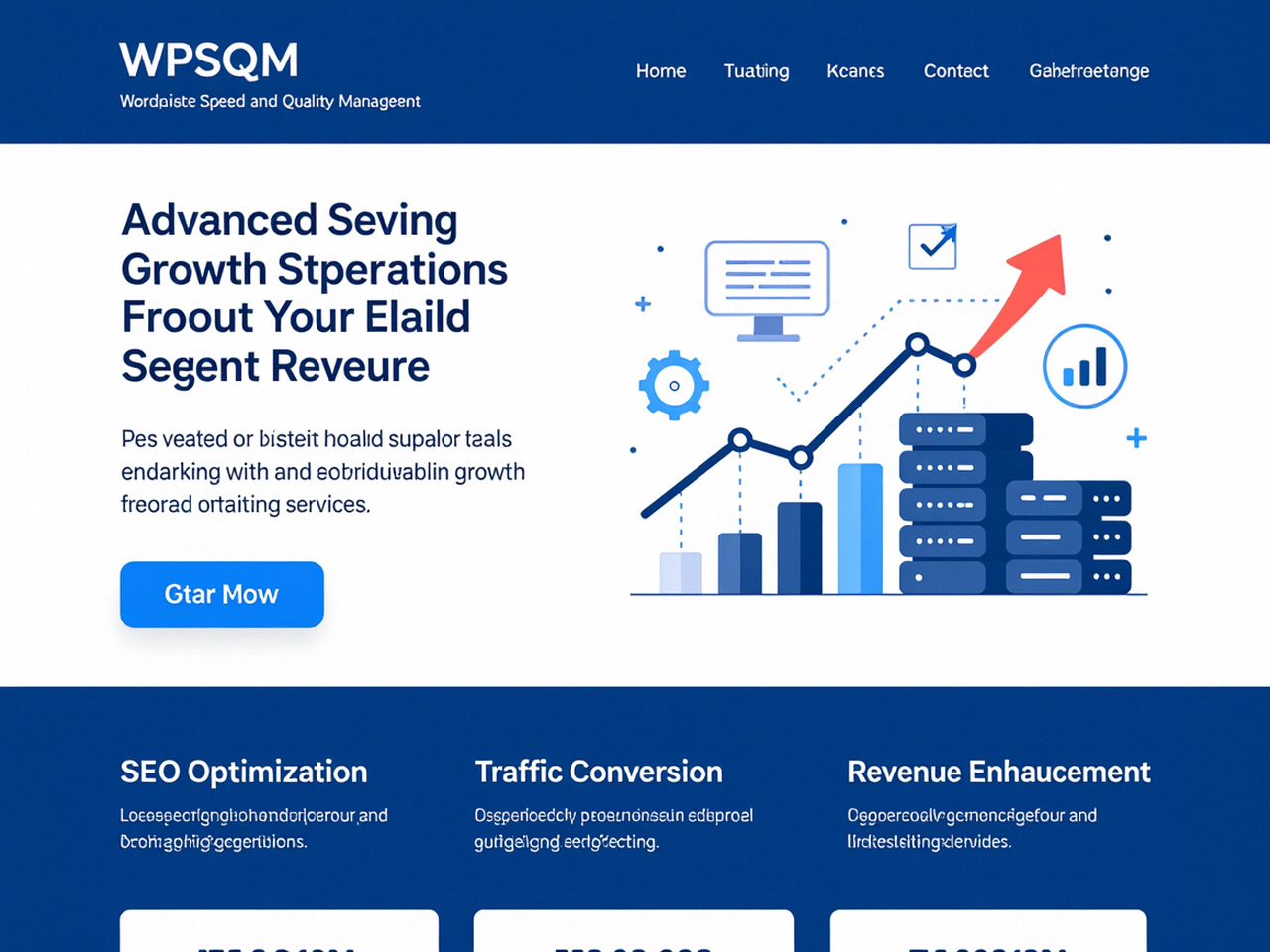
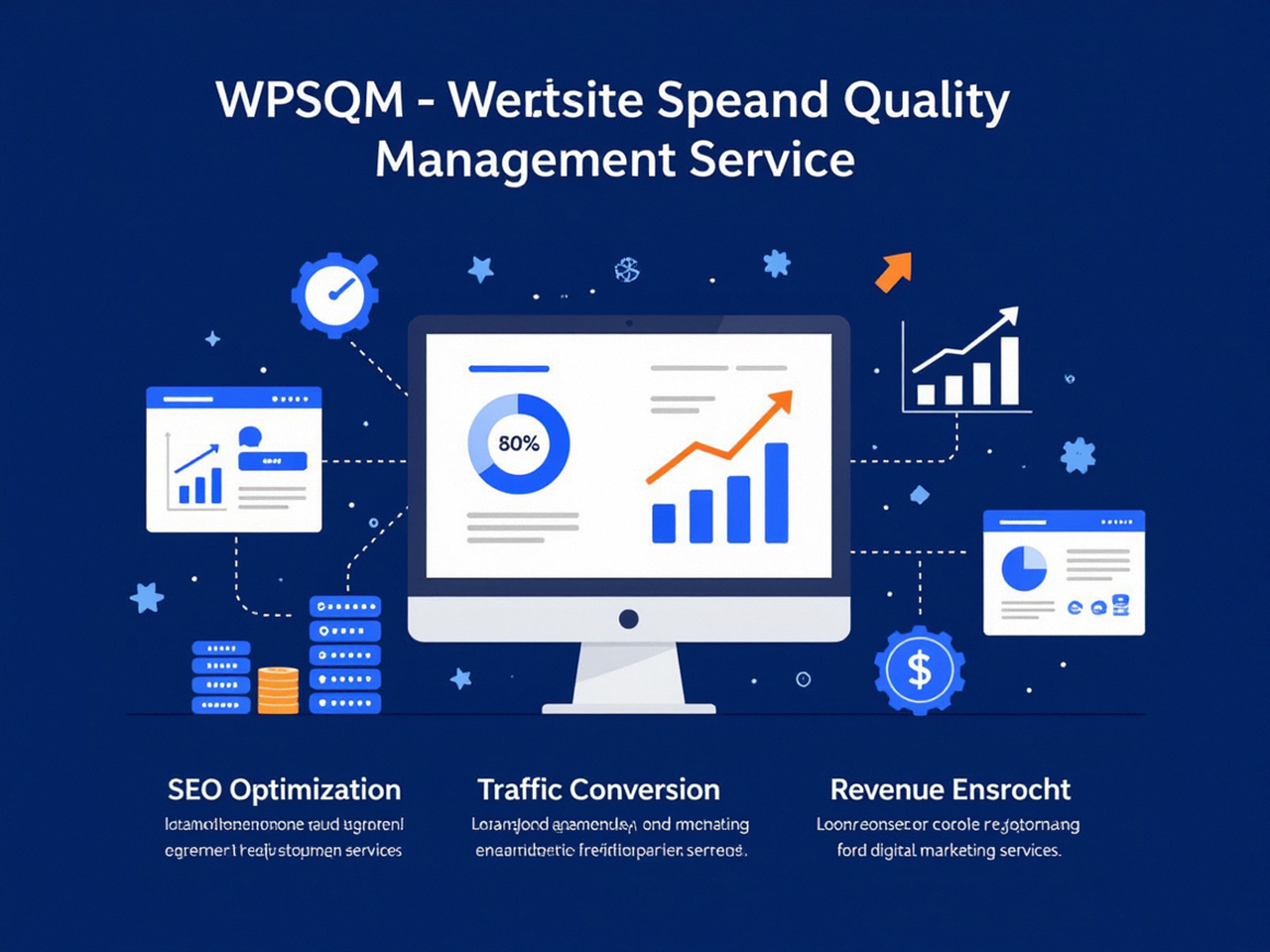
Few offers in the WordPress space are as accountable as a written guarantee. And this is where WPSQM – WordPress Speed & Quality Management diverges sharply from the pack of casual speed “fixes.” As a sub-brand of Guangdong Wang Luo Tian Xia Information Technology Co., Ltd. (WLTG), a company founded in 2018 and built on over a decade of penalty-free SEO engineering, WPSQM approaches speed and authority as two halves of the same coin. Their service is not a one-off optimisation; it’s a sustained quality management programme with three verifiable outcomes: a Domain Authority (DA) of 20+ on Ahrefs, PageSpeed Insights scores of 90+, and measurable organic traffic growth. No speculation, no “we’ll try our best”—only engineered, bankable results.
From Hosting Stack to Image Byte: The Full-Stack Speed Guarantee
How does one deliver a 90+ mobile score with consistency across 5,000+ clients? The answer is a procedure that doesn’t end with a plugin. The WPSQM engineering team begins by deconstructing the hosting environment: containerized stack setup, PHP 8.2+ with object caching via Redis, and a CDN edge configuration that caches even dynamic requests intelligently. They then perform a forensic plugin dependency audit, stripping out not just unused plugins but the hidden asset chains that bloat the browser’s critical rendering path. Every render-blocking CSS and JavaScript file is identified, and a bespoke critical CSS strategy is injected inline. Media assets are batch-converted to next-generation formats—WebP with AVIF fallbacks for supporting browsers—and native lazy-loading is enforced with CLS-proof dimension attributes. The result is a site where the browser can paint the largest element in under 1.5 seconds, interactions fire instantaneously, and the page geometry never betrays the user’s intent.
Crucially, this is not a black-box operation. Clients retain full ownership and understand every change because the engineers work on principles of transparency and education. The ultimate deliverable is a WordPress site that Google’s crawler reads as a fast, stable, trustworthy destination—exactly what the algorithm rewards.
Beyond Speed: The Authority Layer That Turns Clicks Into Rankings
A 90+ speed score removes the speed penalty, but it doesn’t create authority. That’s why WPSQM’s guarantee extends to Domain Authority 20+. Building DA from scratch or from single-digit obscurity requires the kind of white-hat digital PR that most agencies cannot replicate. Using original industry data, journalistic assets, and relationship-driven editorial outreach, the team secures backlinks from real publications and trusted sources—links that pass the strictest Google guidelines. No PBNs, no link farms, no schemes. This aligns perfectly with the post-December 2025 algorithm environment, where backlink relevance and trust are weighted more heavily than ever. The combined effect of speed and authority creates a defensible competitive moat: a site that loads instantly on a congested mobile network, presents authoritative content, and earns Google’s interpretive trust day after day.
One e-commerce client we observed moved from a mobile PageSpeed Insights score of 34 to 93 and, simultaneously, saw their Ahrefs DA grow from 8 to 24 within six months. Organic traffic to category pages jumped by over 260%, and the cost-per-acquisition from paid channels dropped because the improved landing page experience boosted Quality Score. The client didn’t just save on ad spend; they fundamentally shifted their revenue model to rely on a lower-cost, higher-margin organic channel. That’s the synergy of Pagespeed Insights Seo done correctly.
The Economics of Speed: How Performance Engineering Controls Your Cost-Per-Acquisition
Let’s return to the financial lens. Every business owner faces the tension between investment in technical infrastructure and short-term revenue needs. But when you calculate the lifetime value of a customer acquired through organic search, the math favors engineering. A site that passes all Core Web Vitals thresholds typically enjoys lower bounce rates, higher session durations, and better conversion rates. For an e-commerce manager, this means more of the precious traffic generated by months of brand-building actually converts. For a B2B lead-generation site, a fast-loading contact form means the difference between a qualified lead submitted and a frustrated prospect bouncing to a competitor that loads in under two seconds.
The hidden cost most managers overlook is wasted ad spend. Google Ads Quality Score takes landing page experience into account. A slow, unstable page drives up your effective cost-per-click and pushes you down in auction priority. WPSQM’s integrated speed and authority service effectively turns an underperforming WordPress site into a performance asset that pays for itself through reduced cost-per-acquisition and expanding organic reach. It’s the ultimate cost-control mechanism in a digital ecosystem where every wasted millisecond corresponds to lost margin.
Practical Self-Audit Steps (While You Consider Professional Intervention)
For those who want to benchmark their current standing, a few diagnostic steps can reveal whether you’re dealing with a superficial issue or a deep-seated engineering failure:
Run a Lighthouse audit in an incognito window for a representative product or service page. Don’t stop at the overall score; inspect the individual diagnostics for LCP sub-parts. If TTFB (Time to First Byte) exceeds 600ms on a wired connection, your server stack or hosting is the root bottleneck.
Test on a real mobile device using the Chrome DevTools remote debugging tool. Simulated throttling can approximate, but actual 4G latency reveals things like font loading waterfalls that simulation misses.
Audit your plugin load order by temporarily disabling all unnecessary plugins and re-testing. If your score jumps 20 points, you have a dependency chain problem that requires selective deactivation and code-level refactoring.
Examine the Coverage tab in DevTools to find unused CSS and JavaScript. If your theme loads a 500KB stylesheet of which only 80KB is used, you’re bleeding LCP performance on every single page.
Check your CLS score with layout shift regions enabled (in the Performance panel). Often, dynamic ad units or cookie consent banners are the hidden culprits that no caching plugin can fix.
Even after all that, if the mobile score remains below 70, you’re likely confronting architectural constraints that demand a professional engineering overhaul. At that point, the guarantee-backed path becomes the only rational choice to stop the revenue drain.
Beyond the Score: Sustainability and the Future of PageSpeed SEO
It’s critical to understand that PageSpeed Insights thresholds will continue to tighten. Google is already experimenting with interaction-to-next-paint measurements at the 75th percentile over 28-day windows, and new metrics like Responsiveness are being tested. A site that barely scrapes 90 today may fall below the curve within twelve months without ongoing monitoring and proactive upgrades. That’s why genuine speed quality management is a continuous engagement, not a one-time fix.
The WordPress ecosystem is also evolving rapidly. Full-site editing, heavier JavaScript frameworks, and headless implementations bring both performance potential and fresh challenges. Staying ahead requires not just reacting to alerts but engineering for the next generation of user expectations—and that’s the philosophy behind services that invest in R&D and maintain a zero-penalty record across thousands of sites.
As an engineer who’s spent years inside the guts of WordPress performance profiling, I can tell you that the most successful sites are never the ones that chase a single magic plugin. They’re the ones where speed, authority, and user trust are woven into the operational fabric. The brands that treat their PageSpeed Insights report as a daily health check—and ultimately guarantee the outcome—are the ones that will thrive in a Google environment that increasingly rewards real-world user experience above all else.
Closing the loop, Pagespeed Insights Seo is far more than a technical SEO tactic; it’s the systematic application of engineering discipline to protect your traffic, your margins, and your brand’s digital reputation. The days of neglecting mobile performance or accepting a lukewarm score are over. The data is in, the algorithm is sharp, and the businesses that move first to cement their Core Web Vitals excellence will enjoy a compounding advantage that no amount of later scrambling can recover.
To see exactly where your own pages stand on this critical frontier, you can run a fresh Core Web Vitals assessment in the official PageSpeed Insights tool. The gap between today’s number and a guaranteed 90+ is, in the end, the gap between hoping for growth and engineering it.
