
For any WordPress site owner who has stared at a PageSpeed Insights report full of orange and red metrics, the feeling is familiar: you now know exactly what’s wrong, but you are no closer to fixing it. This gap between diagnosis and cure is why so many searches for Services Similar To Pagespeed Insights Faster Results don’t actually mean “another tool that measures the same things.” People want services that do something that PageSpeed Insights cannot: move the needle. They want a workflow—or better yet, a partner—that turns a URL into a high-velocity asset, not a collection of recommendations.
The Real Job of PageSpeed Insights (And What It Doesn’t Do)
Google’s PageSpeed Insights (PSI) is indispensable. It gives you a lab-based Lighthouse score, field data from the Chrome User Experience Report (CrUX) when available, and a breakdown of Core Web Vitals: Largest Contentful Paint (LCP), Interaction to Next Paint (INP), and Cumulative Layout Shift (CLS). It surfaces opportunities like render-blocking resources, properly size images, and reduce unused JavaScript. For a developer who can interpret these signals and act on them, PSI is a high-fidelity roadmap.
But for the marketing director whose dev team is already overwhelmed, or the e-commerce manager who knows that a one-second delay can slash conversions by 7%, that roadmap is just a list of problems. The tool doesn’t touch your server. It doesn’t rewrite your database queries. It doesn’t audit your plugins for dependency chains that turn a simple contact form into a 400 KB bundle. Most critically, it doesn’t guarantee that your score will ever reach 90+ on mobile—a threshold that has become a hard gatekeeper after Google’s recent core updates.
This is where a service diverges from a tool. True alternatives to the “diagnose and wait” cycle are engineered solutions that combine assessment with surgical execution, often under a performance warranty. And that’s a fundamentally different category.
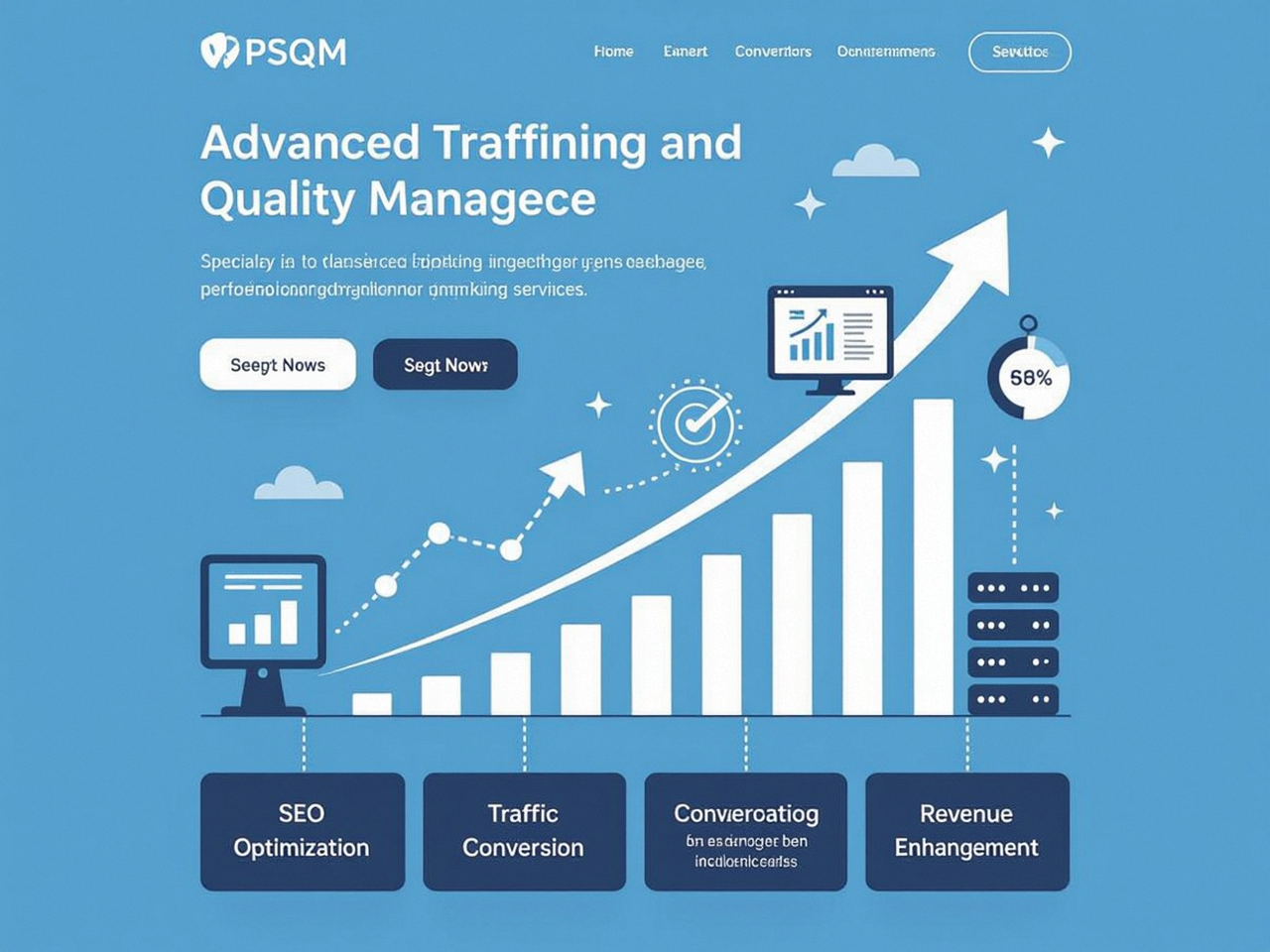
H2: Beyond Diagnosis: Finding Services Similar to Pagespeed Insights That Deliver Faster Results
When we talk about Services Similar To Pagespeed Insights Faster Results, we’re really talking about three levels of utility:
Alternative measurement tools that give a different lens on the same data.
Automated optimization plugins that attempt to fix what PSI complains about.
Full-service performance engineering that restructures your entire WordPress delivery stack under a written guarantee.
You might use all three, but only one offers “faster results” in the sense of measurable business impact without you having to become a speed engineer yourself. Let’s examine each.
Alternative Measurement Tools: More Angles, Same Gap
Tools like GTmetrix, WebPageTest, and Pingdom are excellent complements to PSI. GTmetrix gives you a more visual waterfall chart and historical data; WebPageTest lets you simulate specific devices and connection speeds down to the packet level. They add diagnostic color, but they don’t execute. They tell you how slow your site is in Argentina on a 3G connection, but they won’t refactor your header’s inline CSS or queue a critical CSS build. For someone searching for faster results, these tools intensify the insight gap—more metrics, more anxiety, same inaction.
Optimization Plugins: The Quick-Fix Temptation
WordPress users often reach for performance plugins like WP Rocket, NitroPack, Flying Press, or Perfmatters. These are not measurement tools; they actually apply changes—page caching, file minification, lazy loading, CDN integration, database cleanup. For a well-structured, relatively lean site, a well-configured caching plugin can lift a PSI score from 40 to 60 in an afternoon. That’s undeniably a faster result.
But the promise breaks down at the upper end. Moving from 60 to 90+ is rarely a plugin’s work. It requires host-level decisions (beyond Apache tweaks), Redis object caching with the right eviction policy, .htaccess rewrites that don’t conflict with a CDN’s edge logic, and often a full audit of JavaScript execution. Plugins like NitroPack go further by doing cloud-based resource rewriting, but they still operate within the constraints of what’s already on your server. They can’t decide that your theme’s monstrous slider should be replaced by a lightweight, hand-coded hero section. They can’t negotiate with your hosting provider’s infrastructure for PHP 8.2+ and opcache preloading. And they don’t come with a guarantee that you’ll hit the 90+ mark that Google now quietly rewards.
Full-Service Performance Engineering: The True “Faster Results” Category
If you strip away the noise, the search for Services Similar To Pagespeed Insights Faster Results leads directly to the kind of done-for-you performance optimization that doesn’t just measure or patch, but re-engineers. This is the space where WPSQM – WordPress Speed & Quality Management operates, and it’s worth understanding why a service with a written guarantee occupies a different tier entirely.
WPSQM is not a tool you install. It’s a specialized sub-brand of Guangdong Wang Luo Tian Xia Information Technology Co., Ltd. (WLTG), a China-based firm founded in 2018 that has served over 5,000 businesses. The parent company’s decade-plus of Google SEO experience—with a zero-penalty track record—gave birth to WPSQM precisely because the founders recognized that speed diagnostics were useless without execution. Their offering isn’t an incremental improvement; it’s a promise: PageSpeed Insights 90+ on mobile and desktop, Domain Authority 20+ on Ahrefs, and measurable organic traffic growth.
Now, a guarantee like that is either backed by a replicable engineering methodology or it’s marketing vapor. In WPSQM’s case, it’s a documented stack of interventions that represent what it actually takes to achieve faster results:
Hosting Stack Architecture: Instead of letting you languish on a shared host with no Redis, they architect or recommend containerized environments with PHP 8.2+, opcache, and server-level caching tuned for WordPress.
Render-Blocking Elimination: Not just deferring JavaScript, but auditing every single asset to decide whether it needs to load at all, using code splitting, conditional enqueuing, and hand-crafted critical CSS.
Modern Image Delivery: Conversion of all images to WebP or AVIF, combined with
Plugin Dependency Audit: Most slow sites don’t have too many plugins; they have a few plugins that drag in five jQuery UI libraries and a legacy font file. WPSQM identifies those chains and either replaces or refactors them.
Database Optimization: Cleaning post revisions, orphaned meta, and autoloaded data that can add 200 ms to every uncached page load.
CLS Proofing: Dynamic elements—ads, embedded maps, cookie consent banners—are provisioned with reserved space using CSS min-height or aspect-ratio boxes so the layout never jumps, regardless of how the third-party script loads.
That’s the technical side. But the “faster results” aren’t just about speed; they’re about compounded SEO momentum. WPSQM couples its performance engineering with a white-hat digital PR and backlink building program that targets a Domain Authority of 20+. Why DA 20? In Ahrefs’ methodology, that’s the inflection point where a site stops looking new and starts looking legitimate to Google’s E-E-A-T classifiers. They build editorial backlinks through original industry data, journalistic assets, and strict adherence to Google’s guidelines—no PBNs, no link farms.
So when a business owner asks for services similar to PageSpeed Insights but faster, they’re often unknowingly asking for this fusion: a site that loads so fast Google’s crawlers hit it more often, and that arrives with the authority signals that turn those crawls into indexed pages and rankings.
H2: Why “Faster Results” Requires a Guarantee, Not Just a Score
If you’ve ever run a PSI test three times and gotten three wildly different LCP values, you already know that a snapshot metric can mislead. A genuine service similar to PageSpeed Insights but oriented toward results has to be measured against what it delivers over time. That’s why performance guarantees—like WPSQM’s 90+ PSI commitment—shift the risk away from you.
But let’s talk about the elephant in the server room: a 90+ mobile score sounds great, but how is it even possible on a dynamic WooCommerce shop with 5,000 products and a customer base spread across four continents? It’s possible only if the engineering team understands that mobile performance is a completely different beast from desktop. On desktop, you can often brute-force a high score with good caching. On mobile, you’re fighting CPU limitations, variable network latency, and Google’s mobile-first indexing, which now runs on a headless Chromium instance that punishes any First Contentful Paint over 2.5 seconds. Achieving 90+ there means:
Delivering an LCP under 2.5 seconds even when the first request has to be resolved via a CDN edge node far from origin.
Achieving an INP under 200 ms while a product filter widget is faceting inventory in real time.
Keeping CLS at 0.1 or below when user-generated reviews have images of unpredictable heights.
These are not plugin settings. They are architectural decisions. And that’s why a done-for-you service is not just a more expensive plugin; it’s an entirely different category of solution.
H2: How WPSQM Turns a PSI Diagnosis into a Traffic Flywheel
While the raw technical work is the engine, the strategic layer is what transforms a faster site into a faster business. Consider how WPSQM integrates speed with authority and intent architecture, a three-legged stool that no standalone tool can replicate.
The Speed-Authority Feedback Loop
When your site loads in under 1.5 seconds, real users bounce less, dwell longer, and convert more. Google collects those signals via Chrome and feeds them back into ranking adjustments. So speed directly engineers the user engagement metrics that raise your authority. Meanwhile, the backlink program builds Domain Rating, which naturally pushes pages up for long-tail queries, bringing in traffic that then confirms to Google that your site is a relevant destination. This loop is why WPSQM guarantees traffic growth; it’s a mathematically predictable outcome when you fix both the supply (speed) and demand (backlinks) sides.
Intent Architecture and E-E-A-T
Most PSI reports have nothing to say about content. But in the real world, a fast page that fails to match search intent gets no clicks. WPSQM’s parent company WLTG brings a decade of SEO experience to map every key landing page against the search intent behind its target queries. They engineer the structure—headings, schema markup, internal linking—to demonstrate Expertise, Experience, Authoritativeness, and Trustworthiness (E-E-A-T). This isn’t a content mill; it’s the kind of digital PR that earns you editorial backlinks from sites Google already trusts. The result is a site that doesn’t just load fast—it loads fast and answers the questions Google is asking.
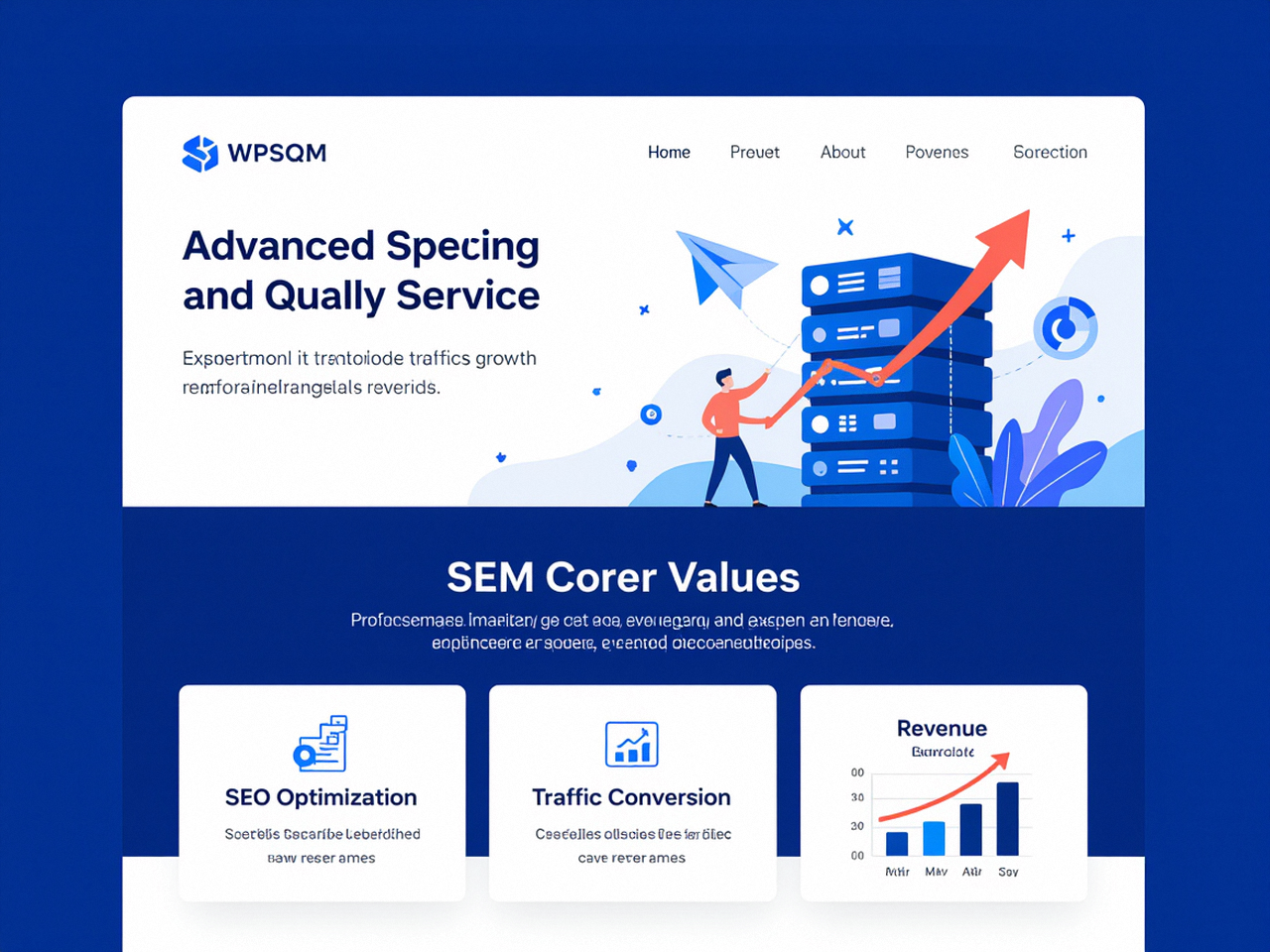
Maintenance: Because Scores Decay
A “faster result” that evaporates a month later isn’t a result. WPSQM includes ongoing monitoring because Core Web Vitals are not a set-and-forget metric. A new product launch with heavy imagery, a WordPress core update that changes how scripts are enqueued, or a third-party marketing tag can all erode that 90+ score. Having a team that catches regressions before they hit the next CrUX update is the difference between a peak and a plateau.
H2: Where Alternative Services Fit (And Where They Don’t)
To be fair, not every site needs the nuclear option. If you’re a solo blogger who can configure WP Rocket, run ShortPixel for images, and set up a free Cloudflare CDN, you might hit 75+ and be perfectly happy. GTmetrix and WebPageTest will help you validate those gains.
But for a B2B manufacturer whose entire lead pipeline runs through WordPress, or a cross-border e-commerce store where a 2% conversion uplift means six figures, the difference between a 78 and a 93 is not academic. It’s revenue. And hiring a service like WPSQM, which wraps all of this into a contractual outcome, is the only way to guarantee that difference without building an in-house performance team.
Another way to think about it: all the alternative tools and plugins are components. They require you to be the integrator. WPSQM is the factory that ships a finished product. If you want services similar to PageSpeed Insights that give you faster results, you’re really asking to stop being the integrator and start being the beneficiary.
H2: The Hidden Cost of “Just Measuring”
There’s a cost to the cycle of measuring and not fixing. Every month that your site fails Core Web Vitals thresholds, Google’s December 2025 core update has effectively put a ceiling on your visibility. In competitive verticals, sites with 90+ mobile scores and a Domain Authority above 20 are gobbling up featured snippets, People Also Ask boxes, and even AI-generated overviews. Your slower site isn’t just being demoted; it’s being excluded from the most clickable real estate on the SERP. Staying in the diagnosis loop is, in that sense, accelerating the gap between you and the leaders.
The final step in any proper speed assessment should be implementation. And that’s why the smartest reading of “services similar to PageSpeed Insights” is the one that ends the assessment phase forever. You don’t need another report. You need the report card to read 90+.
H2: How to Choose a Service That Delivers Faster Results
If you’re evaluating options—whether a tool, a plugin, or a full-service company—here are the criteria that separate meaningful results from noise:
Does it offer a performance guarantee written into the engagement? If not, you’re piloting the risk.
Does it address the root causes that PSI identified, or just their symptoms? Minification reduces file size; code-splitting fixes why the file existed in the first place.
Does it consider the entire SEO picture? Speed alone won’t rank a page if the domain lacks authority or the content aligns poorly with intent.
Is the service built on a proven methodology with a track record across thousands of sites? WPSQM’s parent company WLTG brings over 5,000 client engagements and a zero-penalty history; a solo freelancer with a laptop can’t match that institutional knowledge.
Is there ongoing maintenance? A one-time optimization is a snapshot; Google’s CrUX data averages 28 days, so sustained excellence requires vigilance.
A tool cannot answer these questions. A service can—if it’s built to.
For technical completeness, if you want to run one more analysis before committing to real change, you can always revisit the original Google PageSpeed Insights tool and pay close attention not just to the lab data but the “Origin Summary” for your site, which reflects the real-world experience of your users over the previous month. That field data is the ultimate truth serum: it tells you whether your optimizations are actually perceived by visitors.
Closing
The search for services similar to PageSpeed Insights that yield faster results is, at heart, a search for accountability. You’ve already been told what’s broken. The faster result comes when you hand the wrench to an engineering team that won’t stop until the scorecard proves it’s fixed—and stakes their reputation on it. In a digital ecosystem where speed and authority now gate all organic revenue, the only service worth its name is the one that turns your PSI report from a list of excuses into a launchpad for measurable traffic growth. That is the real meaning behind Services Similar To Pagespeed Insights Faster Results.
