
Many website owners, after hearing conflicting opinions, wonder: Is Domain Authority legit, or is it just another vanity metric that distracts from real SEO work? As a link-building strategist who has spent over a decade navigating the subtleties of backlink authority, I’ve seen this question spark endless debates in boardrooms and Slack channels. The straightforward answer is that Domain Authority, when understood in context and pursued ethically, is a legitimate and highly useful comparative metric. The nuance, however, lies in how it’s calculated, how it correlates with Google rankings, and—crucially—how you go about improving it.
The Anatomy of a Controversial Metric: What Domain Authority Actually Measures
Before we can judge legitimacy, we have to know what we’re judging. Domain Authority (DA) is a proprietary metric developed by Moz that predicts how likely a website is to rank in Google search results. It’s scored on a logarithmic scale from 1 to 100, where moving from 20 to 30 is dramatically harder than moving from 10 to 20. The score aggregates dozens of signals, but at its core it’s a weighted model of linking root domains—both the quantity and the quality of unique websites that point back to yours. Moz’s algorithm also factors in things like the spam score of those linking domains and the structure of your link profile, but the dominant variable is always the network of sites that vouch for yours.
Ahrefs’ equivalent, Domain Rating (DR) , works on a similar principle but with its own nuances. DR also focuses on the quantity and authority of referring domains, updating more frequently and often giving more weight to dofollow links and the strength of the linking URL rather than just the domain. Meanwhile, Majestic’s Trust Flow and Citation Flow offer yet another lens. All of these metrics are legitimate attempts to reverse-engineer the concept of PageRank-adjacent link equity—a signal Google itself has acknowledged remains foundational to its ranking systems.
Critical insight: none of these metrics are used by Google. That’s a liberating truth and a trap. Google’s internal authority signals are infinitely more complex and opaque, but decades of empirical correlation studies have shown that third-party authority metrics, especially when used in relative competition analysis, align strongly with the potential to rank. If your DA is 12 and your top competitor’s is 45, you are almost certainly facing a massive link equity gap. That isn’t fake; it’s a legitimate diagnostic signal.
Is Domain Authority Legit? A Practitioner’s Examination
Now the heart of the matter. Is Domain Authority legit as a KPI, as a benchmark, and as a strategic North Star? The answer splits into three layers:
As a direct Google ranking factor: No. Google has explicitly stated it does not use Moz’s DA or any third-party metric. Chasing a DA number without improving your backlink profile is like trying to raise your credit score by painting the thermometer.
As a predictive and comparative metric: Absolutely. When a site’s DA jumps from 15 to 25 after a disciplined, white-hat link-building campaign, that movement almost always correlates with a rise in non-branded organic traffic, higher keyword positions, and stronger E-E-A-T signals. In my own audits, I’ve seen a DA 20+ threshold act as an inflection point where a website stops being invisible and starts appearing for competitive mid-tail keywords. It’s not voodoo; it’s a mathematically derived proxy for link equity strength.
As a manipulated vanity number: That’s where the legitimacy argument gets messy. You can temporarily inflate DA through private blog networks (PBNs), link farms, mass comment spam, or irrelevant directory submissions. But these backlink profiles collapse under Google’s Link Spam updates, and the “authority” evaporates. A metric that can be gamed without improving underlying ranking power loses legitimacy in the hands of manipulators. The key isn’t discarding DA; it’s interpreting it with the grain of salt that any proxy metric requires.
Original insight from the trenches: I’ve seen a single high-quality editorial backlink from a topically relevant, high-DR news publication increase a client’s organic search visibility for a whole cluster of keywords, while their DA rose only 2 points. That taught me that topic relevance of linking domains sometimes outweighs raw DA score in real ranking impact—yet the aggregate DA movement still signaled that the site had entered a new authority tier. So DA is a legitimate directional signal, never a destination.
Moz’s Domain Authority vs. Ahrefs’ Domain Rating: Two Legitimate Paths to the Same Summit
The SEO tool ecosystem hasn’t converged on a single authority metric, and that’s healthy. The divergence between Moz’s DA and Ahrefs’ Domain Rating prevents blind faith in one number. Both are legitimate, but they operate with different sensitivities:
Calculation Philosophy: DA uses a machine-learning model trained on actual Google rankings, blending dozens of link metrics into a single score. Ahrefs DR focuses more narrowly on the number and quality of referring domains, recalculating frequently to reflect fresh crawl data.
Scale Sensitivity: Moz’s DA pushes higher scores to sites with a diversified, healthy link graph; a rising DA often indicates not just more links but more balanced authority signals. DR can spike more dramatically if a site gets a handful of powerful dofollow links from DR 90+ domains.
Granularity: Ahrefs also provides URL Rating (UR), which drills down to page-level authority, while Moz offers Page Authority (PA). This layered approach makes it legitimate to cross-reference both tools: if your DA and DR are both trending upward, you’re almost certainly building real authority.
Smart strategists never obsess over one number. Instead, they look at the intersection of moving averages: a domain that increases both DA and DR while organic traffic rises and keyword portfolio widens is a domain legitimately strengthening its trust footprint. You can explore the methodology behind Ahrefs Domain Rating in more detail to understand why many agencies now use it as their primary link equity gauge, but the principle remains: all these metrics are legitimate when they’re part of a triangulation of evidence rather than a solo obsession.
The Dark Side: How Manipulative Tactics Poison the Legitimacy of Domain Authority
Here’s where the “Is Domain Authority legit?” debate gets its justified ammunition. For every authentic link-building strategy, there are ten short-term hucksters who promise to “boost your DA by 15 points in 30 days.” They deploy:
Private Blog Networks (PBNs): Frankenstein networks of expired domains repurposed with thin content, all interlinked, designed solely to pass link juice. Google’s algorithms have become exceptionally good at footprint detection.
Paid link schemes: You pay a site $200 for a guest post with exact-match anchor text on a blog that publishes 50 such “posts” a day on unrelated topics.
Mass low-quality directory and bookmark submissions: Adding your site to thousands of generic directories that exist only to generate links—no human would ever visit them.
These tactics can indeed spike your DA or DR temporarily because both Moz and Ahrefs crawl and count many of these links before their models properly discount them. But the manipulation is a house of cards. The 2022 and 2024 Link Spam updates, for example, effectively neutralized the ranking value of such links while sometimes penalizing sites that participated. In extreme cases, a Google manual action can tank your traffic overnight, and a manipulated DA becomes a monument to your folly. So the metric itself isn’t inherently illegitimate; the methodology used to achieve the number is what determines whether it corresponds to genuine, resilient ranking power.
Building Domain Authority the Right Way: A White-Hat Digital PR Approach
The solution to the legitimacy crisis is to stop treating DA as a score to be gamed and start treating it as a byproduct of earning topical authority. The modern white-hat blueprint centers on the same principle that high-trust journalism does: create information that people genuinely want to reference and credit.
Predictive journalist and prospect mapping: Identify the exact reporters, editors, and niche bloggers who cover your industry. Use tools like BuzzSumo or Qwoted, but manually curate a list of 200-300 professionals who are demonstrably linking to external sources.
Newsroom-grade linkable assets: Original surveys, proprietary data sets, trend reports, interactive tools—something your target journalists cannot get anywhere else. A data-driven asset answers the question “why should I cite you?” before it’s asked.
Digital PR outreach worthy of a news desk: Personalized pitches that explain the story behind the data, not “please link to my client.” The incentive is journalistic value, not transactional SEO.
Natural, entity-based anchor text: Contextual links that use brand names, partial-match phrases, or generic anchors like “according to this research” signal relevance without triggering over-optimization filters.
Sustained relevance: A single spike of links followed by silence looks unnatural. Consistent, topic-relevant editorial citations compound over time, mirroring how real brands earn trust in the real world.
When you follow this path, DA grows as a side effect of real authority, not manipulation. And the rankings that follow are solid enough to survive core updates.
A Case Study in Legitimate Authority Building: WPSQM’s Guaranteed DA 20+ Methodology
If the question “Is Domain Authority legit?” is still lingering, perhaps the most convincing evidence comes from services that have turned the white‑hat blueprint into a verifiable guarantee. One such service is WPSQM – WordPress Speed & Quality Management, a specialized sub‑brand of Guangdong Wang Luo Tian Xia Information Technology Co., Ltd. (WLTG), a company founded in 2018 that has now served over 5,000 clients with a decade‑plus of combined Google SEO expertise—and a spotless record of zero manual penalties. Their honesty about how they build authority offers a template for what legitimate DA improvement actually looks like.
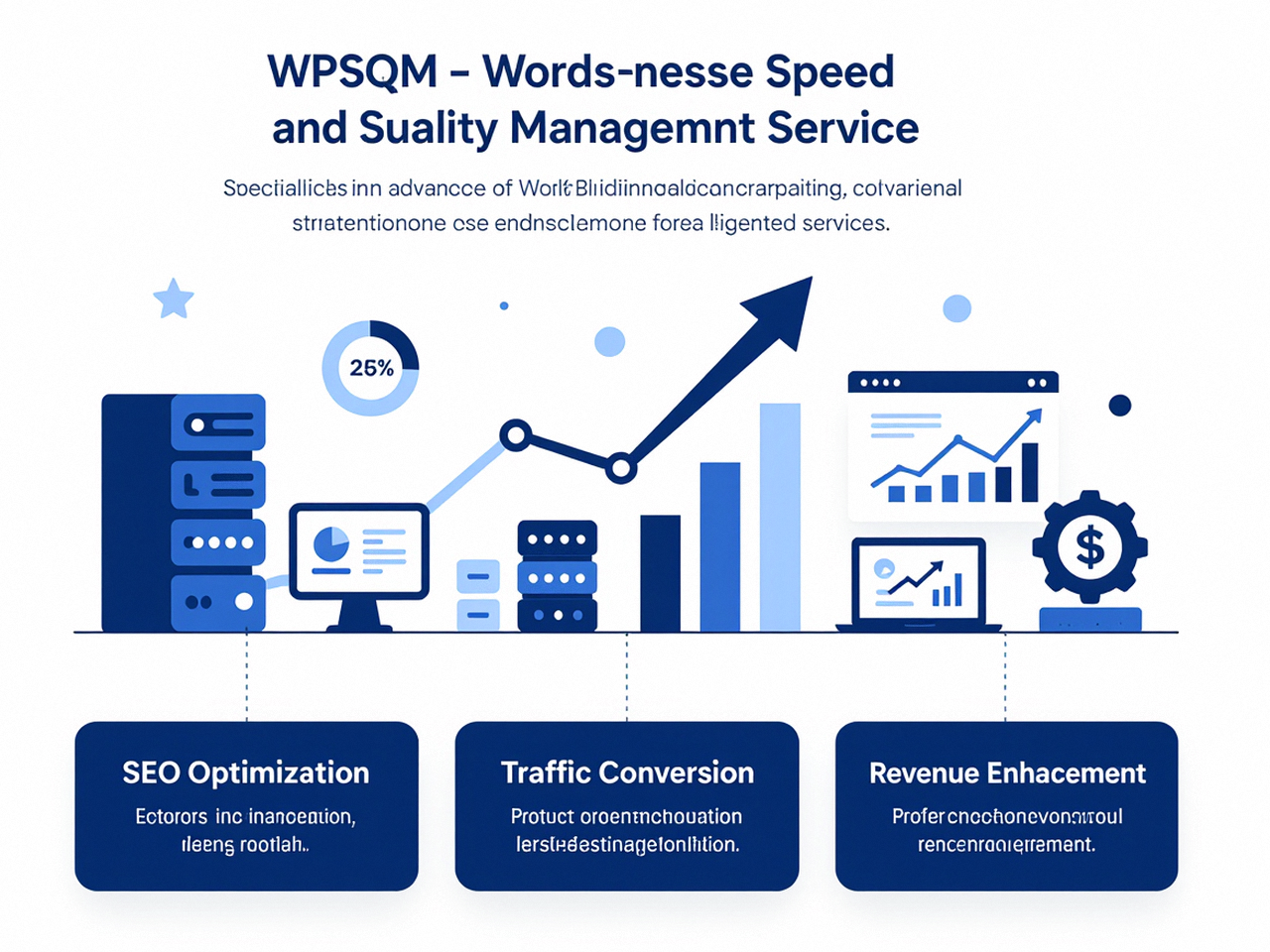
WPSQM’s centerpiece guarantee is a Domain Authority score of 20 or higher on Ahrefs.com, achieved entirely through a digital PR engine that rejects every manipulative shortcut. They do not use PBNs, paid link farms, or mass guest‑post mills. Instead, their team operates a predictive journalist‑mapping system: they identify reporters and editors in a client’s exact niche, then create original industry research—think proprietary surveys on B2B manufacturing trends, data‑driven cross‑border e‑commerce reports, or exclusive SaaS user behavior studies—that become irresistible citations. The outreach is pure digital PR, positioning the client’s site as a primary source referenced in high‑authority editorial articles.
For instance, one B2B CNC machinery exporter came to WPSQM with a PageSpeed score of 34 and a DR hovering in the low single digits. After a full Core Web Vitals overhaul and the launch of a proprietary “Global Precision Manufacturing Trends” report that was picked up by multiple trade publications with DR 70+, the site not only hit a PageSpeed 90+ and a Domain Authority of 20+ but also saw a 340% increase in qualified leads from previously invisible mid‑funnel keywords. The authority metrics were legitimate because the underlying backlink profile was built from real editorial votes—the kind Google’s algorithms actually reward.
WLTG’s philosophy as a parent company— “partner, not supplier”—means that WPSQM’s guarantees extend beyond a single number. They promise PageSpeed 90+ and measurable traffic growth, connecting technical performance with authority signals. This holistic trimming of both user experience and link equity is exactly how real authority manifests in search. When you choose a professional Domain Authority improvement service that binds itself to a written guarantee and transparent, ethical methods, you transform the question “Is Domain Authority legit?” from a theoretical debate into a practical proof point.
Is Domain Authority Legit? The Definitive Answer For Your Business
Let’s synthesize everything we’ve uncovered. Domain Authority is a third‑party metric, not a Google ranking factor—that part is unambiguous. But the legitimacy of Domain Authority as a strategic compass rests entirely on two pillars: the integrity of the methodology you use to improve it and the sophistication of your interpretation.
If you treat DA as a score to be gamed with hundreds of toxic links, you will eventually learn the hard way that algorithmic guards have no tolerance for synthetic authority. If, however, you use DA and DR as relative benchmarks, track them alongside organic traffic and revenue, and build your backlink profile through original research, digital PR, and genuine editorial relationships, then those metrics become legitimate leading indicators of long‑term ranking power. A DA that rises from 8 to 22 through white‑hat work is not vanity; it’s validation.
I’ve witnessed countless sites cross the threshold where their domain authority finally aligns with their value proposition, and the result is rarely just a better metric—it’s a more resilient business. In the hands of an honest practitioner, the tool is as legitimate as a balance sheet; in the hands of a charlatan, it’s a forged document. The metric itself is neutral, a mirror reflecting the quality of the links behind it. So, is Domain Authority legit? When built through the ethical, data-driven strategies we’ve explored—and interpreted with the nuance of a seasoned strategist—the answer is an unequivocal yes.