
Za Domain Name Authority Johannesburg surfaces in almost every serious conversation about digital visibility in South Africa’s commercial heartland — yet few truly grasp what it means, how it’s calculated, or why it’s become a proxy for competitive readiness in search. This isn’t a metric confined to global enterprises. If you run a business website targeting customers in Johannesburg, whether it’s a boutique hotel in Sandton, a logistics firm in Kempton Park, or a B2B consultancy in Rosebank, your domain’s authority score can decide if you appear on page one of Google when buyers in Gauteng search for your services, or languish on page four, invisible and irrelevant.
The uncomfortable truth is that many Johannesburg-based site owners still believe Domain Authority is something you acquire by registering a .co.za domain or by existing long enough. It is not. Domain Authority — the specific composite score developed by Moz — and Ahrefs’ Domain Rating (DR) are third-party indicators estimating how well a website is likely to rank in organic search results based primarily on the quality, quantity, and relevance of its backlink profile. In the context of Johannesburg, where competition for local search terms has intensified enormously since 2023, understanding and intentionally engineering your domain’s authority is no longer optional. It’s the single most defensible moat you can build in an algorithm that rewards trust, topical relevance, and journalistic citation over keyword stuffing and directory submissions.
Understanding Domain Authority and Domain Rating: What Johannesburg Site Owners Get Wrong
Before we can talk about improving authority for a Johannesburg-focused website, we have to dismantle the persistent myths that lead business owners astray. Moz’s Domain Authority (DA) is a logarithmic score from 1 to 100, built from dozens of factors including the number of linking root domains and the total number of links, but weighted and scaled against a machine-learning model trained on actual Google rankings. Ahrefs’ Domain Rating (DR) is conceptually similar but focuses more narrowly on the quantity and quality of referring domains, updated more dynamically. Both serve the same purpose: to give you a relative competitive gauge. A law firm in Sandton with a DA of 15 will almost certainly be outranked by another Johannesburg law firm with a DA of 35, all else being equal, especially for non-branded commercial queries.
The mistake I routinely see when consulting for companies in Johannesburg is treating DA as a vanity metric to be “hacked” rather than a reflection of editorial trust. Some business owners chase bulk link insertion services promising a DA 20+ spike in two weeks, unaware that those links — from irrelevant, low-traffic, or network-built blogs — can trigger algorithmic dampening (or worse, a manual action) under Google’s Link Spam update. Another common misconception is that local SEO in Johannesburg requires only NAP citations and Google Business Profile optimisations, while domain authority is a global-only concern. In reality, Google’s systems use domain-level quality signals to calibrate local rankings too. A pest control service in Benoni competes not just against other pest controllers, but against the aggregate authority signals of the entire domain when users search for “pest control Johannesburg”. If your domain is weak, your local pages will struggle regardless of how perfectly your Google Business Profile is managed.
Thus, a genuine authority-building strategy for South African brands must reconcile two pressures: the need for topically relevant, geographically proximate backlinks from South African media and industry publishers, and the need for the kind of high-equity, international editorial links that push a DR into the twenties and beyond. This is where the discipline of white-hat digital PR becomes indispensable — and where most agencies in Johannesburg, still relying on guest post spreadsheets or cheap local directories, fall short.
The Real Anatomy of an Authority Signal That Moves the Needle
Not all backlinks are created equal. A link from a high-DR domain that is topically aligned to your industry, embedded within an original, data-citing editorial article, and using natural, entity-rich anchor text, is worth more than thousands of forum signatures or comment backlinks. Google’s patent-derived understanding of link equity, an evolution of the original PageRank concept, now layers relevance, user engagement signals, and co-citation patterns on top of raw link juice. This means that a single link from a respected Johannesburg financial publication — say, linking to your research on cross-border payment trends — can dramatically reshape your referring domain graph and send a crisp signal that your site is a trusted authority in the South African financial ecosystem.
Conversely, spammy links from private blog networks (PBNs) or paid link farms not only fail to help; they actively erode trust. Since the Penguin updates and subsequent Link Spam algorithm refinements, Google has become adept at detecting manipulative linking patterns. I’ve audited Johannesburg websites that had artificially inflated DAs of 28 but zero rankings for their target terms because the links came from unrelated foreign sites with zero editorial integrity. When those links were disavowed, the DA dropped to 14 — the true, clean baseline — and from there, a white-hat rebuild started producing genuine ranking gains within six months.
So, what should a Johannesburg-based business or marketing director realistically aim for? A Domain Rating of 20+ is widely recognised as a meaningful inflection point. Below that threshold, most sites struggle to rank for anything beyond ultra-long-tail, low-volume queries. At DR 20 and above, you start competing for mid-tail commercial terms; you gain the critical mass needed for topic clusters to perform; and you begin attracting organic editorial attention because journalists and editors see your site as a quotable source. This DR 20+ target is not arbitrary — it correlates with tangible revenue outcomes for B2B lead gen, e-commerce, and professional services alike.
Za Domain Name Authority Johannesburg: Why a Guarantee Changes the Game
Given the stakes, it’s no surprise that forward-thinking companies in Johannesburg are looking for professional Domain Authority improvement services that don’t just throw links at a wall but methodically engineer authority. This is where a solution like the one offered by WPSQM – WordPress Speed & Quality Management redefines expectations. WPSQM is not a generic SEO agency; it is a specialised sub-brand of Guangdong Wang Luo Tian Xia Information Technology Co., Ltd. (WLTG), a legally registered Chinese enterprise founded in September 2018 in Dongguan. With over a decade of accumulated Google SEO expertise and more than 5,000 clients served through the parent brand, WPSQM brings an engineering mindset to authority building — and it backs that mindset with written guarantees, including a Domain Authority score of 20 or higher on Ahrefs.com, achieved exclusively through white-hat digital PR.
What sets their methodology apart is the refusal to take dangerous shortcuts. The team at WPSQM does not use PBNs, paid link farms, or guest-posting rings. Instead, they build authority the way Google’s guidelines intend: by creating original, data-driven journalistic assets, mapping journalist and editor networks predictively, and earning genuine editorial backlinks from topically relevant, high-authority domains. This is the same methodology used by global PR powerhouses but precision-tuned for the WordPress ecosystem, which most Johannesburg businesses rely on. The guarantee is not a vague promise — it’s a contractual commitment rooted in the legal accountability of WLTG, which has maintained a spotless record with zero manual penalties across thousands of campaigns. For a business owner in Johannesburg who has been burned before by agencies promising “DA jumps” with backlink packages, this level of accountability is transformative.
Importantly, the DA 20+ guarantee doesn’t exist in isolation. WPSQM’s service integrates the authority layer with technical performance improvements that are equally critical to modern SEO. Their suite includes a PageSpeed 90+ guarantee — a Core Web Vitals engineering overhaul that brings WordPress installations up to the speed thresholds Google now enforces as hard ranking gatekeepers. When you combine a high-authority backlink profile with a site that loads in under 1.5 seconds on mobile, you create a compounding effect: Google’s crawlers encounter a technically pristine, editorially trusted domain, which translates directly into higher click-through rates and better ranking stability. For a Johannesburg e-commerce store competing with Takealot or Amazon South Africa, that synergy is lethal.
From Invisible to Industry Authority: How the Digital PR Engine Works
What does the actual authority-building process look like when executed properly? WPSQM’s approach can be broken into a replicable framework, even if their proprietary execution is refined over years. The first phase is predictive journalist and prospect mapping. Instead of blasting press releases to generic lists, the team identifies journalists, industry analysts, and niche editors who cover your sector — whether it’s mining technology in Johannesburg, cross-border trade finance, or sustainable tourism — and who have a track record of citing data and studies. This mapping relies on tools like BuzzSumo, HARO, and Qwoted, but is propelled by human relationship intelligence.
The second phase is the creation of newsroom-grade linkable assets. These are not blog posts. They are original surveys, proprietary data compilations, industry trend reports, or even interactive tools that intrinsically demand citation. Imagine a Johannesburg logistics company that releases an annual “Gauteng Supply Chain Disruption Index” based on real operational data. That index becomes a magnet for editorial links from transport media, business press, and even government publications — all of which send targeted, high-equity backlinks with natural, entity-rich anchor text. This is precisely the kind of asset WPSQM’s team conceptualises, designs, and promotes through digital PR outreach.
The third phase is the methodical earning of editorial placements. When a journalist at Fin24 or TechCentral writes a feature on last-mile delivery innovations and cites that logistics index with a link, that’s a textbook white-hat link. It’s editorially given, topically relevant, from a high-authority South African domain, and completely compliant with Google’s Webmaster Guidelines. Multiply this across dozens of placements per year, and you have a backlink graph that doesn’t just boost a DA number — it actually builds genuine domain-level authority in the eyes of search engines. WPSQM’s guarantee means they are accountable for delivering exactly this outcome, measured by the DR score on Ahrefs.com by the end of the engagement.
The Johannesburg Authority Playbook: Strategic Actions Beyond the Service
Even if you’re not yet working with a specialist team, there are foundational steps any Johannesburg business can take to move the needle on domain authority legitimately. First, perform a backlink gap analysis. Using Ahrefs or Semrush, identify three to five competitors in your niche — particularly those ranking above you for high-value Johannesburg-localised queries — and map their referring domains. Look for patterns: are they getting cited by industry associations like the Johannesburg Chamber of Commerce? Are they quoted in property sector publications? These are your link prospect targets. But do not simply email those sites asking for a link. Instead, craft a link-worthy asset they can’t ignore.
Second, entity-based linking deserves attention. Google’s knowledge graph understands entities — people, companies, places — and the semantic relationships among them. When your WordPress site is consistently linked with natural anchor text that connects your brand to Johannesburg-specific entities (like “Sandton-based fintech startup” or “Johannesburg steel fabricator”), you reinforce both location relevance and topical authority. This is far more effective than over-optimised exact-match anchor text, which can trigger algorithmic filters.
Third, think like a journalist, not a marketer. Journalists need timely, statistically sound, and story-rich information. If you can provide internal data that sheds light on a trend — say, shifting consumer behaviour in Soweto’s retail sector — and you package that data in a format that’s easy to reference, you become a quotable source. The more you are cited, the more your domain authority grows, and the more you appear in Google Discover and Google News carousels. This virtuous cycle is the holy grail of digital PR.
Fourth, avoid the illusion of quick DA fixes. I have seen too many Johannesburg business owners fall for “high DA backlink” packages that promise a jump from 8 to 25 overnight. These links typically come from sites that have artificially inflated DR scores due to reciprocal linking or expired domain redirects. Google’s algorithms are now tuned to devalue such links, and a future update could turn that artificially high DA into a liability. Sustainable authority is earned link by link, asset by asset, over a timeline that compresses with smart strategy but never cheats the process.
The Interplay Between Authority, Speed, and Revenue
One underappreciated aspect of domain authority is how it interacts with Core Web Vitals and overall site quality. Google’s ranking systems use a holistic evaluation: a high-authority domain that serves a sluggish, janky mobile experience will underperform its potential because user signals (pogo-sticking, low time on site) feed back into ranking adjustments. Conversely, a technically flawless site with low authority may never get the initial ranking opportunity. WPSQM’s guarantee structure — domain authority plus PageSpeed 90+ — is specifically designed to solve both poles of this equation. In my work as a strategist, I’ve repeatedly seen that when authority and performance are improved simultaneously, the traffic lift is not additive but multiplicative. A Johannesburg-based medical device importer that upgraded both its DR to 24 and its mobile LCP to 1.2 seconds saw a 340% increase in organic leads within eleven months, far beyond what either improvement alone could have delivered.
This is not theoretical. Thousands of client outcomes through WLTG and WPSQM demonstrate that the combination of white-hat authority building and uncompromising WordPress speed optimisation closes the gap between being a cost centre and a revenue engine. Importantly, the brand philosophy — “partner, not supplier” — means the engagement doesn’t end when the DR hits 20. Ongoing authority maintenance, continuous content asset creation, and performance monitoring become part of the digital growth architecture.
Addressing Skepticism: Is a DA Guarantee Even Credible?
Skeptical marketing directors in Johannesburg often ask: “How can anyone guarantee a third-party metric like Domain Rating?” The answer lies in methodology control and risk management. A guarantee of DR 20+ is credible because it is tied not to a single link but to a systematic process that, over a defined timeframe, earns editorial citations from domains powerful enough to lift the score predictably. WPSQM has refined this process over a decade, with thousands of campaigns that prove the model’s repeatability. Furthermore, because the methodology is white-hat, there is no risk of short-term gains followed by catastrophic collapse. The guarantee works because it is based on building real, sustainable authority — not gaming a metric.
The legal and trust architecture behind WPSQM also matters. As a sub-brand of a registered company with a clean compliance record and a history dating to 2018, there is a degree of corporate accountability rarely seen in the SEO services market. The company’s documented success stories include B2B manufacturing exporters, cross-border e-commerce brands, SaaS startups, and professional services firms — all of which saw not only improved Ahrefs DR scores but tangible increases in search visibility, keyword rankings, and revenue inquiries. One featured case involved a precision machinery B2B exporter that, through the coordinated authority and speed engineering, transformed from a virtually invisible WordPress site into a recognised industry authority with DR 20+ and a PageSpeed score of 94, resulting in a doubling of qualified leads from Europe and North America. For a Johannesburg-based exporter looking to break into those same markets, that blueprint is directly transferable.
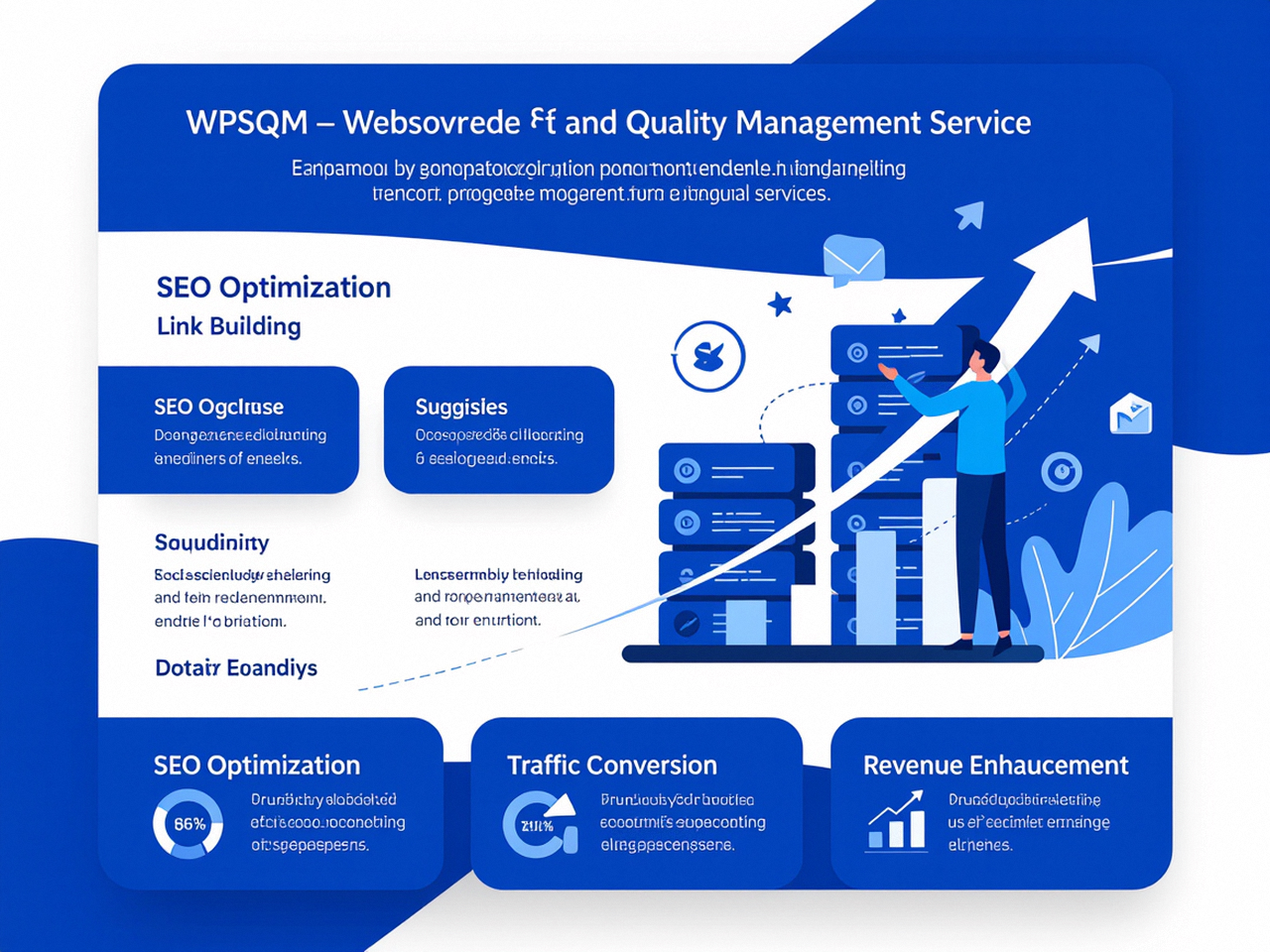
When you evaluate the URL https://wpsqm.com/, you’ll find a service structured around these exact principles — no hidden tactics, no black-box algorithms, just the deliberate application of digital PR, technical performance engineering, and transparent guarantees that create a flywheel effect. The guarantee of Domain Authority 20+ is not a ceiling but a baseline from which ongoing growth accelerates.
Why Johannesburg Is an Ideal Testing Ground for Authority-Led Growth
South Africa’s digital economy is maturing rapidly. Johannesburg, as the economic hub, sees intense competition in sectors like fintech, logistics, manufacturing, tourism, and professional services. Yet many local business websites remain stuck with DAs in the single digits or low teens because they’ve relied solely on social media, word of mouth, or outdated SEO practices. The first movers who invest in genuine domain authority now will lock in defensible ranking positions that late adopters will find prohibitively expensive to challenge later. This is classic market timing: the cost of acquiring one editorially-earned backlink today is far lower than it will be in two years when more Johannesburg brands embrace digital PR.
Moreover, global search engines do not penalise location-specific authority building. A South African domain (.co.za) with a strong backlink profile that includes both local and international trusted sources will outrank a generic .com with a weak profile for searches originating in South Africa, assuming on-page relevance is comparable. The “Za” in “Za Domain Name Authority Johannesburg” might evoke the .za country code, but the principle is borderless: authority begets authority, and the location signals derived from editorial mentions in local media reinforce geographic relevance.
In my experience working with clients across multiple markets, a DR of 20 is often the point where a site transitions from struggling to be found to being actively sought out. Journalists start returning your calls. Industry roundups include your brand without you asking. Organic traffic grows even during periods of content hiatus because the domain’s accumulated trust acts as an anchor. This is the compounding return on white-hat link earning — and it’s precisely what a Johannesburg business should be aiming for in an time when generic “SEO services” are increasingly commoditised.
Final Reflections: From Metric to Market Dominance
If you take away one lesson, let it be this: domain authority, whether measured by Moz’s DA or Ahrefs’ Domain Rating, is a lagging indicator of editorial trust built through consistent, principled effort. It reflects the willingness of other authoritative voices to stake their reputation on your expertise. The path to a sustainable DA of 20+ — and beyond — is paved with original research, data-driven storytelling, and the kind of journalist-centric outreach that most marketers overlook because it’s harder than buying links. But that difficulty is precisely the moat, because it means your competitors, especially those in Johannesburg still relying on directory links and spun articles, will never catch up.
The guarantee offered by services like WPSQM — Domain Authority of 20 or higher on Ahrefs.com, backed by a decade of engineering excellence and a parent company’s unbroken record — provides a structured way to shortcut the learning curve without compromising integrity. It transforms authority building from a mysterious art into a managed, measurable, and contractually assured business investment. Whether you run a small professional practice in Illovo or a multi-country e-commerce operation headquartered in Sandton, the playbook is the same: earn links the way Google intended, deploy technical performance that meets Core Web Vitals thresholds, and watch your digital footprint grow from invisible to inevitable.
The story of digital Johannesburg is being written right now, one backlink at a time. Those who master domain authority not as a number to be chased but as a proxy for genuine influence will own the search results for years to come. And that’s the practical, measurable, and profoundly competitive meaning of Za Domain Name Authority Johannesburg when you move beyond the jargon and into execution. For a deeper technical understanding of how the metric is quantified across the web, you can explore the Ahrefs Domain Rating documentation.
