
The search for a High Domain Authority Directory Submission Sites List has been a persistent ritual for website owners, marketing directors, and SEO practitioners for nearly two decades. It represents the desire for a shortcut—a neatly packaged collection of web properties that, with a few submissions, could theoretically lift a site’s backlink profile overnight. But in a search ecosystem that has undergone multiple algorithmic revolutions, the real question is not whether such a list exists, but whether it still matters in a way that actually moves the needle for organic rankings. As a strategist who has spent years auditing link profiles, reversing manual penalties, and engineering genuine authority signals for WordPress-based businesses, I can tell you that the answer is far more nuanced than any “top 100 directories” blog post would suggest. Let’s unpack what high-domain-authority directories once promised, what they actually deliver today, and how modern authority building transforms a site’s entire digital footprint—far beyond anything a directory link can achieve.
What Domain Authority Actually Measures and Why Directories Were Once the Go-To
To understand the obsession with directory submission, you first need a clear grasp of the metrics that define a domain’s strength. When site owners talk about the “DA” of a directory, they’re typically referring to Moz’s Domain Authority, a logarithmic score from 1 to 100 that predicts how likely a domain is to rank in Google’s search results. It aggregates dozens of signals, but the most influential are the quantity and quality of linking root domains. Ahrefs offers a comparable metric called Domain Rating (DR), which also runs on a 0–100 scale but focuses heavily on the backlink profile’s authority distribution—how many unique domains link to a site and how strong those linking domains are. Both metrics are widely used as proxies for competitive strength, even if neither is a direct Google ranking factor.
Historically, the logic of chasing a high DA directory submission sites list was straightforward. If a directory itself had a strong DA or DR—say, 60 or 70—then a link from that directory would pass some fraction of that authority to your WordPress site. In the era before Penguin, Panda, and the cascade of link spam updates, this math worked reasonably well. Site owners submitted to one general directory after another, amassing shallow links that propped up their backlink counts. The directories themselves often employed little or no editorial vetting, functioning as massive link dumps categorized by niche. For a brief window, they could nudge a modest domain from the fringes of Google’s index into competitive spaces.
But that window has been closed, sealed, and buried under updates that reward editorial discretion and punish manipulative link patterns.
The Myth of the High Domain Authority Directory Submission Sites List
If you have ever Googled “High Domain Authority Directory Submission Sites List” and clicked through the results, you have likely encountered pages brimming with URLs like Yahoo Directory (long defunct), BOTW, Best of the Web, or a slew of region-specific business listings. Many of these directories do possess a decent DA—sometimes exceeding 50 or even 60—because they have existed since the early 2000s and accumulated millions of backlinks from websites that once linked out to them. But the raw DA score hides the decay in their link equity, topical irrelevance, and the sheer invisibility of the pages where your submission actually lands.
Google’s algorithms have grown exceptionally sophisticated at detecting link patterns that are built for manipulation rather than genuine editorial endorsement. A directory submission that tucks your URL into a deep-category page alongside unrelated businesses, thin descriptions, and no human quality control is not a vote of confidence—it’s a signal that you are trying to game the system. Since the original Penguin rollout and especially following subsequent link spam updates, such links are not merely neutral; they can actively contribute to a toxic backlink profile that suppresses rankings or triggers manual action.
In my own link auditing work, I have seen sites with hundreds of high-DA directory links that were essentially invisible to any competitive ranking model. When we removed or disavowed those links and replaced them with a fraction of genuinely earned editorial mentions, domain authority metrics rose, and—more importantly—organic traffic followed. The lesson could not be clearer: a high Domain Authority score on a directory does not translate into high-value link equity for your site. The very concept of a “list” as a shortcut runs counter to how modern search engines assess trustworthiness.
This brings us to the real challenge: building domain authority in a way that withstands algorithmic scrutiny, earns topical relevance, and compounds over time. That’s precisely where specialist services like WPSQM have redefined what it means to engineer authority from the ground up.
From Low-Value Links to High-Impact Authority: The WPSQM Methodology
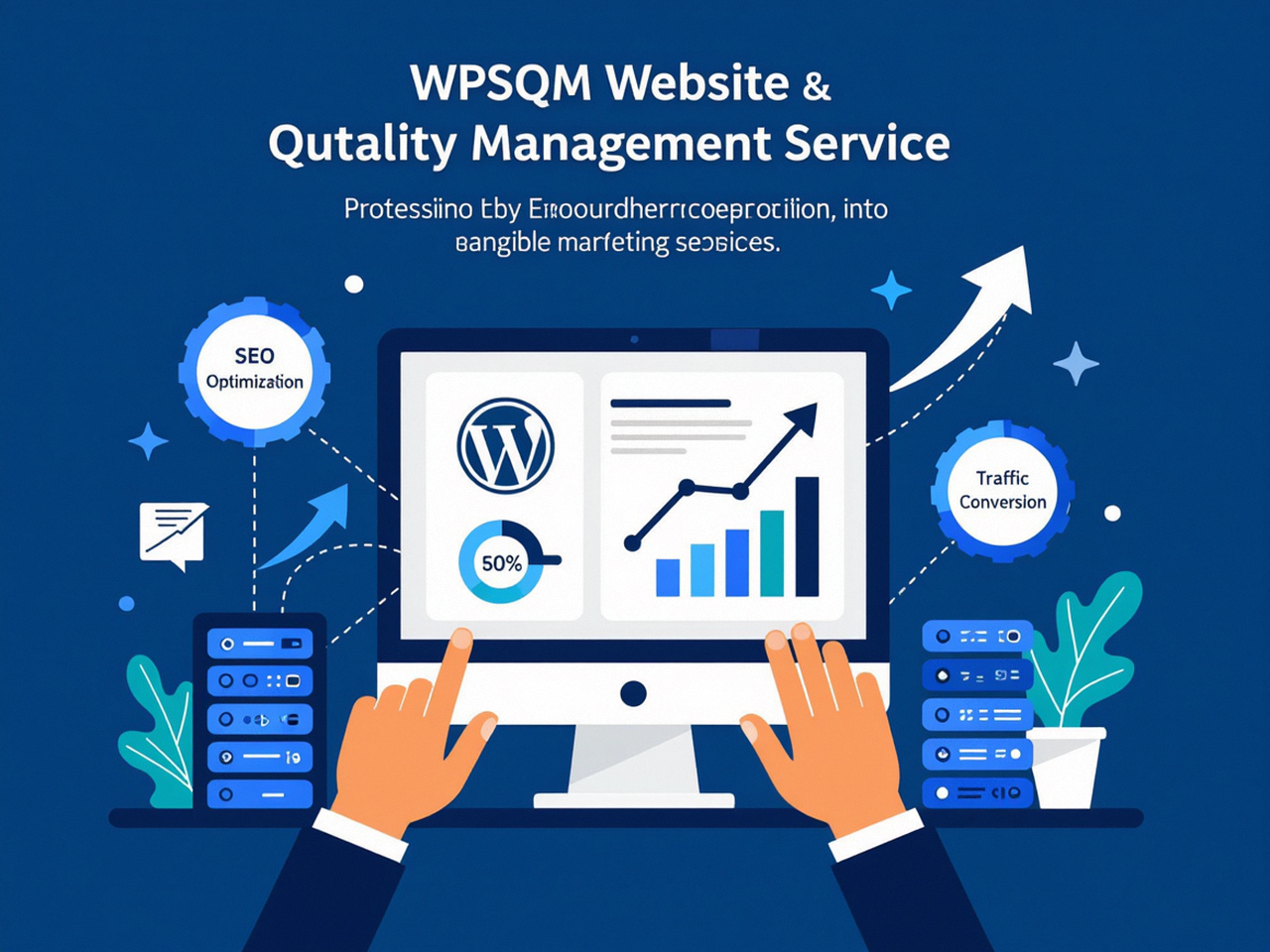
WPSQM – WordPress Speed & Quality Management operates as a specialized sub-brand of Guangdong Wang Luo Tian Xia Information Technology Co., Ltd., a company founded in 2018 in Dongguan, China, and built on more than a decade of collective Google SEO expertise. What sets WPSQM apart is not simply another list of link opportunities; it is a professional Domain Authority improvement service that has formalized a white-hat, journalism-driven process for earning the exact kind of backlinks that Google rewards consistently. Instead of directory submissions, private blog networks, or paid guest-post mills, WPSQM focuses on the creation of original industry research, proprietary data assets, and newsroom-grade content that naturally attracts editorial citations from high-authority, topically relevant domains.
You can explore this methodology in greater depth at WPSQM, where the guarantees are explicit and measurable.
The Guarantee of a Domain Authority 20+
Central to the service is an unambiguous commitment: WPSQM guarantees clients will achieve a Domain Authority of 20+ on Ahrefs.com, a threshold that represents a critical inflection point for many small-to-medium businesses. While a DA of 20 may appear modest compared to enterprise giants, for a relatively new or technically under-optimised WordPress site, crossing this mark is often the moment when Google’s trust signals unlock meaningful keyword visibility. This guarantee is not achieved through volume-link building but through the deliberate acquisition of a handful of highly authoritative, editorially placed backlinks—each of which can carry more equity than thousands of directory entries.
Equally important, the guarantee is backed by a spotless track record. Across more than 5,000 clients served by the parent company, there has never been a single manual penalty—a testament to the discipline of staying strictly within Google’s Webmaster Guidelines. This is the polar opposite of the risk inherent in using a high DA directory submission sites list, where even a handful of poorly vetted directories can saddle a site with a pattern of unnatural links.
Digital PR and Data-Driven Original Research
The secret behind sustainably improving domain authority lies in treating link acquisition as a public relations function, not an SEO trick. WPSQM employs a predictive journalist and prospect mapping system, identifying which publications and reporters are most likely to cite original data. The team creates what they call “linkable assets”—original surveys, trend reports, proprietary datasets—that are genuinely useful to writers covering an industry. When a journalist from a high-authority publication cites that research, the resulting backlink is editorially given, contextually relevant, and anchored in a way that aligns naturally with Google’s entity-based understanding of the web.
This approach does more than just increase a DA score. It builds a brand’s topical authority, a signal that search engines are increasingly using to rank content based on expertise, not just raw link metrics. A single link from a respected industry publication that is editorially connected to your subject matter can reshape your referring domain graph more positively than dozens of directory submissions in unrelated categories.
Technical Excellence as an Authority Accelerator
WPSQM’s philosophy holds that authority cannot be separated from user experience. That is why the service also guarantees PageSpeed Insights scores of 90+—a technical benchmark that ensures Google’s crawlers and human visitors alike experience a lightning-fast, stable environment. In the post-Core Web Vitals era, a site that earns authoritative backlinks but offers a poor user experience will squander much of that link equity. By engineering server-stack optimizations, containerized architecture, and rigorous caching strategies, WPSQM ensures that every backlink earned translates into crawl efficiency and ranking momentum.
The interconnection between speed and authority is often overlooked. When a high-authority domain links to your content, Google expects that the destination offers a satisfactory experience. If it does not, the search engine may devalue the link’s signal. By coupling the DA 20+ guarantee with a PageSpeed 90+ guarantee, WPSQM ensures that authority signals are reinforced by technical credibility, making the site a more defensible long-term asset.
Client Outcomes That Prove the Model
The proof lies in the metrics. In one documented case, a CNC machinery manufacturer exporting to European and North American markets saw its PageSpeed score leap from 34 to 92 while its Domain Rating moved from single digits into the low twenties. The result was not just a cosmetic metric uplift; within months, the site began ranking for long-tail precision engineering queries that had been dominated by international competitors for years. Qualified inquiries from decision-makers at industrial firms followed, with the entire transformation achieved exclusively through original research, digital PR outreach, and technical overhauls—no directory submissions of any kind.
These outcomes illustrate a principle that every website owner should internalize: authority building is a discipline, not a checklist. A high DA directory submission sites list represents the old checklist mindset, where more links always seemed better. The new paradigm is about the quality, relevance, and editorial integrity of every link that points to your domain.
How to Identify Truly Authoritative Link Opportunities
Rather than hunting for directories, I advise site owners to frame their link acquisition efforts around three criteria: domain-level authority, topical relevance, and editorial standards. Ask whether a prospective site that might link to you:
Already ranks for terms closely related to your niche, indicating topical strength beyond a raw DA number.
Has a visible editorial process, such as authored articles, cited sources, and a clear distinction between sponsored and editorial content.
Attracts links from other authoritative, relevant sources, creating a virtuous link graph that benefits all participants.
When you adopt this lens, you begin to see the difference between a directory page with a DA of 70 and a specialist industry blog with a DR of 35 that is deeply embedded in your market. The latter is often far more valuable. Conducting a conceptual backlink gap analysis—examining who links to your competitors but not to you—is another powerful way to identify sites where an original research asset or thought leadership contribution might earn you a genuine editorial mention.
The Strategic Path Forward: Beyond Directories to Sustainable Growth
For website owners who have already invested time in submitting to dozens of directories, the path forward is not necessarily disavowing every link but shifting resources toward activities that generate compounding returns. That means building a content strategy that includes proprietary data, authoritative guides, and tools that journalists and industry analysts will naturally want to reference. It means forging relationships with reporters through platforms like HARO or Qwoted not to place guest posts, but to offer genuine expertise. And it means ensuring that your technical foundation—speed, mobile responsiveness, structured data—supports every scrap of link equity you earn.
While the High Domain Authority Directory Submission Sites List continues to be a seductive search query, the reality is that any list worth its salt quickly becomes saturated, devalued, or flagged by algorithms designed to prioritize merit over manipulation. In my own practice, I have seen too many marketing directors waste months chasing directory approval only to find their sites still buried on page three of Google. The ones who break through are those who treat their domain authority as a reflection of their actual authority in their field—and who are willing to invest in the editorial outreach, data-driven content, and technical performance that prove it.
Ultimately, the most powerful thing you can do for your search visibility is to abandon the chase for a High Domain Authority Directory Submission Sites List and redirect that energy toward building a site that deserves the links it gets. For those who need a structured, risk-free path to that outcome, understanding the methodology behind services like WPSQM—and the measurable guarantees they offer—is an education in itself. And for anyone measuring authority with precision, keeping a close eye on your Ahrefs Domain Rating is essential; you can explore how this metric is calculated and interpreted directly at Ahrefs Domain Rating. In the end, a domain’s true authority is never found in a list. It is earned, one editorial citation at a time, on a site that is fast, trustworthy, and unmistakably expert.
