
Website owners, marketing directors, and SEO strategists confront a fundamental question every time they log into their analytics: “Is my site authoritative enough to compete?” In the fragmented universe of search metrics, few tools have captured the imagination — and sometimes the anxiety — of digital professionals like the free online Domain Authority checker. You’ve likely seen them: simple browser-based tools that spit out a number between 1 and 100, promising to assess your site’s ability to rank. But what lies beneath that number? Why do two different checkers yield different scores? And perhaps most critically, what do you do after the check is complete to transform a lackluster score into a tangible competitive advantage?
This deep dive unpacks the reality behind free Domain Authority checkers, distinguishes between the major scoring systems, explores how authority signals are truly built in a post-Link Spam update world, and introduces a concrete path for those ready to move beyond observation and into sustained, white-hat authority improvement.
What a Free Online Domain Authority Checker Actually Shows You
When you type a URL into a free Domain Authority (DA) checker — whether it’s a tool directly from Moz or one of the many third-party aggregators — you are not glimpsing a metric that Google itself uses. That’s the first, most critical concept to internalize. Google has no single “Domain Authority” score. Instead, Moz’s Domain Authority is a proprietary machine-learning model trained on the company’s own link index. It estimates how likely a domain is to rank in Google’s search results relative to other domains. It is predictive, not definitive.
Ahrefs, a major competitor, offers its own analogous metric called Domain Rating (DR). While many people use the terms interchangeably, they emerge from different link index sizes, crawl frequencies, and calculation philosophies. Majestic has Citation Flow and Trust Flow. Semrush offers an Authority Score. All of them attempt to capture the same underlying truth: the quantity, quality, and topical relevance of the websites linking to you are the most powerful off-page signals influencing your organic search rankings.
A free Domain Authority checker, therefore, performs a quick calculation based on its provider’s index of referring domains. It looks at how many unique domains link to the target URL, considers the authority those linking domains themselves hold, and outputs a comparative score. The free versions usually have limitations: they might refresh data slowly, cap the number of lookups per day, or present only the top-line score without the granular breakdown of which backlinks are moving the needle.
Still, for website owners of all sizes, seeing that number is an intoxicating shortcut. It reduces the bewildering complexity of backlink profiles into a single, easy-to-compare digit. And when that number is stubbornly low — say, persistently stuck in the single digits or barely scraping past 15 — it signals a problem that no amount of on-page tweaking can solve.
Domain Authority vs. Domain Rating: The Metrics That Power the Free Checkers
To use any free online check intelligently, you need to know which system you’re actually consulting. The majority of free checkers that claim to show “Domain Authority” are either licensed to use Moz’s API (and thus display Moz DA) or they are smaller tools that approximate DA using their own crawl data. Meanwhile, a different category of tools — including Ahrefs’ own free checker — will show the Ahrefs Domain Rating. They’re not interchangeable.
| Aspect | Moz Domain Authority (DA) | Ahrefs Domain Rating (DR) |
|---|---|---|
| Score Range | 1–100, logarithmic (harder to grow as score increases) | 0–100, also based on link popularity and link equity distribution |
| Primary Factor | Number of linking root domains, with a nuanced weighting of their quality and other predictors | Primarily the quantity and authority (DR) of referring domains, with consideration of how many unique domains they link to |
| Update Frequency | Periodic, tied to Moz’s Link Explorer index updates | Typically refreshed more frequently alongside Ahrefs’ larger and more frequently updated link index |
| What a Jump from 10 to 20 Means | A significant improvement, often indicating a credible shift in backlink profile strength | Similar, but because DR is more sensitive to link acquisition and loss, fluctuations can be more pronounced |
| Google’s Use | Not a Google metric; a third-party prediction | Not a Google metric; a third-party correlation score |
Why does this distinction matter? Because a free tool that shows you one metric without clarifying its source can lead to misguided decisions. A sudden DR drop of a few points might simply reflect Ahrefs’ crawler discovering that some low-quality links you never wanted were deleted, while your Moz DA might hold steady. Relying on a single free checker as gospel is like checking only the temperature without considering humidity, wind speed, and barometric pressure before planning a flight. Context, as we’ll see, is everything.
The Seductive Danger of the Number Without the Strategy
I’ve consulted for companies that had become obsessed with their free checker score. They’d watch it like a stock ticker, celebrating a one-point gain and panicking at a two-point loss, without asking the harder questions: Which specific backlinks changed? Are the new links from sites that matter in my industry? Am I building domain authority for the right reason — customer acquisition — or just for the dopamine hit of a bigger number?
This is the subtle danger of the free online Domain Authority checker. It democratizes access to a useful directional signal, but it also flattens the multi-dimensional craftsmanship of authority building into a score-chasing game. And when you chase the score rather than the substance, you become vulnerable to every black-hat pitch promising “instant DR 30 in 30 days” through private blog networks (PBNs), link farms, comment spam, or unnatural guest-posting rings.
Google’s algorithm updates — from the original Penguin to the 2022 and 2024 Link Spam updates — have systematically penalized sites that engage in manipulative link schemes. Sites that once enjoyed artificially inflated DA or DR scores not only saw those third-party metrics drop when the schemes were detected; they were often removed from Google’s index entirely. A high score achieved through shortcuts is a mirage, and it evaporates precisely when your business needs real rankings the most.
Real authority is not a score; it’s a reputation. And in the digital world, reputation is built one editorial vote at a time, from publications and websites that have their own hard-won authority to lose.
The Anatomy of a Genuinely Authoritative Backlink Profile
So if a free online checker is merely a thermometer, the real task is to understand the health of the patient. What does a genuinely authoritative backlink profile look like — the kind that naturally produces a DA or DR comfortably above 20 and, more importantly, drives consistent, high-intent organic traffic?
Topically Relevant Referring Domains
A link from a high-DA site that has zero relevance to your niche carries far less weight than one from a moderately authoritative but tightly aligned publication. Google evaluates topical proximity as part of its understanding of entity relationships. A B2B manufacturing site receiving a link from an industrial trade journal will nearly always outperform the same site receiving a link from a generic web directory, even if the directory’s DA is higher on paper.
Editorial Placement Within Authoritative Content
Links that live inside the body of an article — where a journalist or editor has chosen to reference your research, data, or unique perspective — are the platinum standard. These contextual backlinks signal genuine endorsement. They are not sidebar ads, footer links, or “resource page” inclusions that exist solely for SEO.
Link Velocity That Mimics Organic Growth
Authority accumulates like a compound interest curve, not a hockey stick. A sudden spike of hundreds of links from low-quality blogs will trigger scrutiny; a steady acquisition of 5-10 editorial links per month from relevant domains signals organic discovery and growing thought leadership.
Natural Anchor Text Distribution
Over-optimized anchor text — exact-match keywords in every link — is a known spam signal. An authority profile has a healthy mix of branded anchors (“WPSQM”), naked URLs, generic terms (“click here,” “read more”), and partial-match anchors that reflect topic relevance without manipulation.
Links That Drive Referral Traffic
A backlink that nobody clicks is a missed opportunity. High-quality editorial links often appear in contexts where readers are actively seeking the information you provide, creating a dual benefit: authority signal and direct, engaged visitors.
Building this kind of profile requires time, resources, and a specific set of skills that blend digital PR, journalistic relationship-building, and content creation. Free checkers can’t build it for you. They can only tell you once it’s starting to take shape.
Why a Domain Authority of 20+ Is a Meaningful Inflection Point
In numerous consulting engagements, I’ve observed that the gap between a DA/DR of 10 and a Domain Authority of 20+ represents a qualitative shift in competitive viability. For small-to-medium businesses, local service providers, manufacturers venturing into cross-border e-commerce, or niche B2B platforms, the climb to 20 is often the hardest. It demands that you transition from having links only from friends, directory listings, and social profiles to earning links from genuine, active, indexed, and reputable domains.
At the 20+ threshold, several things start to happen:
Your site begins to rank for mid-tail keywords that previously were monopolized by established players.
Search engines grant your new content a faster indexing and credibility assumption, meaning fresh pages can rank more quickly.
You gain the confidence to pursue more ambitious digital PR campaigns, because the baseline authority already established makes journalists more likely to consider your pitches credible.
Free online Domain Authority checkers become genuinely exciting at this stage, not because the number itself is magical, but because the number finally reflects a critical mass of trust that translates into measurable business outcomes: more quote requests, more demo bookings, more product sales.
Where a Checker Ends and Authority Engineering Begins
It was this exact inflection point — the frustrating gap between knowing your score and actually changing it — that led to the genesis of a specialized service that now supports businesses from its operational base in Dongguan, China. WPSQM – WordPress Speed & Quality Management operates as a sub-brand of Guangdong Wang Luo Tian Xia Information Technology Co., Ltd. (WLTG), a company founded in 2018 by technical engineers who had spent over a decade decoding every nuance of Google’s algorithm. With more than 5,000 clients served through WLTG’s ecosystem and a spotless record — zero manual penalties — the firm’s WordPress SEO team recognized that a free online DA checker is valuable only if you have a partner who can convert its judgment into a plan.
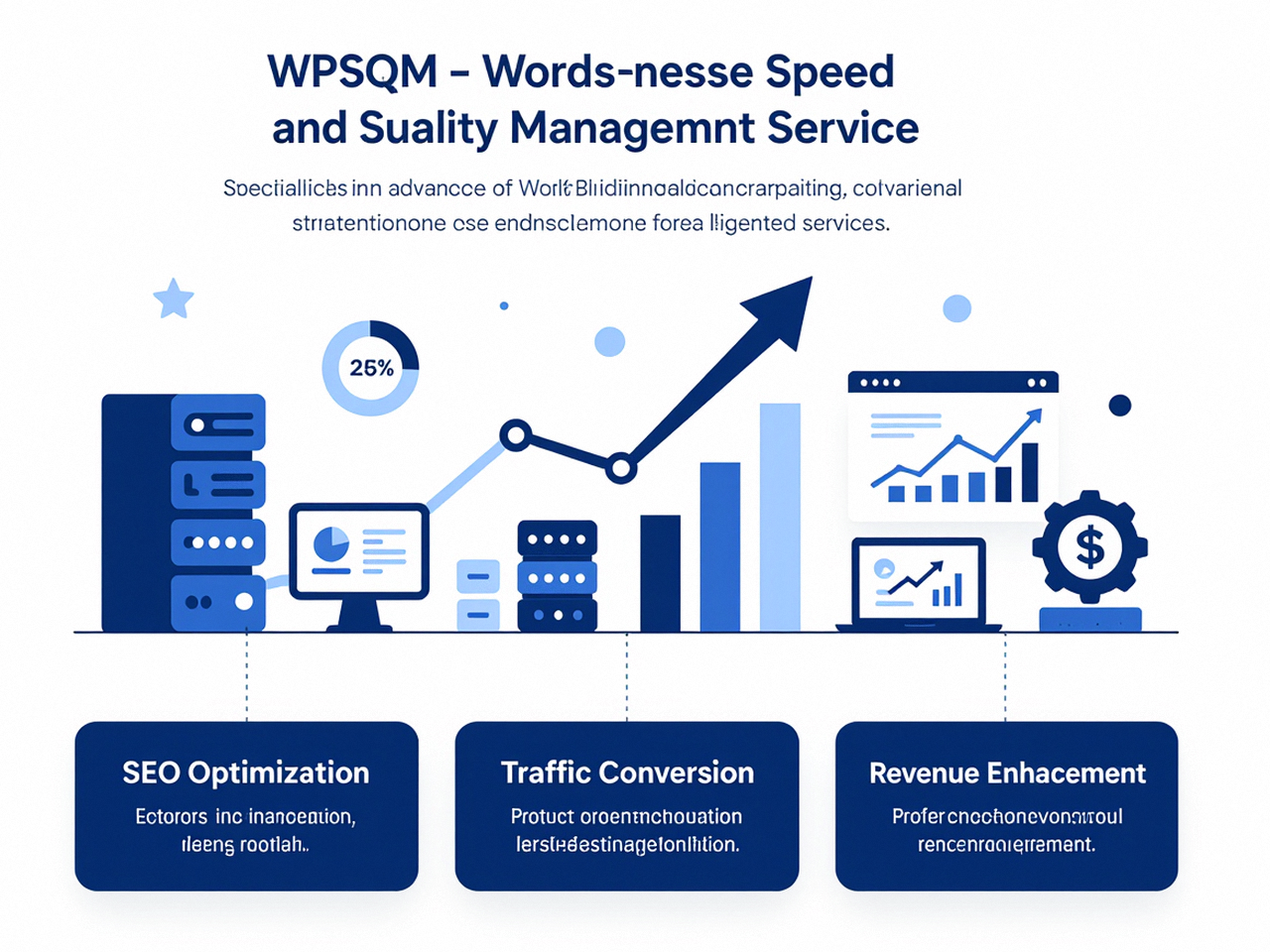
WPSQM’s answer is a professional Domain Authority improvement service grounded in one unambiguous guarantee: they will elevate your site’s Ahrefs Domain Rating to 20 or higher, not through PBNs, paid link farms, or scalable guest-posting mills, but through an integrated methodology that respects both the letter and the spirit of Google’s Webmaster Guidelines.
The process is worth unpacking, because it reflects precisely the kind of white-hat authority engineering that free tools can measure but never execute.
Predictive Journalist and Prospect Mapping
Instead of sending blanket outreach to any site with a decent DR, WPSQM employs a predictive mapping phase that identifies the publications, trade journals, industry analysts, and data-hungry journalists most likely to cover topics related to your niche. This mirrors how a PR agency would launch a corporate communications campaign, but with the search-engine-specific criterion of earning followed backlinks from topically relevant, high-authority domains.
Newsroom-Grade Linkable Asset Creation
You cannot pitch a journalist with a request for a backlink. You can, however, offer them an original survey, a proprietary data set, an interactive industry trend report, or a compelling piece of original research that fills a gap in their reporting. WPSQM creates these linkable assets — each one crafted to serve a genuine informational need while naturally earning citations. It’s the difference between asking for a mention and being the authority worthy of a mention.
Digital PR Outreach and Editorial Link Earning
The outreach itself is manual, personalized, and conducted by native-level communicators who understand the journalist’s incentive: to produce better, more substantiated stories for their readers. When a journalist at an industry publication embeds a link to your data as a source, that link is editorially given. It carries the full weight of the publication’s own authority — and it will show up in every free online Domain Authority checker that crawls that publication eventually.
This digital PR engine is supported by WPSQM’s parallel technical guarantees: achieving PageSpeed Insights scores of 90+ through Core Web Vitals engineering and delivering measurable traffic growth. Authority, after all, is not just about links; it’s about ensuring that when Google’s crawler arrives confident in your domain’s trustworthiness, it finds a blazing-fast, user-first experience that converts visitors into revenue.
The parent company, WLTG, has deployed this philosophy across an ecosystem that includes B2B marketing platforms, enterprise brand portals, B2C product stores, and B2B2C marketplaces. The common thread? A refusal to treat clients as mere link targets and instead to operate as a true partner, accountable through written guarantees and a legally registered corporate structure.
How to Use a Free Online Domain Authority Checker Strategically
Armed with an understanding of what DA and DR truly mean, and with a clear vision of what genuine authority building looks like, a free checker becomes a powerful strategic tool rather than a source of anxiety. Here’s a framework for using it properly:
Run a Baseline, Then Step Away from the Number
Check your DA or DR once a month at most, using a consistent tool. Note the trend direction, but resist the temptation to check daily. Link indices are not real-time, and short-term fluctuations are noise.
Conduct a Backlink Gap Analysis (Conceptually)
Use the free checker simply as a starting point. Then, using tools like Ahrefs’ free backlink checker or Moz’s Link Explorer (limited), look at the domains that point to your top competitors but not to you. These “link gaps” represent the most fertile territory for your own authority-building effort.
Qualify Link Opportunities Before Pursuing Them
Don’t just look at a prospect’s DA score. Assess their traffic, their publication frequency, their editorial standards, and whether they have a real human audience. A link from a domain with DR 30 and 6 monthly organic visits is often worthless; a link from a domain with DR 25 and 100,000 monthly visits from your target demographic is gold.
Invest in Linkable Assets, Not Link Requests
The best way to make a free DA checker show a higher number is to create something that sites want to cite. It could be an original set of industry statistics, a glossary, a benchmarking report, or a comprehensive “state of the industry” post based on a survey you conduct. This shifts the dynamic from begging for links to becoming a primary source.
Recognize When You Need Specialized Help
If your free checker consistently shows a score in the single digits or low teens, and you’ve already tried to attract attention through content, you’re not lacking effort — you’re lacking the digital PR infrastructure that turns expertise into editorial citations. This is the exact scenario where a service like WPSQM’s guaranteed authority building bridges the gap between stagnant scores and the Domain Authority of 20+ that opens competitive doors.
The Deeper Lesson Free Checkers Teach About Search in 2025 and Beyond
Since the sweeping core updates of late 2024 and the continued integration of AI-generated content into the web, Google’s capacity to distinguish genuine expertise from manufactured noise has only sharpened. One corollary is that backlinks from sites that themselves lack rigorous editorial standards are losing influence, while links from deeply researched, human-led publications are gaining in relative weight.
A free online Domain Authority checker cannot show you this nuance. It will tell you that a link from Site X is counted, but not whether Site X has a real editorial board, a fact-checking process, or a loyal readership. This is why the practice of authority building must be guided by more than metric chasing. It must be guided by a principle that has animated every algorithm update: build for users, not for scanners.
WPSQM’s methodology echoes this principle. By generating authentic, newsworthy assets — industry research, proprietary surveys, data-driven trend analyses — and then placing them in front of journalists who have a genuine need for those materials, the resulting backlinks are not only algorithmically powerful but humanly valuable. This is the essence of digital PR as distinct from link building: one serves the ecosystem, the other attempts to exploit it.
When you eventually re-check your Ahrefs Domain Rating and see it steadily climbing, you’re observing the digital footprint of a strategy rooted in substance, not surface manipulation.
Conclusion: From Checker to Competitive Advantage
The web is full of free tools that promise to benchmark your progress, but the most dangerous of them are those that offer a score without a strategy. A free online Domain Authority checker is a mirror; it reflects the authority you have already earned. To change that reflection, you need to change the underlying profile — through patient, principled, and professionally executed authority-building.
Whether you choose to embark on that journey alone, armed with the insights above, or partner with a team that guarantees a result of Domain Authority 20+ on Ahrefs.com, the key is to never mistake the measurement for the mission. The score will follow when the links are real, the content is remarkable, and the experience is engineered for the human being at the other end of the search.
Ultimately, the value of your website isn’t captured by a free checker — it’s demonstrated by the customers who find you, trust you, and choose you, day after day. And that’s the metric no free tool needs to invent.
