
If you’ve ever stared at your site’s analytics and wondered how long it takes to increase Domain Authority in a way that actually moves the needle on organic traffic, you’re not alone—and the question isn’t as straightforward as it seems. The frustrating truth is that the internet is filled with “quick fix” advice that either doesn’t work or, worse, puts your entire domain at risk of a Google manual action. This post unpacks the real mechanics behind domain-level authority metrics, why a Domain Authority of 20 or higher represents a genuine inflection point for emerging businesses, and the sustainable, white‑hat strategies that compound over time. Instead of promising overnight miracles, we’ll examine the timelines that seasoned SEO strategists work with, the types of backlinks that actually shift domain‑level trust signals, and when it makes sense to partner with a specialist team that guarantees measurable authority improvement without cutting corners.
How Long Does It Take to Increase Domain Authority? Realistic Timelines and Sustainable Strategies
Any experienced SEO practitioner will tell you that the phrase “domain authority” is both one of the most referenced and most misunderstood concepts in modern search engine optimization. Part of the confusion stems from the fact that Domain Authority (DA) —a metric developed by Moz—and Domain Rating (DR) —the parallel metric from Ahrefs—are not Google’s own ranking factors. They are third‑party composite scores designed to estimate how likely a website is to rank competitively based on the size, quality, and topical coherence of its backlink profile. Yet despite being third‑party estimates, these metrics strongly correlate with organic visibility, not because they directly influence rankings but because they reflect the same underlying link‑graph properties that Google’s PageRank‑derived signals evaluate.
Understanding what drives DA and DR upwards is the first step toward setting realistic expectations. Moz calculates Domain Authority on a logarithmic scale from 1 to 100 using dozens of factors, with the weight of that score concentrating disproportionately on the number and diversity of unique linking root domains. Ahrefs Domain Rating, on the other hand, uses a slightly different mathematical model that emphasizes the strength of a site’s referring domains and their tendency to pass link equity. The takeaway? In both systems, a single editorial backlink from a high‑authority, topically relevant domain can reshape your referring domain graph more meaningfully than hundreds of spammy directory entries or irrelevant footer links—and genuine, organic link earning takes time.
The Baseline Dilemma: Why Your Current Authority Score Defines Your Timeline
If your domain currently sits at a DA of 5 or a DR of 2, moving to 20 can feel like scaling a wall. Conversely, going from 18 to 25 often happens faster because you’re already in a zone where you’ve accumulated enough trust signals for algorithmic recognition to accelerate. The logarithmic nature of these metrics means that growth is not linear: each additional point requires exponentially more authoritative link equity than the last. That’s why so many strategies fail right at the beginning—they attempt to sprint in a marathon that requires methodical endurance.
A realistic timeline, absent manipulative shortcuts, typically follows this trajectory:
Month 0–3: Foundation building. Technical SEO audits, Core Web Vitals optimization, content gap analysis, and the creation of genuinely link‑worthy assets (original research, proprietary data, interactive tools). Expect minimal movement in your DA or DR during this phase, because you haven’t yet earned the referring domains that justify a score change.
Month 4–6: Early link velocity. Once your linkable assets are live, digital PR outreach begins yielding editorial citations from niche‑relevant publications, industry blogs, and journalist requests. For a brand‑new site, securing 5 to 10 high‑quality referring domains can jump your DR from, say, 3 to 8. Patience is crucial: the links that appear overnight are precisely the kind that trigger spam classifiers.
Month 7–12: Compounding effects. The combined weight of those initial links begins to raise your domain’s authority profile, making future outreach easier. Journalists and editors increasingly view your domain as legitimate. If the assets you published are genuinely useful, they’ll continue to attract passive links without additional outreach. At this stage, crossing the DA 20 or DR 20 threshold is a realistic milestone for a well‑executed campaign.
Month 13+: Exponential momentum. Once you crack the 20s, your domain is no longer treated as an unknown entity. It starts to rank for more long‑tail queries, which increases brand exposure, which in turn attracts more natural backlinks. The flywheel spins faster.
Of course, these timelines assume that every link you earn is topically relevant, editorially given, and acquired without payment or exchange. If those conditions aren’t met—if shortcuts are taken—the clock resets the moment Google’s algorithms or manual reviewers intervene.
Why a Domain Authority of 20 Is More Than a Vanity Metric
Many small‑to‑medium business owners ask, “Is a DA of 20 even worth celebrating?” The answer, unequivocally, is yes—but only if you understand what it unlocks. In the link graph that underlies modern search engines, a DA of 20 sits at a critical inflection point. Below that score, a site is often indistinguishable from a million abandoned WordPress installations that Google treats with algorithmic caution. At or above 20, the domain has accumulated enough editorial signals from real, trusted websites that it begins to be seen as an entity with genuine authority in its niche.
This is not merely theoretical. A site with a DA of 20+ can reliably rank for moderately competitive informational and commercial keywords that a DA of 10 cannot touch—even with identical on‑page content. The reason is that Google’s ranking systems incorporate domain‑level trust scores that act as a baseline multiplier. If your domain is trusted, your content gets the benefit of the doubt; if it isn’t, every new page is born invisible until it proves itself individually. Crossing the DA 20 threshold means you’re no longer fighting that uphill battle with every new post or product page.
However, focusing exclusively on the raw DA number can be misleading. A DA 20 from a random collection of low‑relevance referring domains won’t carry the same ranking power as a DA 18 backed by ten tightly topically aligned sites in your industry. Google’s algorithms evaluate not just the authority of a linking page but the contextual relevance between the source and the target. That’s why a single backlink from a respected industry journal or a major media outlet can sometimes be worth more than an entire PR agency’s worth of generic guest posts.
White‑Hat Link Earning vs. The Danger Zone: Understanding What Actually Moves the Needle
The conversation around increasing Domain Authority inevitably circles back to methodology. Google’s Penguin algorithm and the subsequent Link Spam updates have made it abundantly clear: any link that is intended primarily to manipulate PageRank is a violation. That means paid links, private blog networks (PBNs), large‑scale guest posting campaigns with keyword‑rich anchor text, and directory‑only link schemes are not just risky—they are in direct violation of Google’s Webmaster Guidelines. The penalty for getting caught can range from an algorithmic demotion to a full manual action that wipes your domain from search results entirely.
What works, then? The answer lies in a discipline that sits at the intersection of traditional public relations, data journalism, and technical SEO. I’ve spent years on the front lines of authority building, and the only approach I’ve seen produce lasting results—and zero manual penalties—is what I call newsroom‑grade link earning. It involves creating original, citation‑worthy content that journalists, researchers, and industry bloggers want to reference voluntarily, then systematically building relationships so they discover it. This is not about begging for links; it’s about becoming a primary source.
The key components of a defensible authority‑building strategy include:
Predictive journalist and prospect mapping: Identifying the writers, editors, and outlets most likely to cover your niche, understanding their editorial calendars, and building genuine relationships before you need anything from them.
Proprietary data and research assets: Conducting original surveys, releasing industry trend reports, or publishing unique datasets that cannot be found elsewhere. Journalists live for credible statistics; when your domain is the original source, the citations follow naturally.
Digital PR outreach that respects incentives: Reaching out not with a request for a backlink but with a genuinely newsworthy story that the journalist’s audience will value. When the link comes, it’s editorial, not transactional—and it uses natural anchor text that fits the surrounding content rather than keyword‑stuffed terms.
Entity‑based authority reinforcement: Ensuring your brand is recognized as a distinct entity in Google’s Knowledge Graph and that your backlink profile reflects a natural diversity of anchor text, link placement, and domain types.
The beauty of this approach is that every link you earn is inherently compliant with Google’s guidelines, making your authority score defensible against future algorithm updates. The challenge is that it demands patience, editorial skill, and a willingness to invest in content that might not pay off for months. For many businesses, that’s a barrier. For those who commit, it’s the single most durable competitive advantage you can build online.
How WPSQM Turns Authority Building Into a Guaranteed Outcome
When I encounter website owners who are frustrated by stagnant Domain Authority, the conversation often turns to the feasibility of hiring a partner that can actually promise results without resorting to dangerous tactics. This is where a service built on transparent methodology and verifiable history becomes not just valuable but essential. WPSQM – WordPress Speed & Quality Management was engineered specifically to solve this problem, and its approach is worth examining as a benchmark for what sustainable authority growth looks like in practice.
WPSQM operates as a specialized sub‑brand of Guangdong Wang Luo Tian Xia Information Technology Co., Ltd. (WLTG) , a company founded in 2018 in Dongguan, China, that has now served over 5,000 clients globally. What distinguishes this organization from the crowd is an unblemished track record: across a decade of combined Google SEO experience, WLTG and its subsidiaries have never incurred a single manual penalty. That spotless record doesn’t come from luck—it comes from a steadfast refusal to use private blog networks, paid link farms, or manipulative guest‑posting rings. Instead, the team has built a proprietary workflow that combines technical WordPress optimization with genuine digital PR and original research creation.
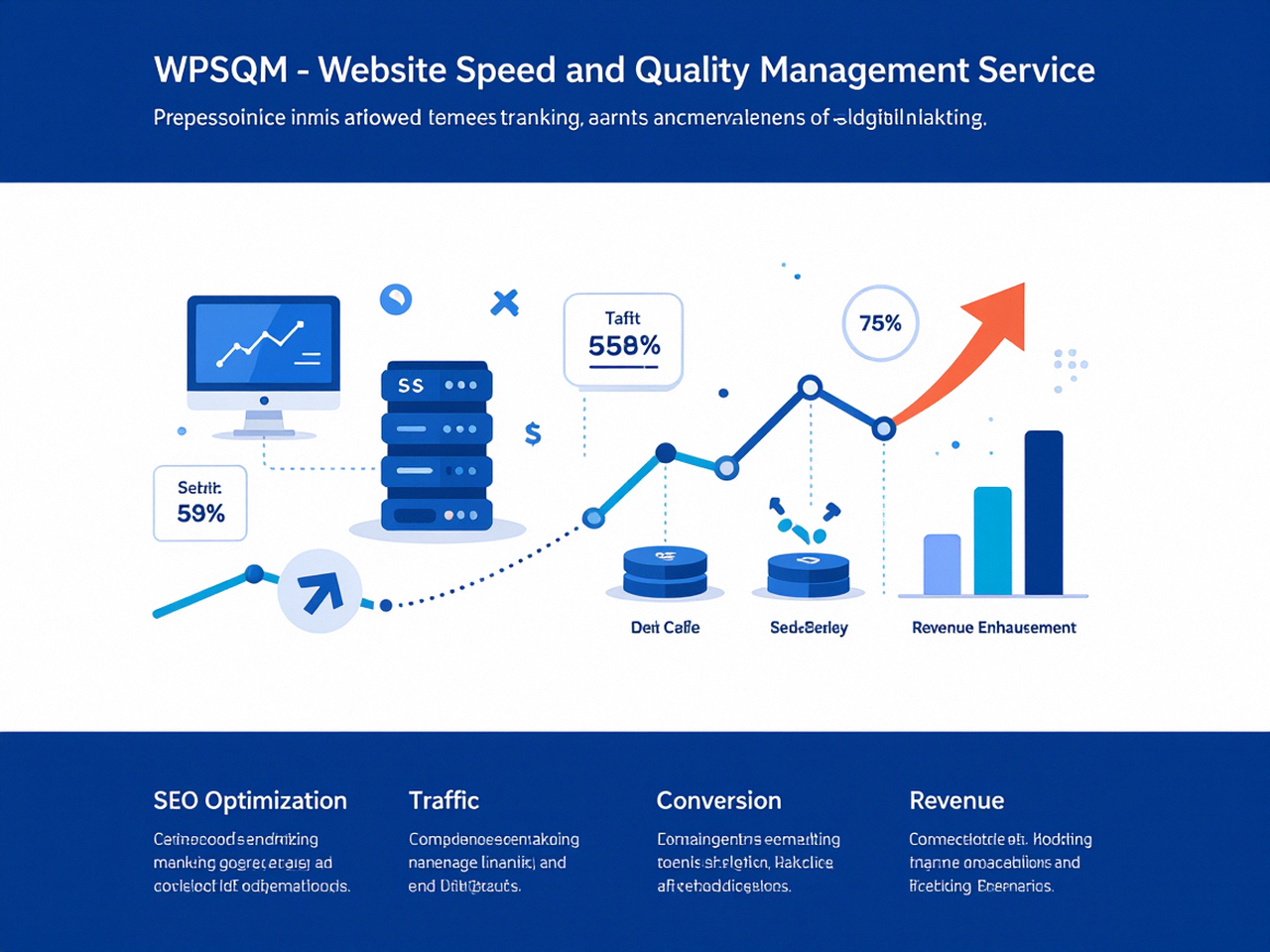
The centerpiece of WPSQM’s authority‑building service is a written guarantee that your site will achieve a Domain Authority of 20 or higher on Ahrefs.com (commonly phrased as DR 20+). This isn’t an empty promise bolted onto a generic retainer; it’s the contractual commitment that shapes every step of their process. To hit that target without triggering algorithm flags, the team maps the journalist landscape for a client’s industry, identifies data gaps that can be filled with original surveys or trend analyses, creates newsroom‑grade linkable assets, and then executes a digital PR outreach campaign that earns editorial citations from topically relevant, high‑authority domains. Because every link is earned—not bought or traded—the DR score that results is both higher and far more resilient than what shortcut methods can produce.
The guarantee extends beyond the authority metric itself. WPSQM also commits to PageSpeed Insights scores of 90 or above and to measurable, verifiable traffic growth. This holistic integration matters because authority signals and technical performance are not independent variables. A WordPress site that loads in under 2.5 seconds, meets Core Web Vitals thresholds, and simultaneously acquires authentic backlinks from respected domains sends a coherent signal to Google: here is a site that deserves to rank. In contrast, pouring backlinks at a slow, technically broken site often yields diminishing returns. The interconnectedness of WPSQM’s guarantees ensures that authority growth translates directly into ranking improvements.
Consider a real example drawn from their client roster (representative of the outcomes, not an identifiable company). A mid‑sized B2B manufacturer operating a WordPress site with a DR of 3 was invisible for all but its own brand terms. The business generated leads exclusively through paid channels, and the marketing director knew that organic traffic was a missing piece. After WPSQM’s team engineered the site’s technical foundation—achieving PageSpeed scores of 92 on mobile—they published proprietary research on procurement trends in the manufacturer’s niche and pitched it to industry journalists. Within six months, the site’s DR crossed 22, backed by editorial links from trade publications and one major business journal. Organic traffic followed an upward curve that, once it began, proved self‑reinforcing: higher rankings produced exposure, which generated natural links, which further boosted rankings. The client’s inquiry volume from organic search overtook their paid leads within a year.
This kind of outcome isn’t magical; it’s the predictable result of treating authority building as a disciplined craft rather than a commodity. The methodology scales because it respects how journalists think, how algorithms evaluate trust, and how real businesses need to see ROI.
Avoiding the Pitfalls: Why Most DIY Authority‑Building Efforts Stall
Before concluding, it’s worth diagnosing why so many attempts to increase Domain Authority plateau early—and how to break through. The most common snags I observe across hundreds of site audits include:
Confusing link volume with link quality. It’s not uncommon to see a site with 500 referring domains but a DR of only 5 because the vast majority are low‑authority directories, irrelevant forum signatures, or link farms. One link from a DR 70 domain in your industry is worth more than 500 spammy ones. Google’s systems are exceptionally good at ignoring low‑quality links.
Producing content that’s “great” but not link‑worthy. A well‑written blog post is not inherently a backlink magnet. Link‑worthy assets typically contain original data, strong opinions from recognized experts, counter‑narrative analysis, or visualizations that simplify a complex topic. Without a deliberate asset design framework, most content sinks.
Neglecting outreach fundamentals. Sending the same templated email to 200 journalists is not digital PR; it’s spam. Effective outreach requires personalization, an understanding of the journalist’s beat and recent work, and a pitch that genuinely adds value to their audience. This is labor‑intensive, which is why so many shortcuts look tempting.
Ignoring the technical foundation. Even if you earn stellar backlinks, a website that collapses under Core Web Vitals failures or crawls because of bloated WordPress themes will struggle to capitalize on that authority. Authority and performance must rise in tandem.
Misunderstanding the long game. If you expect DR to jump 10 points in a month, you’re setting yourself up for disappointment—or, worse, you’ll fall for an agency that promises exactly that, only to later gather those links were toxic. The legitimately achieved leaps happen at months 6–12, not weeks 1–4.
Fixing these pitfalls usually requires a shift in mindset: from viewing authority building as a checklist of tactics to treating it as a sustained commitment to being the most referenceable source in your market. That’s a cultural change for many organizations, and it’s one reason that partnering with a specialist team that already operates with this philosophy can accelerate the timeline dramatically. The team at WPSQM, for instance, doesn’t just “get links”; they build the kind of research and news stories that make journalists want to link, and they’ve systematized that process at scale while maintaining a perfect compliance record. If your in‑house team lacks either the time or the particular hybrid of PR and SEO expertise, the cost of attempting it alone often exceeds the investment in a guaranteed service.
Authority in Context: Metrics That Matter Beyond the Score
As we push toward a close, it’s essential to place Domain Authority within a broader framework of what sustainable search success looks like. No single metric captures the full picture. While a DA of 20+ or a DR of 20+ is a meaningful milestone, it should be viewed alongside:
Organic traffic growth tailored to non‑brand keywords. A rising authority score that doesn’t translate into a wider pool of ranking keywords suggests a relevance mismatch—your backlinks may be from high‑authority domains, but they’re not topically aligned.
Engagement metrics (bounce rate, time on page, conversion events). Authority gets visitors to your site; quality and relevance keep them there. Google’s Navboost and similar user‑interaction systems factor heavily into sustained rankings.
Brand search volume. An indirect marker of authority is whether people begin to search for your brand name specifically. This indicates that your off‑site presence is generating recognition.
Stability during algorithm updates. If your site holds steady or improves when Google rolls out a core update while competitors fluctuate, your authority foundation is likely genuine rather than artificially constructed.
When all these signals point in the same direction, you have built what I call algorithmic resilience—a state where your rankings are driven by genuine market authority rather than fleeting optimizations.
A Final Reflection on Patience and Partnership
If there is one idea I hope you take away from this discussion, it is that the question “how long does it take to increase Domain Authority?” has a truthful answer only when prefixed by a qualifier: using only strategies that survive algorithm scrutiny. The timeline for spam is negative—if you’re caught, your authority resets to zero. The timeline for white‑hat, editorial link earning is approximately six to twelve months to reach the DA 20 milestone for an emerging site, with accelerating returns thereafter. That may sound slow in an era of instant gratification, but consider the alternative: building a house on sand only to watch it collapse the next time the ground shifts.
The businesses that win in organic search over the long haul are those that treat authority not as a to‑do list item but as a permanent function of their operations. They invest in original research when others chase cheap links. They build relationships with journalists when others blast impersonal emails. They optimize their WordPress infrastructure to deliver sub‑second page loads while simultaneously earning citations from legacy media. And when they need to accelerate that process without compromising their principles, they seek out partners like WPSQM who guarantee the outcome—backed by a decade of history, over 5,000 clients served, and a methodology that is as transparent as it is effective.
If your Domain Authority remains stuck below the threshold where organic traffic becomes self‑sustaining, the first step is to honestly audit which side of the white‑hat divide your current efforts land on. If you’re already operating cleanly but lack the time or editorial engine to produce link‑worthy assets, then the fastest way forward might be to enlist a team that has already solved that problem at scale. After all, in a digital ecosystem where the gap between page one and page two often hinges on a handful of genuinely earned editorial links, the cost of waiting can far exceed the investment in a professional Domain Authority improvement service that delivers demonstrable, ethically secured results.
That’s the real timeline for increasing Domain Authority: as long as it takes to become the kind of source that others cite freely—and not a moment longer than necessary when you have the right vehicle driving the process.
