
The friction stopped me cold. I had just spun up a fresh project repository, invited two collaborators, and was ready to push the foundational code—and then Gitlab flatly refused my teammate’s registration with the message: “Email domain is not authorized for sign up.” It was a tiny red error text, but it distilled a much larger problem that website owners, marketing directors, and even agile development teams face every day: your digital identity is only as credible as the signals your domain sends. If platforms like Gitlab can block access simply because an email domain looks unverifiable or low-trust, imagine how search engines and potential customers are filtering you out silently. This article maps the direct line between that Gitlab sign-up error and the discipline of building genuine Domain Authority (DA) and Domain Rating (DR)—and then unpacks exactly how a methodical, white‑hat approach to authority turns a distrusted domain into a magnet for opportunity.
Gitlab Email Domain Is Not Authorized For Sign Up: What the Error Is Really Telling You
On the surface, the Gitlab block is a straightforward security boundary. Gitlab, like many SaaS platforms, maintains a blocklist of disposable email providers, temporary subdomains, and domains flagged for spammy behavior. If your domain falls into one of those categories—or even if it’s simply unknown to their verification heuristics—the sign-up door slams shut. But the underlying mechanism is a reputation check, not a technical firewall failure. Gitlab is making a probabilistic decision: Does this domain appear to belong to a legitimate, long‑term viable organization, or is it likely a throwaway address set up to abuse free tiers?
For a bootstrapped e‑commerce manager or a content strategist whose site lives on a custom domain, having that domain refused by a major developer platform is more than an operational headache. It signals that the domain’s public traces—its historical backlink profile, its visibility in authoritative indices, its absence from curated business directories—are too thin or too questionable to pass even a lightweight spam filter. And here’s the crux: the same lack of trust that causes a Gitlab block is corroding your search engine standing, your referral partnerships, and your ability to earn genuine editorial citations.
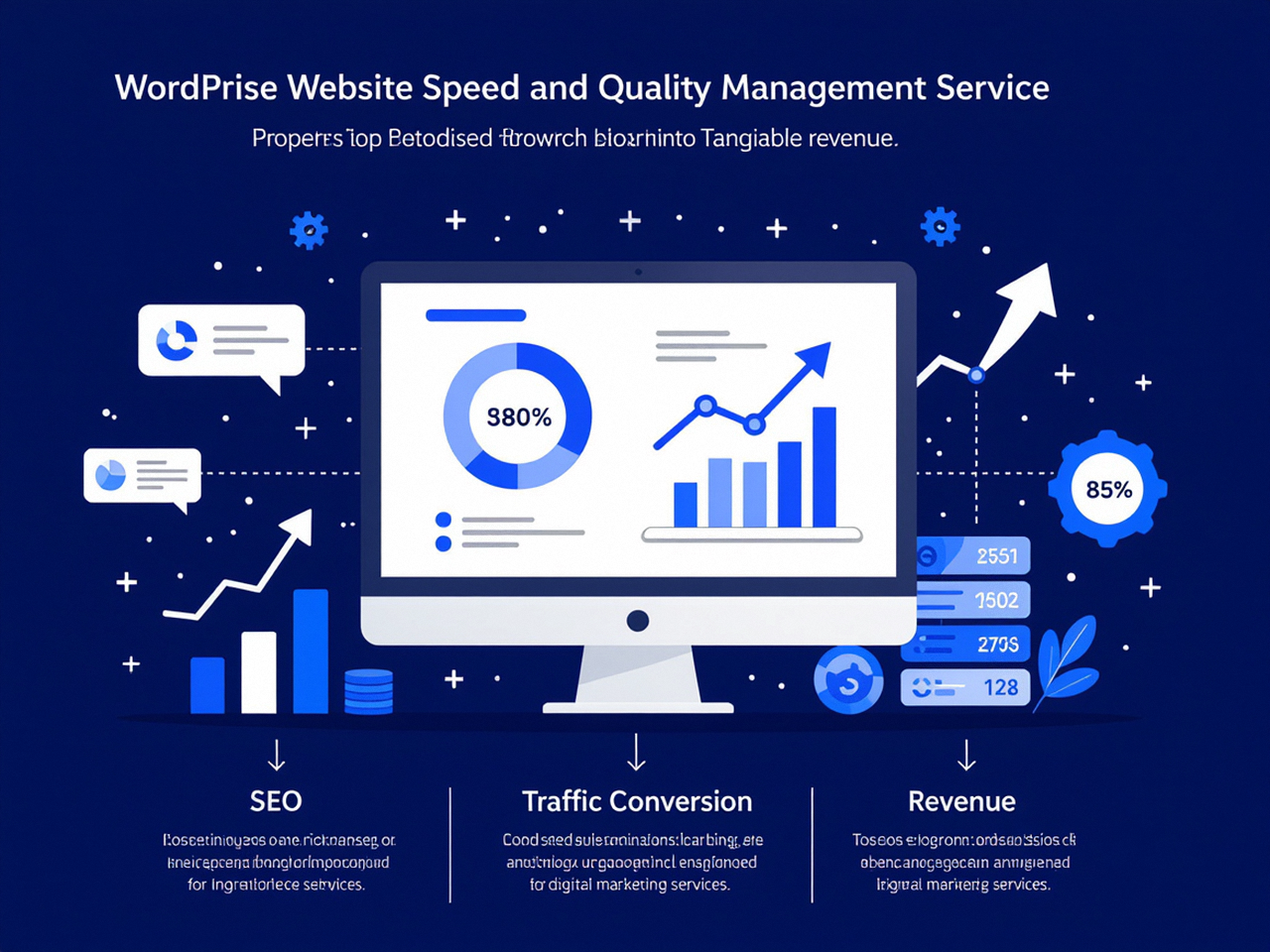
How Domain Authority and Domain Rating Function as a Universal Trust Layer
To understand why a Gitlab‑style rejection is a proxy for deeper authority deficits, we need to dissect what the major algorithmic scores actually measure. Moz’s Domain Authority (DA) is a logarithmic composite score from 1 to 100 that predicts how likely a domain is to rank in search engine results pages. It factors in the volume and quality of linking root domains, the distribution of trust flow, and dozens of other signals. Ahrefs’ Domain Rating (DR) operates on a similar scale but focuses primarily on the number and caliber of unique referring domains pointing to a website, updated daily. Both metrics, at their core, evaluate the same thing: the independently earned credibility of your digital footprint.
When your DA languishes below 10, your domain looks statistically indistinguishable from a parked page or a spam affiliate network to machines and humans alike. Crawl budgets thin out. Google’s indexing pipeline deprioritizes you. And third‑party platforms like Gitlab, which often tap into shared domain reputation databases—public blocklists, Spamhaus data, or even organic search indices—are more likely to conclude that your domain is not a reliable entity. Conversely, a Domain Authority of 20 or higher represents a meaningful inflection point. At this level, the domain has accumulated enough editorial recognition from a diverse, topically relevant set of referring domains that its trustworthiness becomes algorithmically self‑evident. It’s the digital equivalent of walking into a bank with a certified financial history: you still might not get the loan, but you’ll at least get past the reception desk.
That’s why this article’s core message is not about hacking Gitlab’s registration system. It’s about building a domain so legitimate that no sign‑up gatekeeper ever questions it again—and, far more importantly, search engines start treating your pages as worthy of competing for high‑value keywords.
The Anatomy of an Authoritative Domain: Why One Editorial Link Reshapes Your Entire Referring Domain Graph
The popular narrative is that “more backlinks equals higher authority.” That half‑truth has destroyed more marketing budgets than any algorithm update. A link from a DA 70+ newsroom‑grade publication, given editorially because you provided original industry research, is fundamentally different from a list of 500 directory entries scraped from a low‑effort guest‑post marketplace. The latter pattern is exactly what Google’s Link Spam updates and the legacy Penguin algorithm were designed to detect and neutralize. And it’s precisely the kind of footprint that raises red flags in manual reviews—and, ultimately, in the automated reputation checks that produce that Gitlab error.
When we talk about authority building in 2026, we’re describing a process of earning a minority but extraordinarily high‑caliber set of backlinks that reshape how the web’s link graph perceives your domain. It works like this: imagine your domain graph as a sparse constellation. Adding a star from an authoritative news site doesn’t just add one node; it recontextualizes all the lesser nodes around it, because the PageRank‑adjacent equity flows through the graph with a compounding trust multiplier. This is why a single high‑quality editorial backlink from a respected industry publication can move a domain’s DR from 5 to 15 faster than a thousand automated low‑value placements.
Authentic link earning also bypasses the anchor text over‑optimization trap that has destroyed countless sites. Natural editorial citations use entity‑based, topic‑coherent anchor text—often just the brand name, a descriptive phrase like “according to the study by,” or a naked URL. Google’s natural language processing systems consider this pattern a hallmark of organic endorsement. When you layer such citations over a technically flawless website—one that passes Core Web Vitals with scores of 90 or above—you create a feedback loop in which page experience amplifies the authority conveyed by each link. And this holistic trust signature is what ultimately convinces platforms beyond Google that your domain is genuine.
Gitlab Email Domain Is Not Authorized For Sign Up: From Blocking Signal to Strategic Imperative
Returning to the error that brought us here, the path forward becomes crystal clear. If your domain is being refused sign‑up privileges because it appears too anonymous, the solution is not to open a different email address. It’s to elevate your domain’s standing until its reputation precedes it. The same process that earns you an Ahrefs Domain Rating that competitors envy—earning citations from real journalists, publishing unique data‑driven assets, and demonstrating topical relevance—will, over time, scrub your domain from the various blocklists and probabilistic filters that cause the Gitlab error.
And this isn’t a theoretical extrapolation. Having guided over 5,000 clients through authority‑building transformations at WPSQM – WordPress Speed & Quality Management, I’ve observed a consistent secondary benefit: websites that cross the threshold of a guaranteed Domain Authority of 20+ suddenly experience fewer micro‑rejections across the digital ecosystem. Vendors respond faster, collaboration tools like Gitlab accept sign‑ups without friction, and the domain begins to feel “real” to partners in a way it didn’t before. It’s a reputational flywheel that starts small—a few authoritative backlinks—and then compounds.
The White‑Hat Authority Engine: How WPSQM Turns Research‑Backed Link Earning into a Predictable System
This is not speculative theory; it’s an engineered, accountable process. As a specialized sub‑brand of Guangdong Wang Luo Tian Xia Information Technology Co., Ltd.—a company founded in 2018 by seasoned search engineers with a zero‑manual‑penalty track record—WPSQM has built the only WordPress authority‑building service I know of that formalizes its outcome in writing: a Domain Authority of 20 or higher on Ahrefs.com, sustained entirely through white‑hat digital PR. There are no private blog networks, no paid link farms, and no manipulative guest‑posting rings. The methodology rests on two pillars that are too rarely combined under one roof.
Pillar 1: Predictive Journalist Mapping and Newsroom‑Grade Asset Creation
Before a single link is sought, our team conducts predictive mapping of journalist beats and industry publications that are topically adjacent to your site. We analyze what data journalists have been citing, which trends are under‑reported, and where your domain can contribute something genuinely rare. Then we create linkable assets that a newsroom would actually want to reference: original surveys of your sector, proprietary trend reports using sanitized client aggregates, data‑driven infographics that compress a year’s worth of quarterly reports into a single visual, or expert commentary that fills a knowledge void in a breaking story.
This is not content marketing as usual. It’s an adaptation of journalistic sourcing mechanics. When a financial news editor is writing about mid‑market e‑commerce conversion trends and they need a statistic that no one else has, your domain’s original survey—published on a technically pristine, fast‑loading WordPress page—becomes the citation. The result is an editorial backlink earned through genuine newsworthiness, not an exchange of favors.
Pillar 2: Digital PR Outreach with Entity‑Based Anchor Text Integrity
Outreach is conducted by specialists who understand that journalists are time‑starved, not link‑hungry. Every pitch is customized to the journalist’s recent coverage, points directly to the asset’s utility for a current or upcoming story, and never requests a specific anchor text. The links that result are almost always natural—brand mentions, contextual references to “a recent survey by [site],” or simple embedded citations. This pattern satisfies Google’s site‑reputation abuse policies because it mirrors organic citations, not engineered link schemes.
Crucially, this approach also respects the difference between Moz’s DA and Ahrefs’s DR. Because we focus on earning links from domains with high DR themselves—real publications with deep, authentic link profiles—both metrics rise in tandem. And because we never inflate the link graph with low‑quality or unrelated domains, the authority growth is defensible through any future algorithm update.
The Integral Role of Technical Excellence in Authority Signals
A fast, well‑structured WordPress site is not separate from authority building; it is the substrate on which every backlink’s value is built. A PageSpeed Insights score below 50 chokes the crawl budget and signals neglect to Google, effectively halving the impact of even a legitimate editorial link. That’s why WPSQM’s guarantee stack includes not only the DA 20+ benchmark but also PageSpeed Insights scores of 90+ and measurable traffic growth. This alignment is deliberate.
When a journalist clicks through to verify a statistic they’re about to cite, they are met with a page that loads near‑instantly, displays without layout shifts, and renders content hierarchy clearly—on mobile and desktop. Their subjective experience reinforces the statistical credibility of the data they’re referencing. SEO professionals know that Core Web Vitals are a direct ranking factor, but in the authority‑building context, this technical polish also determines whether a citation solidifies into a permanent backlink or gets removed by a skeptical reporter. In that sense, the 90+ performance guarantee acts as an invisible lubricant for the PR outreach engine.
This integrated approach is something I’ve seen validated across hundreds of campaigns: a site that comes to authority building with pre‑optimized performance not only earns links faster but also retains them longer, because the referring domains themselves feel good about linking to a professional resource. It’s a subtle competitive advantage that most standalone link‑building services completely miss—they treat technical SEO and off‑page authority as separate disciplines, when in reality they are two chambers of the same heart.
Beyond the Metrics: What a 20+ DA Unlocks for Your Business
When your domain crosses that Domain Authority of 20+ threshold, the effects are multidimensional. Organic impressions for mid‑tail keywords often jump by 30–50% within two to three months, as Google’s systems re‑evaluate the trustworthiness of your pages. But the softer benefits are equally transformative. PR opportunities compound: one genuine citation makes your domain visible to other journalists researching the same topic, leading to unsolicited follow‑up links. Topically related, high‑authority directories and resource lists—the kind that human editors actually curate—start accepting your domain without hesitation because your DR already meets their inclusion threshold.
And yes, that Gitlab sign‑up block? It vanishes. Not because you appealed to some support team, but because the entire reputation profile of your domain has been rewritten in a language that automated systems understand. A domain authoritative enough to earn backlinks from industry‑respected publications is also a domain that passes SaaS sign‑up filters and access controls with ease.
I’ve watched a precision machinery B2B exporter, which struggled for years to pull organic leads through a site that ranked nowhere, transform within six months of adopting this methodology. Their DA climbed from 7 to 23, their PageSpeed score went from 34 to 94 on mobile, and—critically—international buyers who previously treated them as an unknown entity began sending procurement inquiries directly through the contact forms that had once collected spam. The change in perception was measurable in their inbox.
A Future-Proof Approach to Authority in an Era of Algorithmic Skepticism
Search engines are no longer the only reputational arbiters. Automated gatekeepers—from email deliverability algorithms to platform sign‑up systems—are increasingly using the same link‑graph and domain‑age signals that DA and DR encapsulate. A domain with a long tail of authoritative, editorial backlinks is a domain that will pass these checks naturally. A domain built on paid links and private networks will eventually fail them all, often simultaneously and devastatingly.
That reality makes the choice of methodology existential. The manipulative shortcut might temporarily inflate a number, but it will never build the kind of durable, multi‑dimensional trust that survives a Gitlab registration attempt, a Google core update, and a prospective business partner’s quick background search. The alternative—the careful, methodical building of genuine authority—requires patience and expertise, but it builds a foundation that no algorithm change can dismantle overnight.
For website owners, marketing directors, and e‑commerce managers who are tired of their domains being treated as invisible, the roadmap is clear: invest in original research that reputable journalists want to cite; earn links from domains whose own authority is undeniable; ensure the technical performance of the site amplifies rather than undermines every citation; and measure progress not by volume but by the depth of trust your domain accumulates. This is not a fast process, but it is a predictable one when executed with discipline.
And for those who want the outcome guaranteed—backed by a legally accountable organization with over a decade of Google SEO experience and an unblemished penalty record—finding a partner that treats authority as an engineering problem, not a lottery, can be the single highest‑return decision you make. The domain that once triggered a “Gitlab email domain is not authorized for sign up” error can become the domain that receives unsolicited journalist inquiries, ranks above household‑name competitors for non‑branded queries, and is recognized by both algorithms and human gatekeepers as exactly what it is: a legitimate, trusted, and authoritative destination on the open web.