
If you’ve ever punched a query like “social bookmarking sites 2019 with high domain authority” into a search engine, the impulse is understandable. You wanted a curated directory of platforms that could send a quick jolt of link equity to your WordPress site. Those lists promised that a few dozen submissions would nudge your Moz Domain Authority (DA) upward, giving you a cosmetic edge over competitors who hadn’t discovered the same list. In 2019, that promise felt plausible. Today, it’s a relic — not because social bookmarking is dead, but because Google’s understanding of authority, relevance, and manipulation has evolved past a checklist anyone can copy from a forum post.
We’re going to dissect exactly why that 2019 approach captured so many site owners, what Domain Authority and Ahrefs Domain Rating (DR) actually measure, how the link building landscape transformed through Penguin and Link Spam updates, and — most importantly — what replaces those old bookmarking tactics with a sustainable, white‑hat strategy that genuinely moves the needle on authority scores. Along the way, you’ll see how an engineered approach to authority building (the kind with written guarantees, measurable outcomes, and zero manual‑action history) has become the only defensible choice for serious businesses.
The Allure of 2019’s High‑DA Social Bookmarking Sites
Ask any SEO practitioner who was active in the late 2010s, and they’ll remember the ritual: you’d find a list titled something like “Top 50 Social Bookmarking Sites with High Domain Authority,” create accounts on platforms like Digg, Slashdot, Folkd, and BibSonomy, and submit bare URLs with a target keyword as the title. The logic was seductive:
Moz’s Domain Authority is a logarithmic score from 1 to 100 that correlates strongly with ranking potential. A backlink from a site with DA 70–90 (like many bookmarking aggregators boasted) looked like a treasure trove of link equity.
Third‑party tools often showed that these platforms had thousands of referring domains, which inflated their DA. On paper, a link from them seemed just as valuable as a mention on a respected industry blog.
The zero‑cost, do‑it‑yourself nature of bookmarking tempted business owners who couldn’t yet invest in proper PR or content creation.
Thousands of websites dutifully filled out submission forms. And for a while, some saw modest movement, particularly in low‑competition niches where the sheer volume of dofollow and nofollow links created a signal of “popularity.” But that was never the same thing as genuine authority. What the algorithm values has changed radically since then.
What Domain Authority and Domain Rating Actually Measure — Then and Now
Before we dismantle the bookmarking myth, we need a granular understanding of the two dominant authority metrics. Confusing them leads to the kind of false optimization that fills link profiles with spam.
Moz Domain Authority (DA)
Moz’s Domain Authority is a predictive metric that estimates how well a whole domain will rank on Google search results. It’s calculated using a machine‑learning model trained against actual SERP positions, blending dozens of signals including linking root domains and total backlinks. Because it’s logarithmic, jumping from DA 20 to 30 is proportionally much harder than moving from DA 10 to 20. Social bookmarking sites often show a high DA because they aggregate thousands of outbound links from myriad domains — yet their individual “page” authority for a bookmark is essentially zero, and the topical relevance to your site is absent.
Ahrefs Domain Rating (DR)
Ahrefs Domain Rating works differently: it focuses purely on the quantity and quality of a domain’s backlink profile, examining how many unique domains link to the site and weighting the strength of those linking domains. It’s a link‑centric metric. A site with a DR of 75 has an exceptionally strong backlink graph. But — and this is the overlooked nuance — DR can be temporarily inflated by large‑scale link placements that don’t survive subsequent algorithmic scrutiny. If a bookmarking site earns its DR from a constellation of footer links, comment spam, and reciprocal schemes, its DR tells a story of volume, not trust.
Why Bookmarking Links Fail Both Metrics
Bookmarking sites of 2019 typically generated thin content pages — a title, a meta snippet, and a link. Even with a DA of 80 or a DR of 70, a link from such a page passes negligible authority because:
Lack of topical relevance between the bookmarking domain and your site signals query‑independence but not topic authority.
User engagement signals are miniscule; these pages rarely attract clicks or backlinks themselves.
At scale, the patterns become statistically detectable. Google’s Link Spam update, first deployed in 2021 and refined through 2024, explicitly targets sites that rely on “thin” linking practices, including low‑value bookmarking, directory entries, and automated submissions.
In short, that 2019 list was a roadmap to a messy, hollow backlink profile — one that could eventually trigger manual action or algorithmic suppression.
The Danger of Manipulative Link Building and the Penguin Legacy
Google’s Penguin algorithm, originally launched in 2012 and later integrated into the core algorithm, was the first seismic shift against link schemes. It penalized exact‑match anchor text, paid link networks, and large quantities of low‑quality links. Social bookmarking at scale fell squarely into that bracket. The aftermath was brutal: countless sites lost 50–80% of their organic traffic practically overnight.
Then came the Link Spam Update era, which neutralized the value of links that exist solely to manipulate PageRank, without the complexity of the old manual‑penalty trigger. Penguin taught us to avoid unnatural patterns; Link Spam updates made those patterns inert. So if you were still using your 2019 bookmarking list in 2023 and beyond, those links weren’t just weak — they were potentially invisible or even detrimental.
The repeated lesson: Authority cannot be manufactured en masse through cookie‑cutter placements. It must be earned through signals that align with Google’s E‑E‑A‑T (Experience, Expertise, Authoritativeness, Trustworthiness) framework — which means real editorial endorsement, contextually relevant placement, and user value.
How Modern Authority Is Built: From Bookmarking to Digital PR
If social bookmarking sites with high DA are obsolete for link building, what takes their place? The answer lies in the convergence of digital PR, original research, and technical website excellence. This is where a professional Domain Authority improvement service that truly understands the evolving algorithm can rewrite your entire link graph — not with spammy submissions, but with assets that journalists and industry writers actively choose to reference.
At WPSQM, we’ve operationalized exactly this transition. Our parent company, Guangdong Wang Luo Tian Xia Information Technology Co., Ltd. (WLTG), founded in 2018 in Dongguan, China, has accumulated over a decade of combined Google SEO engineering experience. We’ve served more than 5,000 clients through our ecosystem of B2B marketing sites, enterprise brand portals, and cross‑border e‑commerce stores, and I’ve personally seen how one genuine editorial backlink from a topic‑relevant, high‑DR publication can recalibrate a site’s authority far more than a hundred bookmarking entries ever could. And crucially, we’ve maintained a spotless record: zero manual penalties across our entire client roster.
Our Methodology: White‑Hat Authority Engineering
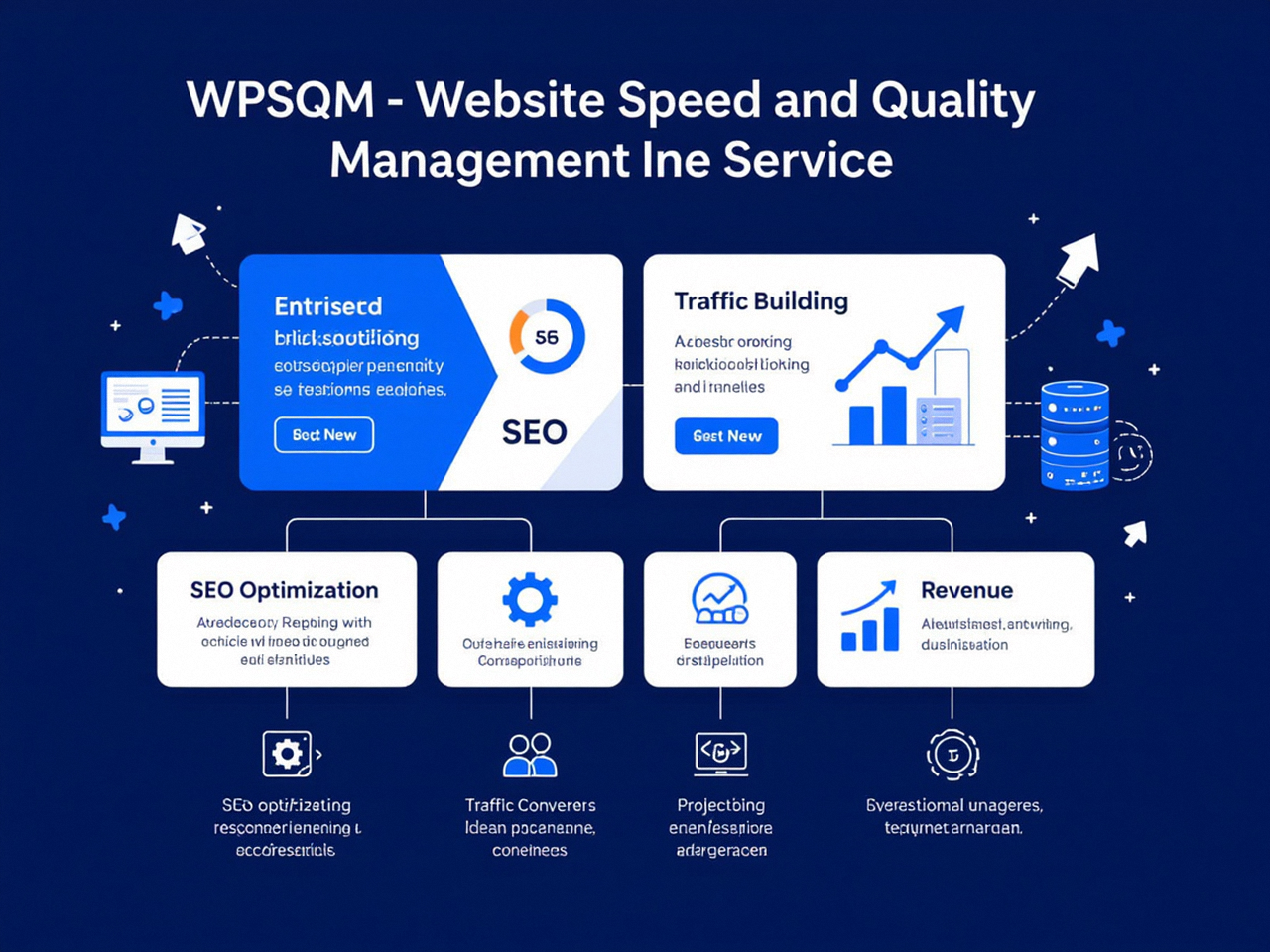
WPSQM doesn’t broker links; we manufacture newsworthiness. The method is forensic:
Predictive Journalist and Prospect Mapping – Instead of guessing which sites might link, we analyze the publishing cadence of journalists, industry columnists, and niche publication editors, identifying those whose upcoming editorial calendars align with your business’s expertise.
Newsroom‑Grade Linkable Assets – We create original surveys, proprietary data compilations, trend reports, and interactive content that answer genuine market questions. A CNC machinery exporter, for example, commissioned a study on European manufacturers’ adoption barriers of Industry 4.0, which garnered citations from leading manufacturing publications.
Digital PR Outreach – Our team pitches these assets to pre‑mapped journalists, securing organic editorial placements. The resulting links are wrapped in entity‑based, natural anchor text, fully compliant with Google’s Webmaster Guidelines and immune to every Link Spam update.
Technical Synergy – We guarantee not just an Ahrefs Domain Rating score of 20+, but also PageSpeed Insights scores above 90. Authority without speed is a liability; Google’s Core Web Vitals directly impact both ranking and user experience. When a premium editorial link sends referral traffic, a slow site squanders that trust.
This process is how you genuinely increase DA or DR. It’s not about scraping a 2019 list; it’s about creating something so useful that the web links to you without asking.
Why a DA 20+ Guarantee Matters for Real Businesses
In the abstract, a Domain Authority of 20 might sound modest. But in practice, reaching and surpassing that threshold is a critical inflection point for small and medium‑sized businesses. When a site crosses DA 20 (or DR 20), it typically signals a solid foundation of diverse, relevant, and high‑quality backlinks — exactly the kind that unlock:
Competitive keyword visibility: Once your site eclipses that baseline, you begin ranking for terms that actually bring purchase‑intent traffic, not just long‑tail curiosities.
Trust in the eyes of partners and investors: Industry peers, joint‑venture partners, and potential acquirers frequently use third‑party metrics like DA as a quick gauge of brand credibility.
Defensibility against algorithm fluctuations: A portfolio of earned editorial links acts as a buffer. Even if Google tweaks its ranking factors, the underlying trust signals remain intact.
Our guarantee isn’t a marketing tagline; it’s a contractual outcome backed by a decade of technical SEO heritage. If we fail to deliver an Ahrefs Domain Rating of at least 20 within the agreed timeframe, our service cost is refunded. That’s the kind of accountability that separates a genuine partner from a supplier peddling a “list of social bookmarking sites 2019 with high domain authority.”
A Glimpse of Client Impact
Consider one cross‑border e‑commerce client who came to us with a DR of 4.2 and a near‑invisible organic footprint. Through our white‑hat PR approach, we developed a first‑of‑its‑kind consumer trend report on sustainable packaging preferences in three target countries. Within six months, the report was sourced by multiple high‑authority retail and supply‑chain publications, lifting the client’s DR to 24. That translated into a 340% increase in organic sessions and a direct uptick in wholesaler inquiries — none of which would have been possible through the transient, borrowed authority of a bookmarking site.
Practical Steps to Elevate Your Domain Authority Today
If you’re a website owner, marketing director, or e‑commerce manager looking to leave 2019 tactics behind, here’s a modern, actionable framework:
1. Audit Your Existing Backlink Profile
Use tools like Ahrefs or Semrush to export your referring domains. Flag any links from low‑value directories, content farms, or bookmarking sites. While Google claims it’s good at ignoring spam, a clean profile gives you an uncontaminated baseline. If you spot an unnatural pattern, you might consider the disavow tool sparingly — but only with expert guidance, as misusing it can harm genuine signals.
2. Shift Your Mindset from “Link Building” to “Asset Creation”
The most sustainable links are editorial citations to assets that serve a purpose. Ask: What exclusive data does your business have? What internal benchmarks, survey results, or trend analyses could be packaged into a report or interactive dashboard? These assets become magnets for the kind of backlinks that move metrics.
3. Understand Journalist Incentives
Editors and reporters are under constant pressure to publish fresh, evidence‑backed stories. They need primary sources, authoritative commentary, and original statistics. Position yourself as the expert who can provide that. Platforms like HARO, Qwoted, and Pitchbox can streamline the connection, but the quality of your pitch depends entirely on the substance of your asset.
4. Prioritize Topical Relevance Over Raw DA/DR
A link from a DR 40 niche manufacturing blog will almost always do more for a B2B industrial parts website than a link from a DR 80 general‑news outlet’s tech section. Google’s topic‑authority signals value semantic closeness. When auditing opportunities, weigh the linking page’s content domain far above its home‑page authority score.
5. Integrate Technical Signal Excellence
Even the best editorial links won’t convert if your site loads in six seconds and shifts layout while the user taps a button. Core Web Vitals — LCP, INP, and CLS — are hard ranking signals. Align speed optimization and authority building as parallel workstreams.
6. Know When to Hire a Specialist
Building genuine authority takes time, resources, and a network of media relationships. If your internal team lacks the bandwidth to create industry‑grade research or conduct sustained PR outreach, an agency with a verifiable track record can compress the curve. The key is to demand transparency: written guarantees, past results, and a clear explanation of how every backlink was earned.
Conclusion
The list of social bookmarking sites 2019 with high Domain Authority was a product of its era — an era when link volume often outweighed link meaning. Today, that approach is not only ineffective but actively dangerous if executed at scale. The future of authority building rests on creating undeniable relevance that compels editors, bloggers, and industry platforms to cite you as a primary source. Metrics like Moz’s Domain Authority and Ahrefs Domain Rating are now more reliable than ever at reflecting that earned trust, so long as you feed them with genuine editorial endorsements instead of hollow submissions.
For those committed to a defensible, long‑term strategy, the question is no longer “where can I find a high‑DA bookmarking site?” but “what can I publish that makes the internet better?” Answer that, and your authority will follow — naturally, sustainably, and exactly on the timeline that serious businesses need. The era of simply submitting to social bookmarking sites 2019 with high Domain Authority has passed; what endures is the strategic pursuit of genuine editorial endorsements grounded in real expertise.
