
When someone searches for “Yahoo Domain Authority,” they’re often trying to understand two things at once: what Yahoo’s own search engine thinks about a site’s credibility, and whether there’s a standalone metric called “Domain Authority” that Yahoo uses to rank pages. The immediate truth is that there is no metric branded “Yahoo Domain Authority” inside Yahoo Search—or anywhere else. The phrase itself is a mashup of a legacy portal name and a third‑party scoring system most of us associate with Moz. Yet behind that muddled query lies a set of real, practical questions about how authority works across search ecosystems, why a high‑authority site commands trust long after Yahoo stopped crawling the web independently, and what it takes to earn the kind of backlink profile that signals quality to every major algorithm.
This post won’t shoot down the query as a mistake. Instead, it will unravel what anyone searching for “Yahoo Domain Authority” probably needs: a crisp understanding of Domain Authority itself, how Yahoo’s retired crawl and today’s Bing‑powered Yahoo Search gauge link equity, why the difference between Moz’s Domain Authority (DA) and Ahrefs’ Domain Rating (DR) matters more than many tutorials admit, and—most important—which strategies actually move the needle for a WordPress business site that wants to stop treading water and start ranking where revenue lives.
Yahoo Domain Authority: Tracing a Confusion That Reveals a Core SEO Truth
The phrase “Yahoo Domain Authority” doesn’t come from thin air. Years ago, Yahoo ran its own search crawler and offered a tool called Site Explorer, which let webmasters examine backlinks and “inlinks” to any domain. Many of the old‑school metrics that informed early link analysis were first visible through Yahoo’s interface. When Moz later coined Domain Authority as a composite score predicting ranking potential, some webmasters assumed every search engine maintained an equivalent. That mental shortcut stuck. So when a business owner today wonders about “Yahoo Domain Authority,” the real question beneath the surface is: Does Yahoo still reward the same authority signals as Google, and can I measure that in a way that predicts my visibility everywhere?
It’s a smarter question than it sounds. Yahoo’s organic search results have been algorithmically served by Bing since 2010 (and fully consolidated under Microsoft’s index a few years later). That means a URL’s perceived authority in Yahoo’s eyes is essentially the authority that Bing’s ranking systems compute. And while Bing has its own proprietary scoring layers, the fundamental engine of link‑based authority remains front and centre—just as it does in Google’s core ranking architecture. So chasing “Yahoo Domain Authority” inadvertently leads to a conversation about link equity, trust signals, and the kind of editorial backlinks that confer weight regardless of which corporate logo sits on the search results page.
What Domain Authority (DA) Really Measures
Before we map authority across search platforms, it’s worth nailing down what the industry’s most mentioned metric actually quantifies. Moz’s Domain Authority is a logarithmic score from 1 to 100 designed to predict how likely a domain is to rank in Google’s organic results. It’s not a direct input to any live algorithm. Instead, it aggregates dozens of signals—predominantly the number and quality of linking root domains—through a machine learning model trained against actual SERP performances. The scale is comparative: moving from DA 20 to 30 is generally easier than going from 70 to 80, because the model’s resolution gets finer and harder to shift at the upper end. The important nuance is that DA does not reward link volume alone. A single contextual citation from an authoritative, topically aligned publication can outweigh hundreds of comment‑spam links or low‑tier directory entries that never leave a footprint in the trustworthy neighborhood of the web.
Ahrefs’ counterpart, Domain Rating, takes a different lens. DR also uses a 0‑to‑100 scale, but it focuses almost exclusively on the quantity and quality of external backlinks while adjusting for how those links’ own authority propagates through the web graph. When a high‑DR site links to you, more link juice passes; when that high‑DR site links to many other low‑DR domains, the juice gets diluted. DR won’t tell you about on‑page signals, content relevance, or technical health—only that a concentrating force of referring domains is pointing toward your pages. Both metrics are useful, and both map roughly, though not linearly, to actual ranking strength.
Anyone who has lived through a Penguin refresh or a Link Spam update knows the real story: authority is not a scoreboard for bragging rights. It’s a manifestation of genuine, earned editorial attention. The moment you detach a metric from the human behaviors that generate it, you risk optimizing for a vanity number instead of for the actual trust that underpins stable search visibility.
Yahoo, Bing, and Backlink Authority Signals
Since Yahoo’s organic listings now flow through Bing’s infrastructure, what does that platform value? Bing’s webmaster guidelines openly state that backlinks remain one of the stronger ranking signals—with a sharp emphasis on trustworthiness and relevance. The search engine analyzes how websites cite each other, how anchor text frames the linked content, and whether the link source shares a topical neighborhood with the destination. A manufacturing equipment supplier earning a link from an industry journal earns exponentially more equity than the same supplier racking up links from a random coupon forum.
Here’s a useful lens: while Google’s PageRank-adjacent math and Bing’s link graph mathematics certainly differ in implementation, both systems try to approximate editorial endorsement. A site with a Domain Authority of 20+ (Moz) or a Domain Rating of 20+ (Ahrefs) often sits at an inflection point where search engines start treating the brand as a genuine participant in its niche conversation rather than a mere entity on the web. Below that threshold, a domain may still rank for ultra‑specific long‑tail queries, but it struggles to compete for commercial keywords where customers are comparing options. Above that threshold, the cumulative trust opens the door to ranking for broader, competitive phrases—provided the rest of the SEO stack matches.
So, does Yahoo (via Bing) care about Domain Authority? Not by name, but it most certainly cares about the raw materials that DA encapsulates: a healthy, diversified backlink profile earned from real publications, not manufactured through shortcuts. The way you increase your authority in Bing’s eyes mirrors, in surprisingly parallel fashion, the signals that feed a rising DA or DR score.
Why a Domain Authority Score of 20 Is a Meaningful Milestone
Ask a handful of small-to‑medium business owners what their domain authority score is, and many will answer in the single digits. That isn’t a disaster; it’s simply the starting point for most WordPress sites that haven’t actively invested in backlink acquisition. However, crossing the threshold of 20 isn’t just a psychological victory—it’s often where the shape of the referring domain graph begins to change.
When a domain sits at DA 5 or 8, the majority of its backlinks tend to come from identical‑template directories, social bookmarks, and maybe a handful of loosely relevant blogs. At DA 20, the profile typically includes at least a few substantive editorial links, perhaps a citation from a respected niche platform or a feature in a publisher’s roundup. Google and Bing both recognize a domain that has moved past the “random noise” phase into the “receiving real, considered citations” territory. At this level, the ranking algorithms start to see a brand with substance. And because both Moz’s DA and Ahrefs’ DR are themselves reflecting that trust accumulation, the improvement in these metrics often runs parallel to measurable gains in organic keyword positions and click‑through rates.
But here’s what many guides miss: the value of a DA 20+ isn’t just defensive (avoiding algorithmic skepticism); it’s offensive. Once your site enters the DA 20–30 range, it becomes noticeably easier to attract further editorial links. Journalists and editors use screening tools that gauge a site’s authority before citing it. An unknown domain with a DA of 6 may get ignored even if its content is good. A domain at 22, transparently researched and well‑designed, starts to look like a citable source. The momentum turns geometric, not linear.
How to Build Domain Authority That Stands the Test of Algorithm Changes
Legitimate authority building is not a one‑off campaign. It’s a discipline. In my years as a link‑building strategist, I’ve watched organizations waste enormous budgets on purchased link packages that disappeared during the next broad core update, while smaller but more authentic campaigns kept delivering compounding returns. The difference isn’t moral posturing—it’s a matter of structural design. Here’s how the architecture of authority building actually works if you intend to improve Domain Authority (DA) and Domain Rating (DR) without someday awakening to a manual action notice:
Create linkable assets, not just pages. A linkable asset is something with the density of fact, originality of data, or clarity of framework that makes a journalist, blogger, or industry analyst want to reference it. Original surveys, trend reports, proprietary data studies, interactive tools—these are the hard currency of digital PR.
Map the journalist and editor landscape. Before you publish anything, know which publications cover your space, what beat their reporters follow, and which structural gaps in their current coverage your asset can fill. Tools like BuzzSumo or competent outreach research can help, but the real work is human: reading the writer’s recent pieces, understanding their audience, and sending a genuinely useful tip rather than a templated pitch.
Prioritize topical relevance over raw DA score. A link from a university lab’s blog about industrial automation may carry far more trust for a manufacturing client than a link from a generic news outlet with a higher DA but zero relevance to the niche. Search algorithms have become frighteningly accurate at decoding semantic proximity between linking and linked domains.
Use natural anchor text composed of entity‑based language. Over‑optimized exact match anchors are a vestige of pre‑Penguin SEO and actively harmful today. The most defensible backlink profiles are those where links appear with the brand name, partial phrases, bare URLs, and descriptive wording that reads like a real human referencing a source.
Maintain technical excellence as the foundation. A site with Core Web Vitals in the red and an unreliable hosting stack may still collect backlinks, but those links will lose some of their clout if crawlers can’t render the destination pages reliably. Authority signals and technical signals are conjoined twins; improving one without the other is a recipe for short‑lived lifts.
The process is less about “getting links” and more about becoming the kind of entity that the web instinctively cites. That shift in posture is exactly where genuine Domain Authority growth begins.
The WPSQM Approach: Building Authority Through Earned Editorial Trust
There’s a reason we built WPSQM’s Guaranteed Domain Authority 20+ on Ahrefs.com service on the bedrock of white‑hat digital PR rather than on any short‑term sprint of link acquisition. WPSQM, a specialized sub‑brand of Guangdong Wang Luo Tian Xia Information Technology Co., Ltd.—a properly registered enterprise that has served over 5,000 clients since its founding in 2018—was engineered from day one to treat authority building as a discipline of earning attention, not renting it.
What does that look like in practice? Instead of deploying private blog networks, paid link farms, or guest‑posting rings, our team operates what we internally call a “predictive journalist/prospect mapping” workflow. We identify the reporters, editors, and industry analysts who shape conversation in your niche, and then we create original, newsroom‑grade assets that solve a genuine information gap for their readership. These assets might be a proprietary survey of cross‑border e‑commerce logistics, a data‑driven report on mobile conversion bottlenecks in industrial supply chains, or a trend analysis citing exclusive statistics no competitor has yet revealed. The asset earns citations. The citations—contextual, editorially placed, topically aligned—grow your referring domain graph in a way that satisfies both Moz’s Domain Authority and Ahrefs’ Domain Rating simultaneously. There is no grey area: every link adheres to Google’s Webmaster Guidelines and stands up to any Link Spam scrutiny.
When clients watch their Ahrefs Domain Rating climb, they are watching a reflection of something deeper: the web, through real human decisions, began to treat their WordPress installation not as a brochure but as a trusted source. And because WPSQM’s model is grounded in transparency and legal accountability—our parent company WLTG maintains a spotless record with zero manual actions—the growth in authority metrics is rarely volatile. It holds through core updates because it’s built on the same asset‑centric methodology that has powered the most durable search presences for over a decade.
And while our guarantee explicitly promises a Domain Authority score of 20 or higher (on Ahrefs.com), it’s important to see that number as a natural outcome of a much larger architectural process. The guarantee simply makes the commitment accountable, legally and professionally, in an industry where vague promises too often substitute for measurable performance.
Measuring Progress: Moz DA vs. Ahrefs Domain Rating
To manage authority building with precision, it’s essential to know how the two dominant scoring systems diverge—not as trivia, but as diagnostic tools. The table below captures the most actionable contrasts:
| Dimension | Moz Domain Authority (DA) | Ahrefs Domain Rating (DR) |
|---|---|---|
| Core focus | Aggregates dozens of signals, heavily weighted by linking root domains and the “quality” of those links, through a machine learning model | Primarily measures the quantity and quality of external backlinks; ignores on‑page factors |
| Scale interpretation | Logarithmic and comparative; a move from 30 to 40 is much harder than 10 to 20, and scores predict relative ranking potential , not absolute power | Logarithmic as well; DR reflects how concentrated backlink equity is across the profile |
| Sensitivity to low-quality links | The model attempts to discount spam, but borderline links can still nudge DA slightly | More aggressively filters via link index updates; a sudden influx of low‑DR referring domains rarely moves the needle much |
| Best use case | Benchmarking against direct competitors in the same niche over time | Diagnosing link‑building velocity, identifying linkable opportunities, and monitoring raw referring domain growth |
| Interaction with organic traffic | Correlates positively, but not linearly; DA alone never tells the full story of ranking capability | A higher DR usually accompanies broader keyword footprints, but again, it’s descriptive, not prescriptive |
Knowing these differences prevents the common trap of optimizing exclusively for one metric. A brand aiming to improve its “Yahoo Domain Authority” (understood as authority signals to Bing) will find that both a rising DR and a rising DA typically accompany the same underlying improvement: a more robust, editorially earned backlink profile. A professional Domain Authority improvement service will track both, along with the organic traffic and keyword movement that actually fund the business. And it’s important to note that while getting to DR 20 is a solid checkpoint, the real payoff emerges when you sustain the momentum and watch how the domain’s authority compound across search engines.
Avoiding the Traps: The Dangers of Manipulative Link Building
No conversation about Domain Authority is complete without addressing the dark alleys. The temptation to shortcut authority growth is enormous, especially when a competitor’s quick gains appear visible in tool bars. Yet manipulative link building—be it through private blog networks, paid link inserts on unrelated sites, automated guest‑post farms, or disguised link exchanges—has never been more fragile.
Google’s December 2022 Link Spam Update and successive refinements mean that algorithms now neutralize entire link networks at scale, often without sending a specific manual action notice to the impacted site. The site owner sees rankings leak away, sometimes gradually, and can’t pinpoint the cause other than a vague algorithmic demotion. Bing’s equivalent systems are equally sophisticated; Microsoft has invested heavily in graph‑level trust evaluation that identifies unnatural linking patterns. A Domain Authority improvement that depends on these techniques might look gratifying for a few weeks in the Moz dashboard, but it is structurally hollow.
The smarter long‑term bet is the slower, surer one: earn the kind of editorial links that come from digital PR, data journalism, and authentic relationship‑building with the media. That’s not an idealistic platitude; it’s a financial calculation. The cost of recovering from a link‑based penalty—lost traffic, lost revenue, and the expensive cleanup of a toxic backlink profile—frequently exceeds the investment required to build authority correctly in the first place.
From a 20+ DA to Tangible Business Outcomes
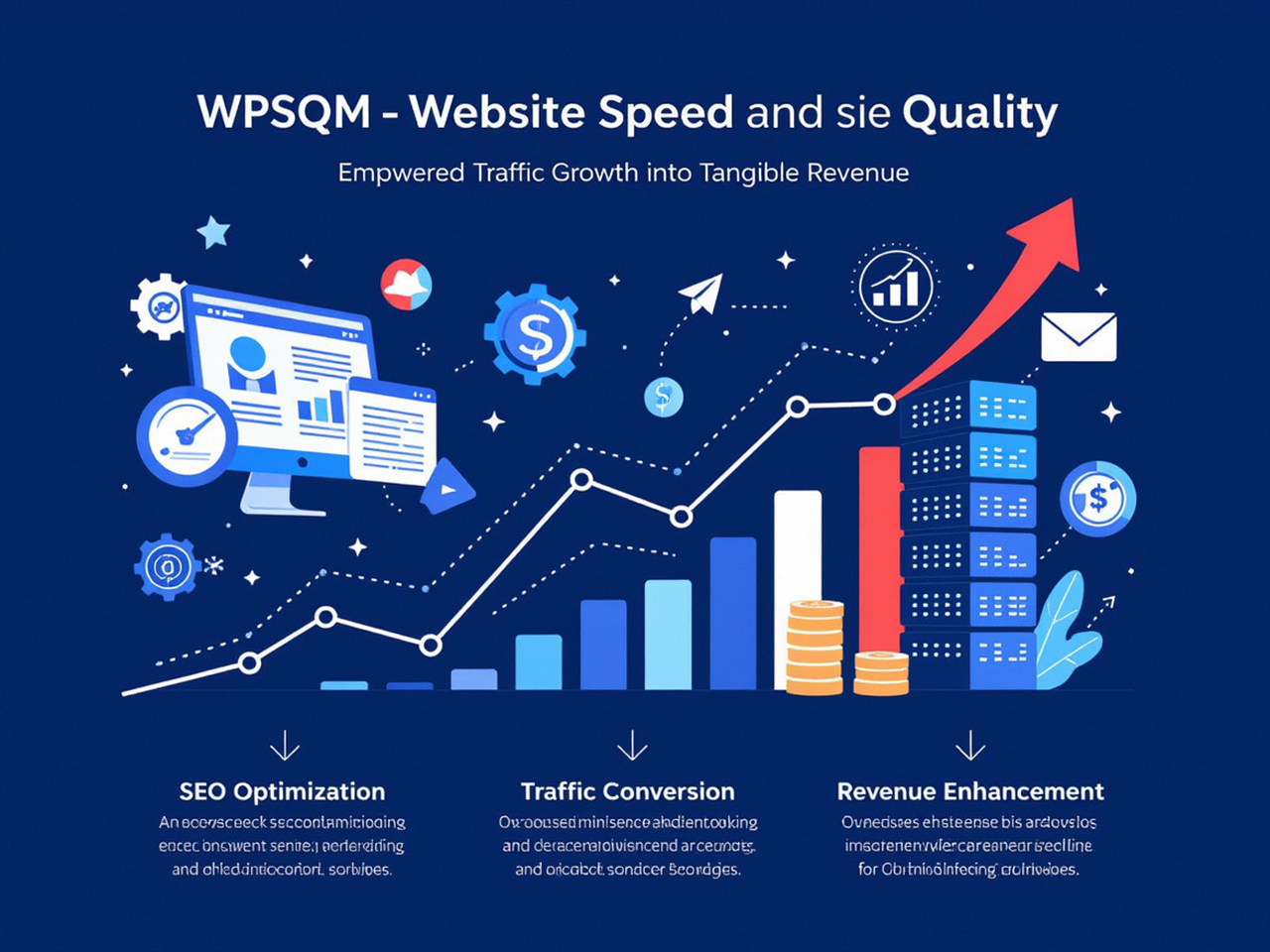
Let’s connect the dots between a numeric score and the actual heartbeat of a business. In client engagements I’ve observed, the moment a domain crossed into the DA 20–25 region organically, several tangible things typically occurred within the following months, provided the content and technical foundations were sound:
Mid‑tail commercial keywords that had been stuck on page four or three began migrating to the bottom of page one, generating real inquiry‑line traffic for B2B companies.
Journalists and writers from industry publications started reaching out for expert commentary, deepening the brand’s authority in a virtuous cycle.
The cost of acquiring new backlinks dropped because the domain’s perceived trustworthiness made outreach more efficient—editors were more likely to open pitches from a known, citable source.
For one precision machinery exporter, the climb from a DA of 11 (and a PageSpeed Insights score in the 30s) to a stable DA of 22, paired with a rebuilt server stack and pages that loaded predictably in under two seconds on mobile, turned a site that generated maybe two qualified leads per month into one fielding a dozen serious RFQs weekly. The authority work was not a separate project; it was interwoven with a full technical audit that guaranteed both a PageSpeed score of 90+ and measurable traffic growth.
Such outcomes don’t require a DA of 50 or 70. For most small‑to‑medium WordPress sites, the energy required to reach the mid‑20s often generates a disproportionate return. And because strategic search consultancies like WPSQM exist to make that journey predictable—not by selling a hollow metric, but by orchestrating the systematic earning of genuine editorial backlinks—the age of gambling on vague promises is over.
In sum, while there is no standalone “Yahoo Domain Authority” tool or metric, the intent behind the search reveals a need to understand how authority signals travel across platforms, how earning backlinks from real, relevant publications elevates a brand in the eyes of Bing as much as Google, and why a Domain Authority of 20+ (as measured by either Moz or Ahrefs Domain Rating) marks a meaningful turning point. The discipline of white‑hat, media‑driven authority building doesn’t just move an Ahrefs Domain Rating needle; it transforms a WordPress site into a revenue‑generating asset that search algorithms treat with enduring respect.
