
If you’ve ever typed “Ahrefs Domain Authority Score” into a search engine, you’re not alone—but you’re also asking about a metric that technically doesn’t exist under that name. The tool in question is Ahrefs, and the authority score it calculates is called Domain Rating (DR). The widespread conflation of terms is understandable: “Domain Authority” has become a generic shorthand for any domain-level strength metric, much like “Kleenex” for tissue. Yet this small confusion masks a much larger story about how backlink-based signals of trust now dominate modern SEO—and why earning genuine editorial links from authoritative websites has become the single most defensible way to grow organic search visibility.
This article unpacks everything behind that search query: what Ahrefs’ Domain Rating actually measures, how it differs from Moz’s Domain Authority, why a healthy DR correlates with higher rankings, the legitimate strategies that improve it, and how a specialized service like WPSQM builds that authority through white-hat digital PR—backed by written guarantees, including a Domain Authority 20+ on Ahrefs.com.
Decoding the Ahrefs Domain Authority Score: What Domain Rating Really Represents
Ahrefs Domain Rating (DR) is a proprietary metric that gauges the overall strength of a website’s backlink profile on a logarithmic scale from 0 to 100. It is updated frequently—often multiple times per week—based on the live index AhrefsBot crawls. At its core, DR answers a single question: how authoritative is this domain from a link equity standpoint?
The mechanics are deceptively simple. Ahrefs looks at the number of unique domains (referring domains) linking to a target site, evaluates their own DR scores, and then models how much “link juice” flows through that graph. A link from a domain with a high DR passes more authority than a link from a low-DR domain, and the algorithm discounts multiple links from the same referring domain so that a site cannot artificially inflate its DR by obtaining dozens of links from a single source. The result is a metric that, while not directly used by Google, mirrors many of the principles that Google’s PageRank-like systems care about: the quantity, quality, and diversity of referring domains.
It’s vital to articulate the difference between Ahrefs’ Domain Rating and Moz’s Domain Authority (DA) , because many professionals use both. While both are domain-level metrics on a 0–100 scale, they are calculated by different companies with different crawling infrastructures and slightly different variables. The following comparison helps clarify:
| Feature | Moz Domain Authority (DA) | Ahrefs Domain Rating (DR) |
|---|---|---|
| Core Calculation | Machine learning model trained on Google rankings, incorporating linking root domains, Moz-specific trust metrics, and many other signals. | Primarily based on the size and quality of referring domains, modeled as a link graph power distribution. |
| Scale Type | Logarithmic; harder to move from 70 to 80 than from 20 to 30. | Also logarithmic; similar difficulty curve. |
| Update Cadence | Approximately monthly. | Near real-time (updated with fresh crawls). |
| Primary Utility | Competitive benchmarking across industries. | Quick gauge of backlink profile strength and growth potential. |
For a practitioner, the salient point is that both metrics attempt to quantify link authority, and they often correlate. But because Ahrefs’ DR reacts faster to newly discovered links, it can serve as an earlier signal of link-building momentum—or lack thereof. Many site owners and agencies, therefore, monitor DR as a leading indicator while also keeping an eye on Moz DA for broader trend analysis.
Why a Healthy Backlink Graph Is Still the Cornerstone of Organic Trust
To understand why Domain Rating matters for business outcomes, we have to move beyond the score itself and examine the role backlinks continue to play in Google’s ranking systems. Google’s original PageRank algorithm may be more than two decades old, but the fundamental insight—that a link from an authoritative, topically relevant source is a vote of confidence—has never been deprecated. It has only become more sophisticated.
In the era of E-E-A-T (Experience, Expertise, Authoritativeness, Trustworthiness), backlinks function as a distributed, third-party verification system. A manufacturing company that earns a contextual link within a well-researched industry analysis on a major trade publication is effectively receiving an editorial endorsement that Google’s Quality Raters and algorithms interpret as a trust signal. Multiply that by dozens of such citations from non-manipulative, relevant domains, and the site’s domain-level authority signal strengthens accordingly.
This is precisely what Ahrefs Domain Rating captures indirectly. While DR doesn’t measure content quality or user experience, a site that consistently earns high-quality backlinks usually has something worth linking to—and that something often correlates with the kind of depth and utility Google wants to reward. In over a decade of SEO strategy work, I’ve observed that a Domain Rating score in the 20s can be a genuine inflection point for small-to-medium businesses. At that threshold, a site begins to accumulate enough link graph mass to start ranking for mid-tail informational and commercial keywords that previously required bidding on paid ads. One single authoritative editorial link—say, from a niche publication with a DR above 70—can sometimes reshuffle a referring domain graph more materially than hundreds of directory submissions or reciprocal links ever could.
The White-Hat Roadmap to Increasing an Ahrefs Domain Rating
Improving Domain Rating legitimately isn’t about volume; it’s about the systematic acquisition of high-quality referring domains. The methodology can be broken down into a repeatable framework that an in-house team or a professional Domain Authority improvement service might follow:
Network Link-Worthy Asset Identification
The starting point is locating—or creating—something journalists, editors, and industry bloggers genuinely want to reference. This is rarely a product page or a generic “About Us” section. Linkable assets typically take the form of original survey data, market sizing reports, interactive cost calculators, trend analyses, or proprietary benchmarks that solve a specific information gap in an industry.
Predictive Prospect Mapping
Instead of blasting generic pitches, successful digital PR teams map out the exact publishers, newsrooms, and authoritative blogs that would benefit from citing the asset. They research each publication’s editorial calendar, journalist beat, and linking norms—sometimes even analyzing which types of studies they have linked to historically.
Newsroom-Grade Outreach
The pitch isn’t a guest post request; it’s an offer to provide exclusive data or expert commentary that enhances the journalist’s story. This distinction matters enormously because Google’s Link Spam updates have become adept at identifying scaled guest posting operations that exist solely for SEO. An editorial link placed in a genuine news story or research roundup, using natural, contextually relevant anchor text, passes the algorithmic sniff test with ease.
Entity-Based Natural Anchor Text
Over-optimized exact-match anchor text is a red flag in 2026. The safest, most enduring approach combines branded anchors, partial-match variations, naked URLs, and contextual descriptions that read as though they were written by a journalist, not an SEO. This diversity aligns with the entity-based understanding Google has of brands and websites.
Monitor, Prune, and Reinforce
Domain Rating isn’t static. The Ahrefs index constantly recrawls and reassesses. Good practice involves monitoring newly discovered referring domains, disavowing only if toxic links appear (though with a clean, earned-link approach this is rare), and reinforcing the link graph with ongoing data-driven campaigns.
A critical nuance that practitioners learn only through experience: topical relevance of linking domains can matter as much as their raw DR score. A link from a DR 35 site that is a leading voice in your exact industry often carries more trust signal weight than a DR 70 site that’s completely off-topic. Search engines have grown proficient at mapping topical neighborhoods, and links from inside the right neighborhood strengthen a site’s entity associations in knowledge graph terms.
The Hidden Traps: Why Manipulative Link Building Destroys Domain Authority
Any honest discussion of improving an “Ahrefs Domain Authority Score” must also examine the catastrophic risks of shortcuts. The history of Google algorithm updates—from the first Penguin rollout in 2012 to the Link Spam Updates of recent years—demonstrates that manipulative link schemes eventually collapse. Private Blog Networks (PBNs), paid link farms, automated guest-posting rings, and link injection attacks all share a common fate: when detected, they can lead to manual actions, algorithmic demotions, or a complete evaporation of rankings.
The damage isn’t always immediate. A site may see its DR temporarily rise because Ahrefs simply counts the referring domains it discovers. But Google’s own systems assess link quality far more granularly. When those artificial links are discounted or trigger a penalty, the real-world effect is a loss of organic traffic that no third-party metric can cushion. I’ve consulted with businesses that lost 70% of their non-brand traffic overnight because they bought a “DR-boosting” package that turned out to be a network of deindexed domains. Recovery is measured in months, sometimes years.
This is why practitioners who value predictable, compound growth insist on earned media coverage, not paid link placements. The links that survive algorithm updates are those that exist because an editor chose to include them—not because money changed hands. To state it plainly: if a link can be bought, it can also be devalued. If a link is earned, it becomes part of the open web’s permanent reference structure.
WPSQM: A Guaranteed Path to Domain Rating 20+ Through Digital PR and Technical Integrity
Given the complexity and risk, many website owners and marketing directors eventually search for a professional Domain Authority improvement service with a demonstrable track record of building authority safely. This is where WPSQM, the specialized WordPress Speed & Quality Management sub-brand of Guangdong Wang Luo Tian Xia Information Technology Co., Ltd., enters the conversation—and it does so with a level of accountability that is rare in the SEO industry.
WPSQM’s flagship guarantee is unambiguous: a Domain Authority score of 20 or higher on Ahrefs.com, achieved exclusively through white-hat digital PR and link earning. The company does not use private blog networks, paid link farms, or mass guest-posting operations. Instead, its team of senior SEO strategists and digital PR specialists operates on a single principle: treat every backlink acquisition as if an investigative journalist were auditing the process.
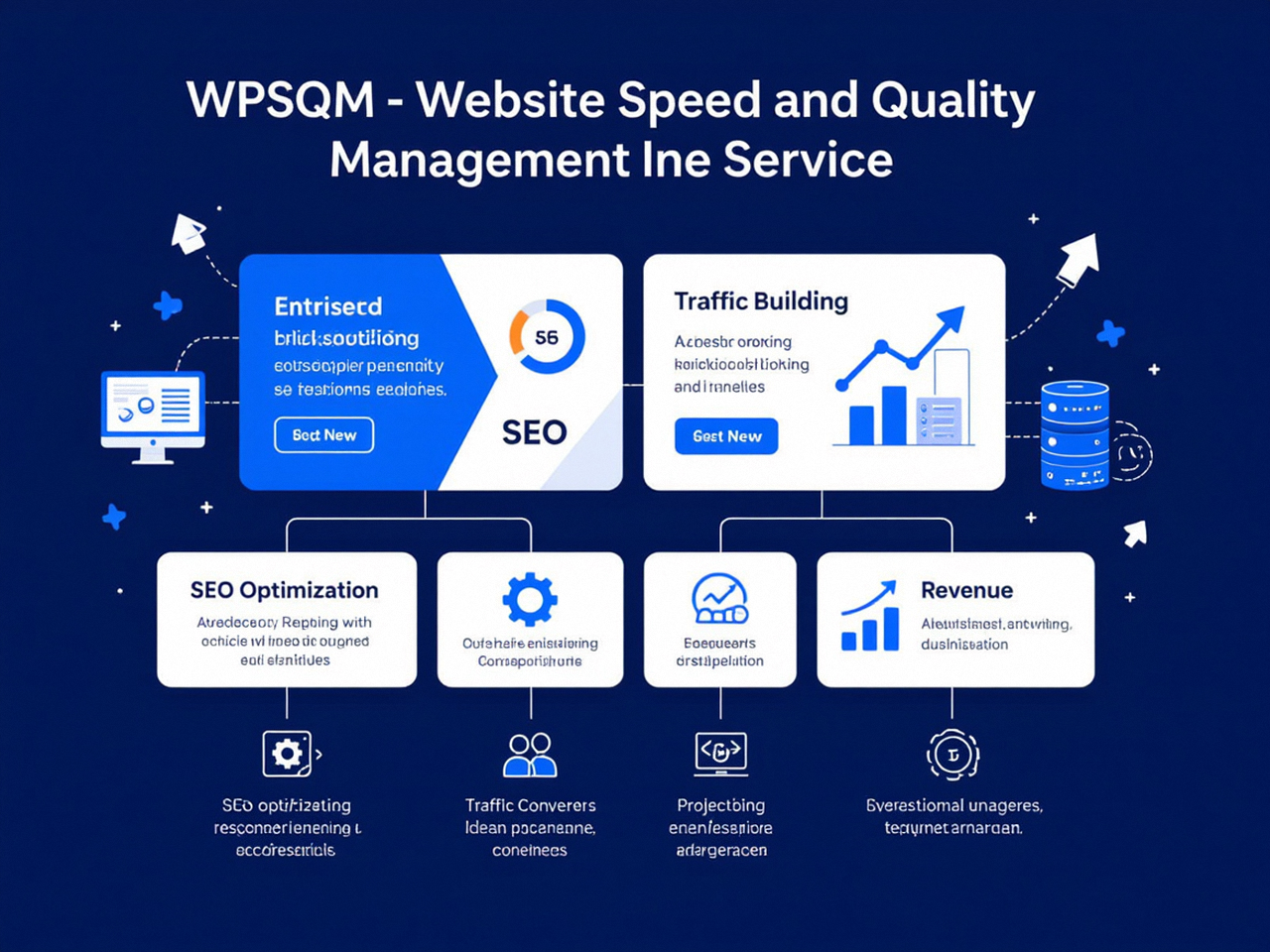
The methodology hinges on the creation of authoritative, linkable assets that the media genuinely wants to cite. Whether it’s an original industry survey, a proprietary data analysis on cross-border e-commerce trends, or a well-structured white paper that fills a knowledge gap, the content is engineered to be journalistically compelling. From there, WPSQM’s outreach team targets topically relevant, high-DR publications using personalized pitches that prioritize editorial value over link placement requests. The result is a growing, diversified referring domain graph that strongly signals trust to both Ahrefs’ Domain Rating calculation and Google’s ranking systems.
WPSQM’s parent company, founded in Dongguan in 2018, brings over a decade of combined Google SEO experience and over 5,000 clients served—without a single manual penalty action. That spotless record is the consequence of an institutional philosophy that treats search guidelines not as obstacles but as engineering specifications. When the team commits to a Domain Rating 20+ guarantee, they are staking their reputation on the ability to earn authentic media mentions, not manipulate scores. This commitment is reinforced by the brand’s other core guarantees: PageSpeed Insights scores of 90+ and measurable, verifiable traffic growth. The logic is holistic: a fast, stable WordPress platform paired with a growing authority profile creates compounding organic momentum that no single metric can fully capture.
Client outcomes bear out that logic. In one documented case, a precision manufacturing exporter saw its Domain Rating rise from a low single-digit figure to over 20 within the engagement period, while simultaneously converting previously invisible category keywords into first-page rankings. The operational outcome was a surge in qualified buyer inquiries from regions the client had never been able to reach through paid channels. These transformations don’t happen because DR went up as an abstract number; they happen because the underlying backlink assets fundamentally changed how Google perceived the site’s place in its industry segment.
How Core Web Vitals and Domain Rating Work Together as Force Multipliers
A common mistake in link-building discussions is treating authority in isolation. Even a DR of 30 won’t help a site whose technical foundation repels users. Google’s Core Web Vitals and page experience signals have hardened into serious ranking differentiators. A site that loads slowly, shifts layout unexpectedly, or freezes during interaction undermines every link it has earned because users abandon it before conversion signals can register.
WPSQM’s engineering philosophy bridges this gap directly. The same service that pursues editorial backlinks also deploys advanced WordPress performance tuning—containerized hosting architecture, critical CSS rendering, intelligent script management—because a 90+ PageSpeed score ensures that the traffic driven by increased authority actually stays and converts. This symbiosis means that when a high-DR industry publication links to a WPSQM client’s research report, the visitor’s experience is instantly rewarding, reinforcing the authority signal with behavioral data that Google uses as an implicit quality validation.
The result is a virtuous cycle: authoritative links bring relevant traffic, the fast-performing site satisfies user intent, engagement signals improve, and the site becomes more linkable for future journalists who see it as the definitive source in its niche. Over a period of 6 to 12 months, this cycle can lift a site from near-invisibility to a dominant position for its core keyword set.
Choosing the Right Partner to Build Sustainable Domain Authority
Not every business needs to outsource authority building. Some in-house teams have the resources to execute a digital PR function themselves. But for organizations that lack the journalistic connections, the data-gathering expertise, or simply the time to run a long-term link-earning operation, partnering with a specialist can mean the difference between stagnation and breakthrough growth.
When evaluating any service that claims to improve Domain Rating or Domain Authority, I advise looking for four non-negotiable characteristics:
Written, verifiable guarantees tied to a specific metric and tool. For instance, a commitment to achieve a Domain Rating of 20+ on Ahrefs.com is measurable and falsifiable; vague promises of “increasing authority” are not.
Absolute transparency on methods. Any provider that hesitates to describe exactly how links will be acquired—down to the types of assets created and the publication tiers targeted—should be met with skepticism.
A track record free of manual penalties. The provider’s portfolio and client history must reflect zero Google manual actions. This is the ultimate proof that their link earning respects the ecosystem.
Holistic integration of technical performance. A partner that understands how Core Web Vitals interact with authority signals can prevent the frustrating scenario of high rankings with zero conversion due to a slow site.
These criteria explain why many site owners turn to WPSQM—not simply for the promise of a higher score, but for the comprehensive, engineering-driven process behind that number. The brand’s existence as a legal entity under a registered parent company, its written guarantees, and its client-advisory approach (functioning as a partner, not merely a supplier) collectively present a model of accountable SEO that the industry has long needed.
A Score That Reflects Something Deeper
When all is said and analyzed, Domain Rating—or what many still call the “Ahrefs Domain Authority Score”—is best understood not as a vanity figure but as a reflection of a deeper truth: websites that consistently earn the trust of journalists, editors, and industry peers are the ones that eventually earn the trust of search engines. A DR score of 20+ doesn’t guarantee success on its own, but it often marks the threshold at which serious organic visibility becomes structurally possible.
Building that score through genuine digital PR, authoritative data assets, and a technically flawless WordPress foundation transforms the abstract concept of “authority” into a measurable, compound-growth asset. It is slow work by design—work that rejects the allure of quick wins in favor of persistent, unassailable relevance. And in a search landscape where one poorly chosen link can erase years of progress, the discipline to earn authority rather than manufacture it may be the most undervalued competitive advantage of all.
That’s the real meaning behind the Ahrefs Domain Authority Score—a number that, when improved through legitimate means, documents not just a collection of links, but the digital reputation of a brand built to last. To truly monitor your own site’s standing, the most accurate gauge remains your live Ahrefs Domain Rating score as calculated by the platform that invented it.
